Bed Mover Service Contract: Ensuring Safety and Uptime in 2026
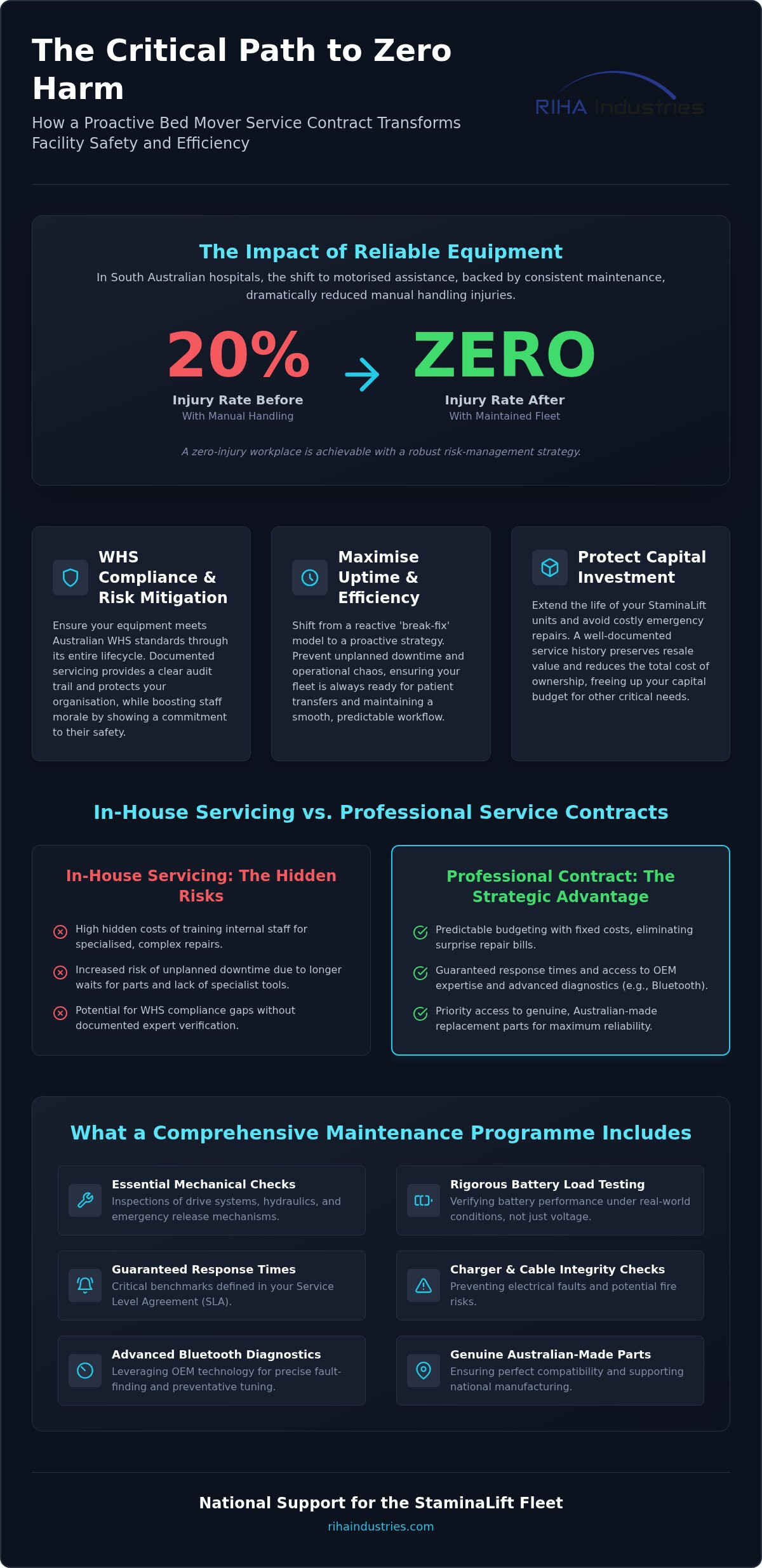
A zero-injury workplace isn't just a goal for 2026; it's a standard that's already being met by facilities that treat a bed mover service contract as a core safety strategy. In South Australian hospitals, the transition to motorised assistance helped reduce manual handling injuries from 20% to zero, but that safety record depends entirely on the consistent reliability of the fleet. You've likely felt the frustration when unplanned downtime forces staff back into manual manoeuvres or when ad-hoc repair costs begin to strain your annual budget. It's a high-stakes environment where a single equipment failure can compromise both patient flow and staff well-being.
Securing a structured maintenance plan is the most effective way to turn these operational risks into long-term stability. By reading this guide, you'll discover how a tailored agreement protects your porters, ensures strict WHS compliance, and significantly extends the life of your StaminaLift and Easi series units. We'll outline how predictable budgeting and guaranteed response times can transform your facility's efficiency while keeping your most valuable assets, your people, safe from harm.
Table of Contents
The Strategic Importance of a Bed Mover Service Contract
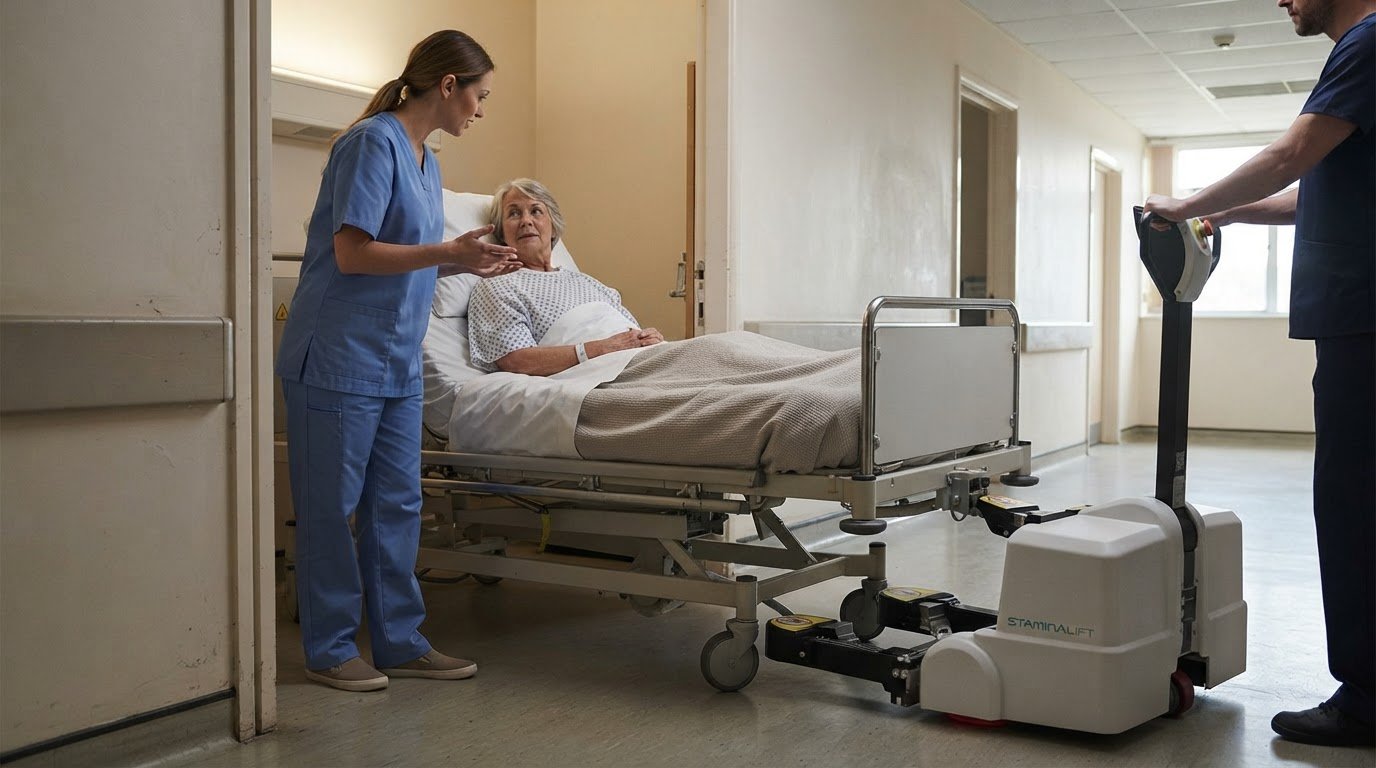
Hospital wards don't pause for equipment failure. In the high-stakes environment of patient transfers, a "break-fix" model is a recipe for operational chaos. When a motorised unit is sidelined, the immediate consequence is a return to manual pushing and pulling, which places porters and nurses at immediate risk of strain. Implementing a bed mover service contract replaces this reactive stress with technical certainty. It ensures that your fleet is always ready for the next admission, discharge, or theatre transfer. Relying on ad-hoc repairs often leads to longer wait times for parts and higher costs, whereas a structured agreement prioritises your facility's needs.
A bed mover service contract transforms this vulnerability into a controlled, predictable workflow. It ensures that every piece of equipment is verified for safety before it ever reaches a ward. This proactive approach doesn't just keep the wheels turning; it builds a culture of safety where equipment reliability is a given rather than a gamble. When your team knows they can rely on their tools, the focus remains entirely on patient care rather than mechanical troubleshooting.
WHS Compliance and Risk Mitigation
Australian WHS regulations require more than just providing tools; they demand that those tools remain safe for use through their entire lifecycle. Regular maintenance is the essential link between having the right equipment and actually meeting your legal obligations. Consistent servicing directly supports "zero-injury" targets by eliminating the mechanical surprises that lead to workplace accidents. In South Australian hospitals, the transition to motorised assistance helped reduce manual handling injuries from 20% to zero, but these results depend on the equipment staying in peak condition.
Documented servicing also acts as a protective shield for your organisation during safety audits. It provides a clear paper trail of your commitment to staff well-being and risk mitigation. Beyond the legalities, reliable equipment significantly boosts staff morale. When porters and nurses know their tools won't fail them during a critical transfer, they feel valued and protected, which is vital for staff retention in the aged care and hospital sectors.
Protecting Your Capital Investment
Scheduled care is the most effective way to protect your facility's balance sheet. By maintaining the StaminaLift Transfer System 5000 through a structured programme, you avoid the high costs of emergency call-outs and expedited shipping for parts. This isn't just about fixing what's broken; it's about fine-tuning the electrical and mechanical systems to prevent wear before it starts. Small, proactive adjustments to drive systems and hydraulics can prevent the catastrophic failures that lead to expensive, premature replacements.
This methodical approach preserves the trade-in or resale value of your motorised fleet. A well-documented service history proves the equipment has been cared for by experts, making future upgrades much more affordable. By reducing the total cost of ownership, a service contract ensures that your capital budget is used efficiently, allowing you to invest more in patient-facing technologies and staff development.
What a Comprehensive Maintenance Programme Should Include
Precision engineering requires precision care. A comprehensive bed mover service contract ensures that the technical integrity of your fleet matches the high standards of your clinical environment. This isn't a mere visual inspection. It involves a deep dive into the mechanical, electrical, and software systems that keep your facility moving. By identifying minor misalignments or electrical fluctuations early, you prevent the operational bottlenecks that occur when a unit fails mid-shift. Facilities looking to streamline their compliance can explore our preventative maintenance and repairs options to ensure their fleet remains in peak condition.
A robust programme must address electrical health through rigorous battery load testing. Simply checking the voltage is insufficient; technicians must verify how the batteries perform under the actual weight of a bariatric bed. This process includes inspecting charger cable integrity to prevent fire risks and ensuring that the electrical draw remains within factory specifications. On the digital side, modern service contracts now include Bluetooth diagnostic feedback. This allows technicians to review usage history and identify if certain units are being underutilised or if staff require additional training. Firmware updates are also applied during these visits, ensuring your equipment benefits from the latest safety and performance optimisations.
Technical Checklist for StaminaLift Units
Maintaining the StaminaLift series requires a specialised focus on the patented "connect and lock" jaw system. Technicians must inspect these jaws for precision alignment to ensure a secure grip on every bed frame. The 360-degree manoeuvrability that defines the StaminaLift experience depends on perfectly calibrated joysticks and responsive drive motors. During each service, the automatic braking system is tested to confirm the unit comes to a complete, controlled stop the moment the joystick is released. This fail-safe mechanism is critical for preventing runaway incidents in busy corridors or on sloped ramps.
Easi Series and Tug Maintenance
The Easi series and walk-behind movers have unique maintenance requirements that focus on ward protection and operator safety. Non-marking drive wheels are inspected for wear to ensure they continue to protect expensive hospital flooring from scuffs and damage. A vital part of the safety check is testing the "Back Off Button" on walk-behind units. This feature instantly reverses the mover if it makes contact with the operator, providing a critical layer of protection in tight spaces. Finally, technicians perform thorough lubrication of all hitches and coupling systems. This ensures a seamless, rattle-free connection to trolleys and equipment, reducing vibration and noise in patient-sensitive areas.
In-House Servicing vs. Professional Service Contracts
Deciding whether to manage maintenance internally or through a professional bed mover service contract requires a careful analysis of long-term risk and hidden costs. While general facility engineers are highly skilled, motorised bed movers rely on specialised hydraulics and integrated electronic systems that demand specific OEM knowledge. Relying on in-house teams for complex repairs often leads to "parts swapping," where components are replaced by trial and error because the diagnostic tools aren't available. This approach doesn't just inflate costs; it keeps critical equipment out of service for far longer than necessary.
The question of liability is equally important. When a unit is returned to the ward after a repair, the organisation needs a formal sign-off to ensure it meets Australian safety standards. A professional contract provides this certification, shifting the responsibility of technical validation to the experts who built and designed the equipment. This is bolstered by priority access to genuine components. While ad-hoc procurement can leave a unit sidelined for weeks, a service agreement ensures you benefit from 24-hour parts shipping, keeping your fleet operational when it matters most.
When In-House Support Makes Sense
Internal teams play a vital role in the daily lifecycle of the fleet, particularly when it comes to preventative pre-start checks. We empower these teams through innovative resources like RIHA's 3D-viewer tool, which allows rural or remote staff to visualise internal components for basic troubleshooting. By training internal "super-users," facilities can manage first-line triage, such as identifying simple charging issues or joystick obstructions. This collaborative model ensures that minor glitches are resolved instantly, while complex mechanical work is reserved for professional technicians who have the specialised tools to do the job safely.
The ROI of a Professional Service Contract
The true value of a bed mover service contract lies in the elimination of operational "nasty surprises." Fixed-cost budgeting allows facility managers to forecast their maintenance spend with total accuracy, removing the volatility of emergency call-out fees. Beyond the financial predictability, contracts provide a direct pipeline to the latest engineering modifications and safety upgrades. These incremental improvements, often applied during routine visits, ensure your StaminaLift or Easi series units perform better and last longer. By guaranteeing response times, a professional agreement minimises equipment downtime, ensuring your portering teams always have the motorised support they need to maintain a zero-injury workplace.
Evaluating Your Service Level Agreement (SLA)
A robust bed mover service contract is defined by the clarity of its Service Level Agreement (SLA). This document shouldn't be viewed as mere administrative paperwork; it's the operational backbone that guarantees your facility remains mobile. For metropolitan hospitals, a critical response time might be measured in hours, while regional facilities require a different support structure. In these remote areas, the SLA should specify access to technical support and the 3D-viewer tool to facilitate immediate triage. Regardless of location, the inclusion of genuine Australian-made replacement parts is non-negotiable. Using inferior components compromises the engineering integrity of the unit and can void safety certifications.
Transparency is the hallmark of a world-class partnership. Your SLA must include detailed reporting on usage history and diagnostic feedback captured via Bluetooth. This data provides a window into the health of your fleet, allowing you to see which units are working hardest and which might be due for early intervention. Each service visit should also be an opportunity for staff development. Verifying that your contract includes on-site retraining and staff certification ensures that your porters and nurses are always using the equipment according to the latest safety protocols. To see how these standards are applied in practice, you can learn more about our preventative maintenance and repairs.
Key Performance Indicators (KPIs) for Procurement
When evaluating a provider, focus on measurable outcomes that impact ward efficiency. Equipment uptime is the primary metric; for a 24/7 hospital environment, a benchmark of 95% or higher is typically expected. You should also scrutinise the Mean Time To Repair (MTTR). A low MTTR indicates that the provider has the parts and expertise to resolve issues quickly, preventing long-term bottlenecks in patient flow. Finally, ask about first-time fix rates for preventative maintenance visits. A high rate here suggests the technician is arriving with the right parts and knowledge to complete the job without requiring a follow-up visit.
Contract Flexibility and Scalability
Your facility's needs will evolve, and your bed mover service contract must be able to keep pace. High-volume environments like Emergency Departments require more frequent servicing than low-usage rehabilitation wards. A flexible agreement allows you to adjust service intervals based on the actual usage data provided by Bluetooth diagnostics. This scalability also applies to your fleet's composition. Whether you're adding a StaminaLift Transfer System 6000 for specialised bariatric care or customising hitches as your trolley fleet changes, your contract should easily accommodate new assets. This ensures that every piece of motorised equipment, regardless of when it was purchased, remains under the same protective umbrella of expert care.
RIHA Industries: National Support for the StaminaLift Fleet
Choosing a bed mover service contract with RIHA Industries is a commitment to "Engineering Sustainability." We don't just build equipment; we manage its entire lifecycle to ensure it remains a reliable asset for your facility. Our national service coverage means that whether you're in a metropolitan trauma centre or a remote aged care facility, expert technical support is always within reach. We're here for the long haul. By partnering with facility managers, we're able to customise hospital bed mover repair services that align with specific ward volumes and clinical priorities, ensuring your fleet is never a bottleneck for patient care.
Reliability depends on the speed of support. We back our contracts with a 24-hour shipping guarantee for parts, leveraging our Australian-made quality control to keep your facility moving without delay. This rapid response is a core component of our role as a protective ally for your staff. When you secure a bed mover service contract with us, you're not just buying a maintenance schedule; you're gaining a partner dedicated to the safety of your porters and the seamless operation of your wards. Our goal is to ensure that your investment in motorised assistance continues to deliver the zero-injury results your team deserves.
The RIHA Difference: More Than Just Repairs
What sets our service apart is the direct connection to our South Australian design team. If a technical query arises that goes beyond standard troubleshooting, our technicians have immediate access to the engineers who designed the StaminaLift and Easi series units. This depth of expertise allows us to implement proactive battery management programmes that prevent the mid-shift failures that disrupt ward transfers. We also utilise advanced Bluetooth diagnostics to review usage history. This data doesn't just help us maintain the machines; it helps you identify staff training needs, ensuring every operator is empowered to use the equipment safely and efficiently.
Getting Started with a Service Audit
The first step toward a safer, more predictable maintenance model is a comprehensive fleet assessment. We'll help you determine the current health of your equipment and review your facility's manual handling injury data to align our service goals with your safety targets. To begin this process, you can contact our Edinburgh North headquarters to discuss a tailored proposal. Our audit process includes:
Fleet Health Review: A detailed inspection of every StaminaLift and Easi unit currently in operation.
WHS Alignment: Mapping your maintenance schedule to Australian safety standards and injury reduction goals.
Customised Proposals: Developing a service frequency that reflects the actual usage and pressure points of your facility.
We're ready to help you secure the uptime and safety your facility requires for 2026 and beyond. By moving away from reactive repairs and toward a structured agreement, you protect your staff, your budget, and your patients.
Securing the Future of Your Facility's Mobility
Reliability in healthcare isn't a luxury; it's a fundamental requirement for staff safety and operational flow. Transitioning to a structured bed mover service contract ensures your facility moves away from the risks of reactive maintenance and toward a model of technical certainty. By prioritising expert diagnostics and genuine Australian-made parts, you directly support the well-being of your portering teams and nurses. This approach has already proven its worth in South Australian hospitals, where the right equipment and maintenance strategy helped reduce manual handling injuries from 20% to zero.
RIHA Industries stands as your protective ally. We offer national service coverage and FDA-registered quality control to keep your fleet in peak condition. We're committed to engineering sustainability, ensuring that your StaminaLift and Easi series units provide years of dependable service. Secure your fleet with a RIHA Industries Service Contract today and take the final step toward a safer, more efficient workplace. We look forward to helping you achieve your zero-injury goals for 2026 and beyond.
Frequently Asked Questions
What is the typical duration of a bed mover service contract?
Service contracts typically range from one to three years, though we offer flexibility to suit your facility's procurement cycle. Long-term agreements provide the benefit of fixed-cost budgeting, protecting you against inflation or unexpected service price rises. This stability allows hospital managers to focus on clinical outcomes while we handle the technical lifecycle of the motorised fleet, ensuring consistent safety standards across the entire contract period.
Does a service contract cover both the StaminaLift and Easi series equipment?
A standard bed mover service contract covers the full range of StaminaLift and Easi series equipment. This includes the StaminaLift Transfer System 5000, 2100, and 6000 units, as well as the Easi Rider and Easi Mover series. By consolidating your fleet under a single agreement, you ensure that every motorised asset receives the same high level of expert care and diagnostic attention, regardless of its specific model or age.
Can we perform our own maintenance and still keep the warranty?
You can perform basic daily pre-start checks and cleaning without affecting your warranty. However, any major mechanical or electrical repairs must be conducted by our qualified technicians to ensure the unit remains compliant with factory standards. Unauthorised internal modifications or repairs using non-genuine parts can compromise the safety of the equipment and may void your warranty, as these actions aren't verified by our engineering team.
How quickly can RIHA Industries respond to an urgent repair request in regional Australia?
We provide national service coverage across Australia with guaranteed response times defined in your SLA. For regional facilities, we utilise a combination of 24-hour part shipping and remote technical support, including our innovative 3D-viewer tool for immediate triage. This approach ensures that even remote wards receive the expertise they need to minimise equipment downtime and maintain a safe environment for both staff and patients.
Are genuine Australian-made parts always used in your service contracts?
We always use genuine Australian-made parts in every service and repair we perform. These components are designed and tested at our Edinburgh North headquarters to meet strict quality control and safety standards. Using genuine parts is essential for maintaining the engineering integrity of your StaminaLift fleet, ensuring that safety features like the "connect and lock" jaw system or automatic braking continue to function exactly as intended.
Does the service contract include software updates and Bluetooth diagnostics?
Every comprehensive contract includes the latest firmware updates and Bluetooth diagnostic reviews. These digital tools allow our technicians to monitor usage history and identify potential issues before they lead to a mid-shift failure. By reviewing this data, we can also provide feedback on how the equipment is being used, helping you make informed decisions about fleet rotation and staff training requirements to improve overall efficiency.
Is staff training included as part of the regular preventative maintenance visit?
Staff retraining and certification are standard components of our preventative maintenance visits. We believe that safe equipment is only effective if the operators are confident in its use. During a scheduled service, our technicians can work with your porters and nurses to refresh their knowledge on manoeuvring, hitching, and safety features. This proactive approach ensures your team is always equipped with the latest best practices for motorised patient transfers.
How does a service contract help with WHS manual handling compliance?
A service contract ensures your motorised equipment remains a reliable control measure for manual handling risks. By maintaining units in peak condition, you eliminate the mechanical failures that force staff back into risky manual pushing and pulling. Documented servicing provides the necessary evidence for safety audits, proving that your facility is meeting its legal obligations under Australian WHS standards to provide safe, functional tools for all employees.