Hospital Bed Handling Equipment: The 2026 Guide to Clinical Safety and Efficiency
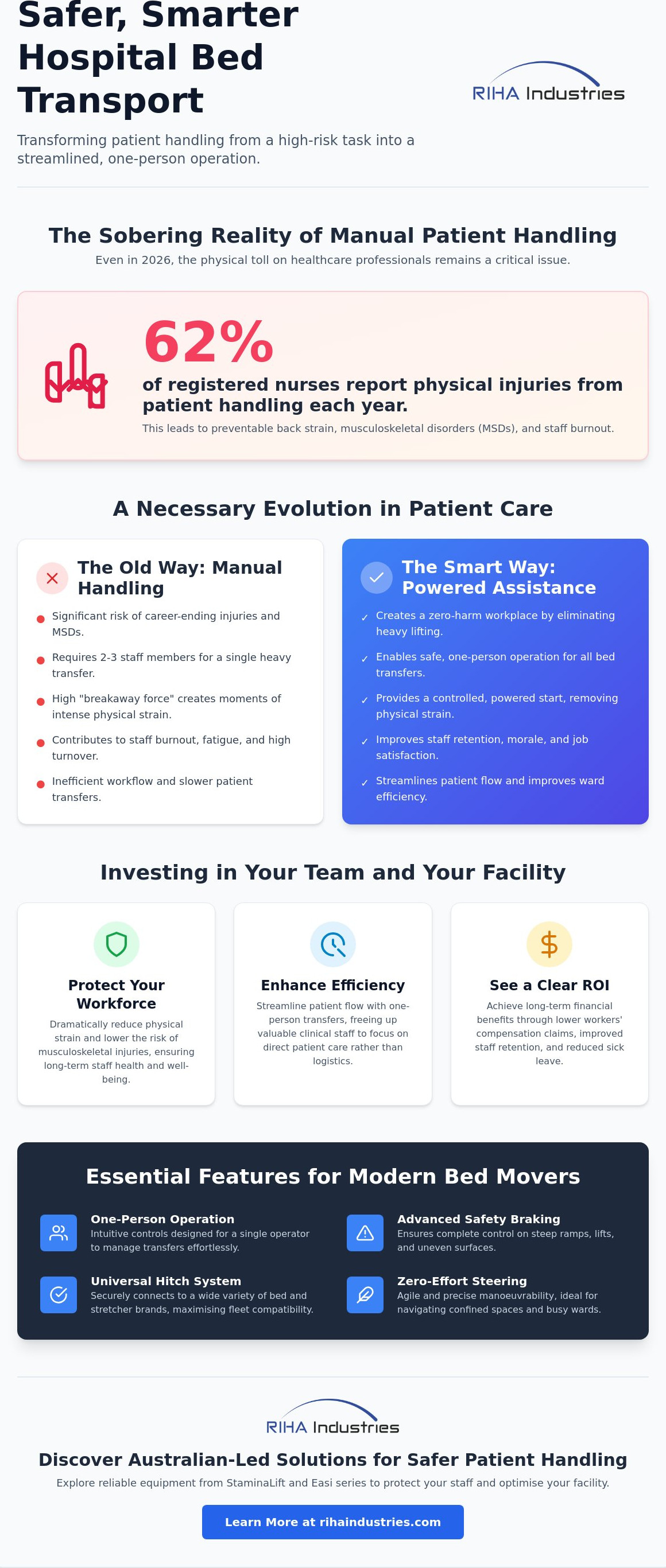
Did you know that in 2026, 62% of registered nurses still report physical injuries from patient handling tasks every single year? It's a sobering reality for facility managers who watch their best staff sidelined by preventable back strain and musculoskeletal disorders. You likely recognise that manual pushing isn't just exhausting; it's a significant risk to your operational budget and your team's long-term health. Implementing the right hospital bed handling equipment is no longer a luxury but a clinical necessity to prevent burnout and ensure patient flow remains fluid.
This guide explains how advanced movers and transport systems transform these intense physical burdens into a streamlined, one-person operation that protects your workforce. By investing in the right technology, you can achieve a zero-harm workplace while significantly improving transfer times across your facility. We will examine the latest 2026 international safety standards, the ergonomic benefits of powered transport systems, and how to select reliable equipment that integrates seamlessly with your current fleet of beds and stretchers.
Table of Contents
The Critical Role of Powered Bed Handling Equipment in Modern Healthcare
Essential Categories of Hospital Bed Movers and Handling Systems
Key Features to Prioritise When Selecting Bed Transport Solutions
Reducing Workplace Injuries: The ROI of Mechanical Handling Systems
Implementing RIHA Industries Solutions: From StaminaLift to Easi Tugs
The Critical Role of Powered Bed Handling Equipment in Modern Healthcare
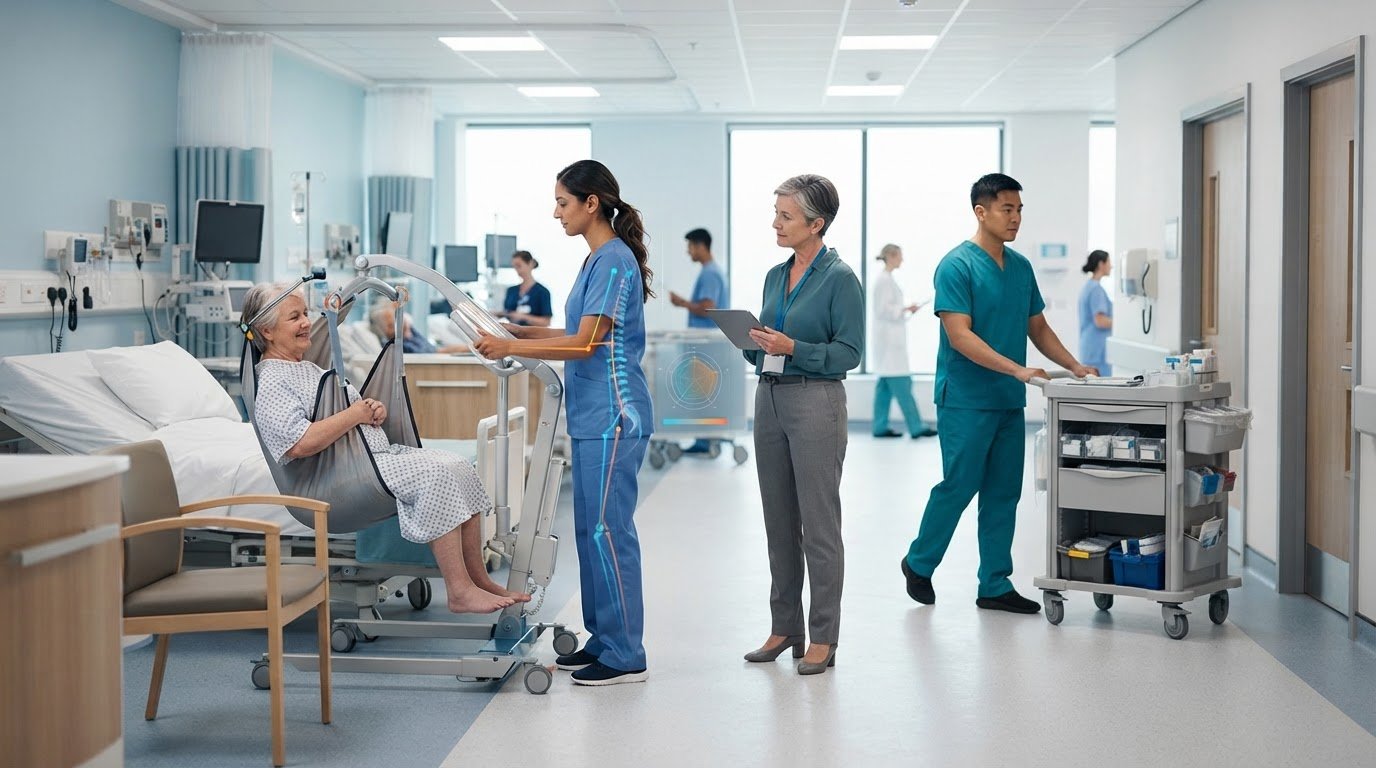
Hospital bed handling equipment encompasses specialised motorised systems specifically engineered to transport occupied beds and stretchers with precision and ease. As we move through 2026, the healthcare sector is witnessing a decisive shift from manual pushing to universal powered assistance. This transition is driven by a commitment to clinical safety and a recognition that the physical demands of traditional porting are no longer sustainable for a modern workforce. While modern hospital bed features have improved patient comfort, the sheer weight of these units, especially when accommodating bariatric patients, places immense strain on staff.
In the Australian context, Work Health and Safety (WHS) regulations place a heavy emphasis on minimising manual handling risks. There is a direct, documented correlation between moving heavy loads and the development of musculoskeletal disorders (MSDs) among nurses and porters. When a single staff member attempts to steer a bed weighing several hundred kilograms, the risk of a career-ending injury is high. Motorised handling solutions mitigate this risk by taking on the mechanical burden, ensuring that the staff member's role is one of guidance rather than brute force.
The Evolution of Patient Transport Safety
Historically, moving a patient required a coordinated effort from multiple staff members to overcome the initial resistance of the bed. This "breakaway force" is the moment of greatest risk, as it requires a sudden, intense physical exertion to get the wheels turning. Modern hospital bed handling equipment eliminates this danger by providing a controlled, powered start. This evolution allows a single operator to manage transfers that previously required two or three people, significantly improving ward efficiency. This is particularly vital in high-risk zones such as steep ramps, service lifts, and long stretches of carpeted corridors where friction and gravity work against the porter. By providing consistent torque, these systems ensure that movement remains steady and predictable, regardless of the floor surface or incline.
Addressing the Nursing and Portering Crisis
The current global healthcare environment is defined by chronic staff shortages and high levels of burnout. Providing ergonomic tools is a powerful strategy for improving staff retention and overall well-being. When porters and nurses feel protected by their equipment, their job satisfaction increases and their physical fatigue decreases. We aim for a zero-effort operation where the technology does the heavy lifting, allowing clinicians to focus on patient care rather than their own physical strain. This psychological sense of security is invaluable; it transforms a high-stress, physically taxing task into a manageable, routine part of the day. Reliability in your transport fleet sends a clear message to your team that their health is a priority, not an afterthought.
Essential Categories of Hospital Bed Movers and Handling Systems
Selecting the right hospital bed handling equipment requires a clear understanding of your facility's unique layout and patient profile. While acute hospitals often manage high-volume bariatric transfers, aged care centres might prioritise navigating narrow hallways and shared rooms. Modern systems are typically categorised into dedicated bed movers, high-capacity transfer systems, and versatile electric tugs. A critical advancement in this field is the "universal hitch" concept. This engineering feat allows a single mover to connect securely with various bed brands, eliminating the need for a fragmented fleet. Choosing between a walk-behind unit for short ward trips or a ride-on configuration for long corridor stretches can significantly mitigate the high cost of workplace injuries associated with physical fatigue.
Powered Bed Movers for Ward Transfers
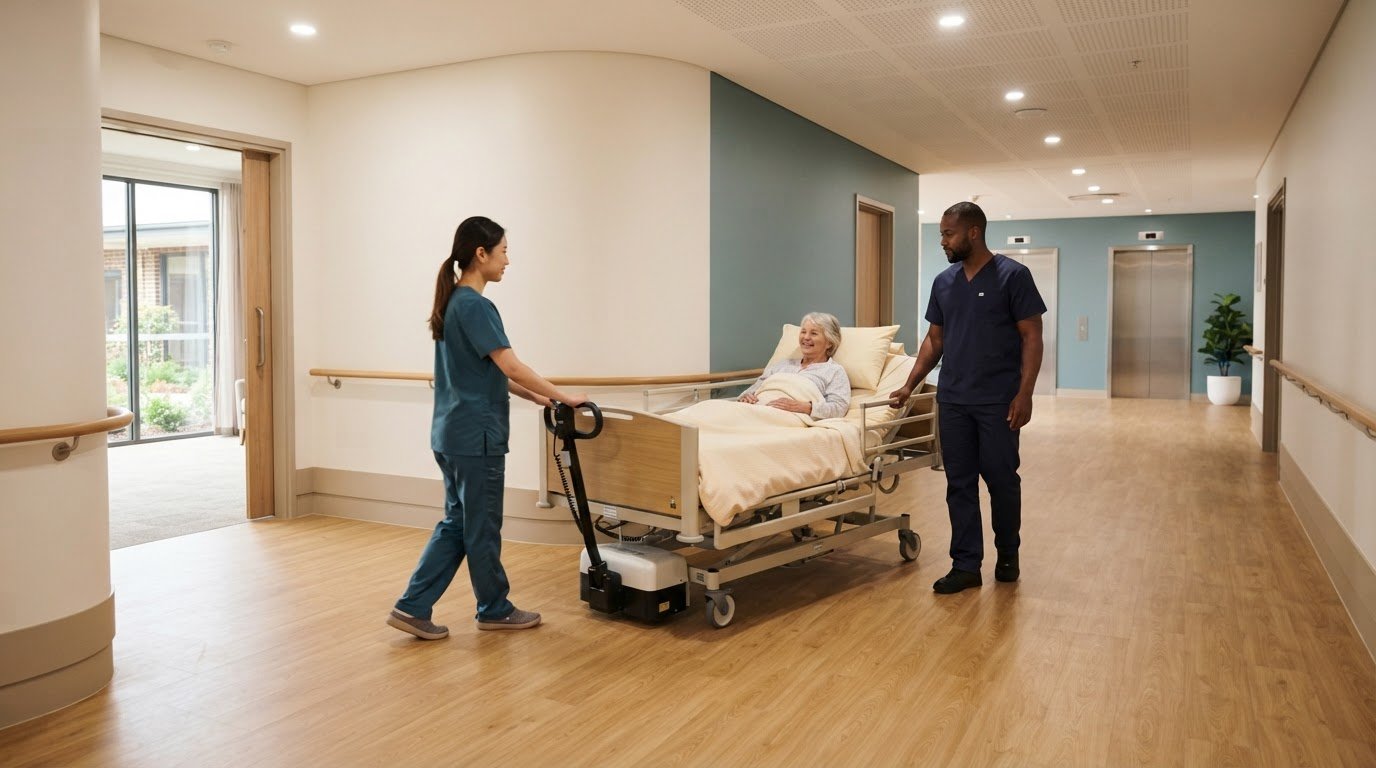
The StaminaLift 2100 Bed Mover is designed specifically for agility in confined spaces. Its primary advantage lies in the sophisticated jaw mechanism that secures the bed frame without requiring any manual lifting or awkward bending from the operator. Once attached, the mover and bed function as a single, cohesive entity that is easy to steer and stop. This setup is ideal for routine ward transfers where precision is more important than raw speed. If you're looking to optimise your facility's safety profile, starting with these compact units often provides the quickest return on staff well-being.
Heavy-Duty Patient Transfer Systems
For acute settings and bariatric care, high-capacity solutions like the StaminaLift Transfer System 5000 are indispensable. These systems provide the 360-degree manoeuvrability required in the high-pressure environment of an emergency department, where every second counts and space is at a premium. They are built to handle significant weight with zero-effort steering, ensuring that even the heaviest loads don't compromise staff safety. For a deeper look at technical specifications and hospital requirements, refer to our StaminaLift Transfer System 5000 buying guide.
Electric Tugs for General Hospital Logistics
Facility efficiency extends beyond patient beds to the heavy loads moved by porters and cleaning staff every day. Tugs like the Easi Rider and Easi Mover play a vital role in transporting linen trolleys, waste bins, and bulky medical machinery. These multi-purpose tools ensure that the same ergonomic protection afforded to clinical staff is extended to the entire logistics team, creating a safer environment across the whole facility. This versatility allows facility managers to streamline their fleet, using a single reliable tug for multiple departments to reduce overall operational costs.
Key Features to Prioritise When Selecting Bed Transport Solutions
While patient comfort remains a fundamental design element for bed manufacturers, the operational success of a facility depends heavily on the interface between the staff and their hospital bed handling equipment. In 2026, the benchmark for excellence is a "one-person operation" model. This approach directly addresses current staffing shortages by ensuring that a single porter or nurse can safely transport an occupied bed without waiting for a second or third person to assist. Beyond labour efficiency, the technical specifications of your transport solution must include robust, regenerative braking systems. These are non-negotiable for maintaining control on steep ramps and ensuring that emergency stops are handled with clinical precision, even when moving heavy bariatric loads.
Universal compatibility is another essential factor for modern facility management. Your chosen system should work seamlessly with major manufacturers like Hillrom and Stryker to avoid the logistical headache of maintaining multiple proprietary movers. We also suggest evaluating the battery technology and charging cycles. Systems that support "opportunity charging" allow staff to top up the power during brief periods of downtime. This ensures the equipment is ready for 24/7 hospital operations without the risk of a flat battery mid-transit. Aligning your procurement with OSHA guidelines on safe patient handling ensures that these technical features translate into measurable safety outcomes for your team.
Ergonomics and Operator Control
Effective equipment should feel like a natural extension of the operator. Look for intuitive joystick controls that require minimal training; this is vital for maintaining safety standards when using casual or agency staff. Adjustable handle heights are equally important, as they prevent the repetitive wrist and shoulder strain that often leads to long-term injury. We also recommend prioritising "automatic engagement" features. These systems reduce the time and physical effort required to hitch the equipment to the bed. This allows the operator to focus on the patient's well-being rather than struggling with mechanical alignment in a busy corridor.
Manoeuvrability in Confined Spaces
Hospital environments are notoriously tight, particularly within service lifts and older patient rooms. A zero-turn radius is a critical feature that allows a single operator to pivot a heavy bed in place. This makes it easier to navigate around medical carts and monitoring gear without multiple shunts. When the mover is not in use, a compact footprint is essential for keeping corridors clear and compliant with fire safety regulations. Precision positioning is also a key requirement during diagnostic transfers. Moving a patient into a specific spot for an MRI or X-ray requires delicate, controlled movements that manual pushing simply cannot replicate with the same level of accuracy.
Reducing Workplace Injuries: The ROI of Mechanical Handling Systems
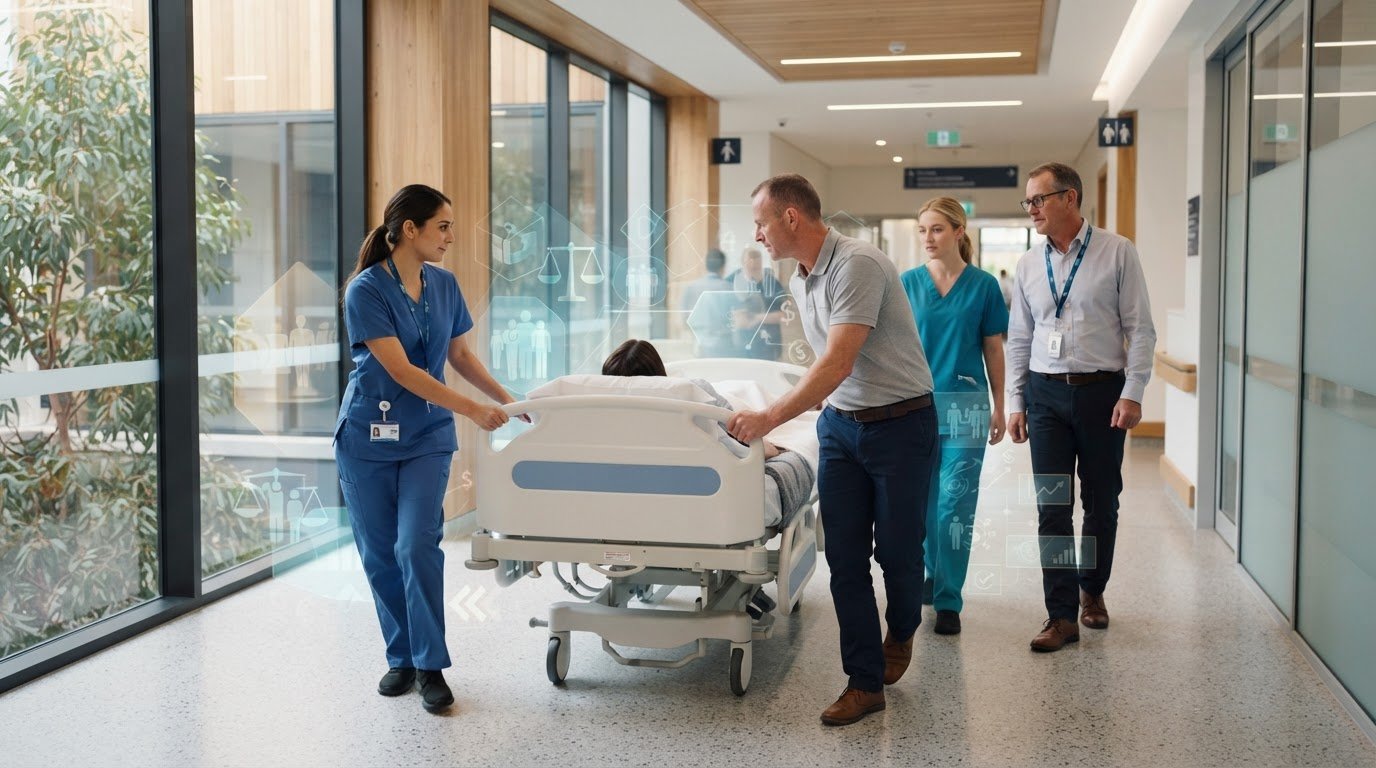
Investing in hospital bed handling equipment is a strategic financial decision that extends far beyond the initial procurement phase. While the capital outlay is a primary consideration for facility managers, the return on investment (ROI) is realised through the systematic reduction of both direct and indirect expenses. Direct costs, such as rising insurance premiums and medical payouts for WorkCover claims, represent only the visible portion of the financial burden. Beneath the surface lie the indirect costs: staff absenteeism, the high price of hiring agency nurses to cover "lost time" shifts, and the substantial retraining required when experienced staff leave the profession due to physical burnout. To calculate your facility's potential savings over a five-year equipment lifecycle, we recommend evaluating the following checklist:
Current annual expenditure on manual handling injury claims and insurance premiums.
Cost of temporary agency staff required to cover injury-related leave.
Recruitment and training expenses for new porters or clinical staff due to high turnover.
Productivity gains achieved by reducing the number of staff required for each patient transfer.
The Financial Impact of Musculoskeletal Disorders
Back injuries and other musculoskeletal disorders (MSDs) remain the leading cause of "lost time" within the Australian healthcare sector. The physical toll of manual pushing and pulling often leads to chronic conditions that force talented clinicians out of the workforce prematurely. It's helpful to contrast the one-time cost of a bed mover with the recurring, compounding cost of a single major injury claim. High-capacity equipment like the StaminaLift 6000 is engineered to eliminate the physical strain entirely, effectively paying for itself by preventing the very injuries that drain hospital budgets. Protecting your staff isn't just an ethical priority; it's a fundamental requirement for maintaining a stable, cost-effective workforce.
Improving Patient Flow and Throughput
Operational efficiency is directly linked to how quickly and safely patients can be moved between departments. Powered movers facilitate a "Single Minute Exchange of Bed" (SMEB) approach, where transfers are handled with the precision and speed of a lean logistics operation. This increased speed is vital for clearing "bed block" in emergency departments, ensuring that patients are admitted to wards without unnecessary delays. For bariatric patients, this technology also preserves dignity by providing a smooth, controlled transit that doesn't require a large team of staff to manage. If you are managing a residential facility, our aged care transport guide offers specific strategies for integrating these efficiencies into long-term care environments. To understand how these systems can be integrated into your specific clinical workflow, you can request a facility safety audit from our specialist team.
Implementing RIHA Industries Solutions: From StaminaLift to Easi Tugs
RIHA Industries stands as the Australian leader in specialised patient transfer technology, providing a stable partnership for facilities dedicated to world-class safety. We recognise that a hospital's operational success relies on the seamless movement of both patients and essential supplies. Our hospital bed handling equipment is engineered to bridge the gap between mechanical capability and human impact. While the StaminaLift range, including the 2100 Bed Mover and the 5000 and 6000 Transfer Systems, is purpose-built for bed-specific tasks, our Easi series provides the versatility required for general porting. This dual approach ensures that every physical burden within your facility, from bariatric bed transfers to heavy linen logistics, is managed with zero-effort technology.
Reliability is the cornerstone of our service model. Equipment that sits idle due to mechanical failure is a liability to staff safety and ward flow. We prioritise 100% equipment uptime through our dedicated Preventative Maintenance and Repairs programme. By choosing a local partner, you gain access to a support network that understands the high-stakes nature of the Australian healthcare sector. Our team works alongside your facility managers to ensure that every unit in your fleet remains compliant with the latest safety standards and operates at peak performance throughout its entire lifecycle.
Customised Support and Maintenance
Our commitment to your facility extends far beyond the initial delivery. We offer customised service contracts that include regular inspections and rapid repair services to mitigate the risk of unexpected downtime. These proactive checks are essential for maintaining OHS compliance and extending the functional life of your investment. Because we provide Australian-based support, your technical teams can rely on clear communication and the fast dispatch of parts or service technicians. This local presence eliminates the delays often associated with international vendors, ensuring your porters and nurses are never left without the protection they deserve.
Taking the Next Step Toward a Safer Facility
Improving your facility's safety profile begins with a clear assessment of your current challenges. We encourage facility managers to examine their recent injury rates and identify the specific bottlenecks affecting patient throughput. Whether you are managing an acute hospital or an aged care centre, we provide a structured pathway for implementing change. This process often begins with a facility-wide safety audit or a hands-on equipment trial, allowing your staff to experience the physical relief and empowerment our systems provide. When you are ready to transition to a zero-harm workplace, our specialists are available to design a tailored solution that fits your specific ward layouts and fleet requirements.
Securing the Future of Your Clinical Workforce
The shift toward motorised systems is no longer just a trend; it's a fundamental requirement for any facility aiming to meet 2026 safety benchmarks. By prioritising one-person operation and universal compatibility, you don't just reduce the risk of career-ending injuries; you also unlock significant operational efficiencies that keep your wards moving. Implementing the right hospital bed handling equipment ensures that your nurses and porters can perform their duties with confidence, knowing their physical health is protected by world-class engineering.
RIHA Industries is proud to provide proprietary StaminaLift technology that is designed and manufactured in Australia specifically for these high-stakes environments. Our commitment to your facility includes comprehensive preventative maintenance and repair services to guarantee that your equipment remains a reliable asset for years to come. We invite you to explore RIHA Industries’ full range of hospital bed movers and discover how our solutions can transform your daily operations. Together, we can build a safer, more resilient healthcare environment for your entire team.
Frequently Asked Questions
What is hospital bed handling equipment?
Hospital bed handling equipment consists of specialised motorised units that attach to patient beds to facilitate effortless transport throughout a facility. These systems are engineered to replace the physical exertion of manual pushing with controlled, battery-powered movement. By using these tools, hospitals can ensure that occupied beds are moved with precision, reducing the risk of collisions and protecting the clinical team from the cumulative strain of heavy lifting.
How does a powered bed mover reduce staff injuries?
A powered bed mover reduces staff injuries by assuming the mechanical burden of the "breakaway force" required to start a heavy bed moving. It also provides motorised braking and steering, which prevents the sudden physical corrections that often lead to back and shoulder strain. By eliminating the need for brute force, these systems significantly lower the incidence of musculoskeletal disorders and work-related injury claims among porters and nursing staff.
Are StaminaLift movers compatible with all hospital bed brands?
StaminaLift movers are designed with universal compatibility in mind, featuring a sophisticated jaw mechanism that secures to almost any bed frame. This includes major international brands like Hillrom and Stryker, as well as various specialised bariatric units. This flexibility allows facility managers to operate a standardised fleet of hospital bed handling equipment across different wards without needing proprietary movers for every specific bed type in their inventory.
Can one person operate a motorised bed mover safely?
One person can operate a motorised bed mover with complete safety, even when transporting bariatric patients or navigating steep ramps. The equipment is specifically engineered for single-operator use, featuring intuitive controls and advanced braking systems that provide total control over the load. This efficiency allows facilities to manage patient flow effectively during peak periods without waiting for multiple staff members to become available for a single transfer.
What is the difference between a bed mover and an electric tug?
The primary difference lies in the specific load they are designed to transport. A bed mover, such as the StaminaLift 2100, is specialised for patient beds and stretchers, often featuring a hitching system that connects directly to the bed frame. Conversely, an electric tug like the Easi Mover is a versatile tool used for general facility logistics, including moving heavy linen trolleys, waste bins, and bulky medical machinery throughout the hospital.
How often does hospital bed handling equipment require maintenance?
Hospital bed handling equipment typically requires periodic preventative maintenance to ensure optimal performance and 100% uptime. We recommend regular inspections to check battery health, braking systems, and the integrity of the hitching mechanism. Adhering to a structured service schedule not only ensures OHS compliance but also extends the operational life of the equipment, preventing the high costs associated with emergency repairs or unexpected failures during critical patient transfers.
Does using a bed mover improve patient safety during transport?
Using a bed mover significantly enhances patient safety by providing a smooth, vibration-free transit that manual pushing cannot replicate. The motorised control prevents the jerky starts and stops that can cause discomfort or distress to a patient, particularly those recovering from surgery. Additionally, the precise steering reduces the risk of the bed hitting walls or doorframes, ensuring a dignified and secure journey between clinical departments.
What training is required to use the StaminaLift system?
The StaminaLift system is designed for ease of use, requiring only a brief induction for staff to become proficient. The intuitive joystick controls and automatic engagement features are straightforward; this means even casual or agency staff can operate the units safely after a short training session. This user-friendly design reduces the administrative burden of staff training while ensuring that safety standards remain high across the entire facility.