Hospital Bed Mover vs Electric Tug: Which Is Right for Your Hospital?
A heavy-duty electric tug isn’t automatically the right choice for moving hospital beds. In the hospital bed mover vs electric tug decision, the key difference is the load and connection: a bed mover attaches to a compatible bed or patient-transfer device to support controlled manoeuvring, while a tug is designed for broader equipment loads such as linen and meal trolleys.
It’s understandable to want one solution that reduces staff effort across the facility. But beds, stretchers and trolley loads behave differently on tight routes, through doorways and around busy clinical spaces. Match the equipment to the load, connection and route to help staff move it with greater control and less physical effort.
This comparison explains how each machine works, the loads it’s suited to and the practical factors to weigh before purchasing. Bed compatibility, capacity, manoeuvrability and everyday workflow all shape the decision. You’ll also see where a dedicated bed mover such as StaminaLift fits and when an Easi tug is better suited to general equipment. The aim is a clear framework for matching equipment to your facility’s transport tasks.
Table of Contents
Hospital bed mover vs electric tug: what is the difference?
A hospital bed mover is powered equipment designed to connect with a bed or compatible patient-transfer equipment and assist its movement. An electric tug is designed to pull compatible trolleys and other heavy loads. Both reduce the effort involved in moving equipment, but they connect to different loads and serve distinct tasks. Similar motorised movement doesn’t make them interchangeable.
The practical distinction is the connection. A bed mover attaches to a compatible bed or transfer device, while a tug uses a suitable hitch to pull a load. In a hospital, where routes can pass through patient rooms, corridors and lifts, the connection affects how staff guide the equipment and negotiate turns.
What does a hospital bed mover do?
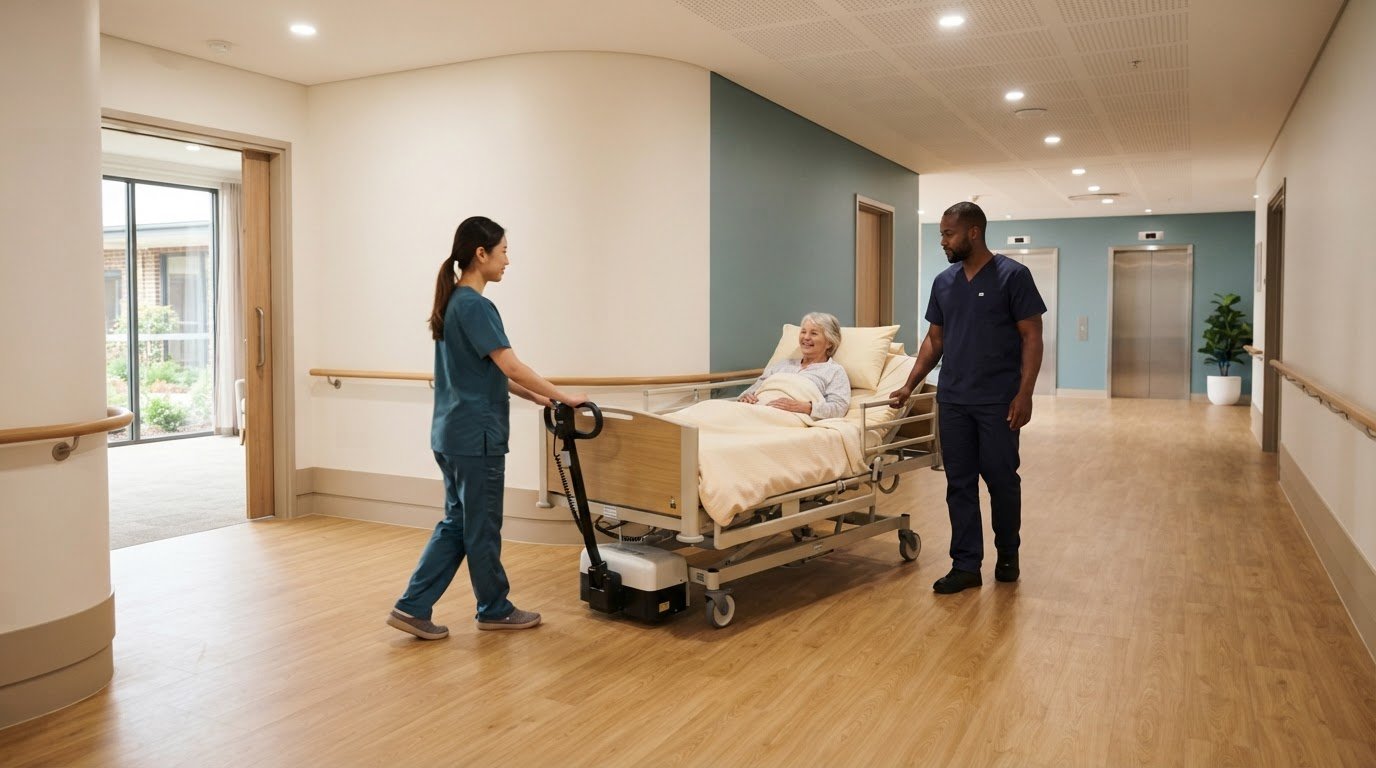
A powered bed mover attaches to a compatible bed and assists staff with moving and steering it. Its powered connection helps control the bed’s movement instead of relying on staff to push from the head or foot. StaminaLift systems are designed for single-person operation, with patented attachment mechanisms that connect to compatible beds and patient-transfer equipment.
This can be useful in clinical spaces where doorways, furniture and tight turns leave little room to manoeuvre. StaminaLift is designed to turn through 360 degrees, which can help operators navigate confined spaces. A bed mover may also work with stretchers or other patient-transfer equipment when the attachment and equipment are compatible. A familiar-looking frame or set of castors isn’t enough to establish suitability. The connection must be designed for the load and intended movement.
What does an electric tug move?
An electric tug pulls compatible equipment through a hitch or other connection point. In a healthcare facility, typical loads include linen trolleys, meal trolleys and medical-equipment carts. RIHA’s Easi Rider and Easi Mover tugs are designed to move equipment loads up to 1,500 kg, making them suited to facilities that regularly transport heavier equipment. For operations that extend beyond corridor transport into loading bays or bulk distribution stores, nortruckforklifts.com provides sales and advisory support for forklifts and heavy lifting equipment.
Hitch choice and frame compatibility determine which loads a tug can move. A trolley needs a connection point that works with the tug, and the combined load and route must suit the equipment’s design. A tug may move several compatible loads in sequence, but that doesn’t make it a bed mover. It is intended for equipment transport, not patient transport, unless a specific configuration is designed for that purpose.
So, in the hospital bed mover vs electric tug decision, begin with the object being moved and how the machine connects to it. For routine bed transfers, a bed-specific mover is designed around the bed and its manoeuvring needs. For linen, meal or medical-equipment trolleys, a tug may be the more suitable category. Some facilities handle both kinds of work, which may call for distinct equipment matched to each task rather than one machine expected to do everything.
How bed movers and electric tugs differ in operation and capability
Connection, controls and capacity ratings all affect how a machine performs on a hospital route. A bed mover works in direct relation to a compatible bed or transfer device; a tug pulls a load through a hitch. That difference shapes steering and manoeuvring, so compare equipment against the task rather than relying on a single capacity figure.
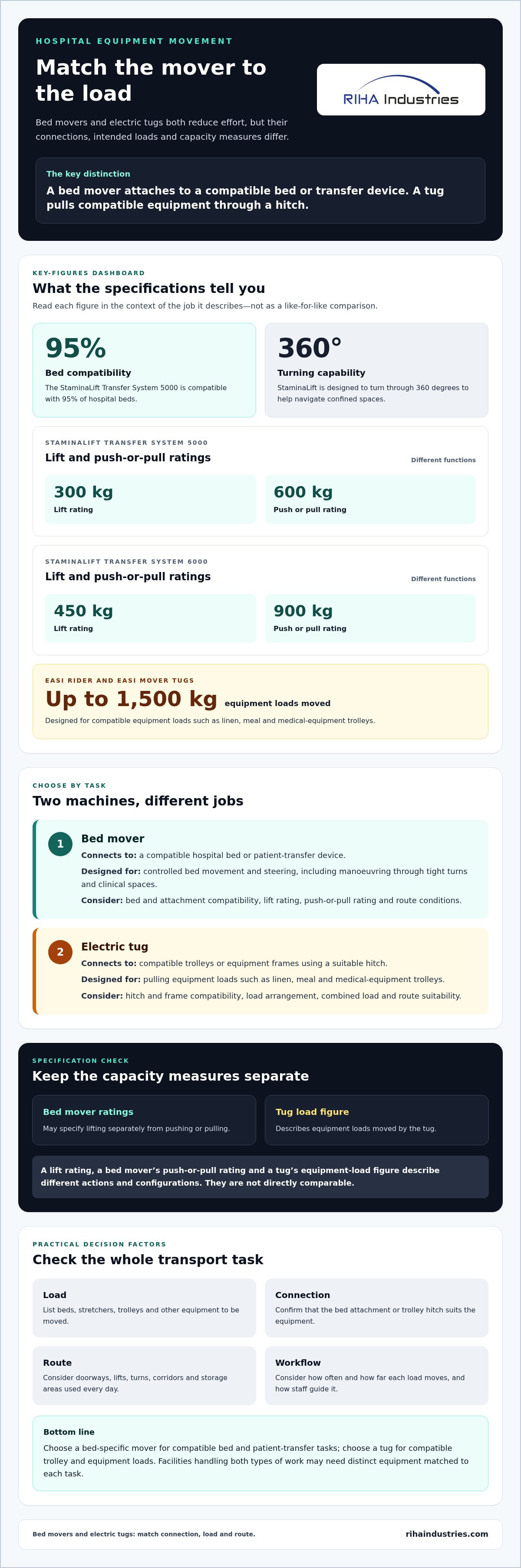
In the hospital bed mover vs electric tug comparison, capacity figures across different machine types are not directly comparable because they describe different actions and load configurations.
Attachment systems, compatibility and load ratings
StaminaLift uses patented attachment options to connect with compatible beds and patient-transfer equipment. The StaminaLift Transfer System 5000 is compatible with 95% of hospital beds. A secure, suitable connection is central to controlled movement. Easi tugs use hitch options suited to compatible trolley frames and load configurations, so the attachment point and the way the load is arranged matter.
Keep the ratings distinct: the StaminaLift Transfer System 5000 is rated for a 300 kg lift and 600 kg push or pull; the Transfer System 6000 is rated for a 450 kg lift and 900 kg push or pull. Easi Rider and Easi Mover tugs are designed to move equipment loads up to 1,500 kg. A lift rating describes a different function from a tug’s equipment-load figure, and neither should be treated as a like-for-like measure.
Controls, safety and manoeuvrability in hospital spaces
Bed movers commonly use joystick controls to guide a connected bed, while tug controls operate the powered unit as it pulls a load. StaminaLift and Easi equipment includes safety and manoeuvrability features for healthcare settings, such as automatic braking when the joystick is released on StaminaLift systems. Operators should be familiar with the controls and intended use of the specific machine.
Route conditions can change what feels manageable. A wide corridor may allow a trolley train to turn easily, while a tight patient-room entrance or lift can favour equipment designed for controlled steering. Check clearances, turning space, thresholds and ramps on the actual route. OSHA’s Safe Patient Handling and Mobility guidance also discusses assistive equipment as part of safer patient handling.
Reviewing RIHA’s bed movers and electric tugs can help relate these operating differences to the equipment used in your facility.
Which option suits beds, trolleys and mixed hospital loads?
The right choice depends on the work staff repeat, not simply on which machine can move the heaviest load. Start by separating patient-transfer tasks from general equipment transport, then consider how often each occurs and the routes involved. A bed mover may be the stronger fit for frequent bed transfers, while a tug may better suit recurring trolley runs. Facilities with both workflows can match each task to its own equipment type.
When a hospital bed mover is the better fit
Consider a bed mover where staff regularly reposition or transfer beds and pushing them manually creates recurring physical effort. Its bed-specific connection is designed to support controlled movement, which can help on routes involving room entrances, corridor turns and lifts. Compatible patient-transfer equipment may also suit the workflow when the correct connection is available.
Bed compatibility matters across a mixed fleet. Review the bed models in regular use, their connection points and any transfer equipment staff need to move. The StaminaLift Transfer System 5000 is compatible with 95% of hospital beds, but checking your fleet’s models and connections helps establish the fit for your facility. For a broader procurement framework, the hospital bed mover procurement guide explores considerations such as fit and operational needs.
When an electric tug is the better fit
A tug is worth considering when staff repeatedly move compatible linen, meal, stores or medical-equipment trolleys. Map the common trips: a regular run between stores and a ward, for example, has different demands from short movements within one department. Account for the loaded trolley, hitch and frame fit, distance, turns and where the operator can walk or position themselves safely.
Route conditions shape suitability, too. A long, open route may accommodate a trolley load differently from a congested corridor or a tight lift entrance. Consider whether trolleys travel individually or as a connected group, and how staff manage stopping, turning and parking at the destination. Porter teams balancing several transport duties may find the hospital porter equipment guide useful context for reviewing equipment and workflow together.
For a mixed hospital workload, list tasks separately rather than forcing every movement into one category. Bed transfers, stretcher movements and trolley deliveries may happen on overlapping routes, but they don’t necessarily call for the same connection or control. Note the frequency, distance, load and pinch points for each task, then compare the equipment against those practical demands.
Frequent bed transfers: assess a bed mover against the bed fleet and patient-transfer equipment used.
Regular trolley transport: assess a tug against hitch fit, load configuration and the route.
Both types of work: consider distinct equipment for each workflow where one machine cannot serve both safely and effectively.
There’s no universal winner in the hospital bed mover vs electric tug decision. The best fit is the equipment that addresses the facility’s recurring transport tasks, supports staff movement and can operate appropriately on the routes they use every day. For facility managers who also oversee heavier warehouse or yard logistics, equipment dealers such as United Lift LLC offer practical buyer guides when selecting broader material handling equipment.
How to compare bed movers and tugs for your facility
Choose by load and task, not machine label. A practical assessment starts with the movements staff perform each day, then checks whether equipment, routes and workforce needs align. This makes the hospital bed mover vs electric tug decision more specific than comparing product descriptions alone.
Build a task inventory. List beds, stretchers, trolleys and other equipment that staff move. Record how often each task occurs, approximate load weights and movement distances. Note where staff experience physical effort or delays, and separate patient-transfer tasks from general equipment runs.
Map the routes. Trace the usual journeys from pick-up to destination, including corridors, tight corners, lift entrances, gradients and thresholds. Record lift dimensions and any floor-protection requirements. A route that works for a single bed may not suit a loaded trolley or a train of equipment. The manual-handling equipment selection criteria can complement this facility-level review.
Check load and connection compatibility. Match the equipment category to each job: bed movers connect with compatible beds and transfer equipment, while tugs use suitable hitches with compatible trolley frames. Compare the actual load configuration with the relevant machine rating, keeping lift, push-or-pull and towing figures distinct. Include the variety of models in the facility’s existing bed or trolley fleet, not just the most common unit.
Consider operators and training. Identify who performs routine movements, how many staff are involved and whether the controls suit the work. Plan safe-use instruction for the specific equipment and tasks, including connecting loads, manoeuvring through confined areas and stopping or parking. Staff who move equipment across several departments may encounter different routes and load configurations, so account for that variation.
Plan for ongoing support and review. Include preventative maintenance, repairs, service access and parts support in lifecycle planning. Before implementation, decide how the facility will assess operational outcomes using its own records. For example, track task frequency, movement times, staff feedback, equipment downtime and reported handling concerns, then review whether the selected solution fits actual use. This supports a grounded evaluation without assuming a particular saving or result.
Use the findings to rank tasks by frequency, physical demand and route complexity. If bed transfers and trolley transport both feature heavily, assess each workflow separately rather than expecting one machine category to cover every job. RIHA’s Australian-made StaminaLift bed movers and Easi electric tugs serve distinct transport needs, with preventative maintenance and repair support for equipment lifecycle planning.
Explore RIHA’s transport equipment and support as you shape your facility assessment.
RIHA Industries solutions: choosing between StaminaLift and Easi
Once you’ve identified which loads and routes drive your facility’s transport needs, RIHA Industries’ two equipment categories make the distinction clear: StaminaLift bed movers connect with compatible beds and patient-transfer equipment, while Easi electric tugs move compatible trolley and equipment loads. They address different workflows, so selection starts with the transport task rather than treating the machines as substitutes.
StaminaLift bed movers for bed-transfer workflows
The StaminaLift Transfer System 5000 is RIHA’s flagship bed-mover option and is compatible with 95% of hospital beds. Its ratings are 300 kg for lifting and 600 kg for pushing or pulling, so match each figure to the specific movement required. Facilities assessing bed fleets should consider connection requirements as well as the frequency and route of transfers.
For bariatric and acute-care applications, the StaminaLift Transfer System 6000 is rated for a 450 kg lift and 900 kg push or pull. These are separate operating ratings, not a single combined capacity. Compare them with the task and transfer equipment in your workflow. The StaminaLift 5000 definitive buying guide provides further product-specific detail for hospital procurement planning.
Easi tugs for compatible equipment transport
Easi Rider and Easi Mover are designed for general equipment transport, including compatible linen, meal and medical-equipment trolleys. They’re intended for equipment loads up to 1,500 kg. Hitch and trolley-frame compatibility remain central to selecting a suitable configuration, as does the route staff will travel with the load.
The operating format distinguishes the two options: Easi Rider is a ride-on tug, while Easi Mover is walk-behind. Consider how each format fits the facility’s routes, operator positioning and transport routines. For example, a porter team moving loaded trolleys between departments can assess whether the ride-on or walk-behind arrangement better suits the journeys and working conditions involved.
RIHA designs and manufactures its equipment in Australia and provides national service coverage, preventative maintenance and repairs. These are useful procurement considerations alongside equipment fit: planned maintenance and repair support form part of the longer-term operational picture. They don’t replace checks of load, hitch, compatibility and route, but they help facilities plan support across the equipment lifecycle.
The hospital bed mover vs electric tug decision becomes clearer when the two workflows are considered separately: StaminaLift for compatible bed-transfer tasks, and Easi for compatible general equipment loads. To discuss your facility’s transport needs and the relevant RIHA equipment categories, get in touch with RIHA Industries.
Turn your transport assessment into a confident next step
A well-matched transport solution starts with the work your teams need to get done. Use your task inventory to identify which movements create the greatest practical challenge, then bring staff experience and route conditions into the procurement conversation. This gives your facility a clear basis for deciding whether to address bed movement, equipment transport or both.
For the hospital bed mover vs electric tug decision, RIHA’s Australian-made StaminaLift bed movers and Easi tugs serve different healthcare transport tasks. National service coverage in Australia and ongoing maintenance support are also relevant considerations as you plan for equipment throughout its working life.
Take the next step with a discussion focused on your facility’s loads, routes and day-to-day priorities. Discuss your hospital’s bed-moving and equipment-transport needs with RIHA Industries, and move towards a solution that supports staff and fits your workflow.
Frequently Asked Questions
Can an electric tug move a hospital bed?
Only when the tug, hitch and bed are compatible and the configuration is designed for that use. A general-purpose tug designed to tow equipment shouldn’t be assumed to connect safely to a bed. Match the attachment and intended load to the machine’s specifications. For routine bed transport, assess a purpose-built bed mover rather than relying on equipment-towing capability alone.
Is a hospital bed mover the same as an electric tug?
No. Both provide powered assistance, but the hospital bed mover vs electric tug distinction comes down to the task each machine is designed to perform. A bed mover connects with compatible beds or patient-transfer equipment; a tug moves compatible trolleys and other equipment. Their attachments and capacity ratings describe different functions, so compare the actual load and workflow rather than assuming powered movement makes the machines interchangeable.
Can one machine move both beds and hospital trolleys?
A machine can handle more than one type of load when its model and attachment are designed for those tasks. A bed mover’s connection for a bed won’t automatically suit a trolley frame. Check the equipment, connection method, load rating and route for each job. Don’t assume a machine is suitable for a second task without an appropriate configuration.
How much weight can a hospital bed mover or electric tug move?
There’s no single capacity figure for either category. A bed mover may have separate ratings for lifting and pushing or pulling, while a tug’s rating applies to towing an equipment load. Check the specification for the exact model and configuration, then compare it with the intended load and task. Don’t treat unlike figures as equivalent, and keep the planned load within the applicable rating.
Are powered bed movers and electric tugs suitable for hospital ramps?
Suitability depends on the model’s rated gradient, the load, the surface and operating conditions. StaminaLift information gives a maximum seven-degree incline under full load for specified models. Include ramps in the route assessment, and make sure operators understand the equipment’s safe-use instructions before moving a load on an incline.
How many staff members are needed to operate a powered bed mover?
StaminaLift systems are designed for single-person operation, but the number of staff required for a task depends on patient-care needs, local procedures and the equipment configuration. The mover assists with moving the bed; it doesn’t replace clinical supervision or other staff needed to support the patient. Facilities should align operator training with their safe-work procedures and the specific transfer being performed.
What maintenance does a hospital bed mover or electric tug need?
Maintenance requirements depend on the model and its manufacturer’s guidance. As part of maintenance planning, facilities can track routine checks of batteries, controls, attachments and braking, and keep service records. These checks don’t replace model-specific instructions. RIHA provides preventative maintenance and repairs for its equipment, with national service coverage in Australia and parts support for international customers.