How Bed Movers Improve Patient Flow: The Physical Logistics of Hospital Efficiency
Updated: Sep 7
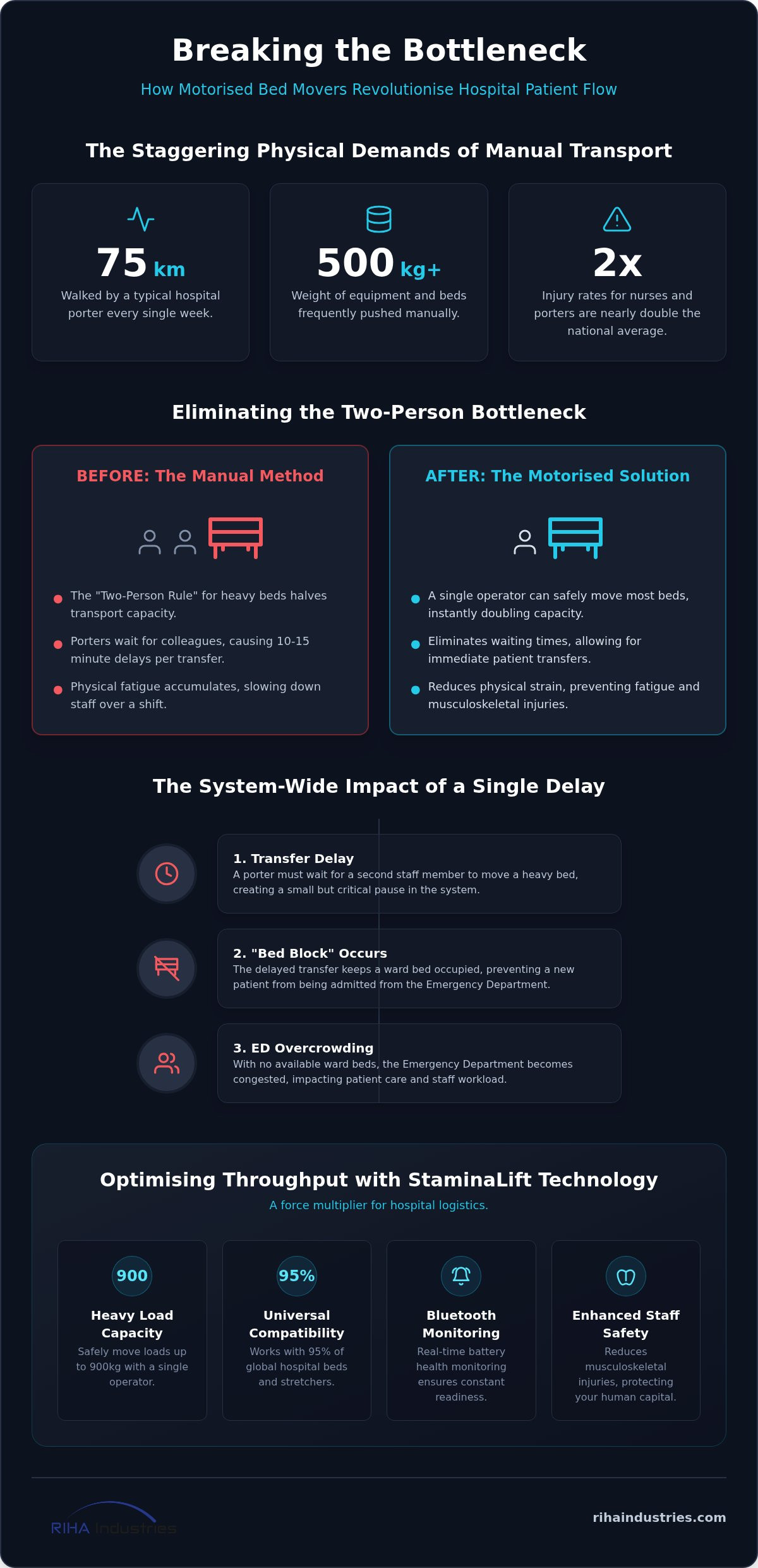
Did you know a typical hospital porter can walk up to 75 kilometres every single week while pushing equipment that frequently weighs more than 500 kilograms? This staggering physical demand is a primary driver of the bottlenecks seen in modern healthcare facilities. You're likely all too familiar with the sight of a crowded Emergency Department or the frustration of "bed block" occurring simply because a transfer is waiting for a second staff member to assist with a manual move. We understand that these delays aren't just administrative hurdles; they represent a significant physical toll on your nurses and porters, who already face injury rates nearly double the national average.
In this article, we explore how bed movers improve patient flow by removing the manual constraints that slow down ward transfers and discharge processes. You'll learn how motorised bed movers, such as the StaminaLift TS5000, empower a single operator to move heavy loads safely and efficiently, effectively eliminating the need for multi-person teams. We will examine the physical logistics of hospital throughput and show you how integrating advanced mechanical assistance can reduce transfer delays, meet current WHS safety mandates, and ultimately create a more fluid, supportive environment for both staff and patients.
Table of Contents
Defining the Link Between Physical Logistics and Patient Flow
Patient flow represents the continuous movement of patients through a healthcare facility, encompassing every stage from initial admission to final discharge. While clinical care is the heart of a hospital, the operational success of the facility relies on its logistics engine. This engine is powered by portering and nursing staff who manage the physical relocation of patients between wards, diagnostic suites, and theatres. When this engine stalls, the entire hospital feels the impact. Recognising how bed movers improve patient flow requires a shift in perspective, moving away from viewing transfers as a simple task and seeing them as a critical logistical component of hospital throughput.
Many modern facilities invest heavily in sophisticated AI-driven scheduling software to manage bed capacity. However, even the most advanced predictive analytics fail when they encounter a physical bottleneck. If a bed is clinically ready for transfer but cannot be moved because it is too heavy for a single porter or a second staff member is unavailable to assist, the software's efficiency is rendered moot. Motorised bed movers serve as the essential tool for synchronising this physical movement with clinical demand, ensuring that digital plans are actually achievable on the hospital floor. This move towards physical automation is a growing trend in complex logistics, where specialists like EdNex Automation provide advanced robotic solutions to streamline workflows across the commercial and industrial sectors.
The Anatomy of a Transfer Delay
A transfer delay often begins with the "two-person rule." When a porter arrives to move a heavy bariatric bed or a patient with complex equipment, they frequently find the load exceeds safe manual handling limits. They must then wait for a colleague to become available. These ten or fifteen-minute windows of stagnation might seem minor, but they accumulate rapidly across a 24-hour cycle. Manual handling fatigue also plays a silent role in these delays. As a shift progresses, the physical strain of pushing loads that can exceed 500kg naturally slows the pace of staff. This creates a ripple effect where a single delayed ward transfer keeps a bed occupied, preventing an Emergency Department patient from being admitted and contributing to ED overcrowding and ambulance ramping.
Physical Throughput vs Digital Capacity
There is often a disconnect between a hospital's digital capacity and its actual physical throughput. While scheduling tools may show an available bed, they don't account for the reality of navigating narrow corridors with heavy manual equipment. Physical Throughput is the rate at which patients are physically relocated to their next care point. Motorised solutions are the missing link in hospital digital transformation because they remove the physical variability of the transfer. By providing a consistent, motorised pace, equipment like the StaminaLift series ensures the logistical engine can keep pace with the hospital's clinical decision-making, transforming "available capacity" into actual patient movement.
Eliminating the Two-Person Bottleneck to Double Transport Capacity
The "Two-Person Rule" is a common safety standard in Australian hospitals, requiring two staff members to move heavy manual beds. While essential for preventing injury during manual handling, it effectively halves a facility's transport capacity. When a porter must wait for a colleague to assist with a bariatric move, both the patient and the clinical team are left in a state of limbo. This delay isn't just a scheduling issue; it's a direct drain on staffing budgets. Recognising how bed movers improve patient flow starts with addressing the logistical weight of this mandatory requirement.
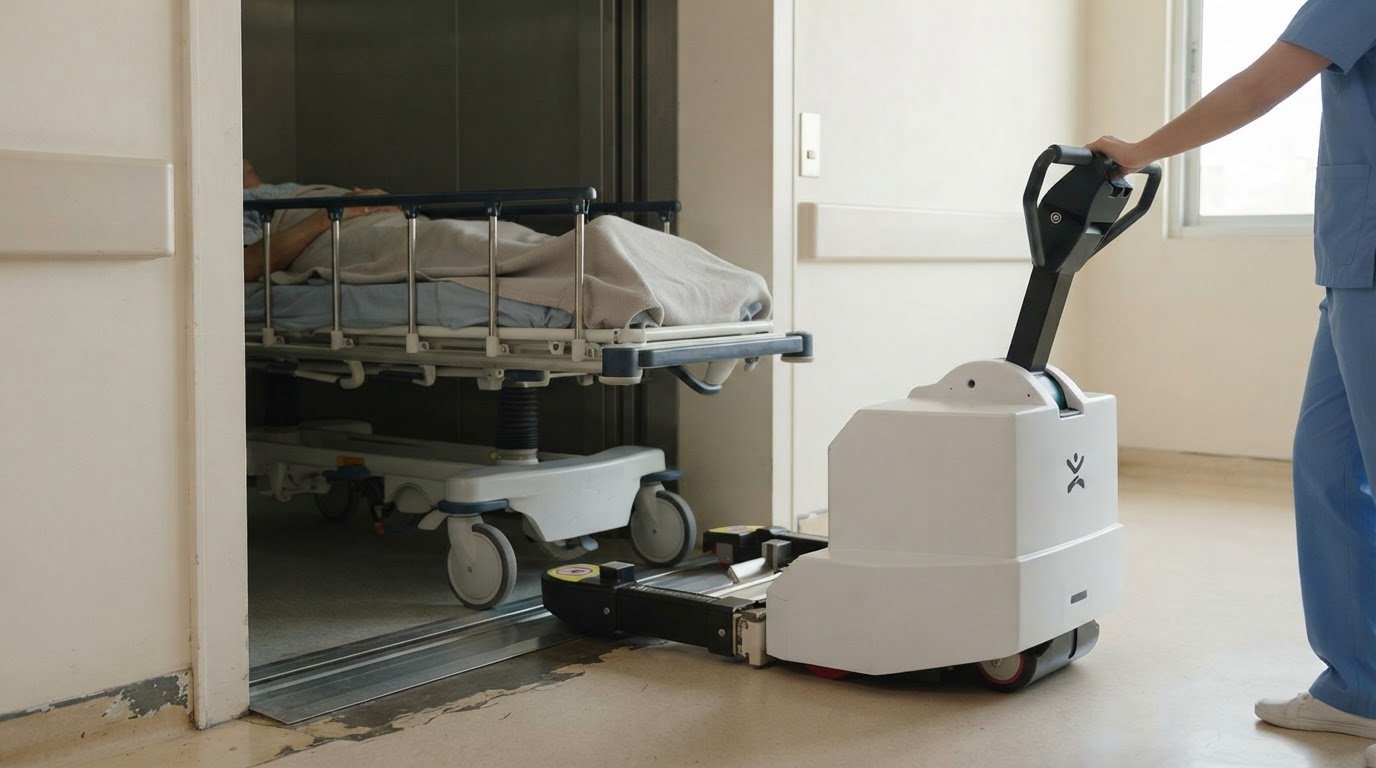
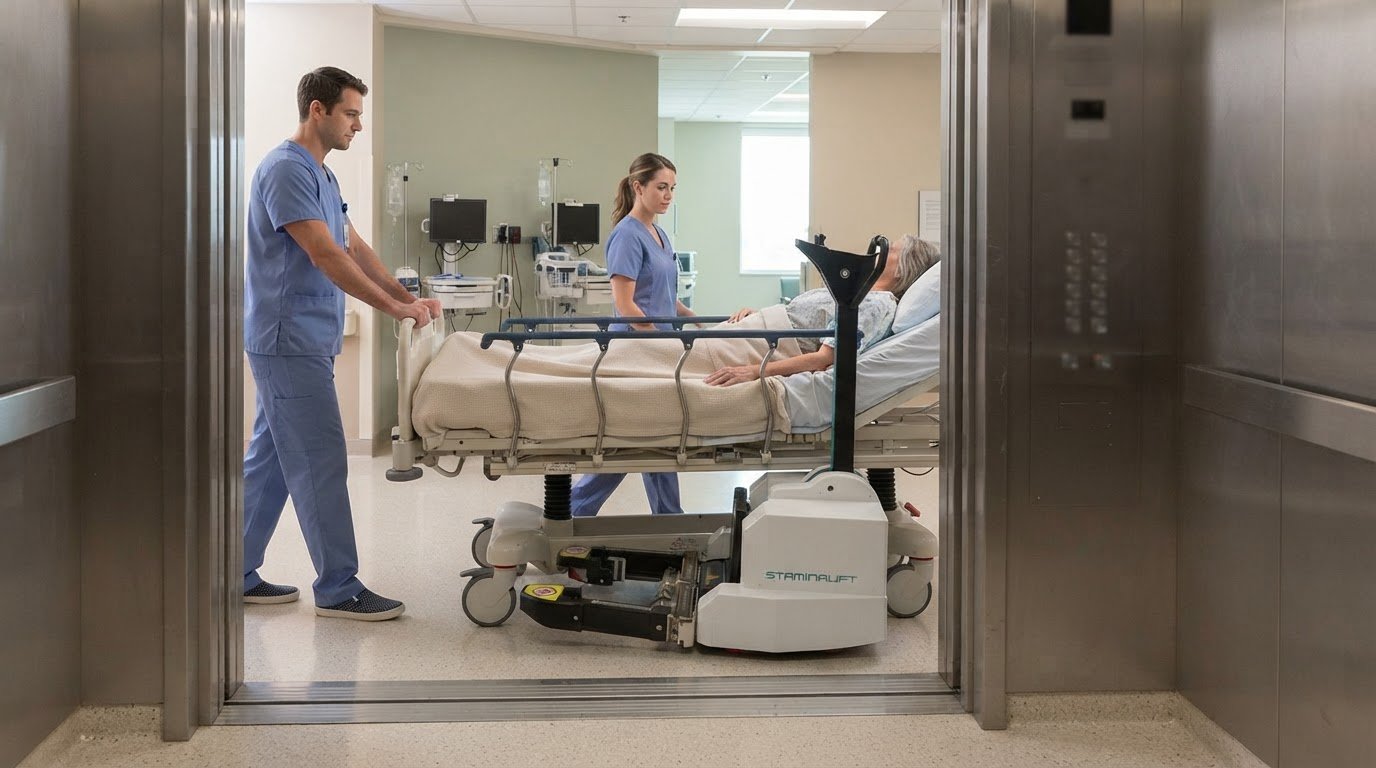
By integrating the StaminaLift Transfer System 5000, hospitals can safely transition to single-person operation. This system is compatible with 95% of global hospital beds and allows a single operator to move loads up to 900kg. This immediately doubles the available portering capacity without hiring additional staff. Identifying how bed movers improve patient flow involves looking at how these tools remove the need for tandem moves, allowing the facility to process twice as many transfers in the same timeframe.
Redefining Staff Allocation
Empowering solo operators changes the math of ward management. During night shifts or periods of skeleton staffing, the ability for one person to move a patient safely is the difference between a fluid discharge and a complete "bed block." By Protecting Human Capital through mechanical assistance, hospitals reduce the risk of musculoskeletal injuries that often lead to long-term absenteeism. For instance, a large South Australian hospital successfully reduced transfer-related injuries from 20% to zero within just two years by implementing these motorised systems. Managers can then reassign the "second person" to assist in high-priority areas like the Emergency Department or ICU.
Precision Movement in Tight Spaces
Efficiency is often lost in the corners. Australian hospital corridors are busy, frequently cluttered with equipment, and often quite narrow. The StaminaLift 2100 Bed Mover addresses this with a 360-degree turning radius, allowing it to pivot on the spot within confined lifts and wards. This precision prevents cornering delays and reduces the risk of accidental collisions with expensive medical equipment. Its sleek profile is designed to fit underneath the bed frame, saving valuable floor space when not in use. Safety is further enhanced by automatic braking systems that engage the moment the operator releases the controls, providing total command over the load. To see these systems in action, you can explore the full range of StaminaLift solutions designed for modern healthcare environments.
Reducing Transfer Delays and Emergency Department Stagnation
Emergency Department (ED) stagnation is rarely just an ED problem; it's a symptom of "back-end" discharge delays. When a patient is clinically cleared for ward admission but remains in a cubicle because the physical transfer hasn't happened, a bed block occurs. This stagnation leads directly to ambulance ramping, a critical issue in Australian metropolitan hospitals where paramedics are unable to hand over patients due to a lack of space. Understanding how bed movers improve patient flow involves looking at the speed and reliability of these physical relocations. Motorised equipment ensures that once a bed is assigned, the patient is moved immediately, freeing up ED resources for the next arrival.
Five Steps to Improving Ward Throughput
Optimising the movement of patients across a large facility requires a structured approach to logistics. By standardising equipment and training, facilities can ensure that every transfer is as efficient as the last. Consider these five steps to enhance your ward throughput:
Standardise equipment: Utilise a universal mover like the StaminaLift TS5000 to ensure compatibility with 95% of your existing bed fleet across all wards.
Master the controls: Train your portering teams on intuitive joystick controls to ensure they can navigate busy corridors at a safe, consistent speed.
Mitigate fatigue: Use ride-on platforms for long-distance transfers to radiology or theatres, keeping staff fresh and maintaining a steady flow throughout the shift.
Ensure reliability: Implement a hospital equipment preventative maintenance programme to avoid unexpected downtime that can stall patient movement.
Empower solo operation: Design workflows that allow a single operator to complete transfers, removing the delay of waiting for a second staff member.
Bariatric Flow: Solving the Heaviest Challenge
Bariatric patients often face the longest transfer delays because the logistics of moving nearly one tonne of weight are incredibly complex. Manually pushing a bariatric bed is slow, exhausting, and often requires three or four staff members. The StaminaLift TS6000 changes this dynamic by providing the motorised power necessary to move up to 900kg with ease. This includes the ability to climb a 7-degree incline under full load, preventing bottlenecks at ramps or lift thresholds that would otherwise stop a manual move in its tracks. Beyond the operational speed, this technology preserves the dignity of the patient by ensuring their transfer is smooth and fast. This is a primary example of how bed movers improve patient flow while simultaneously enhancing the patient experience.
Protecting Human Capital: Why Staff Safety Equals Operational Flow
A hospital's ability to maintain throughput is inextricably linked to the physical health of its workforce. In large Australian metropolitan facilities, porters and nurses can walk up to 15 kilometres per day while navigating heavy equipment. This level of exertion leads to physical exhaustion, which inevitably slows down the movement of patients as the shift progresses. When we discuss how bed movers improve patient flow, we must account for the preservation of human capital. By reducing the physical burden of manual handling, hospitals can keep their most experienced, older staff in the workforce longer, ensuring that years of clinical and logistical knowledge remain on the floor.
Safety and flow are two sides of the same coin. A quiet environment is also essential for patient recovery and staff concentration. The StaminaLift series operates at a "quiet conversation" level of just 65 dB, ensuring that the therapeutic environment is never compromised during high-frequency transfers. This thoughtful engineering supports a calm, professional atmosphere while the machinery does the heavy lifting, proving that operational power doesn't have to be disruptive.
The True Cost of a Manual Handling Injury
The financial and operational impact of a manual handling injury extends far beyond a single worker's compensation claim. When a skilled porter or nurse is forced onto six months of light duties, the facility loses a critical link in its logistics chain. This often results in "bed block," as fewer staff are available to perform the tandem moves required for manual beds. Staff retention is directly influenced by a patient handling equipment selection criteria that prioritises ergonomics. There's a significant morale boost when a team feels their employer is investing in their long-term health, leading to a more engaged and efficient workforce.
Fatigue Management and Flow Consistency
Transfer times often fluctuate based on the time of day, typically increasing toward the end of a 12-hour shift as manual fatigue sets in. Motorised movers eliminate this variability by maintaining a consistent pace from the first hour to the last. For staff covering massive campuses, the Easi Rider's ride-on platform is a transformative addition. It allows porters to travel long distances without the physical strain of walking, ensuring they arrive at their destination ready to work rather than exhausted. This consistency is a cornerstone of how bed movers improve patient flow, as it allows administrators to predict transfer times with high accuracy regardless of shift duration. To protect your team while boosting efficiency, you can explore the StaminaLift and Easi series today.
Optimising Hospital Throughput with StaminaLift Technology
In the high-stakes environment of a modern hospital, the StaminaLift series acts as a sophisticated force multiplier. It's not simply about replacing manual effort with mechanical power; it's about the technical precision required to ensure logistics never compromise clinical outcomes. By integrating advanced features like Bluetooth battery health monitoring and fully programmable joystick controls, these systems provide a level of reliability that manual handling simply cannot match. This technical edge is a primary reason how bed movers improve patient flow, as it allows for predictable, uninterrupted service across every ward, regardless of the time of day or staff availability.
Being Australian-made offers a distinct advantage for local facilities. RIHA Industries provides a 24-hour parts shipping guarantee and local technical support, ensuring that your fleet remains operational around the clock. For administrators looking to justify the transition, we provide comprehensive ROI calculation tools. These tools demonstrate how reducing injury rates and doubling transport capacity leads to a rapid return on investment, turning a safety necessity into a financial benefit.
Seamless Integration into Existing Fleets
One of the greatest challenges in hospital logistics is equipment variety. The StaminaLift TS5000 addresses this through patented attachment mechanisms, including the Adaptable Jaw System 300, which connects to almost any bed or stretcher in your facility. Crucially, the TS5000 adds only 200mm to the total bed length. This compact design ensures that even when attached, the bed still fits comfortably into standard hospital lifts and tight bay areas. Forward-thinking managers now view hospital porter equipment as a strategic asset that unlocks hidden capacity within their existing floor plan rather than just a simple tool.
Future-Proofing Hospital Logistics
As healthcare demands evolve, so does the technology supporting it. The move toward lithium battery upgrades provides a 20% performance boost and significantly faster charging times, ensuring your movers are ready for back-to-back transfers during peak admission windows. We back this hardware with a 24-hour response guarantee for technical support, positioning RIHA Industries as a long-term partner dedicated to your facility's success. To start transforming your facility's efficiency and find out how bed movers improve patient flow in your specific wards, contact RIHA Industries to discuss a custom mobility solution for your facility.
Transforming Hospital Throughput through Mechanical Precision
Optimising patient movement is no longer just a matter of better scheduling software; it's a physical logistics challenge that requires the right tools. By addressing the manual bottlenecks that slow down ward transfers, you can effectively double your transport capacity and eliminate the "bed block" that leads to ED overcrowding. As we've explored, the transition to motorised assistance isn't just about speed. It's about protecting your staff and ensuring that every transfer is safe, dignified, and efficient. When teams are equipped to handle heavy loads without strain, the entire facility operates with greater confidence and reliability.
The evidence for this transition is clear. One major South Australian hospital reduced manual handling injuries to zero within two years by implementing our technology. Our FDA-registered, Australian-made equipment is compatible with 95% of hospital beds worldwide, making it a seamless addition to any facility. By understanding how bed movers improve patient flow, you can empower your team to focus on what they do best: providing world-class care. It's time to move beyond the limitations of manual handling and embrace a future of controlled, reliable logistics. We invite you to request a hands-on demonstration of the StaminaLift TS5000 at your hospital to see the difference for yourself. Your team deserves the support of world-class engineering.
Frequently Asked Questions
How do motorised bed movers actually speed up patient transfers?
Motorised bed movers speed up transfers by allowing a single operator to move heavy loads at a consistent pace without physical exhaustion. Instead of waiting for a second porter to become available for a manual move, a solo staff member can initiate the transfer immediately. This reduction in wait time is a primary factor in how bed movers improve patient flow, as it ensures that beds are vacated and filled according to clinical demand rather than staff availability.
Can one person really move a bariatric bed safely using a StaminaLift?
Yes, a single operator can safely transport loads up to 900kg using the StaminaLift Transfer System 6000. The motorised drive takes on the entire physical burden, allowing the staff member to focus on steering and patient safety rather than exertion. This capability is vital for bariatric transfers, which traditionally require multiple porters. By empowering one person to manage these complex moves, hospitals can maintain throughput even during periods of limited staffing.
Are motorised bed movers compatible with all hospital bed brands?
The StaminaLift TS5000 is compatible with approximately 95% of all hospital beds and stretchers used worldwide. This universal compatibility is achieved through patented attachment mechanisms that securely grip various frame types without requiring modifications to your existing fleet. This ensures that your facility can standardise its logistics processes across different departments, from intensive care to maternity, without worrying about equipment mismatches that could stall patient movement.
What is the typical ROI for a hospital investing in bed movers?
The typical return on investment is realised through a combination of reduced workplace injury claims and increased operational capacity. For instance, a major South Australian hospital reported reducing manual handling injuries to zero within two years of implementation. Beyond direct cost savings from workers' compensation, the ability to double transport capacity by moving from two-person to single-person operation provides a significant boost to hospital-wide throughput and revenue potential.
How do bed movers help reduce ED overcrowding and ambulance ramping?
Bed movers reduce ED overcrowding by accelerating the back-end discharge and ward transfer processes. When patients are moved out of ward beds more quickly, it creates immediate capacity for patients waiting in the Emergency Department. This fluidity prevents bed block, which is a leading cause of ambulance ramping. By understanding how bed movers improve patient flow, administrators can address the physical logistics that often prevent the timely handover of patients from paramedics.
Do bed movers require significant maintenance to keep patient flow consistent?
Maintaining consistent flow requires reliable equipment, which is why we recommend a structured preventative maintenance programme. While our Australian-made systems are designed for durability in 24-hour environments, regular checks ensure that batteries and drive components remain in peak condition. RIHA Industries offers comprehensive repair and maintenance services, including a 24-hour parts shipping guarantee, to ensure that your logistics engine never stalls due to unexpected equipment downtime.
What safety features prevent accidents in busy hospital corridors?
Our movers are equipped with several safety features designed specifically for the busy hospital environment. These include automatic braking systems that engage immediately when the joystick is released and a 360-degree turning radius for precise manoeuvring in tight spaces. The controlled, motorised pace prevents the runaway risks associated with manual beds on inclines, while the quiet 65 dB operation ensures that staff can remain alert to their surroundings without auditory distractions.
Is staff training difficult for motorised patient transfer systems?
Training is straightforward and typically well-received by staff because the systems are designed with intuitive joystick controls. Most porters and nurses become proficient within a single shift, as the equipment handles the complex physics of the move automatically. This ease of use encourages rapid adoption across the facility. Providing staff with tools that visibly reduce their physical exhaustion leads to higher morale and a more consistent pace of work throughout a 12-hour shift.