
Reducing Porter Back Injuries: Hospital Manager's Guide
- Aug 14
- 12 min read
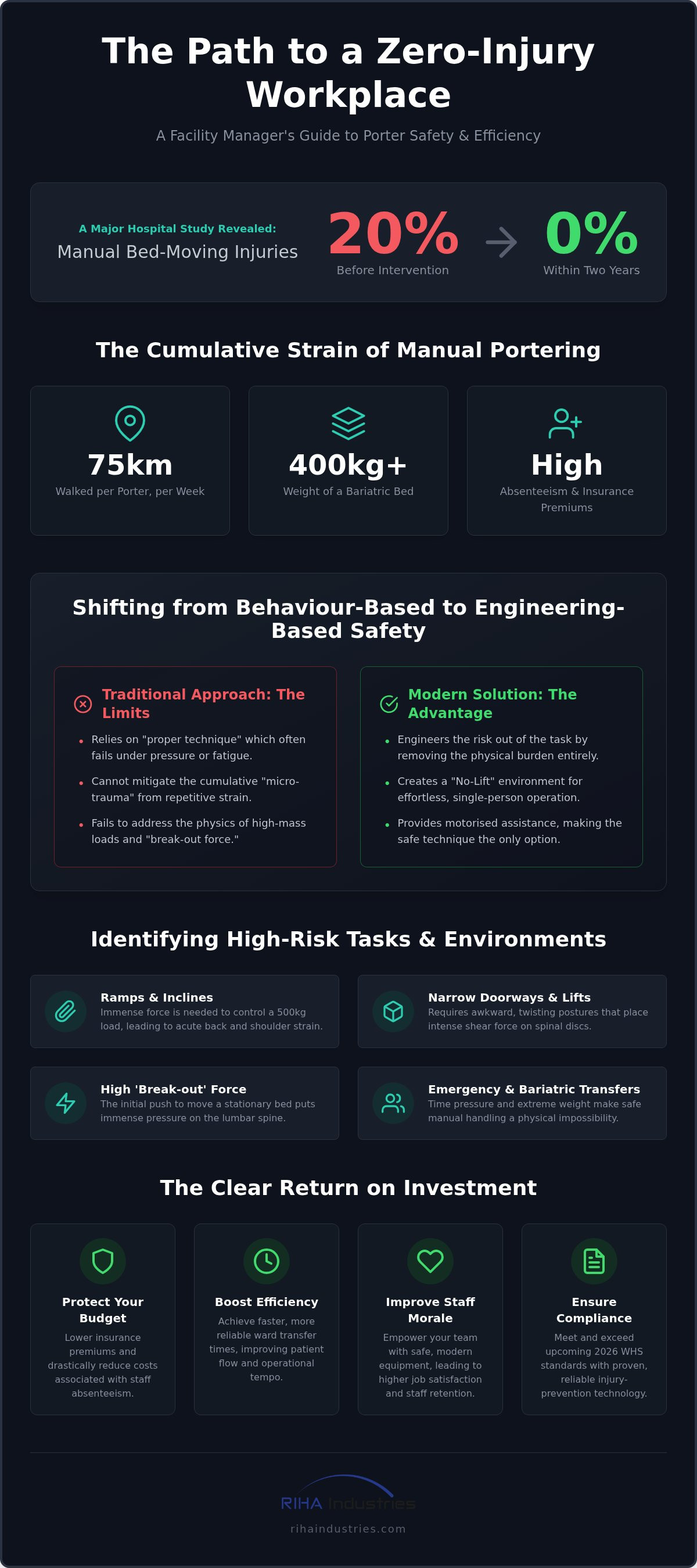
Did you know that a major South Australian hospital study saw manual bed-moving injuries plummet from 20% to zero within just two years? For facility managers, the question of how to reduce porter back injuries is no longer about better lifting techniques, but rather about removing the physical burden entirely. With porters walking up to 75km every week, the cumulative strain on their bodies is a primary driver for the high absenteeism and rising insurance premiums currently facing the healthcare sector.
You're likely all too familiar with the disruption caused when an experienced staff member's career is cut short by a preventable musculoskeletal injury. We believe that safety and operational efficiency should go hand in hand. This guide provides a roadmap to help you achieve zero-injury workplace targets by integrating motorised solutions like the StaminaLift TS5000. You'll discover how to protect your team from debilitating pain while simultaneously achieving faster ward transfer times and boosting staff morale. We'll outline the evidence-based strategies and mechanical innovations that make a safer, more productive hospital environment possible.
Table of Contents
The Physical Toll of Portering: Why Back Injuries Persist
Hospital porters are the engine room of patient flow, yet they operate under a physical burden that often exceeds safe biological limits. On a typical shift, a porter may walk up to 15 kilometres, often while pushing beds that weigh several hundred kilograms. When you aggregate this over a week, a single staff member covers 75km while managing high-mass loads. This cumulative fatigue is a silent catalyst for injury. It isn't always a single catastrophic event that ends a career; often, it's the "micro-trauma" from repetitive strain that leads to chronic spinal degeneration. Understanding how to reduce porter back injuries requires looking beyond the immediate task and addressing the systemic fatigue inherent in the role.
Modern healthcare environments present unique "Red Zones" where risks escalate. Navigating narrow doorways in older hospital wings, entering crowded lifts, and managing steep ramps all require sudden, jerky movements to maintain control. When you consider that a bariatric bed with a patient can exceed 400kg, the physics of manual handling becomes impossible for a single person to manage safely. These challenges are why Occupational safety and health principles increasingly advocate for engineering out the risk rather than relying on staff resilience.
The Science of Push-Pull Forces
Moving a stationary hospital bed requires a significant "break-out force" to overcome inertia and get the wheels turning. This initial surge of effort puts immense pressure on the lumbar spine. Once the bed is in motion, maintaining momentum across carpeted floors or uneven surfaces multiplies the physical strain. Long-distance transfers across large campuses demand "sustained force" which rapidly depletes a porter's energy and compromises their posture. Motorised assistance removes this initial spike in physical exertion, protecting the lower back from the most dangerous moments of the transfer.
Limitations of Manual Handling Training
Traditional safety programmes often focus on "proper technique," yet these classroom lessons frequently fail in the high-pressure reality of a busy ward. When a porter is under time pressure to clear an emergency transfer, speed often overrides safety protocols. If we want to know how to reduce porter back injuries effectively, we must move from a behaviour-based model to an engineering-based model. Relying on a fatigued staff member to remember a specific lifting angle is less reliable than providing motorised assistance that makes the correct technique the only option. Engineering the risk out of the workflow ensures safety is maintained even when staff are tired or rushed.
Identifying High-Risk Tasks in Hospital Portering
While general manual handling training provides a foundation, it often fails to address the specific, high-stress scenarios that porters face daily. To understand how to reduce porter back injuries, facility managers must identify the specific tasks where physical demand exceeds human capacity. Navigating the narrow doorways and tight corners of older hospital wings requires porters to use awkward, twisting postures to steer heavy beds. These "Red Zone" manoeuvres place intense shear force on the intervertebral discs. Similarly, during emergency transfers, the pressure to move quickly often causes safety protocols to be ignored, leading to sudden overexertion that can result in career-ending injuries.
It isn't just bed transfers that pose a threat. The repetitive movement of heavy meal trolleys and linen carts contributes significantly to cumulative strain. When transporting bariatric patients, the risks escalate exponentially. Moving a load that exceeds 400kg manually is no longer a matter of technique; it's a mathematical impossibility for a single person to do so safely. Adopting Safe Patient Handling and Mobility standards is essential for protecting staff during these high-mass transfers. For facilities looking to modernise their approach, exploring the range of motorised movers from RIHA Industries can provide a practical solution to these high-risk tasks.
Ramps and Inclines: The Critical Risk Factor
Transporting a heavy bed on a downward slope is one of the most dangerous tasks in any healthcare facility. The force required to stop a 500kg load from accelerating on a ramp is immense, often leading to acute back and shoulder strains as porters struggle to maintain control. Australian WHS standards recognise that manual braking of heavy medical equipment on an incline is a high-risk activity that should be avoided. Motorised units with automatic braking systems eliminate the risk of "runaway" equipment, ensuring the porter remains in total control without needing to use their own body weight as a brake.
Repetitive Strain from Long-Distance Porting
The sheer volume of walking required in a modern hospital campus takes a heavy toll on a porter's long-term mobility. Walking 75km per week while pushing or pulling equipment leads to chronic fatigue, which is a direct precursor to workplace accidents. As porters become physically exhausted, their ability to maintain ergonomic posture diminishes. Utilising motorised tugs like the Easi Rider allows porters to cover these vast distances without the associated joint and spinal wear. By reducing the physical toll of long-distance transfers, hospitals can significantly improve staff retention and reduce the frequency of fatigue-related injury claims.
Strategies to Reduce Musculoskeletal Risk in 2026
As we move into 2026, healthcare facilities are shifting from reactive injury management to proactive engineering controls. A critical first step in determining how to reduce porter back injuries is conducting a comprehensive audit of existing workflows. This involves tracking high-traffic routes, floor types, and the sheer volume of transfers handled daily. By identifying where bottlenecks and physical strain occur most frequently, managers can implement a strict 'No-Lift, No-Manual-Push' policy. This policy mandates that any load exceeding a specific safety threshold, such as a modern motorised bed or a bariatric patient, must be moved using specialised hospital porter equipment.
Modern technology now allows for even more precise safety management. The latest 2026 equipment models often feature Bluetooth diagnostics, which provide real-time data on battery health and usage patterns. Managers can use this data to identify training gaps; for instance, if a motorised mover is consistently underutilised on a specific ward, it may indicate a need for refresher training or a change in local workflow to better protect staff. This data-driven approach ensures that the investment in safety technology delivers the maximum possible benefit to the workforce.
Developing a Risk Assessment Framework
To make safety protocols practical, transfers should be categorised by weight and environmental difficulty. A robust framework sets clear requirements for when a task requires two-person manual handling versus mandatory motorised assistance. Incorporating direct feedback from porters during the equipment procurement process ensures that the selected tools actually solve the challenges faced on the ground. When staff feel heard and protected, morale and retention rates naturally improve. This collaborative approach is a fundamental part of how to reduce porter back injuries while maintaining operational efficiency.
The Role of Motorised Bed Movers
The StaminaLift Transfer System 5000 serves as a primary tool for eliminating musculoskeletal risk. It effectively removes the need for manual 'break-out' force, which is a major cause of lower back strain. Safety is further enhanced by automatic braking systems that engage the moment an operator releases the controls, preventing accidents on inclines or in busy corridors. With 360-degree manoeuvrability, these units allow porters to navigate tight spaces without the twisting motions that lead to disc injuries. This technology replaces human effort with precision engineering, ensuring every transfer is conducted within safe physical limits.
The Business Case: ROI of Injury Prevention
Investing in motorised movers isn't just a safety choice; it's a strategic financial decision. When facility managers evaluate how to reduce porter back injuries, they must account for the staggering "hidden" costs of a single musculoskeletal claim. These include legal fees, medical expenses, and the logistical burden of hiring and training replacement staff. Beyond the ledger, high injury rates erode staff morale and make recruitment in a competitive healthcare market increasingly difficult. By providing a safe, tech-enabled workplace, you position your facility as an employer of choice, attracting experienced professionals who value their long-term health and wellbeing.
A primary benefit of motorised assistance is the shift to single-person operation. In many facilities, heavy bed transfers currently require two or more staff members to manage safely. Implementing powered equipment allows one porter to handle these tasks alone, effectively doubling your available labour for other critical duties. This shift reduces the strain on rostering and ensures that patient flow never stalls due to a lack of available "pushers." To see how these savings apply to your specific facility, you can use our ROI calculator to build a data-driven justification for the investment.
Reducing Workers' Compensation Claims
The financial impact of injury prevention is best illustrated by real-world results. A major South Australian hospital study demonstrated that bed-moving injuries could be reduced from 20% to zero within two years by implementing specialised motorised movers. This level of risk mitigation leads to significant long-term savings on insurance premiums. As we approach 2026, meeting Australian OHS compliance standards requires more than just training; it demands the implementation of proven engineering controls that remove the hazard at its source. Reducing claims protects your budget as much as it protects your people.
Operational Efficiency and Ward Throughput
Safety and speed are often seen as trade-offs, but motorised movers prove they are complementary. Using powered systems reduces the time required to reach "bed-ready" status, which directly improves ward throughput and patient flow. For instance, specialised patient transport equipment for aged care ensures that even in facilities with complex layouts, transfers remain swift and safe. Minimising the "wait time" for a second staff member to assist with a push means porters can respond to calls faster, ensuring the entire facility operates at peak efficiency.
Ready to transform your facility's safety and efficiency? Contact RIHA Industries today to discuss a tailored motorised solution for your portering team.
Implementing the StaminaLift Solution in Your Facility
Integrating new equipment into a busy hospital environment requires a solution that is both versatile and reliable. When managers look at how to reduce porter back injuries, they often worry about the compatibility of motorised movers with their existing fleet of beds. The StaminaLift Transfer System 5000 addresses this concern directly, as it is engineered to fit 95% of global hospital beds. This universal compatibility means you won't need to replace your current beds to implement a safer, motorised workflow. By choosing a system that integrates seamlessly with your existing infrastructure, you can begin protecting your staff immediately without the need for costly facility modifications.
Ensuring long-term safety involves more than just the initial purchase. Regular maintenance is essential to prevent equipment failure and ensure that safety features, such as automatic braking, remain fully functional. Engaging a professional hospital bed mover repair service provides the preventative care necessary to keep your fleet in peak condition. Beyond mechanical reliability, staff training and certification play a pivotal role. Every porter should be a confident operator, capable of using the equipment's full range of safety features. Future-proofing your facility is also simplified through lithium battery upgrades and smart diagnostics, which allow for real-time monitoring of equipment health and usage patterns.
Customising the Mover to Your Environment
Every healthcare facility has unique logistical challenges. To effectively address how to reduce porter back injuries, the equipment must be tailored to the specific tasks performed on-site. Selecting the right hitch allows the mover to secure specialised theatre tables or heavy linen trolleys, extending safety benefits across different departments. For porters covering those extensive distances across large campuses, ride-on platforms provide essential relief, preventing the cumulative fatigue that leads to accidents. Because these units are Australian-made, you can rely on 24-hour parts availability and local support, ensuring your safety systems are never offline for long.
Getting Started with a Trial
Seeing the equipment in action is the most effective way to understand its impact on your facility's safety culture. Hands-on demonstrations allow your portering team to experience the ease of use and 360-degree manoeuvrability firsthand. We also utilise 3D and AR tools to help you visualise how the equipment will navigate your specific wards and corridors. Contacting RIHA Industries for a tailored site assessment is the first step toward a zero-injury workplace. This assessment ensures that the solution you choose is perfectly matched to your facility's layout and the physical demands of your team.
Building a Sustainable Culture of Safety
The evidence is clear; manual bed handling is a practice that belongs to the past. We've explored the physical toll of the 75km walking week and identified why traditional training is no longer enough to manage the 400kg loads found in modern wards. By shifting from a behaviour-based safety model to an engineering-based approach, you gain a definitive answer to how to reduce porter back injuries while simultaneously improving facility throughput.
Implementing motorised movers isn't just about compliance; it's about empowering your staff with tools that protect their long-term health. With FDA-registered bed movers and certified Australian-made quality, our systems have already proven they can reduce manual handling injuries to zero in major hospital environments. This transition protects your budget from rising insurance premiums and ensures your experienced porters can enjoy long, pain-free careers.
Protect your staff and reduce injuries with RIHA Industries motorised solutions and take the first step toward a zero-injury workplace today. Your team deserves a work environment where safety is engineered into every shift.
Frequently Asked Questions
What is the most common cause of back injuries for hospital porters?
The most common cause of back injuries among hospital porters is the cumulative strain from repetitive pushing and pulling of heavy equipment. While a single event can cause acute trauma, it is often the repeated "break-out" force required to move stationary beds that leads to chronic musculoskeletal issues. This physical burden is exacerbated by long shifts where porters cover significant distances, leading to fatigue that compromises safe posture and technique.
Can one person safely move a 500kg hospital bed manually?
No, manually moving a 500kg hospital bed is considered unsafe for a single person under modern workplace health and safety guidelines. The physical force required to initiate movement and navigate inclines exceeds the safe biological limits of the human spine. Attempting such a transfer alone significantly increases the risk of career-ending disc injuries, which is why engineering controls like motorised movers are now essential for high-mass patient transport.
How much weight can a StaminaLift TS6000 actually move on a ramp?
The StaminaLift Transfer System 6000 is engineered for extreme bariatric transfers, capable of moving nearly one tonne (900kg) up a 7-degree incline. This specialised capacity ensures that even the heaviest patient loads can be managed safely by a single operator without physical strain. This capability is critical for facilities with ramps or older wings where inclines previously required multiple staff members to assist with a single manual transfer.
Are motorised bed movers compatible with all hospital bed brands?
The StaminaLift Transfer System 5000 is designed for universal compatibility, fitting approximately 95% of global hospital bed brands and models. Its adjustable hitching mechanism allows it to secure a wide variety of frames, including specialised theatre tables and stretchers. This versatility ensures that facility managers can implement a standardised solution across different departments without needing to replace their existing fleet of beds or invest in brand-specific accessories.
How does a motorised mover reduce the walking distance for porters?
While a standard bed mover assists with the load, ride-on solutions like the Easi Rider significantly reduce the physical toll of covering long distances. Porters often walk up to 75km per week; by using a ride-on motorised tug, they can complete transfers across large hospital campuses without the associated joint wear and cardiovascular fatigue. This technology preserves staff energy for complex ward manoeuvres and helps maintain high morale throughout long shifts.
What safety features should I look for in a powered tug or bed mover?
When evaluating equipment for how to reduce porter back injuries, prioritise features like automatic electromagnetic braking and 360-degree manoeuvrability. These ensure the load stops instantly when controls are released and allow for precise navigation in tight spaces without twisting the torso. Additionally, look for smart diagnostics and ergonomic handle heights that accommodate different operators, as these details are vital for maintaining a safe and efficient workplace.
Is there an Australian standard for manual handling of hospital beds?
Yes, Australian WHS guidelines for 2026 emphasise the "Hierarchy of Control," which mandates that risks should be eliminated or engineered out wherever possible. For hospital beds, this means that manual pushing of high-mass loads is increasingly viewed as a breach of duty of care if motorised alternatives are available. Adhering to these standards requires facility managers to conduct regular risk assessments and provide equipment that removes the need for hazardous manual exertion.
How long does it take to train a porter to use a StaminaLift?
Training a porter to use a StaminaLift system is a swift and intuitive process, typically taking less than an hour for basic competency. The controls are designed for ease of use, allowing staff to become confident operators after just a few practice runs in a controlled environment. Formal certification ensures that every team member understands how to reduce porter back injuries by correctly utilising the motorised assistance for every high-mass transfer.


