
The Complete Guide to Motorised Bed Movers for Australian Hospitals in 2026
- 2 days ago
- 12 min read
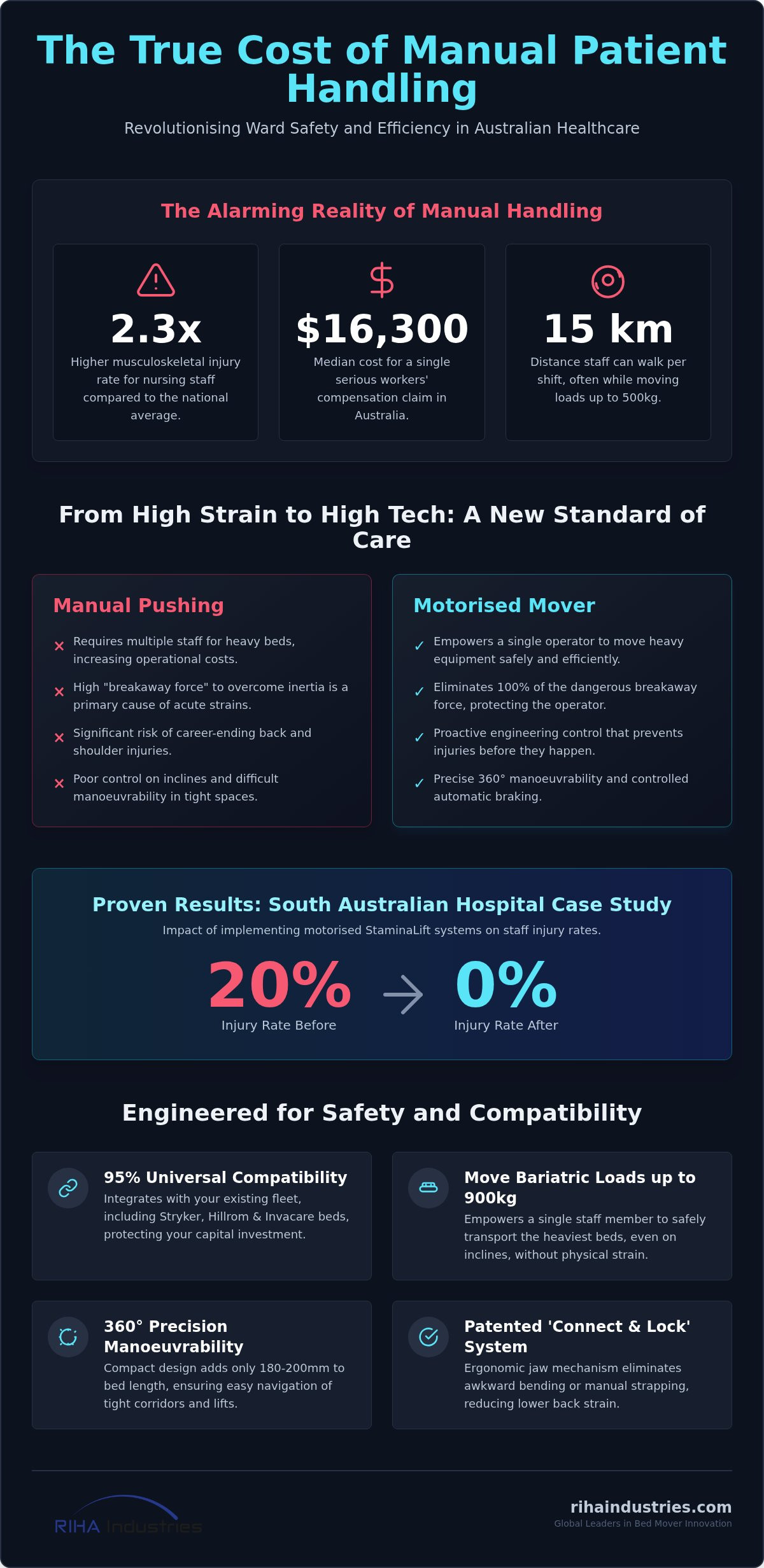
Did you know that nursing staff in Australia face musculoskeletal injury rates that are 2.3 times the national average? It's a sobering reality in 2026, particularly as the median cost for a serious workers' compensation claim has climbed to $16,300. When your porters and nurses are walking up to 15km per shift while navigating heavy bariatric beds through tight corridors, the physical toll becomes unsustainable. Integrating a motorised bed mover for hospitals into your facility isn't just an upgrade; it's a vital safety measure that turns a hazardous, multi-person task into a precise, one-person operation.
We understand that your team's safety is your highest priority, yet the physical demands of modern healthcare often lead to burnout and injury. This guide will show you how to eliminate manual handling risks and boost ward efficiency with the latest motorised transfer technology. We'll preview the new 2026 TGA mandatory reporting standards, the impact of SafeWork NSW's focus on mobile machinery, and how Australian-made solutions provide the 360-degree manoeuvrability needed to navigate the most challenging hospital environments.
Table of Contents
What is a Motorised Bed Mover and Why is it Essential for Modern Wards?
A motorised bed mover for hospitals is a high-torque, battery-powered auxiliary unit designed to interface seamlessly with modern hospital beds and stretchers. These devices act as a mechanical force multiplier, converting a heavy, static piece of equipment into a controlled, powered vehicle. This technology is no longer a luxury but a necessity in the high-pressure environment of 2026. Porters and nursing staff frequently walk up to 15km per shift. When this distance is combined with the physical exertion of pushing loads that often reach 500kg, the risk of cumulative strain becomes an operational liability. The primary goal of these systems is simple: to empower a single operator to move heavy equipment safely, efficiently, and without the risk of career-ending injuries.
The Real Cost of Manual Handling Injuries in Australia
Back and shoulder injuries in healthcare contribute significantly to a $20 billion annual global cost. Within the Australian context, the Work Health and Safety (WHS) implications are particularly sharp. Beyond the $16,300 median cost for a serious workers' compensation claim, facilities face the hidden burdens of staff burnout and the loss of experienced clinicians. A landmark South Australian hospital case study highlighted the impact of engineering controls; injury rates dropped from 20% to zero after the facility implemented StaminaLift systems. By removing the physical burden of transport, hospitals can improve staff retention and reduce their reliance on expensive agency cover, ensuring that resources are focused on patient outcomes rather than injury management.
Motorised Mover vs. Manual Pushing: A Force Comparison
The most hazardous moment of any patient transfer is the "breakaway force". This is the peak physical effort required to overcome inertia and get a 500kg bed moving, especially on high-friction surfaces like ward carpets. This initial shove is responsible for the majority of acute musculoskeletal strains. A motorised bed mover for hospitals replaces this human exertion with smooth, mechanical power. These systems don't just provide forward momentum; they offer sophisticated control mechanisms that manual pushing cannot match. Key advantages include:
Elimination of Inertia: The motor handles 100% of the breakaway force, protecting the operator's spine and shoulders.
Controlled Braking: Automatic regenerative braking ensures safe descents on inclines and prevents the bed from "running away".
Steering Assistance: Power-assisted movement allows for 360-degree manoeuvrability in tight corridors and lifts.
Shifting from manual pushing to motorised assistance represents a move from reactive injury management to proactive engineering control. It's a strategic investment in the long-term health of the healthcare workforce.
Evaluating Compatibility: Will a Motorised Mover Work with Your Existing Beds?
One of the most common concerns for facility managers is the diverse nature of their equipment fleet. It's rare to find a ward with only one type of bed; most Australian hospitals manage a mix of Stryker, Hillrom, and Invacare units. You might worry that a single motorised bed mover for hospitals won't interface with every brand in your facility. However, the StaminaLift TS5000 was specifically engineered to solve this problem, boasting a 95% compatibility rate with global bed designs. This universal approach means you don't have to face the massive capital expense of replacing your entire bed fleet just to introduce powered transport.
Space is always at a premium in clinical environments. A mover that adds too much length can make it impossible to fit a bed into a standard hospital lift. To address this, modern movers utilise a compact design that adds only 180mm to 200mm to the total bed length. This small footprint ensures that the bed remains manageable in tight spaces while providing the 360-degree manoeuvrability needed to navigate sharp corridor corners and narrow doorways.
Patented Attachment Mechanisms and Jaw Systems
The "connect and lock" jaw mechanism is a significant leap forward in staff ergonomics. It removes the need for manual strapping or awkward bending, which are common triggers for lower back strain. For facilities with varied wheel sizes, the Jaw System 300 offers expanded compatibility, securely gripping wheels ranging from 100mm to 300mm. When you're reviewing your patient handling equipment selection criteria, universal hitch versatility should be a top priority to ensure your investment works across every department.
Manoeuvrability in Confined Healthcare Spaces
Navigating the busy corridors of a metropolitan hospital requires absolute precision. A true zero-turn radius allows a single operator to turn a bed within its own length, offering a level of control that manual pushing can't match. For maximum safety, the drive system is designed to sit underneath the bed frame. This positioning reduces tripping hazards and keeps the unit out of the operator's walking path. To maintain the high hygiene standards of your ward, these units use non-marking drive wheels that won't scuff or damage hospital floor surfaces. Adhering to these engineering standards ensures better WHS compliance for patient handling while protecting your facility's physical infrastructure. If you're ready to see how these systems fit into your specific ward layout, the team at RIHA Industries can provide detailed compatibility assessments for your current fleet.
Specialised Solutions: Bariatric Transfers and Heavy Load Management
Bariatric patient transport presents some of the most significant risks in a clinical setting. When you combine the weight of a specialised bariatric bed with a high-BMI patient and associated medical equipment, the total mass can approach one tonne. This level of weight is impossible to manage manually without risking catastrophic injury to staff. Implementing a motorised bed mover for hospitals, such as the StaminaLift TS6000, ensures that even these extreme loads are managed by a single person without physical strain. By providing mechanical assistance for these high-stakes transfers, facilities can significantly improve their outcomes for both staff safety and patient dignity.
The TS6000: Power for Acute and Bariatric Care
The StaminaLift TS6000 provides a 450kg lift capacity and a massive 900kg push/pull capacity, allowing it to move almost any bariatric configuration with ease. Even on a 7-degree incline, the system maintains safety through an automatic braking feature that prevents any uncontrolled movement. This is vital for facilities with internal ramps or basement service corridors where a runaway bed could lead to a serious deterioration in safety. Despite its power, the unit operates at a whisper-quiet 65 dB. This ensures that late-night transfers don't disturb the healing environment. Operators can also utilise programmable joystick controls to set custom speed and torque profiles, tailoring the machine's performance to the specific needs of the ward.
Beyond the Bed: Tugs for Facility Logistics
While patient transfers are the primary focus of Safe Patient Handling and Mobility programs, facility logistics also demand mechanical assistance. Moving heavy linen skips, meal trolleys, and waste bins over long distances contributes to staff fatigue and repetitive strain. The Easi Rider is an ideal solution for long-distance porting, allowing staff to ride the unit while towing multiple trolleys through large hospital campuses. For more localised tasks, walk-behind tugs like the Easi Mover provide the necessary leverage for heavy carts. These units include a critical "Back Off Button" safety feature, which immediately stops and reverses the machine if it comes into contact with the operator. For a deeper look at optimising these workflows, our hospital porter equipment guide offers comprehensive strategies for improving facility-wide logistics.
Using a motorised bed mover for hospitals alongside specialised logistics tugs creates a comprehensive safety net. This dual approach ensures that every heavy load within the hospital, whether it's a patient or a laundry skip, is moved using engineering controls rather than human force.
Implementation Strategy: WHS Compliance and Staff Longevity
Implementing a motorised bed mover for hospitals isn't just about moving equipment; it's a strategic move to preserve your most valuable asset: your staff. Experienced nursing professionals are increasingly scarce, and physical burnout is a primary driver for early retirement in the healthcare sector. By removing the physical strain of bed transfers, facilities can extend the careers of their most skilled clinicians. Modern systems also incorporate Bluetooth diagnostics, allowing managers to monitor equipment utilisation in real-time. This data helps identify departments that might need additional resources or highlight where further staff training is required to optimise ward efficiency.
Hygiene remains paramount. The latest movers allow for "hands-free" connection to the bed, ensuring that staff can maintain strict infection control protocols without having to touch potentially contaminated surfaces on the bed frame or wheels. When calculating the financial impact of these benefits, using a hospital bed mover procurement guide helps administrators quantify labour savings and injury reduction against the initial capital investment.
WHS Compliance and Injury Reduction
Australian WHS standards require employers to implement engineering controls where "reasonably practicable" to manage manual handling risks. A motorised bed mover for hospitals directly satisfies this requirement by transitioning the facility to a "Single Person Operation" model. This change is particularly relevant given SafeWork NSW’s 2026 regulatory focus on mobile machinery and workplace safety. This model doesn't just reduce injuries; it frees up a second staff member to remain at the bedside for clinical care rather than acting as a second pusher. There's also a significant psychological benefit. When staff see that their facility invests in their physical well-being, morale improves and turnover rates typically decline.
Training and Battery Management for 24/7 Reliability
Reliability is the cornerstone of any clinical tool. Upgrading to Lithium battery technology provides a 20% performance boost and significantly faster charging cycles compared to traditional lead-acid options. To keep the ward tidy and safe, integrated retractable charging cables eliminate the common problem of "lost" chargers or tripping hazards in busy hallways. Ensuring your fleet stays operational requires a proactive approach to maintenance. Scheduling a regular hospital bed mover repair service guarantees maximum uptime and ensures your equipment remains compliant with the latest safety standards. If you're ready to improve your facility's safety standards, you can request a facility audit to see how these systems can be integrated into your workflow.
Why RIHA Industries is the Global Leader in Bed Mover Innovation
RIHA Industries represents the pinnacle of Australian medical engineering. Based in South Australia, the company has transitioned from a local manufacturer to a global authority in healthcare mobility. This leadership is evidenced by the 2024 and 2025 MedTech Outlook awards for mobility aid innovation, which recognise the brand's commitment to solving complex manual handling challenges. While competitors often rely on distant supply chains that lead to frustrating delays, RIHA's commitment to local manufacturing ensures that every motorised bed mover for hospitals is built with precision and backed by a 24-hour part shipping guarantee. This national service coverage eliminates the operational downtime risks often associated with international vendors.
Reliability is further validated by RIHA’s status as the only FDA-registered bed mover manufacturer in the US. This registration isn't just a regulatory checkbox; it's a mark of world-class safety and engineering standards that translates directly to the Australian ward. It reassures facility managers that they're investing in a partner that meets the most stringent global quality controls. This global perspective, combined with a deep understanding of local Australian WHS requirements, positions the brand as a stable, long-term partner for healthcare providers across the country.
Engineering Sustainability with 3D Printing
RIHA utilises industrial 3D printing to solve a common healthcare headache: maintaining legacy equipment. They can manufacture high-strength, custom components for discontinued hospital beds or older mover models, ensuring your fleet remains operational for longer. This "Customer-First" strategy focuses on direct engagement rather than impersonal distributor models, allowing for a more responsive support experience. For rural or remote facilities, the website's 3D viewer tool provides an interactive resource to assist with in-house maintenance and part identification, bridging the gap between factory expertise and on-site reality.
Customisation and Future-Proofing
Every facility has unique requirements that standard equipment cannot always meet. RIHA specialises in creating custom hitches for theatre tables, imaging equipment, and specialised surgical platforms. This flexibility has driven a 35% projected growth in export, as international markets increasingly seek out Australian-engineered solutions. By future-proofing your facility with adaptable technology, you're making a long-term investment in staff safety and operational resilience. We invite you to use our ROI calculator to see the immediate impact a motorised bed mover for hospitals can have on your facility’s budget and staff retention rates.
Elevating Ward Safety and Operational Standards in 2026
Transitioning to motorised transport is a strategic investment in protecting your staff from musculoskeletal injuries and meeting the rigorous 2026 TGA reporting requirements. As demonstrated in South Australian case studies, implementing a motorised bed mover for hospitals can reduce transfer-related injuries to zero while ensuring 95% compatibility with your existing bed fleet. This shift doesn't just improve safety; it fundamentally enhances ward efficiency by enabling seamless, one-person operation for even the most complex transfers. It's about replacing physical strain with engineered precision.
These Australian-made, FDA-registered solutions combine 360-degree manoeuvrability with the mechanical power to handle bariatric loads up to 900kg on inclines. By choosing a partner that offers 24-hour worldwide part shipping and dedicated national service coverage, you ensure that your facility's safety infrastructure remains robust and reliable. We're dedicated to helping you build a workplace where human well-being is prioritised and physical burdens are eliminated. To start your journey toward a safer, more efficient ward, View the StaminaLift Range and Request a Demonstration today. We look forward to helping you empower your team and transform your facility's manual handling culture for the better.
Frequently Asked Questions
How much weight can a motorised hospital bed mover actually push?
Our systems are engineered to handle the most demanding loads in a clinical environment. The StaminaLift Transfer System 6000 is capable of pushing and pulling up to 900kg, which easily accommodates bariatric beds and integrated medical equipment. For standard ward requirements, the TS5000 handles loads up to 500kg. This mechanical power ensures that staff never have to exceed safe lifting limits, regardless of the patient's weight or the equipment's mass.
Do motorised bed movers require a special type of hospital bed?
No, you don't need to replace your existing fleet to implement this technology. A motorised bed mover for hospitals from the StaminaLift range is designed with universal compatibility in mind, interfacing with 95% of global hospital bed brands. Whether your facility uses Stryker, Hillrom, or Invacare units, our patented jaw systems provide a secure connection. This allows you to upgrade your safety protocols without the massive capital expense of buying new, integrated powered beds.
Can one person operate a bariatric bed transfer with these machines?
Yes, a single operator can safely manage a bariatric transfer using the right equipment. The StaminaLift TS6000 is specifically designed for one-person operation, even when transporting loads approaching one tonne. The machine handles all the breakaway force and provides precision steering, meaning you no longer need to pull multiple nurses away from their clinical duties to assist with a single bed move. This significantly improves ward efficiency and reduces the risk of team-based injuries.
How long does the battery last on a standard hospital shift?
The battery is designed to last through a standard busy shift, typically covering the 10km to 15km distances that porters often walk. Our latest models utilise advanced battery technology with integrated retractable charging cables for easy top-ups between transfers. For facilities requiring 24/7 reliability, upgrading to Lithium batteries provides faster charging and a 20% performance boost. This ensures your motorised bed mover for hospitals is always ready when an urgent patient transfer is required.
Are motorised bed movers safe to use on hospital ramps and inclines?
Absolute safety on inclines is a core feature of our engineering. These movers are equipped with automatic regenerative braking systems that provide total control on ramps up to 7 degrees. If the operator releases the controls, the machine brings the bed to a controlled stop immediately. This prevents the dangerous runaway scenarios that can occur with manual pushing, ensuring that both the staff member and the patient remain protected during vertical transitions between hospital levels.
Will the bed mover fit inside a standard hospital lift or elevator?
Yes, the units are engineered with a compact footprint to ensure they fit within standard Australian hospital lifts. By adding only 180mm to 200mm to the total length of the bed, the mover maintains the necessary clearance for elevator doors to close safely. Combined with a true zero-turn radius, this allows porters to navigate the bed into the lift and turn it with precision, even in the confined spaces typical of older metropolitan facilities.
What maintenance is required for a fleet of motorised bed movers?
Maintenance is straightforward and focused on preventative care to ensure maximum uptime. We recommend regular check-ups to inspect the drive wheels, battery health, and attachment mechanisms. Many of our newer models feature Bluetooth diagnostics, which allow your facility's engineering team to monitor usage and identify service needs before they lead to equipment failure. RIHA Industries also provides national service coverage and 24-hour part shipping to keep your fleet in peak condition.
Is staff training included with the purchase of a StaminaLift?
Yes, we provide comprehensive staff training to ensure your team feels confident and empowered using the equipment. Our training covers safe attachment techniques, navigating tight corners, and battery management. We believe that proper education is just as important as the hardware itself for achieving a zero-injury workplace. We work closely with your WHS managers to tailor the training to your specific ward layout and equipment fleet, ensuring a seamless integration into your daily workflows.


