
Bariatric Powered Bed Transfer: 2026 Safety Guide
- Aug 12
- 11 min read
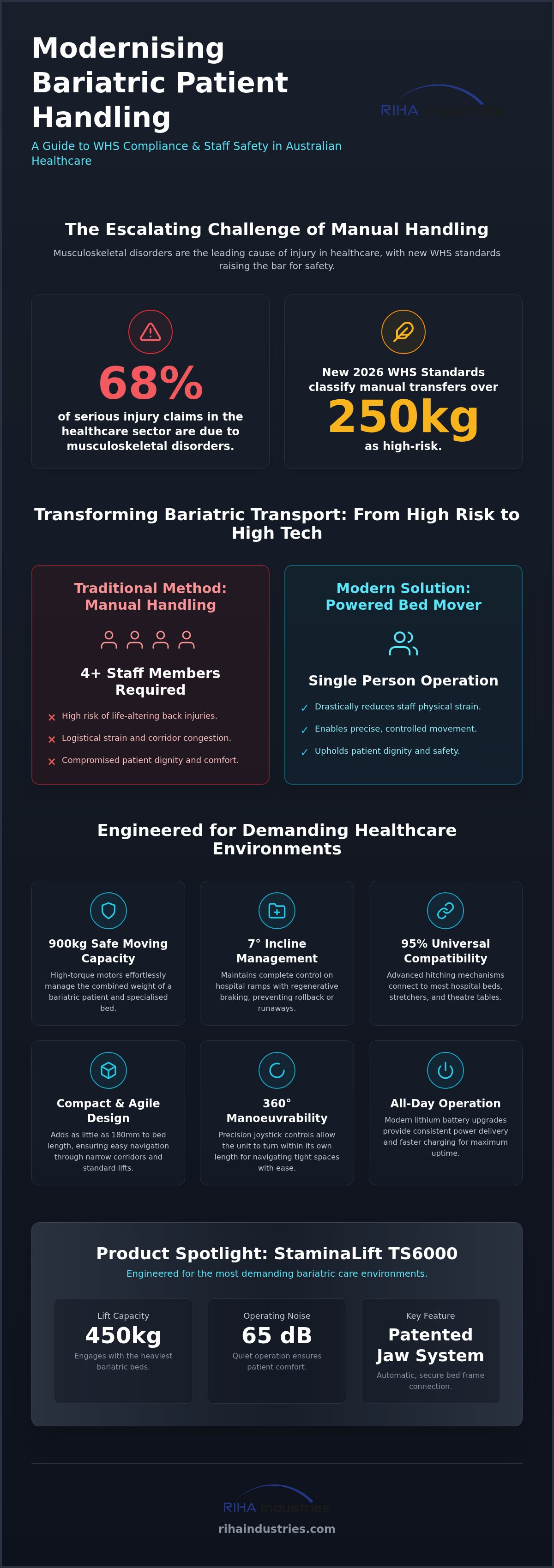
Musculoskeletal disorders account for 68% of serious injury claims in Australia's healthcare sector, a sobering figure that highlights the physical toll of manual handling. With 2026 WHS standards now classifying any manual transfer over 250kg as high risk, the traditional method of pushing heavy loads is simply no longer sustainable. Implementing a powered bed transfer system for bariatric patients is a critical step in shielding your staff from life-altering back injuries while maintaining operational flow.
You're likely familiar with the logistical strain of coordinating four staff members just to move one patient through a crowded hospital corridor. It's a high-pressure situation that compromises both staff wellbeing and patient dignity. We understand that your goal is a zero-injury workplace where equipment works for the carer, not against them. This guide explores how modern motorised movers enable a single person to navigate loads up to 900kg with precision. You'll discover the essential safety features of the latest transfer systems and learn how to streamline your facility's bariatric transport protocols for 2026 and beyond.
Table of Contents
What is a Powered Bed Transfer System for Bariatric Patients?
A powered bed transfer system for bariatric patients is a specialised, motorised unit engineered to integrate with heavy-duty hospital beds and stretchers. Unlike manual handling, which relies on physical exertion to overcome inertia, these battery-powered devices provide the mechanical force necessary to initiate and sustain movement. It's a solution designed to shift the physical burden from the carer's muscles to precision engineering, ensuring that even the heaviest loads move with fluid, controlled momentum.
The "Bariatric Challenge" often arises when standard bed movers reach their mechanical limits. Most general-purpose movers are designed for standard patient weights, but they frequently fail or lose traction once a total load exceeds 300kg. In a bariatric setting, where the combined weight of a patient and their specialised bed can approach 1,000kg, these standard units risk motor burnout or, more dangerously, a loss of braking control on inclines. A true bariatric-grade system is built for this high-capacity environment, providing the stability required for safe transport.
The Distinction Between Patient Lifts and Bed Movers
It's vital to distinguish between vertical and horizontal movement within a bariatric ward. Patient lifts, or hoists, are primarily designed for vertical transfers, such as moving a patient from a bed to a chair or a hygiene station. While essential for bedside care, they aren't designed for transport. Bed movers, on the other hand, are the workhorses of horizontal transport. They facilitate the safe movement of patients from the ward to radiology, theatre, or even to the bay where a bariatric ambulance waits for discharge. A complete safety strategy requires both technologies to eliminate manual handling risks at every stage of the patient journey.
Core Components of a Bariatric-Grade System
To manage extreme loads safely, a powered bed transfer system for bariatric patients must include specific engineering features. High-torque motorised drive wheels are the most critical component, as they provide the power to navigate 7-degree hospital ramps without the risk of the bed rolling back. These systems also utilise ergonomic joystick controls, allowing a single operator to steer a massive bed with centimetre precision through tight corridors. Key components include:
Patented Jaw Systems: These mechanisms automatically secure the bed frame, removing the need for staff to bend down or use manual strapping.
Universal Hitching: Advanced hitches ensure compatibility with 95% of hospital bed fleets, including specialised bariatric stretchers and theatre tables.
360-Degree Manoeuvrability: Precision steering allows the unit to turn within its own length, which is essential for navigating narrow ward entries and lifts.
Technical Requirements: Moving 900kg Safely
Managing the inertia of a 900kg load requires more than just a powerful motor; it demands a sophisticated approach to kinetic energy. When a bariatric bed is in motion, the momentum generated is significant. A dedicated powered bed transfer system for bariatric patients must provide the torque required to initiate movement without straining the operator's joints. This is particularly vital when navigating 7-degree hospital ramps, which are common in older facilities and multi-level complexes. Without sufficient power, these inclines represent a major bottleneck in patient flow and a high-risk zone for staff injury.
Safety isn't just about getting a bed moving; it's about having the capacity to stop it instantly. Advanced systems utilise automatic regenerative braking, which provides a controlled descent on inclines by using the motor to resist gravity. This eliminates the "runaway" sensation often associated with manual transport of heavy loads. To support these high-torque demands throughout a busy shift, modern units now feature lithium battery upgrades. These batteries provide consistent power delivery and faster charging cycles, ensuring the equipment doesn't sit idle when it's needed most.
The StaminaLift TS6000: Bariatric Power
The StaminaLift TS6000 is engineered specifically for the most demanding acute care environments. It features a 450kg lift capacity, allowing it to engage with the heaviest bariatric beds currently on the market. Despite its industrial-grade strength, it operates at a quiet 65 dB, ensuring patient comfort isn't compromised during transport. Operators can also choose from programmable drive modes, which allow the facility to tailor acceleration and speed settings to suit specific floor surfaces or ward layouts. While FDA guidelines on patient lifts focus primarily on vertical safety, the TS6000 provides the necessary horizontal security for high-mass loads.
Bluetooth Diagnostics and Fleet Management
Modern healthcare facilities require data-driven maintenance to ensure equipment longevity. By integrating Bluetooth diagnostics, hospital engineers can monitor battery health and usage patterns in real-time. This feedback loop helps identify training needs if equipment is being underutilised or used incorrectly. It simplifies the preventative maintenance process, ensuring your fleet remains operational without unexpected downtime. If you are looking to enhance your facility's safety protocols, exploring the StaminaLift range is an excellent starting point for achieving long-term operational efficiency.
WHS Compliance and Injury Prevention in Australian Healthcare
Healthcare workers in Australia often walk up to 15km per shift, frequently while pushing significant loads. Over a standard working week, this physical demand totals 75km, a distance that places immense strain on the human body. This exertion is a primary driver for musculoskeletal disorders, which currently account for 68% of serious injury claims within the healthcare sector. Adopting a powered bed transfer system for bariatric patients isn't just an operational choice; it's a fundamental requirement for meeting Australian WHS Standards. Current guidelines in the Safe Work Australia bariatric patient handling report emphasise that manual handling of any load exceeding 250kg is classified as high risk. Transitioning to a "zero-push" environment is the only reliable way to ensure long-term staff safety.
The financial implications of these injuries are staggering for hospital administrators. A single serious back injury can cost a facility hundreds of thousands in workers' compensation, rehabilitation, and replacement staff costs. In contrast, investing in motorised equipment provides a clear ROI through injury prevention and improved efficiency. A trial in a South Australian hospital demonstrated this impact vividly. By implementing specialised bed movers, the facility saw injury rates drop from 20% to zero over a two-year period, proving that technical intervention can effectively eliminate workplace hazards.
Eliminating the "Initial Push" Risk
The most dangerous moment of any patient transfer is the "initial push" required to overcome static friction. This moment of maximum physical exertion is when the majority of musculoskeletal injuries occur. Motorised assistance takes 100% of this initial strain, allowing the operator to guide the bed with precision rather than brute force. This capability also reduces the reliance on "spotters" or second porters, which streamlines workflows in high-pressure wards and ensures that a single staff member can manage a move safely.
Staff Retention and Longevity
As the Australian healthcare workforce ages, the physical burden of bariatric care becomes a significant barrier to staff retention. Smaller-statured staff or older employees may feel unable to safely move heavy loads, leading to burnout or early retirement from the profession. By providing the right tools, facilities empower their entire team to work confidently regardless of their physical size or age. Understanding how to reduce nurse back injuries through proper equipment selection is essential for maintaining a resilient, long-term workforce in 2026.
Manoeuvrability in Tight Hospital Spaces
Navigating a bariatric bed through a busy ward requires more than just power; it demands extreme precision. A high-capacity powered bed transfer system for bariatric patients must turn within its own length to avoid corridor collisions. With a 360-degree turning radius, operators can pivot heavy loads in narrow ward entries without the multi-point turns that delay transport and increase stress. This agility is matched by a compact footprint. Most hospital lifts are designed with tight tolerances, making the addition of bulky equipment impossible. By adding only 180mm to the total bed length, these movers ensure the entire assembly fits into standard elevators, maintaining vertical flow throughout the facility.
Visibility is another critical safety factor. Wide bariatric beds often obscure the operator's line of sight, creating hazards in public hallways. Modern drive systems are designed to position the carer where they have an unobstructed view of the path ahead. To protect the facility's infrastructure, the use of non-marking wheels prevents damage to specialised hospital vinyl and carpeted transition zones, ensuring the equipment leaves no trace on expensive flooring.
Navigating Ramps and Slopes
Maintaining traction is essential when moving a tonne of equipment across varied surfaces. Whether transitioning from smooth vinyl to industrial carpet or navigating a 7-degree concrete ramp, the drive wheels must provide consistent grip. To manage safety in public corridors, integrated lockout features prevent unauthorised use by visitors or patients. In the rare event of a flat battery, emergency bypass systems allow for manual movement, ensuring the bed is never stranded in a thoroughfare.
The "Connect and Lock" Advantage
Efficiency is won or lost at the point of attachment. Hands-free hitching mechanisms eliminate the need for staff to bend, reach, or manually strap equipment under the bed frame. This "connect and lock" technology is compatible with 95% of global bed brands, including specialised bariatric models and theatre tables. For a detailed look at how this technology integrates with your fleet, see our StaminaLift Transfer System 5000 guide.
To see how these systems perform in your specific environment, you can enquire about a facility demonstration to test compatibility with your existing ward layout.
Selecting the Right System for Your Facility
Selecting a powered bed transfer system for bariatric patients requires a thorough audit of your facility's specific operational challenges. Administrators should start by assessing average bariatric patient volume and the unique geometry of their ward layouts. If your facility frequently manages acute care transfers between theatre and radiology, hitch compatibility is paramount. A system must integrate seamlessly not only with bariatric beds but also with specialised theatre tables and stretchers to maintain a truly "zero-lift" workflow. Identifying these integration points early ensures the equipment becomes a versatile asset rather than a niche tool.
Reliability is the cornerstone of any safety strategy. When motorised equipment is central to daily operations, 24-hour parts availability is critical to prevent service disruptions. Successful implementation also relies on comprehensive staff training and certification. Ensuring porters and nursing staff are competent in motorised transport protocols reduces the risk of equipment misuse and fosters a culture of safety. This proactive approach to competency ensures that the transition to motorised handling is smooth and universally accepted by the clinical team.
Why Australian-Made Matters
RIHA Industries manufactures its range using high-grade stainless steel, ensuring the equipment survives the rigours of a 24/7 hospital environment. Choosing Australian-made solutions allows for direct engagement with the manufacturer. This is particularly beneficial if your facility requires custom modifications for non-standard equipment or unique floor plans. Supporting local engineering also ensures a more responsive supply chain and contributes to the long-term sustainability of the domestic healthcare sector.
Next Steps for Procurement
To justify the investment, facilities can utilise the RIHA ROI calculator. This tool compares the cost of equipment against the potential financial impact of workplace injuries and lost productivity. Organising an on-site demonstration is the most effective way to verify compatibility with your specific lifts and ward entries under real-world conditions. For a comprehensive overview of the buying process, consult our 2026 hospital bed mover procurement guide to ensure your facility meets the latest safety standards.
Advancing Bariatric Safety Standards for 2026
The landscape of patient transport is shifting towards a "mechanical-first" safety culture where manual strain is no longer acceptable. By integrating advanced drive technology and universal hitching, facilities can protect their most valuable asset: their staff. We've seen how precision engineering allows a single operator to move 900kg safely, meeting the rigorous 2026 WHS standards while ensuring patient dignity remains intact. It's a transition that moves beyond simple compliance, focusing instead on the long-term wellbeing of the healthcare workforce.
Implementing a powered bed transfer system for bariatric patients is a strategic investment in workplace longevity and clinical efficiency. As an FDA-registered manufacturer and a Top 10 Mobility Aids Provider 2024, RIHA Industries provides Australian-made and owned solutions designed for high-pressure environments. Our equipment doesn't just move beds; it empowers your team to work without the fear of musculoskeletal injury.
Ready to transform your ward's safety protocols? You can request a 30-day trial of the StaminaLift TS6000 for your bariatric ward and experience the relief of zero-injury transport firsthand. We're here to help you build a safer, more efficient future for your entire team.
Frequently Asked Questions
Can one person safely move a bariatric patient using a powered system?
Yes, a single operator can manage the transport of a bariatric patient without physical assistance. By using a powered bed transfer system for bariatric patients, the mechanical effort required to overcome static friction is completely eliminated. The equipment handles the heavy work of initiating movement and precision steering, allowing one staff member to navigate corridors and lifts confidently while maintaining full control over the load.
Is the StaminaLift TS6000 compatible with bariatric beds from different manufacturers?
The StaminaLift TS6000 features a universal hitching system compatible with 95% of global hospital bed brands. This includes heavy-duty frames from major manufacturers such as Hill-Rom, Stryker, and Linet. The system's patented jaw mechanism is engineered to adjust to various frame geometries and heights, ensuring a secure connection to your existing bed fleet without requiring manual modifications or additional straps.
What is the maximum weight a bariatric bed mover can handle on a ramp?
The StaminaLift TS6000 is engineered to move a total load of 900kg with ease. This power is sustained even when navigating 7-degree hospital ramps, which are common in multi-level facilities. The high-torque motor ensures that the unit maintains a controlled speed during ascent and utilises automatic regenerative braking for a safe descent, providing the operator with total command over the massive load.
Do powered bed movers require a special license to operate in Australian hospitals?
No specific heavy vehicle license is required to operate these systems in an Australian healthcare setting. However, facilities must provide competency-based training as part of their WHS obligations. Staff should be instructed on hitching procedures, joystick control, and emergency overrides. RIHA Industries provides comprehensive training support to ensure all operators feel confident when using a powered bed transfer system for bariatric patients.
How long does the battery last on a bariatric transfer system during a standard shift?
Modern systems are equipped with high-capacity batteries designed to last through a busy 8-hour shift. With the latest lithium upgrades, these units offer improved longevity and faster charging cycles compared to older lead-acid models. For facilities with extremely high transport volumes, a quick top-up charge during staff breaks is usually sufficient to keep the equipment operational across multiple shifts without any downtime.
What happens if the battery runs out while moving a patient?
If the battery is depleted during transport, the system features an emergency manual bypass. This allows the operator to disengage the drive wheels and move the bed manually to a safe location or a charging point. While manual movement of a bariatric load is difficult, this failsafe ensures that patients are never stranded in corridors or lifts during an unexpected power failure.
Can these systems be used to move other equipment like linen trolleys or meal carts?
Yes, many of our systems are versatile enough to handle various heavy hospital loads. While primarily designed for beds, models like the StaminaLift 2100 can be fitted with custom hitches to move heavy linen trolleys, meal carts, or waste bins. This multi-purpose capability increases the return on investment by streamlining logistics across different hospital departments beyond just acute patient wards.
How does a powered bed mover improve WHS compliance in my facility?
Powered systems fundamentally change the risk profile of your ward by ensuring compliance with Australian guidelines that classify manual handling of loads over 250kg as high risk. By removing the physical exertion from the carer, you mitigate the primary cause of musculoskeletal injuries. This proactive approach to safety helps lower workers' compensation claims and supports a zero-injury workplace culture, which is essential for meeting modern healthcare accreditation standards.


