Safe Work Procedure for Moving Hospital Beds
Side rails should not automatically be up whenever a hospital bed is moved. Their position should reflect the patient’s assessed needs and care plan, while the bed is moved in a controlled way that protects both the patient and staff. A safe work procedure for moving hospital beds brings these decisions together rather than relying on a single rule for every patient.
It makes sense to want clear safeguards: moving a bed can involve a heavy load, tight spaces and a patient who needs reassurance. A safe work procedure for moving hospital beds starts with assessing the move, communicating with the patient and using suitable assistance instead of relying on force or habit.
This article explains how to consider side rails, choose transfer aids for the task, reduce cross-contamination and limit injury risks. It also outlines why manual bed movement can strain staff, and how suitable equipment and a coordinated team can support safer, more comfortable transfers.
Table of Contents
Use of slide sheets, transfer belts, and air-assisted devices
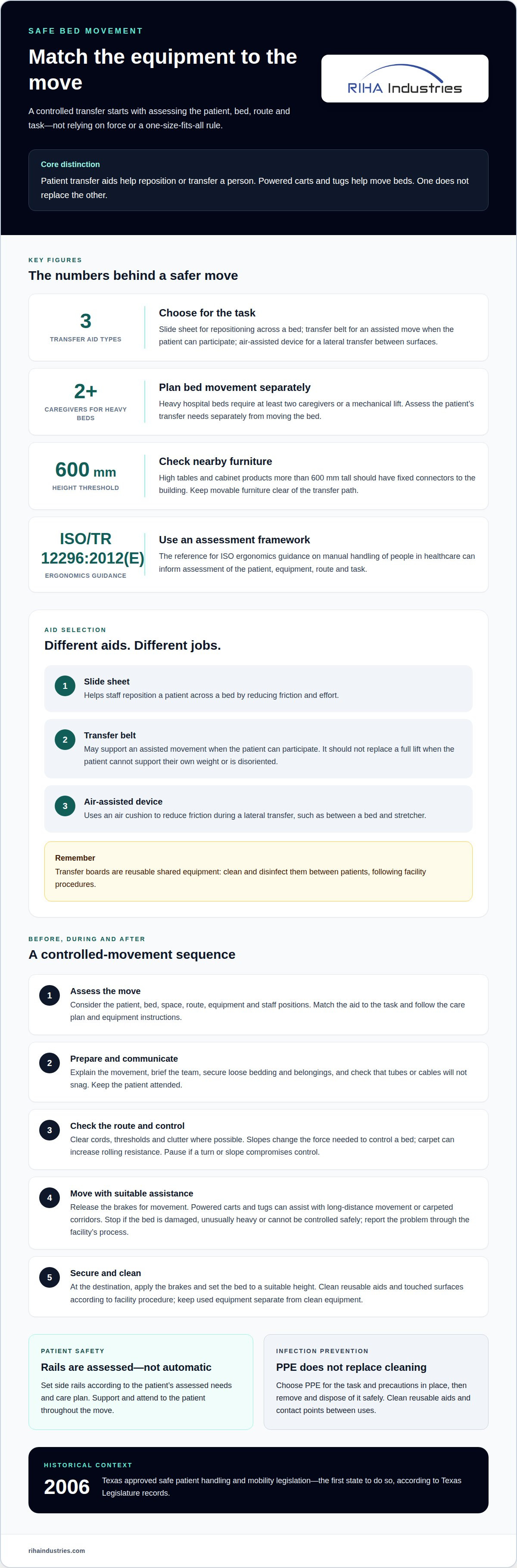
A suitable transfer device reduces friction, effort and uncontrolled movement during patient handling. The International Organization for Standardization uses ISO/TR 12296:2012(E) as the reference number for its ergonomics guidance on manual handling of people in healthcare. Staff can use that framework to inform an assessment of the patient, equipment, route and task before moving a bed or repositioning someone.
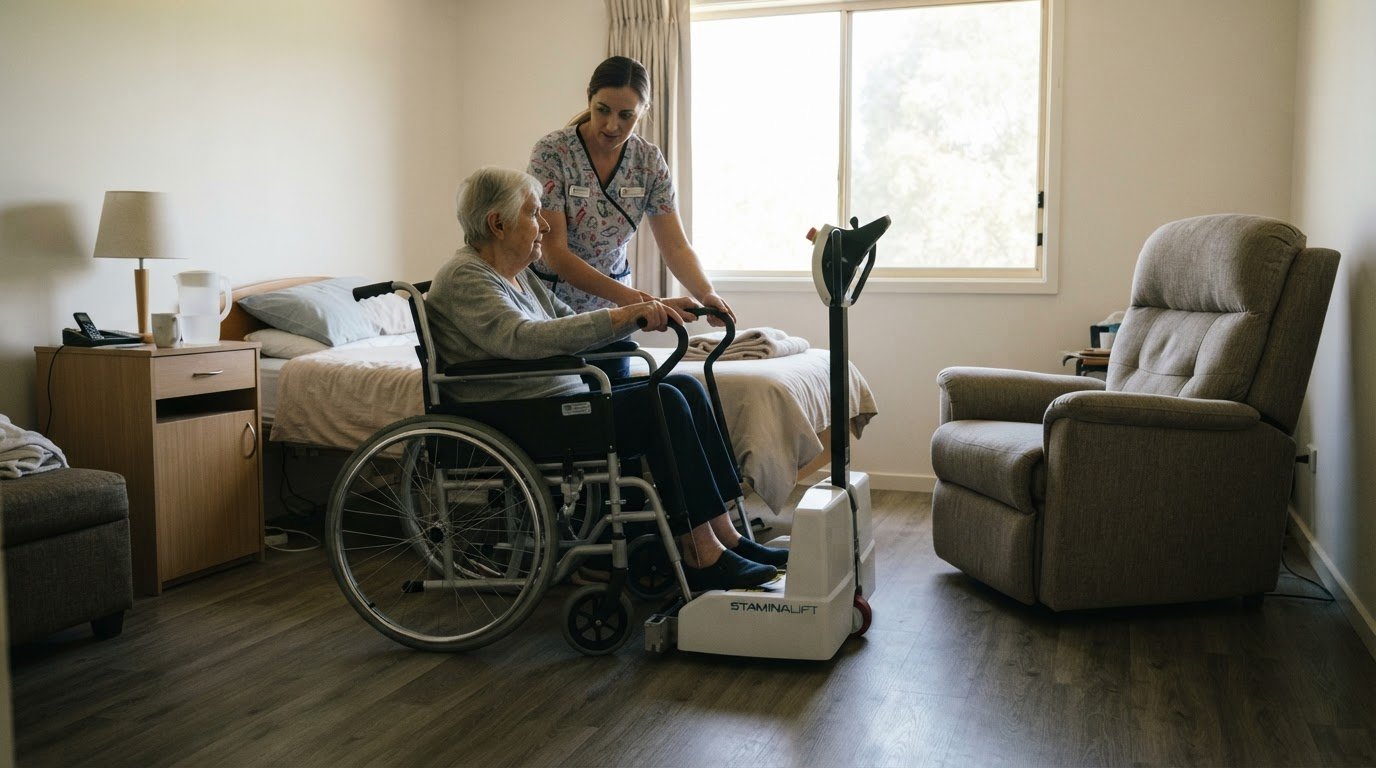
Choose the aid for the task. A slide sheet can help staff reposition a patient across a bed, while a transfer belt may support an assisted movement when the patient can participate. Air-assisted devices use an air cushion to reduce friction during a lateral transfer between surfaces, such as a bed and stretcher. These are different tasks: a patient transfer aid does not move the bed itself.
Before using a device, follow its instructions and the patient’s care plan. Check that the equipment suits the transfer, the patient can be supported safely and the receiving surface is ready. Explain the movement, coordinate the team and stay with the patient throughout. A belt or sheet should not replace a full lift when the patient cannot support their own weight or is disoriented.
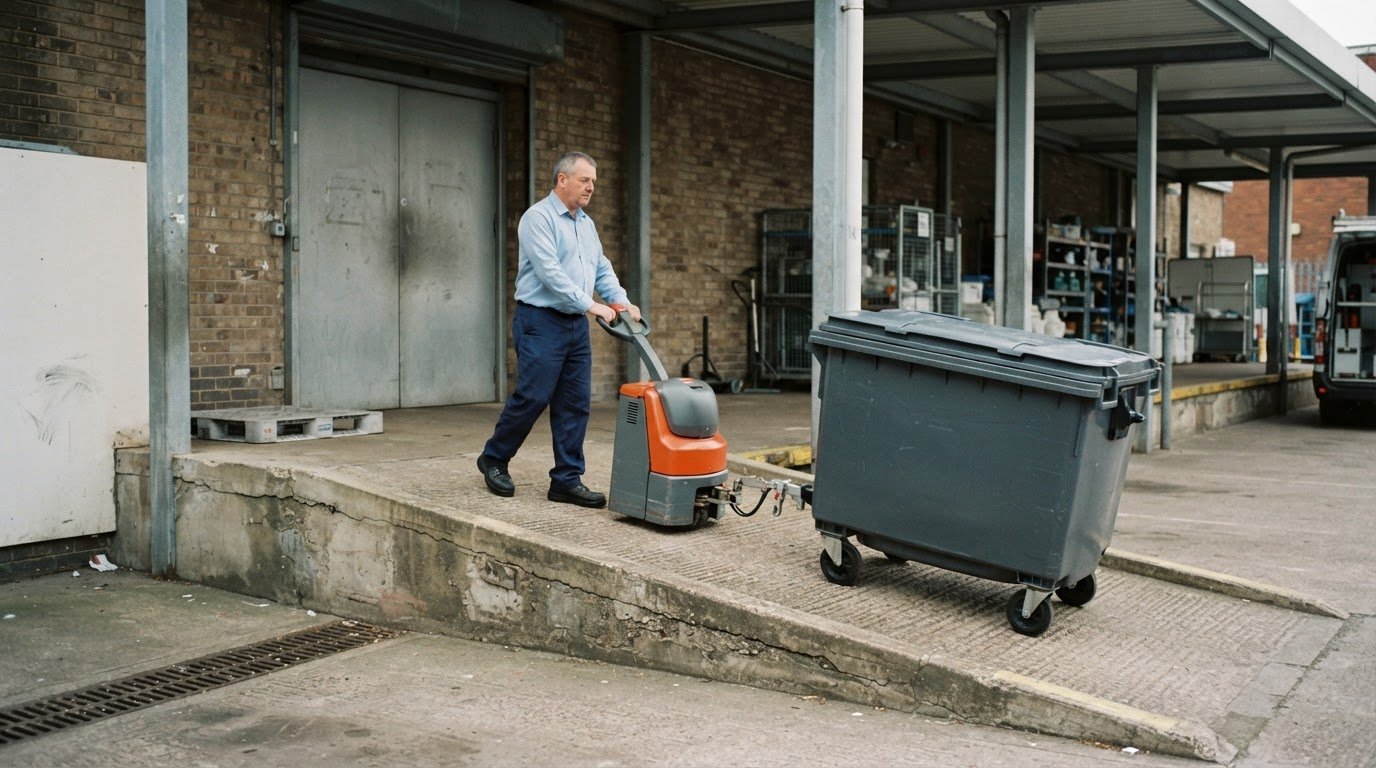
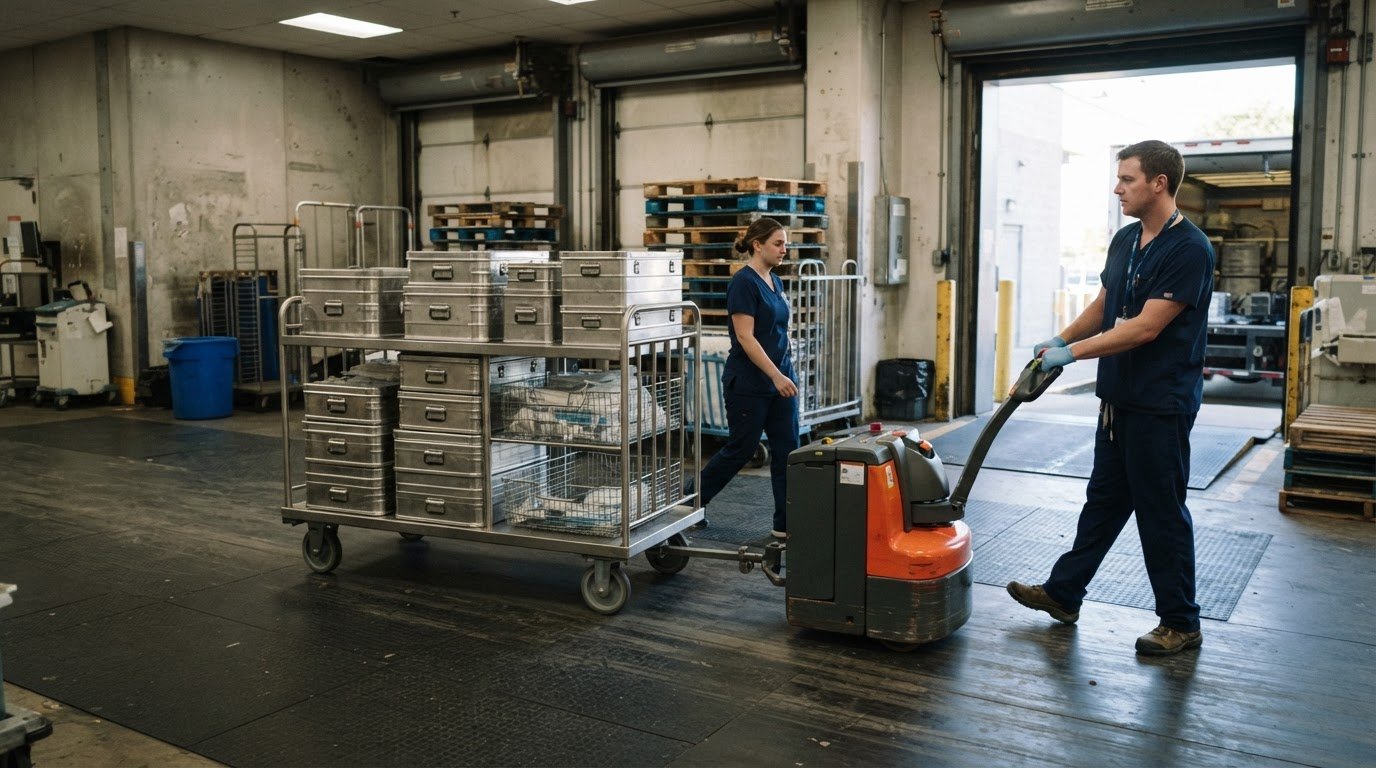
Assess slopes, ramps, carpet and obstacles along the route. A ramp changes the force needed to control a bed, while carpet can increase rolling resistance. Clear cords, thresholds and clutter where possible, and pause if a turn or slope compromises control. Powered transport carts and tugs can assist with long-distance movement or carpeted corridors; they help transport beds, not reposition patients.
High-risk tasks include lateral transfers, rolling, scooting and moving a bed through a confined department. An ergonomic assessment should consider the bed, patient, space, route, equipment and staff positions. Repeatedly pushing or pulling excessive loads increases ergonomic risk. Match the device to the task, and stop if the movement cannot be controlled safely.
How many staff members are needed to move different types of hospital beds? The support required depends on the bed, route and equipment. Heavy hospital beds require at least two caregivers or a mechanical lift. Assess a patient’s transfer needs separately from the bed’s movement.
What should staff do if a bed is damaged, unusually heavy or cannot be moved safely? Stop, keep the bed stationary and report the problem through the facility’s process. Don’t force a damaged or uncontrollable bed; arrange an assessment before moving it again.
Powered assistance can reduce the physical effort required to push a bed, particularly over carpet or longer routes. Texas Legislature records that Texas approved safe patient handling and mobility legislation in 2006, the first state to do so. This history reinforces the importance of planned equipment use, staff preparation and safe movement practices.
Infection and cross-contamination prevention
Cleaning reusable transfer equipment between patients helps limit cross-contamination. Patient transfer boards are rigid aids for moving someone between surfaces, and they require frequent sanitation and disinfection. Treat each board as shared medical equipment: follow facility cleaning procedures after use, including for contact surfaces that touch the patient or staff.
Gloves and other personal protective equipment help protect nurses and patients from germs and infections. Select PPE according to the task and precautions in place, then remove and dispose of it safely after use. Gloves don’t replace cleaning reusable equipment. A transfer board, bed controls, push handles and nearby surfaces can all be touched during one move, so include equipment and contact points in the facility’s cleaning process.
Prepare the bed before moving it. Explain the move to the patient, secure loose bedding and personal items, and check that tubes or cables won’t snag. Disconnect the power lead only when the bed’s operating instructions and clinical requirements allow it; keep the cable clear of wheels and walkways. Release the brakes for movement, then secure the bed at its destination according to facility procedure.
Fall prevention depends on controlling the bed and supporting the patient throughout the move. Keep the patient attended, and avoid leaving them near an edge while equipment is repositioned. At the destination, apply the brakes and set the bed to a suitable height for the next care task. Side rails should reflect the patient’s assessed needs and care plan, not be used automatically. Clear obstacles before starting, including cords that could catch a wheel or create a trip hazard.
Furniture stability matters around the bedside, too. High tables and cabinet products more than 600 mm tall should have fixed connectors to the building. Keep movable furniture out of the transfer path, since an unstable bedside table can shift when brushed by a bed. These checks support safe patient handling as well as an ergonomic workspace for staff.
Cross-contamination controls also protect staff from avoidable exposure during routine transfers. Keep clean equipment separate from used aids, and don’t return a used transfer board to clean storage before it has been sanitised and disinfected. When a patient’s condition requires additional precautions, follow the facility’s infection-control procedures for PPE and equipment handling. A consistent process helps prevent a quick bedside move from compromising patient safety or care.
Facilities reviewing powered bed movement can explore bed-moving equipment as part of a broader ergonomic approach. Safe handling practices, equipment cleaning and compensation risk management all contribute to a more controlled working environment.
Musculoskeletal strain and caregiver injuries
Moving a hospital bed can expose caregivers to repeated pushing, pulling and awkward reaching. Patient transport in beds ranks among the handling tasks associated with musculoskeletal pain, and it can frequently result in low back pain. A surgical ward may need to move occupied beds through narrow spaces, adding turning and braking demands to the task. These movements can strain the back, shoulders and arms, particularly when staff use force instead of suitable equipment.
Risk comes from the whole task, not simply the bed’s weight. Carpet, thresholds, tight corners, poor hand positions and limited space can make movement harder to control. The number of caregivers and their working positions also affect posture and effort. Before moving, assess the route, bed condition, load, available space and required manoeuvres. If the bed resists movement or staff must lean, twist or jerk it, stop and reassess the method.
Use mechanical assistance and coordinated staffing to reduce physical load. Healthcare workers shouldn’t move a patient alone; use appropriate equipment and seek help. For heavy hospital beds, at least two caregivers or a mechanical lift are recommended in the research facts. Agree who steers, who controls the movement and who watches the route. This avoids competing forces, sudden stops and repeated attempts that can increase strain.
The injury burden is reflected in reported US workplace data. In 2017, nursing assistants had 18,090 days-away-from-work cases involving musculoskeletal disorders. Their incidence rate was 166.3 cases per 10,000 workers, more than five times the average across all industries. These figures show why facility guidelines need to address bed movement as a recurring ergonomic task, not an occasional exception.
Moving beds and stretchers is identified as the number one cause of injury to healthcare workers in the research facts. Injuries can affect staff wellbeing, staffing continuity and workers’ compensation claims. A zero-lift programme in 31 rural community hospitals in Washington State used lifting equipment and devices instead of manual patient lifting; patient-handling injury claims decreased by 43 percent. The result illustrates how equipment can support a facility-wide prevention approach.
Practical prevention includes maintaining wheels, clearing the route, positioning staff to avoid twisting and using powered assistance where appropriate. Training should cover available equipment, safe operating methods and when a task needs reassessment. A reported injury or near miss should prompt a review of the bed, route, staffing and procedure. Treating each event as useful safety information helps caregivers and managers address the cause before the same movement causes further harm.
PPE, safety briefings, and communication
A short briefing gives workers a shared plan before a bed starts moving. Name who will steer, who will control the pace, and who will watch the patient and route. Identify hazards such as a doorway, loose cable or wheelchair near the turning space. Agree on a clear stop signal so anyone can pause movement if control is lost or the route changes.
Explain the planned movement to the patient and involve them in decisions where possible. Tell them what will happen, when the bed will move and how they can communicate discomfort. For example, a patient transferring from bed to wheelchair needs to know when staff will assist and where the chair will be positioned. Clear information supports comfort, dignity and safer coordination.
Use gloves and other personal protective equipment when needed to protect workers and patients from germs and infection. Select PPE according to the task and the facility’s infection-control procedures. Before handling a patient or used transfer aid, put on the required equipment, then remove it safely afterwards. PPE supports infection prevention, but it does not replace cleaning equipment or preparing the route.
Brief the team on the physical demands and hazards of the move. A bed travelling over carpet, around a tight corner or across a threshold may need a different pace and staffing plan. Confirm that brakes are released for movement, the power lead is clear and the destination is ready. If the patient’s condition changes or an obstacle appears, stop and reassess before continuing.
Training helps workers use equipment and communication procedures consistently. A healthcare facility’s safe patient handling programme should address equipment, staff training, policies, risk assessment and communication. The toolkit recommends education and training at least annually at each healthcare facility. Training can include practical scenarios, such as stopping a bed move when a wheelchair blocks the planned route.
Keep instructions direct during movement. Use agreed cues such as “stop”, “slow” and “turn”, and avoid shouting different directions at once. The person steering should confirm the next action before the team moves, especially through a narrow doorway. If a patient signals pain, fear or dizziness, pause and respond before resuming. Report injuries promptly through the facility’s process so hazards and procedures can be reviewed.
Risks of manually moving hospital beds
A manual push can place substantial force on health care workers, especially during repeated bed movements. Some Air Fluidized Therapy and bariatric beds weigh up to 1500 lbs. That load can be difficult to start, steer and stop, particularly across carpet or through an awkward doorway. The bed’s weight is only part of the hazard; route, posture and control also matter.
Effort can rise sharply when workers push from a poor position or turn while applying force. A stuck castor, sloping corridor or tight corner can prompt sudden movement and awkward reaching. Repeated pushing or pulling excessive loads creates ergonomic risk. Manual handling also leaves less capacity to respond if a patient shifts or a wheel catches. Nursing teams should treat resistance, loss of control or a need to jerk the bed as reasons to stop and reassess.
A 2019 ergonomic assessment at Tampa General Hospital studied moving a bed weighing 1400 lbs. It found most female healthcare workers needed more force than recommended to move that bed. This example shows why perceived effort alone isn’t a reliable safety measure. A move that feels manageable to one worker may still exceed recommended force for another, especially when repeated across a shift.
Before moving, assess the bed, route, surface and task. Check whether castors roll freely, identify thresholds and corners, and make sure the destination allows a controlled stop. Staff training should cover safe equipment use and clear stop signals. If the bed remains difficult to move, don’t add force or recruit an unplanned push. Use suitable powered assistance or follow the facility’s procedure for arranging a safer movement.
Manual bed movement can also affect staffing and compensation. This figure relates to that hospital’s reported cases, not a universal cost. It illustrates why facilities benefit from examining repeated tasks, equipment suitability and injury reports together, rather than treating each strain as an isolated event.
The practical takeaway is to avoid making physical force the default solution. Assess the load and route, use appropriate moving equipment, and stop if staff cannot control the bed safely. A facility can review its handling practices and equipment needs together to reduce avoidable manual effort. Explore bed-moving equipment options for powered assistance with hospital bed movement.
RIHA Industries
RIHA Industries helps healthcare facilities reduce the physical effort involved in moving hospital beds and other heavy loads. Its patient transfer systems and bed movers are designed to connect with nearly any bed, stretcher or trolley, supporting facilities looking to complement safe handling procedures with mechanical assistance.
The StaminaLift Transfer System 5000, StaminaLift Transfer System 6000 and StaminaLift 2100 Bed Mover address bed-moving needs, while Easi Rider supports movement of heavy loads. These solutions may be relevant when manual pushing creates recurring strain or routes make controlled bed movement difficult. Selecting suitable equipment alongside staff training and movement planning can help make procedures more consistent.
For information about equipment options for your facility, contact RIHA Industries.
Make safer bed movement part of everyday practice
A safe work procedure for moving hospital beds is most effective when it guides routine decisions, not just unusual transfers. Build it into staff induction, equipment training and team communication so workers know how to respond when a route changes or a bed becomes difficult to control. Reviewing near misses can also reveal where equipment, workspace layout or movement planning needs attention.
Facilities can take the next step by matching bed-moving requirements with suitable mechanical assistance. RIHA Industries offers solutions designed to help reduce the physical demands of moving beds and other heavy loads. A conversation can focus on the movement challenges your team encounters and the equipment that may support its procedures.
Contact RIHA Industries for support to discuss bed-moving equipment for your facility. A considered approach can help your team make safer movement a consistent part of patient care.
Frequently Asked Questions
What are the step-by-step safe work procedures for moving a hospital bed?
A safe work procedure for moving hospital beds starts by confirming the patient’s care needs and destination. Check the bed’s condition, route and equipment before moving. Prepare the patient and explain what will happen, then coordinate the team and move at a controlled pace. At the destination, secure the bed and confirm the patient is comfortable. If the bed becomes difficult to control, stop and reassess rather than forcing it.
What training and staff are required to move a hospital bed safely?
Staff need training in the specific bed-moving equipment and procedure used in their facility. Team size depends on the bed, patient, route and assistance available; heavy beds require at least two caregivers or a mechanical lift. A trained team should understand how to operate the equipment, recognise when conditions change and stop the movement safely. Include practical bed-moving scenarios in staff education, rather than relying solely on written instructions.
What ergonomic and lifting techniques reduce injury risk when moving a hospital bed?
Use powered assistance or suitable handling equipment to reduce the force workers apply. If a task involves lifting or repositioning a patient, select an aid suited to the patient’s ability and the surfaces involved. Keep the movement controlled, avoid twisting while applying force, and don’t make sudden pulls to free a stuck wheel. A change in posture, grip or effort is a cue to pause and review the method.
How do you safely move a hospital bed through corridors, lifts, ramps and doorways?
Plan the route before departure, including turns, door openings, floor changes and the lift entrance. Remove movable obstructions and position staff so they can see the bed and surrounding space. Approach thresholds and ramps slowly, maintaining control rather than letting the bed roll freely. For a lift, ensure the bed and team can enter and turn without obstruction, then keep the patient attended during transit.
What hazards and risks should staff assess before moving a hospital bed?
Assess the patient’s condition, bed stability, castors, floor surface, route width and destination. Look for trailing leads, clutter, wet patches, thresholds and people crossing the path. Consider whether the bed’s load or shape makes steering difficult, and whether the planned equipment suits the move. A damaged bed, faulty wheel or unexpected resistance changes the risk; stop and report the issue through the facility’s process.
What PPE and equipment are recommended for moving hospital beds?
Choose equipment according to whether the task is moving the bed, repositioning a patient or transferring them between surfaces. Powered bed movers and tugs assist with bed or load transport; slide sheets and air-assisted devices support patient repositioning or lateral transfers. Gloves and other PPE depend on the task and infection-control precautions in place. Staff should use equipment they’re trained to operate and follow its instructions.
What infection-control precautions apply when moving a hospital bed between rooms?
Follow the facility’s infection-control procedures for the patient’s condition and the equipment used. Wear the required PPE, keep clean aids separate from used equipment, and clean and disinfect reusable items before using them for another patient. Include bed controls, rails and push handles among the surfaces considered during cleaning. If equipment is shared between rooms, its cleaning status should be clear before it enters another patient’s care space.