Bed Mover Maintenance Service: Protecting Your Staff and Your Investment
Updated: Sep 2
In the 2024-25 period, there were 819 injury hospitalisations among Australian healthcare workers, a sobering reminder of the physical risks inherent in clinical environments. You already know that motorised movers are essential for reducing these manual handling risks, yet when a unit fails, the physical burden falls right back onto your porters and nursing staff. Accessing a reliable bed mover repair service becomes critical the moment a machine stops, especially when you're dealing with complex lithium battery systems or struggling to source parts for discontinued models.
Maintaining your equipment isn't just about operational uptime; it's about your duty of care under the WHS Act to ensure a safe workplace through reasonably practicable measures. This guide explores how a professional maintenance programme protects your team from debilitating back injuries while ensuring your facility remains compliant with the latest AS/NZS 3551 standards. We will examine the shift toward predictive diagnostics and how engineering sustainability can extend the life of your entire fleet. By the end, you'll understand how to transform your patient transfer equipment from a potential liability into a high-performance asset.
Table of Contents
The Critical Role of Bed Mover Maintenance in Australian Healthcare
Motorised bed movers are the silent workhorses of the modern hospital environment. They ensure patient flow remains fluid, allowing staff to move heavy loads with 360-degree precision and ease. When these machines operate at peak performance, they eliminate the physical strain associated with manual handling, effectively safeguarding the wellbeing of porters and nurses. However, mechanical equipment is only as reliable as its last service. Without a dedicated maintenance schedule, these vital tools can quickly transition from a safety asset to a significant operational liability.
The High Cost of Neglect: Safety and Financial Risks
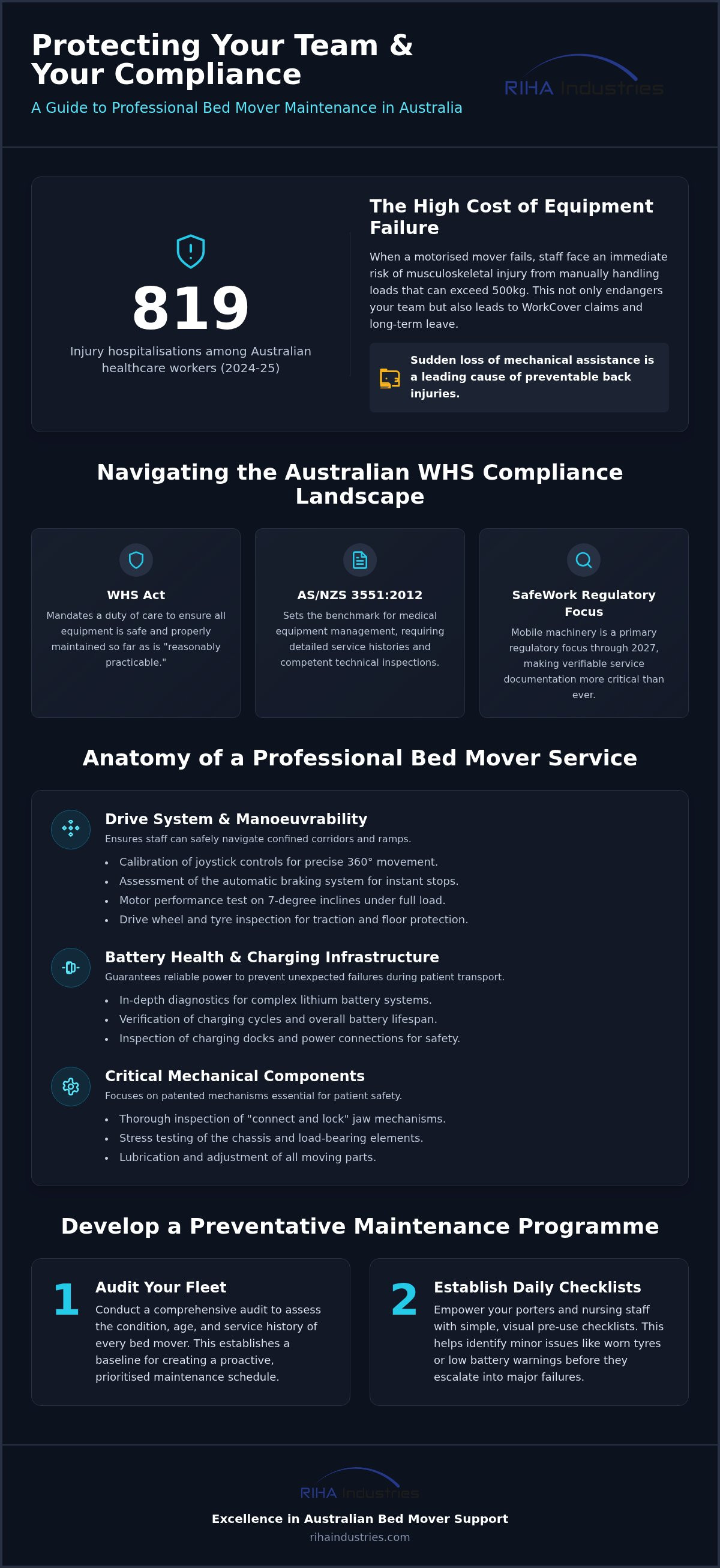
The impact of equipment failure extends far beyond a broken motor or a flat battery. In the 2024-25 period, 819 Australian healthcare workers were hospitalised due to workplace injuries. Many of these incidents stem from the sudden loss of mechanical assistance. When a mover is out of commission, staff are often forced to manually push loads that can exceed 500kg. This creates an immediate risk of musculoskeletal injuries (MSIs), which remain a leading cause of staff burnout and long-term leave in the sector. Implementing a proactive How to Reduce Nurse Back Injuries strategy relies heavily on the constant availability of functional equipment. A faulty unit doesn't just slow down a ward; it physically endangers the people responsible for patient care. Engaging a professional bed mover repair service ensures that these risks are mitigated before they result in a WorkCover claim.
Compliance with Australian WHS Standards
Australian healthcare facilities must navigate a rigorous regulatory landscape regarding plant and machinery. Under the WHS Act, a Person Conducting a Business or Undertaking (PCBU) is legally required to ensure equipment is safe so far as is "reasonably practicable." This duty includes maintaining a detailed plant and equipment register as mandated by the WHS Regulations 2011. Currently, AS/NZS 3551:2012 sets the benchmark for medical equipment management, with a new draft standard, DR AS/NZS 3551:2026, published in July 2026 to further refine these requirements.
SafeWork NSW has identified mobile machinery as a primary regulatory focus through 2027, making thorough documentation more important than ever. Unlike basic electrical safety checks, these standards require detailed service histories and competent technical inspections. Modern hospital bed features often integrate with sophisticated electronic movers that demand specialised knowledge to maintain. A set-and-forget approach isn't just poor management; it's a legal risk that can leave a facility vulnerable during a safety audit. Professional bed mover repair service providers offer the verifiable service histories needed to demonstrate compliance and protect the facility's accreditation status.
Anatomy of a Professional Bed Mover Maintenance Service
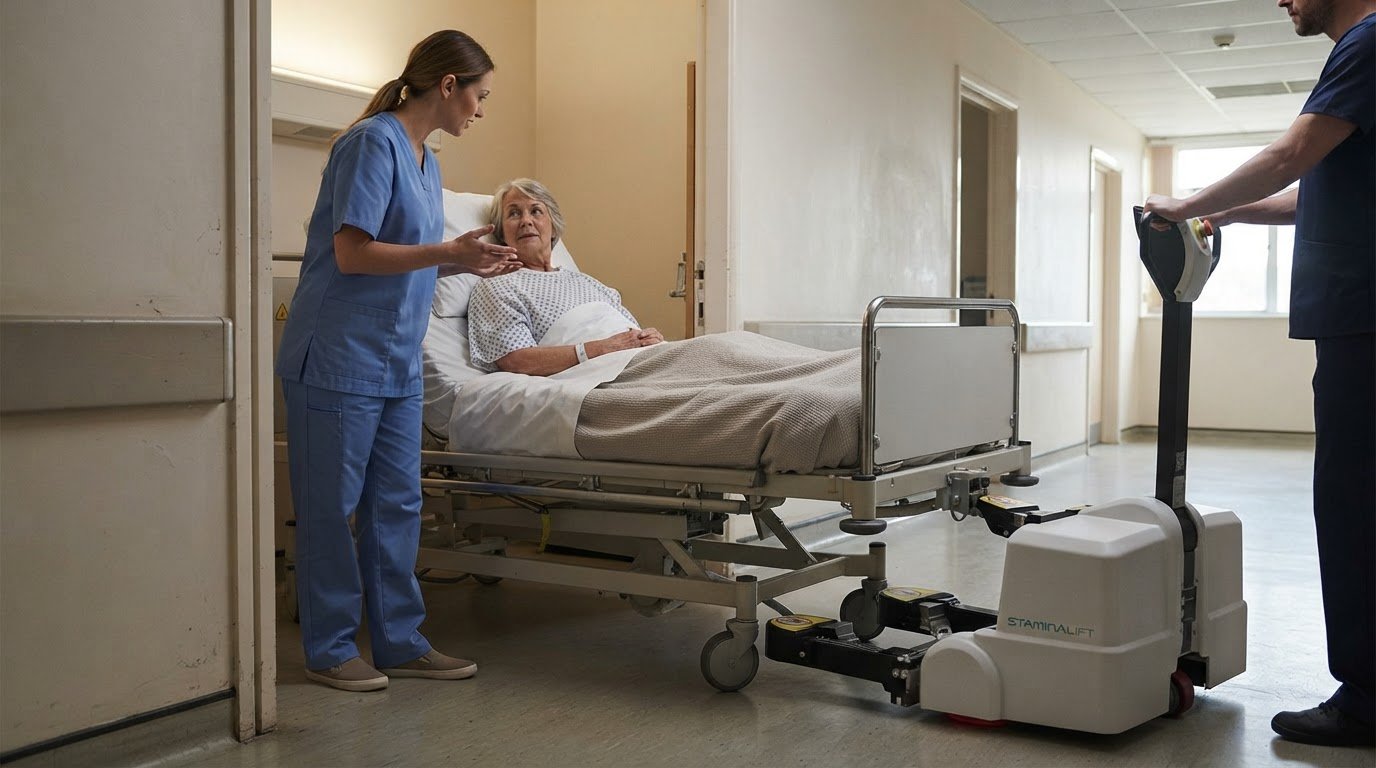
A professional bed mover repair service involves more than just a quick visual check. It requires a technical deep dive into the specific components that ensure safe, effortless patient transport. While general facility maintenance might cover basic hospital furniture, motorised movers like the StaminaLift or Easi series require specialised attention to their drive systems, electronics, and patented hitching mechanisms. Ensuring these machines operate at peak performance directly impacts the safety of every porter and nurse on the floor.
The Drive System and Manoeuvrability
To ensure staff can safely navigate confined corridors, technicians calibrate the programmable joystick controls for precise 360-degree manoeuvrability. This precision is vital for avoiding wall damage and protecting patients during transport. The service also includes a rigorous assessment of the automatic braking system. This system must engage the moment the joystick is released to prevent runaway loads. Technicians also evaluate motor performance on 7-degree inclines under the maximum rated load, ensuring the unit has the torque required for steep hospital ramps. Drive wheels and tyres are assessed for traction and floor protection, as worn tyres can lead to slippage or damage to expensive hospital flooring. Beyond external components, ensuring that internal gears and motors are properly treated with premium products from Rida Lubricants can significantly reduce mechanical wear and extend the service life of the entire drive assembly.
Reliable power is the foundation of equipment uptime. Technicians use Bluetooth diagnostics to monitor battery cycles and identify potential failures before they occur. This data also helps identify if staff require more training on correct charging protocols. Whether your fleet uses standard lead-acid batteries or has been upgraded to advanced lithium systems, regular testing ensures the mover won't fail during a critical transfer. Engaging a qualified bed mover repair service helps prevent overexertion related to repeated manual patient handling, a common result when a mover loses power in a high-traffic area. The retractable charging cable and reel are also tested for electrical continuity and mechanical retraction to prevent trip hazards.
Patented Hitch and Jaw Inspections
The connection between the mover and the bed is the most critical safety point. Technicians inspect the tool-free coupling system to ensure it remains secure under full loads of up to 900kg. This includes a structural alignment check of Pin Hitches and Adjustable Hitches. The "connect and lock" mechanism serves as the primary safety feature for bed movers, ensuring a rigid and secure bond between the mover and the patient's bed. Regular maintenance of these parts ensures the "grab and go" functionality remains seamless for every user. For facilities looking to maintain high safety standards, establishing a preventative maintenance programme is the most effective way to protect both staff and equipment.
Internal vs. Professional Servicing: Choosing the Right Path
Hospital facilities often face a choice between using their own biomedical engineering teams or outsourcing to a specialised bed mover repair service. The most efficient facilities usually adopt a hybrid model. In-house teams are perfectly positioned for routine inspections and minor adjustments, while manufacturer-led servicing handles deeper technical complexities. This balance ensures equipment stays on the floor where it's needed most, rather than sitting in a workshop waiting for a specialist part.
Empowering In-House Teams with Modern Tools
RIHA Industries actively supports hospital maintenance departments by providing the resources needed for rapid, internal fixes. Using an online 3D-viewer tool, technicians can accurately identify components without needing to dismantle the entire unit first. This is particularly valuable for maintaining older or discontinued machinery that might otherwise be decommissioned. Through a commitment to "Engineering Sustainability," RIHA provides CAD-designed and 3D-printed parts for legacy models, ensuring that an older fleet remains safe and functional for years to come.
To further minimise downtime, RIHA offers 24-hour shipping on all replacement parts across Australia. This means a technician can identify a fault on Monday and have the unit back in service by Tuesday afternoon. Training and certification options are also available for internal hospital staff, allowing them to perform more advanced diagnostics with the confidence that they are meeting manufacturer standards.
When to Call the Manufacturer Experts
While daily checks are best handled internally, certain tasks require the specialised expertise of a professional bed mover repair service. Major software updates and the recalibration of Bluetooth diagnostics are critical for modern fleet management. These updates often improve battery efficiency or refine the 360-degree movement patterns of units like the StaminaLift Transfer System 5000, ensuring the equipment continues to reduce the physical burden on staff.
Structural repairs on heavy-duty equipment, such as the StaminaLift TS6000 bariatric mover, also demand professional oversight to maintain their high-load ratings. For large metropolitan hospitals, annual comprehensive safety audits conducted by the manufacturer provide the necessary documentation for WHS compliance. These audits go beyond basic functionality; they offer a deep-tissue scan of the equipment’s health to prevent catastrophic failures before they happen. This proactive approach protects your capital investment and, more importantly, the safety of the porters and nurses who rely on these tools every day.
Developing a Preventative Maintenance Programme for Your Fleet
Building a reliable preventative maintenance programme is a foundational step in achieving zero manual handling injuries within a healthcare facility. It starts with a comprehensive audit of your current fleet to identify high-use units that are nearing their service intervals. By engaging a specialised bed mover repair service for this audit, you can accurately assess which units in high-turnover areas, such as the Emergency Department or Intensive Care, require immediate attention. These high-traffic machines often experience wear at a much faster rate than units assigned to long-stay wards.
Quarterly professional inspections should focus on critical safety components that require specialised tools or diagnostic software. By utilising data from Bluetooth diagnostics, your service provider can predict part failures, such as battery degradation or motor brush wear, before they occur. This predictive approach moves beyond simple "fix-on-fail" logic, allowing you to schedule repairs during low-activity periods. Finally, review your facility's injury reports to correlate equipment health with staff safety outcomes. This data-driven review provides the evidence needed to justify continued investment in your fleet's longevity and proves the efficacy of your WHS risk management strategies.
The Daily Checklist for Healthcare Staff
Staff are the first line of defence against equipment-related injuries. Establishing a daily "pre-flight" checklist empowers porters and nurses to identify issues before they lead to a mid-transfer failure. A simple visual inspection of the hitch and jaw mechanism for debris or damage takes only seconds but prevents significant risk. Testing the emergency stop and brake bypass systems before a shift starts ensures the unit will respond correctly in a crisis. Proper handling of the retractable charging cable is equally vital; ensuring it's fully retracted prevents trip hazards and protects the internal wiring from fatigue.
Quarterly and Annual Service Milestones
Professional servicing goes beyond basic repairs. It includes a deep cleaning of drive components to prevent hospital floor marking and debris buildup, which can compromise traction on ramps. During these milestones, technicians perform software refinements and performance benchmarking against original manufacturer standards. This ensures that features like 360-degree manoeuvrability remain as precise as the day the unit was commissioned. For a more detailed breakdown of these technical requirements, see our comprehensive Hospital Bed Mover Repair Service guide. Regular milestones transform your maintenance from a reactive cost into a proactive safety strategy.
To begin protecting your staff and your investment with a tailored maintenance programme, contact the experts at RIHA Industries today.
RIHA Industries: Excellence in Australian Bed Mover Support
Choosing a bed mover repair service directly from the manufacturer provides a level of technical security that third-party providers simply cannot match. As the Australian designer and manufacturer of the StaminaLift and Easi series, RIHA Industries offers direct access to the engineering expertise that built the equipment. This proximity to the source means that complex mechanical or electronic issues are resolved by the people who understand the equipment's architecture better than anyone else.
Our commitment to "Engineering Sustainability" ensures that your investment is protected for the long term. Through the use of advanced CNC machinery and 3D-printing technology, we can produce high-quality spare parts for discontinued or legacy models. This capability prevents the premature decommissioning of perfectly functional machines simply because a single component is no longer in mass production. We also offer customisation options for theatre tables and unique hospital equipment, ensuring that our motorised solutions integrate seamlessly with your existing infrastructure. For facility managers who also oversee heavy-duty plant maintenance, you can check out Bore Repair Systems, Inc. - Bore Repair Made Easy with our USA made Lineboring and Boreweld solutions for professional-grade bore welding and line boring tools.
RIHA Industries maintains a robust service network that spans all Australian states and reaches into rural and remote regions. We understand that a broken mover in a remote facility is just as critical as one in a metropolitan trauma centre. To support these areas, we utilise remote diagnostics and 3D-assisted tools that allow local technicians to identify issues quickly and accurately.
Because we're the only bed mover manufacturer that is FDA-registered, our equipment and maintenance protocols meet the highest international standards for safety and reliability. This global standard is backed by our logistical capability to ship replacement parts worldwide within 24 hours. Whether you're operating a local clinic or a major international hospital, your equipment uptime is our primary mission.
Partnering for Long-Term Staff Safety
A service contract with RIHA Industries is more than just a maintenance agreement; it's a strategic investment in your workforce. These contracts often pay for themselves by significantly reducing the costs associated with injury claims and staff absenteeism. In some facilities, the implementation of a structured maintenance programme alongside our modernisation efforts has seen injury rates plummet from 20% to zero.
This reduction in physical burden empowers your staff to focus on patient care without the fear of a career-ending back injury. By choosing a professional bed mover repair service, you're not just fixing machines; you're building a culture of safety and operational excellence. To begin your journey toward a safer, more efficient facility, organise a professional maintenance audit for your facility today.
Securing the Future of Your Healthcare Logistics
Proactive equipment management is more than a technical necessity; it's a commitment to the safety and longevity of your healthcare workforce. By implementing a structured bed mover repair service, you ensure that your facility remains compliant with Australian WHS standards while protecting your staff from the physical risks of equipment downtime. We've established that consistent maintenance transforms patient transfer equipment from a potential liability into a reliable asset that supports seamless hospital flow.
Choosing an Australian-made and FDA-registered partner provides the peace of mind that comes with world-class engineering and 24-hour shipping on all replacement parts. These strategies have delivered proven results, including reducing hospital manual handling injuries to zero in many facilities. Maintaining your fleet is the most effective way to safeguard your capital investment and your most valuable resource: your people.
Contact RIHA Industries for a comprehensive bed mover maintenance audit to ensure your equipment continues to perform at its peak. We're here to help you build a safer, more efficient workplace for everyone.
Frequently Asked Questions
How often should a motorised bed mover be serviced?
Motorised bed movers should undergo a comprehensive professional inspection at least once every twelve months to remain compliant with AS/NZS 3551 standards. However, units deployed in high-turnover areas like Emergency Departments often require quarterly servicing to manage the increased wear on drive systems. Regular preventative maintenance identifies potential failures before they lead to staff injuries. This schedule ensures your equipment remains a reliable safety asset rather than an operational liability for your porters.
Can our in-house engineers perform basic maintenance on StaminaLift equipment?
Your in-house biomedical engineering team can certainly perform routine checks and basic repairs using our specialised support tools. RIHA Industries provides an online 3D-viewer that allows your technicians to identify parts accurately without dismantling the entire machine. We also offer 24-hour shipping on all replacement parts across Australia to ensure your internal team can resolve minor issues quickly. For complex software updates or structural recalibrations, we recommend engaging a professional bed mover repair service.
What are the signs that a bed mover needs urgent repair?
Urgent attention is required if you notice any "drifting" during transport or a decrease in the 360-degree manoeuvrability of the unit. Other critical warning signs include unusual grinding noises from the drive motor, the automatic braking system failing to engage immediately, or visible misalignment in the "connect and lock" jaw mechanism. If the battery fails to hold a charge throughout a standard shift, it's a clear indicator that your power system needs a technical assessment to prevent downtime.
Are spare parts available for older StaminaLift 2100 models?
Yes, we continue to support the StaminaLift 2100 through our commitment to "Engineering Sustainability." While some components for older models are no longer mass-produced, we utilise advanced CNC machinery and 3D-printing technology to manufacture high-quality spare parts. This approach allows you to extend the lifecycle of your legacy fleet safely. You don't have to decommission a perfectly functional machine just because a single proprietary part is difficult to source through standard channels.
Does RIHA Industries provide on-site training for hospital maintenance teams?
We provide comprehensive training and certification for hospital maintenance teams to ensure they can manage daily upkeep effectively. These sessions cover diagnostic protocols, part replacement techniques, and the correct use of our 3D-assisted identification tools. By empowering your local staff with manufacturer-approved knowledge, you can reduce the frequency of external call-outs. This training ensures that every minor adjustment made to your bed movers meets the rigorous safety standards required in Australian clinical environments.
How does Bluetooth connectivity help with bed mover maintenance?
Bluetooth connectivity allows technicians to access real-time diagnostic data and historical performance logs without opening the unit's chassis. This technology is vital for monitoring battery health cycles and predicting potential motor failures before they occur. By analysing this data, a bed mover repair service can identify if specific units are being overworked or if staff require additional training on charging protocols. It transforms maintenance from a reactive task into a data-driven, predictive safety strategy.
What is the maximum incline a well-maintained TS6000 can handle?
A well-maintained StaminaLift Transfer System 6000 is engineered to handle inclines of up to 7 degrees while carrying its maximum rated load. This capability is essential for navigating the steep ramps found in many Australian hospital facilities. Regular servicing ensures the motor maintains the necessary torque and the drive wheels provide the traction required for these gradients. If your unit struggles on familiar inclines, it's often a sign that the drive system or battery requires professional recalibration.
How do I source parts for a bed mover that has been discontinued?
Sourcing parts for discontinued equipment is a primary focus of our local engineering team in Australia. We maintain a digital library of CAD designs for our legacy StaminaLift and Easi series models. If a part is no longer in stock, we can often manufacture a replacement using 3D-printing or CNC machining processes. This service ensures your older equipment remains operational and safe, providing a sustainable alternative to the high cost of full fleet replacement.