Bed Mover Safety: 2026 Australian Healthcare Guide
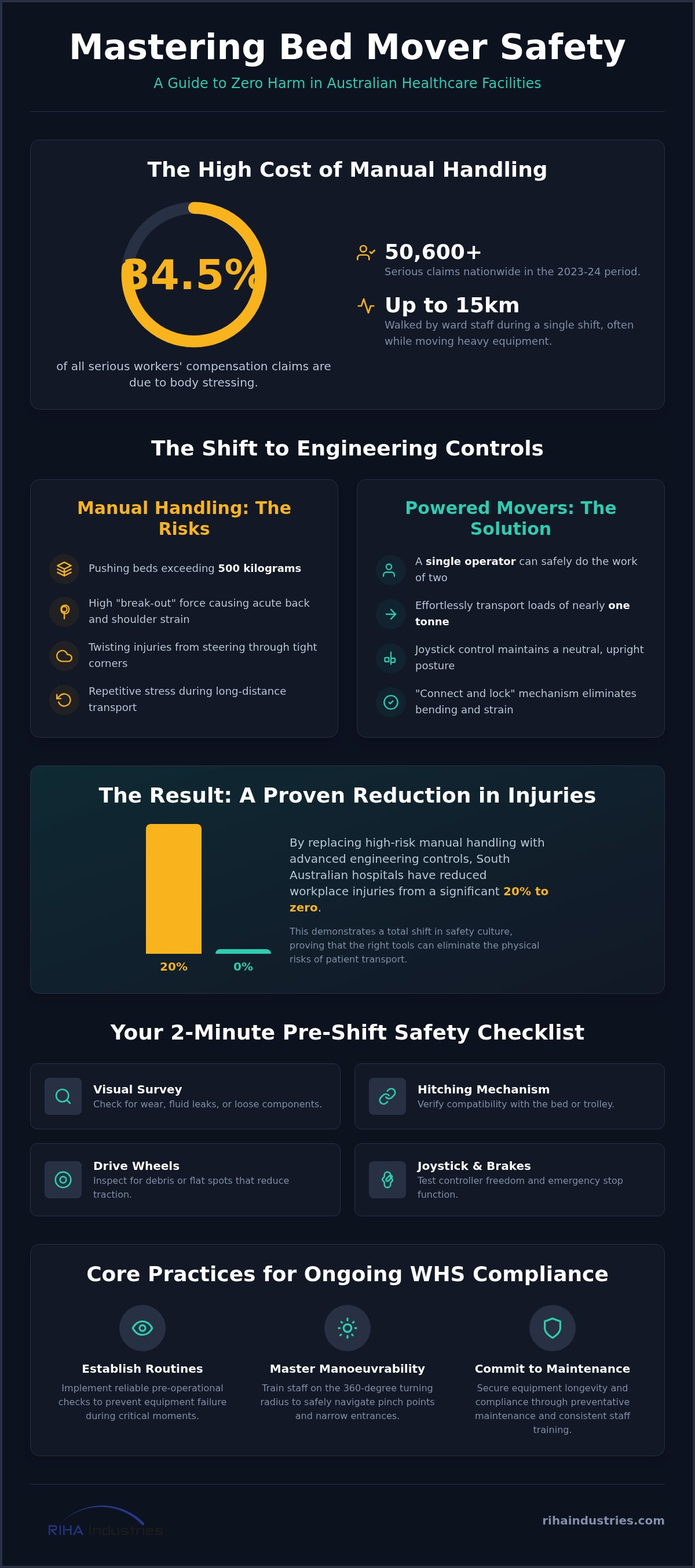
Body stressing accounted for 34.5% of all serious workers' compensation claims in Australia during the 2023-24 period, totalling more than 50,600 serious claims nationwide. If you manage a healthcare facility, you've likely seen the impact of these statistics firsthand through staff back injuries and the constant pressure of maintaining patient flow. Navigating heavy loads through narrow hospital corridors is a high-stakes challenge, especially when you're relying on a rotating team of casual and permanent staff.
We understand that keeping your team safe is your top priority, and it's a goal that requires more than just basic training. This guide will help you master the latest bed mover safety guidelines to eliminate manual handling risks and ensure your facility meets the 2026 Australian WHS standards. We'll explore how shifting from manual techniques to advanced engineering controls, like the StaminaLift system, can reduce injuries to zero. You'll learn the best practices for operational safety that protect your staff's wellbeing while significantly improving ward efficiency and supporting a culture of care.
Table of Contents
Understanding the Risks of Manual Bed Handling in Hospitals
In busy Australian wards, staff often walk up to 15 kilometres during a single shift. When much of that distance involves pushing hospital beds that can exceed 500 kilograms, the physical strain becomes immense. Managing patient transport services manually isn't just exhausting; it's a primary driver of musculoskeletal injuries that force seasoned professionals out of the workforce. These injuries don't just hurt the individual; they damage team morale and create significant gaps in staff retention across the healthcare sector.
The transition from manual pushing to motorised assistance marks a vital shift in workplace safety. However, introducing technology requires a new approach to risk management. Establishing clear bed mover safety guidelines is the first step in moving from high-risk manual labour to a modern, technology-supported environment. By understanding the mechanical realities of the equipment and the physical limits of the human body, facilities can bridge the gap between technical capability and human impact.
Common Injury Triggers in Patient Transport
Most manual handling injuries occur during three specific phases of transport. First is the "break-out" force, which is the massive burst of energy required to get a stationary bed moving. This sudden exertion often leads to acute back and shoulder strains. Second, twisting injuries frequently happen when staff try to steer heavy loads through tight corners or doorways, forcing the spine into awkward positions under load. Finally, repetitive stress takes a toll during long-distance porting across large metropolitan campuses. Without mechanical aid, the cumulative effect of these forces makes injury almost inevitable for many healthcare workers.
The Role of Powered Movers in Injury Prevention
Motorised movers, such as the StaminaLift Transfer System 6000, fundamentally change the safety equation by eliminating the need for manual pushing and pulling. This technology allows a single operator to safely do the work of two, improving ward efficiency without increasing the physical burden on staff. It represents a total shift in safety culture, moving from a "muscle it" mentality to a "manage it" approach where engineering controls do the heavy lifting.
The ergonomic advantage of joystick-controlled movement allows operators to navigate nearly one tonne of equipment with minimal physical effort, keeping the body in a neutral, upright posture throughout the transfer. By utilising a patented "connect and lock" jaw mechanism, staff can secure the bed without bending or using awkward strapping techniques. This thoughtful engineering has helped some South Australian hospitals reduce manual handling injuries from 20% to zero, proving that the right tools can completely eliminate the physical risks of patient transport.
Pre-Operational Safety Checklist for Bed Movers
Before any equipment enters a high-pressure clinical environment, a systematic pre-operational check is essential. Adhering to these bed mover safety guidelines ensures that the technology functions as intended, protecting both the operator and the patient from avoidable risks. A quick two-minute inspection before a shift can prevent a mechanical failure in a crowded lift or a steep corridor, where control is most critical.
Operators should begin with a thorough visual survey of the unit. Look for signs of mechanical wear, fluid leaks, or loose components that might compromise stability during a sharp turn. It's also vital to verify that the hitching mechanism is compatible with the specific bed or trolley scheduled for transport. Because hospital equipment varies in design, confirming that the mover's jaw aligns perfectly with the bed frame prevents accidental disconnection. This is particularly important when using the "connect and lock" jaw mechanism, which is designed to secure the load without the need for manual bending or awkward strapping.
Mechanical and Electrical Verification
The reliability of the system depends on the integrity of its moving parts. Check the drive wheels for any trapped debris or flat spots; these can reduce traction on polished hospital floors and cause vibrations that disturb the patient. Testing the joystick controller is equally important; it must move freely and return to the neutral position immediately when released. Finally, verify that the emergency stop button and automatic braking systems are fully operational. These features act as your primary failsafe, ensuring the unit comes to a controlled halt if an unexpected obstacle appears. The emergency jaw release should also be tested to ensure the bed can be manually detached if an electrical fault occurs.
Battery Care and Management
A bed mover is only as effective as its power source. Check the battery status to ensure there's sufficient charge for the upcoming shift, preventing the inconvenience of a mid-ward stall. Modern systems, like the StaminaLift Transfer System 5000, often feature integrated chargers with retractable cable reels to keep walkways clear of tripping hazards. This level of preparation transforms a piece of machinery into a reliable partner in patient care.
If your facility is looking to improve operational uptime, consider the benefits of lithium battery upgrades. These units offer higher performance and shorter charging cycles compared to traditional lead-acid alternatives. Many advanced models now include Bluetooth diagnostics, allowing maintenance teams to monitor battery health and usage history remotely. For those looking to maintain peak performance, scheduling regular preventative maintenance and repairs is the best way to ensure your fleet remains reliable and compliant with Australian standards.
Safe Operating Procedures for Powered Transfers
Safe operation begins with precise alignment. Position the mover centrally to the bed or stretcher to ensure a seamless connection. This initial step is critical for maintaining stability during the entire journey. Using the patented "connect and lock" jaw mechanism is a cornerstone of modern bed mover safety guidelines. This technology allows the operator to secure the load with the push of a button. It removes the need for manual bending or physical exertion, which are common causes of lower back strain in healthcare environments.
Setting the appropriate drive program is another key safety step. Most advanced systems, like the StaminaLift Transfer System 6000, allow you to tailor the unit's responsiveness to your surroundings. A "slow" mode provides the precision needed for navigating crowded wards or entering lifts, while a "standard" mode suits long corridors. Throughout the transfer, maintain clear lines of sight. Effective communication with your team and the patient ensures everyone understands the movement, reducing the risk of collisions in high-traffic nursing stations.
Securing the Load Safely
Achieving a stable connection is vital for patient comfort and safety. Use the adjustable hitches to accommodate various frame types, whether they're round or square. This flexibility ensures that the mover works with your existing fleet without requiring expensive modifications. Always verify that the lockable jaws are fully engaged to prevent any unexpected bed roll during transport. The sleek profile of units like the StaminaLift 2100 Bed Mover is specifically designed to fit underneath the bed frame. This reduces the overall footprint of the transport team and eliminates potential tripping hazards for staff walking alongside the equipment.
Navigating Inclines and Ramps
Hospitals often feature ramps that connect different wings or levels. When handling these transitions, you must adhere to the maximum 7-degree incline limit under a full load. This ensures the motor and braking systems remain within their safe operating parameters. Manage your speed carefully when descending; never rush a patient down a ramp. The automatic braking feature acts as an invisible safety net, ensuring the equipment stays under control even if the operator is forced to stop suddenly. This fail-safe mechanism ensures that if the joystick is released, the unit and its load come to a complete, secure stop on the incline, preventing runaway accidents.
Navigating the Hospital Environment: Manoeuvring Guidelines
The true test of any transport system is how it performs in the tightest corners of a facility. Utilising a 360-degree turning radius allows a single operator to pivot a bed within its own length, making it possible to enter elevators or navigate narrow ward entrances without the wide, sweeping arcs required by manual pushing. These bed mover safety guidelines focus on maintaining total control in confined spaces, ensuring that the momentum of nearly one tonne remains manageable at all times. By mastering the pivot, you reduce the physical footprint of the transport team and eliminate the need for a second staff member to act as a "spotter" in most corridors.
Managing speed is equally vital when moving between clinical zones and high-traffic public areas. Operators should reduce speed when approaching nursing stations or "pinch points" near doorways where foot traffic is unpredictable. For long-distance transfers across large campuses, using a ride-on platform like the Easi Rider provides a significant ergonomic advantage. It allows the operator to maintain a consistent pace without physical fatigue, ensuring they arrive at the destination alert and ready for clinical tasks. This balance of speed and precision keeps patient flow efficient while keeping everyone in the hallways safe.
Precision Handling in Confined Spaces
Operating in small patient rooms requires a methodical approach to reversing and repositioning. Advanced walk-behind tugs often feature a "Back Off Button" on the handle, a critical safety mechanism that automatically reverses the unit if it makes contact with the operator. This failsafe prevents entrapment against walls or furniture. When manoeuvring around medical equipment like IV poles and oxygen bottles, keep movements slow and deliberate. The goal is to integrate the mover seamlessly into the clinical environment, ensuring that the presence of technology never complicates the delivery of care.
Floor and Asset Protection
Maintaining the integrity of the hospital's physical assets is a key part of operational safety. Equipment should be fitted with non-marking drive wheels to protect the longevity of polished hospital floors and prevent unsightly scuffing. Beyond the floor, operators must remain vigilant to avoid collisions with wall-mounted medical gas points and monitors, which are expensive to repair and critical for patient safety. High-quality engineering ensures that these movers operate at a quiet 65 dB, allowing for the transport of patients at any hour without disrupting the healing environment. To see how these precision tools can transform your facility, explore the range of StaminaLift bed movers designed for the modern Australian healthcare landscape.
Maintenance, Training, and OHS Compliance
Ensuring the longevity and safety of your transport fleet requires a commitment to rigorous maintenance and continuous staff education. While the technology itself eliminates physical strain, its operational reliability depends on following strict bed mover safety guidelines for upkeep and usage. Adhering to these standards ensures that your facility remains fully compliant with Australian WHS regulations, protecting both your staff's wellbeing and the hospital's reputation for excellence.
Maintaining detailed service records and using onboard diagnostics are essential for meeting OHS obligations. Because these units are Australian-made, facilities benefit from local support and 24-hour parts shipping, which minimises downtime in critical clinical environments. This local infrastructure is a vital component of a resilient healthcare system. It ensures that equipment is never out of service for long periods due to a lack of components or specialist advice.
Preventative Maintenance Programmes
Reliability is built through proactive care rather than reactive repairs. For rural facilities, using 3D-viewer tools allows in-house technicians to perform routine servicing with confidence, bridging the gap when specialist travel isn't immediate. Conversely, large metropolitan hospitals often find the greatest value in professional service contracts, where expert teams handle comprehensive preventative maintenance and repairs. Modernising older equipment is also a sustainable strategy, extending the operational life of your fleet while ensuring that safety features meet current 2026 standards.
Building a Culture of Safety
Technology provides the data needed to foster a safer workplace. Using Bluetooth feedback, managers can identify specific staff training needs by reviewing usage patterns and duty cycles. This data-driven approach ensures that every operator is a "satisfied user" who feels empowered by the equipment. Certification should be an ongoing process, ensuring that even casual or rotating staff are proficient in safe handling techniques and understand the nuances of the "connect and lock" mechanism.
The impact of this approach is tangible. One South Australian hospital network successfully reduced manual handling injuries from 20% to zero within two years by integrating powered movers and strict safety protocols. This achievement highlights why choosing the right equipment is only half the battle; the other half is knowing how to reduce nurse back injuries through a combination of engineering controls and robust safety cultures. By prioritising these systems, you create a workplace where staff safety and patient flow are perfectly aligned.
Advancing Towards a Safer Healthcare Future
Transitioning from manual patient transport to motorised assistance is more than a technical upgrade; it's a profound commitment to your team's long-term health and wellbeing. By integrating these bed mover safety guidelines into your daily operations, you move beyond simply managing risks to actively eliminating them. The evidence is compelling: clinical trials have shown that adopting the right engineering controls can reduce manual handling injuries from 20% to zero. This shift doesn't just protect staff; it empowers them to focus on clinical care without the fear of career-ending strains.
Our FDA-registered and Australian-made solutions are engineered for universal compatibility, designed to work seamlessly with 95% of all hospital beds currently in service. This ensures your facility can achieve a safer workplace while maintaining efficient patient flow through even the most challenging ward environments. If you're ready to empower your staff and protect your facility's most valuable assets, enquire about a StaminaLift demonstration for your facility today. Let's work together to create a healthcare environment where physical burden is replaced by thoughtful innovation and lasting safety.
Frequently Asked Questions
Do I need a special licence to operate a hospital bed mover in Australia?
No, you don't need a specific heavy vehicle or machinery licence to operate a bed mover in Australia. However, following bed mover safety guidelines requires that every operator undergoes facility-approved training and certification. RIHA Industries provides comprehensive training to ensure staff can manage the equipment confidently. This internal certification process helps facilities meet their OHS obligations by ensuring that only competent personnel handle heavy patient loads in clinical areas.
What is the maximum weight a StaminaLift bed mover can safely transport?
The maximum capacity depends on the specific model you're using within your facility. The StaminaLift Transfer System 5000 is rated to push or pull loads up to 600kg, while the heavy-duty TS6000 can safely transport nearly one tonne, or 900kg. These ratings ensure that even the heaviest bariatric beds can be moved by a single operator without the risk of physical strain or mechanical failure during the transfer.
Can a bed mover be used on ramps and inclines within the hospital?
Yes, our equipment is specifically engineered to navigate the various gradients found in modern hospital campuses. All StaminaLift models can safely manage a maximum 7-degree incline while under a full load. To maintain control, the units feature an automatic braking system that engages the moment the joystick is released. This failsafe ensures the bed remains stationary on the ramp, preventing any uncontrolled movement or "runaway" scenarios in high-traffic wards.
How often should powered bed movers undergo safety inspections?
Safety inspections should occur on two levels to ensure ongoing operational reliability. Operators should perform a quick visual pre-start check before every shift to verify battery levels and mechanical integrity. Beyond these daily checks, we recommend professional preventative maintenance and repairs at regular intervals. Maintaining detailed service records is a vital part of OHS compliance, ensuring that every unit in your fleet meets the rigorous safety standards required in Australian healthcare.
Is the StaminaLift compatible with all hospital bed brands?
The StaminaLift range offers unmatched compatibility with globally available healthcare equipment. Our flagship TS5000 model is compatible with 95% of all hospital beds, stretchers, and trolleys. For facilities with unique requirements, the Jaw System 300 expands wheel compatibility to a broader 100mm to 300mm range. This flexibility allows you to standardise your bed mover safety guidelines across a diverse fleet without needing to replace existing beds or invest in expensive modifications.
What should I do if the bed mover battery goes flat during a transfer?
If a battery goes flat during a transfer, you can use the emergency brake and jaw release systems to move the unit manually. To prevent this from occurring, modern units feature integrated chargers with retractable cable reels, making it easy to top up the charge between tasks. You can also monitor battery health via Bluetooth diagnostics, which provides real-time feedback on usage history and identifies when a unit requires a recharge before a shift starts.
Are powered bed movers safe to use in quiet wards at night?
Powered bed movers are ideal for use in quiet wards and during night shifts. Operating at a noise level of just 65 dB, the equipment is significantly quieter than the sounds of manual pushing and the associated verbal coordination between multiple staff members. The non-marking drive wheels also ensure silent movement across polished floors. This quiet operation helps maintain a peaceful healing environment for patients while allowing essential transfers to continue without disruption.
How does the "connect and lock" jaw system improve operator safety?
The patented "connect and lock" jaw system eliminates the most dangerous aspects of manual handling. It allows the operator to secure a bed at the press of a button, removing the need for physical bending, reaching, or awkward strapping. By automating the connection process, the system ensures a stable, hands-free link that prevents the bed from rolling or disconnecting unexpectedly. This engineering choice is a primary reason why some hospitals have reduced transport-related injuries to zero.