How Equipment Can Reduce Physical Strain in Patient Transport
The equipment used for a patient move can make the difference between controlled handling and avoidable physical effort. Reducing physical strain in patient transport starts with matching the stretcher, mobility chair or transfer aid to the patient’s ability to move, the route and the transfer required, then combining it with trained handling and enough assistance.
It’s easy to focus on where a patient needs to go, but every lift, turn and transfer also places demands on the people providing care. Suitable equipment can reduce manual effort and help control movement. The wrong equipment or a rushed approach can make a difficult transfer harder for both patient and staff.
This article explains how stretcher handling, transport chairs and transfer equipment affect physical strain, and outlines practical ways to make patient movement more manageable. It covers route preparation, coordinating assistance and choosing equipment that supports a safer, more controlled transfer.
Table of Contents
Perceived exertion during stretcher handling
Stretcher handling can demand substantial effort, particularly when staff lift a patient, load a cot or move across an awkward route. Perceived exertion reflects how hard the task feels to the people doing it. A patient who cannot bear weight, a narrow doorway or uneven ground can increase the physical demands of the same move. Assess the task before starting, including the patient’s mobility, the stretcher’s position and the route to the destination.
For a patient who cannot bear weight, use a soft stretcher with handles and enough personnel to lift and move them. Agree on the sequence and commands before lifting so each handler knows when to raise, turn and lower the stretcher. Keep the movement coordinated rather than relying on one person to compensate when the load shifts. If the patient’s weight, position or surroundings make the move difficult, pause and arrange additional assistance.
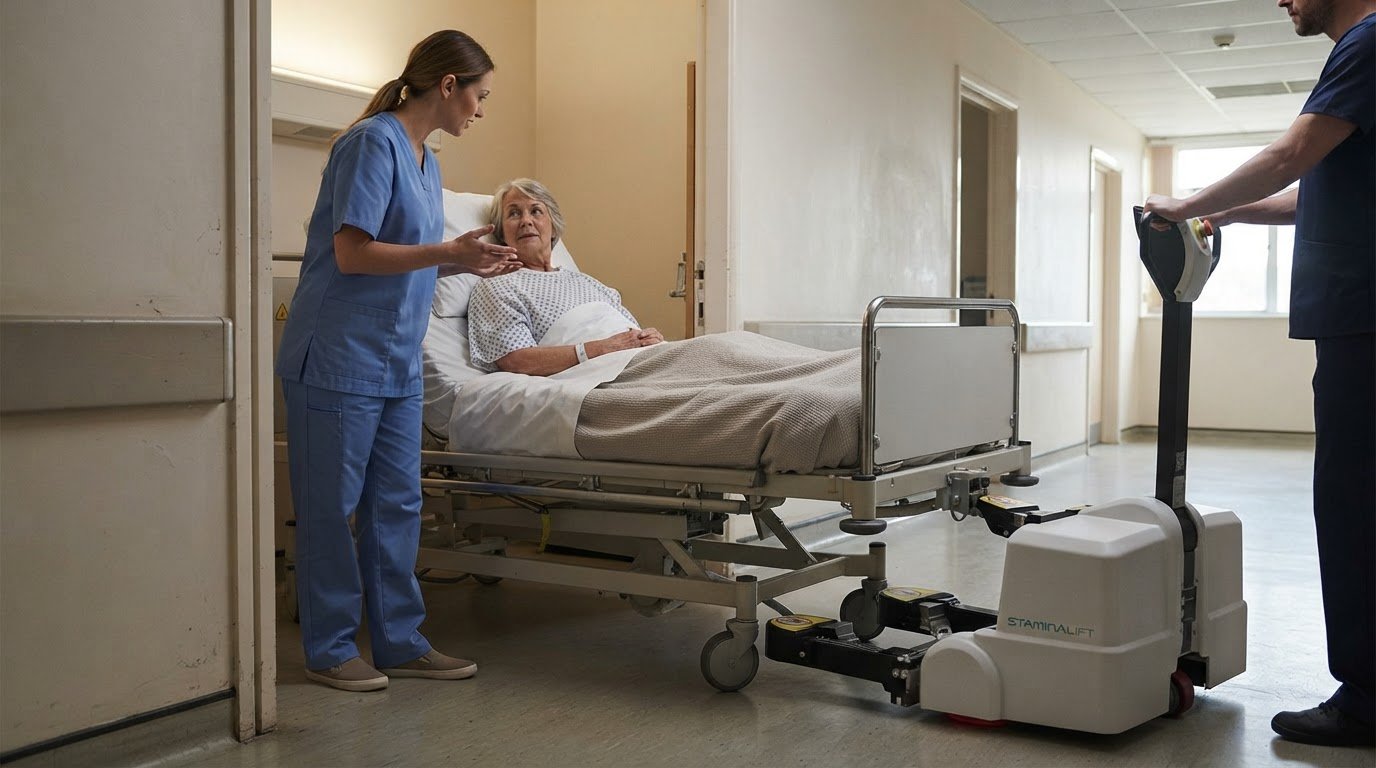
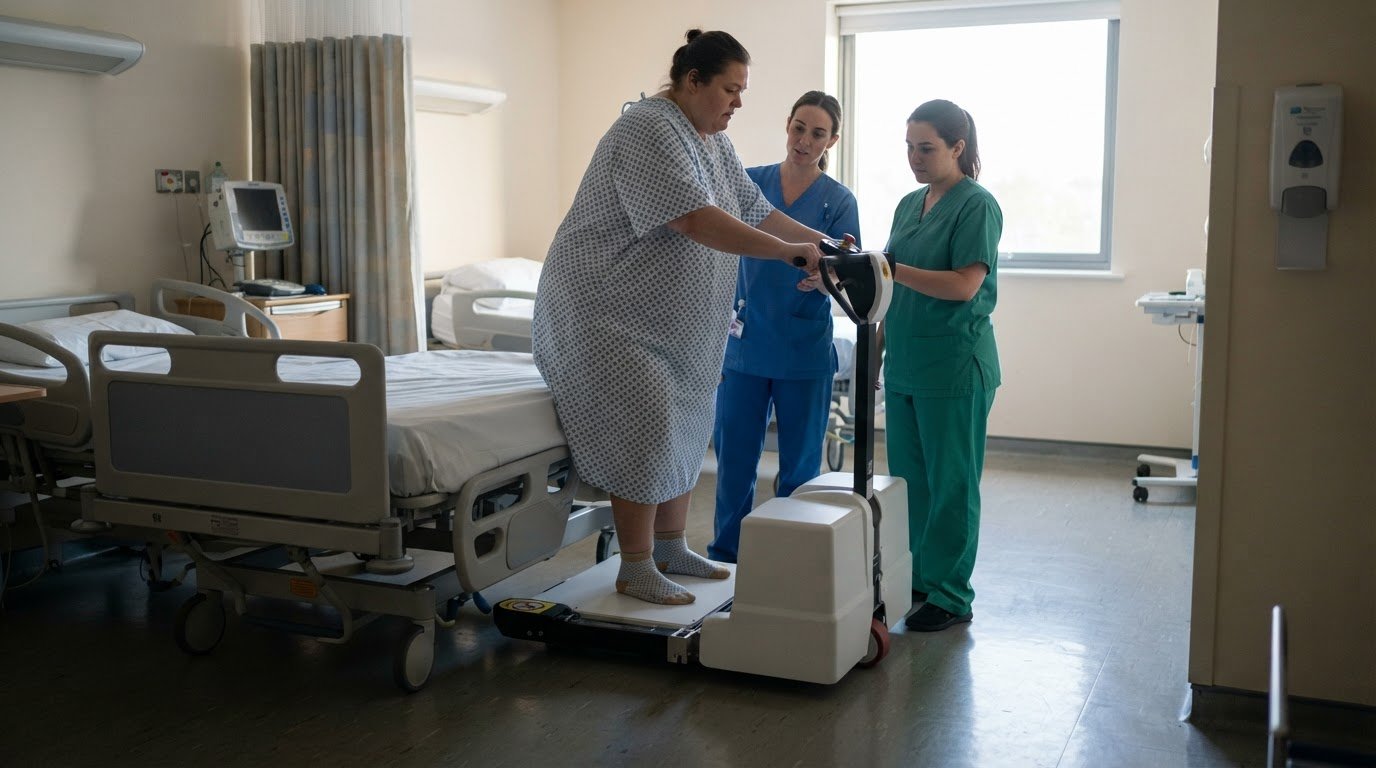
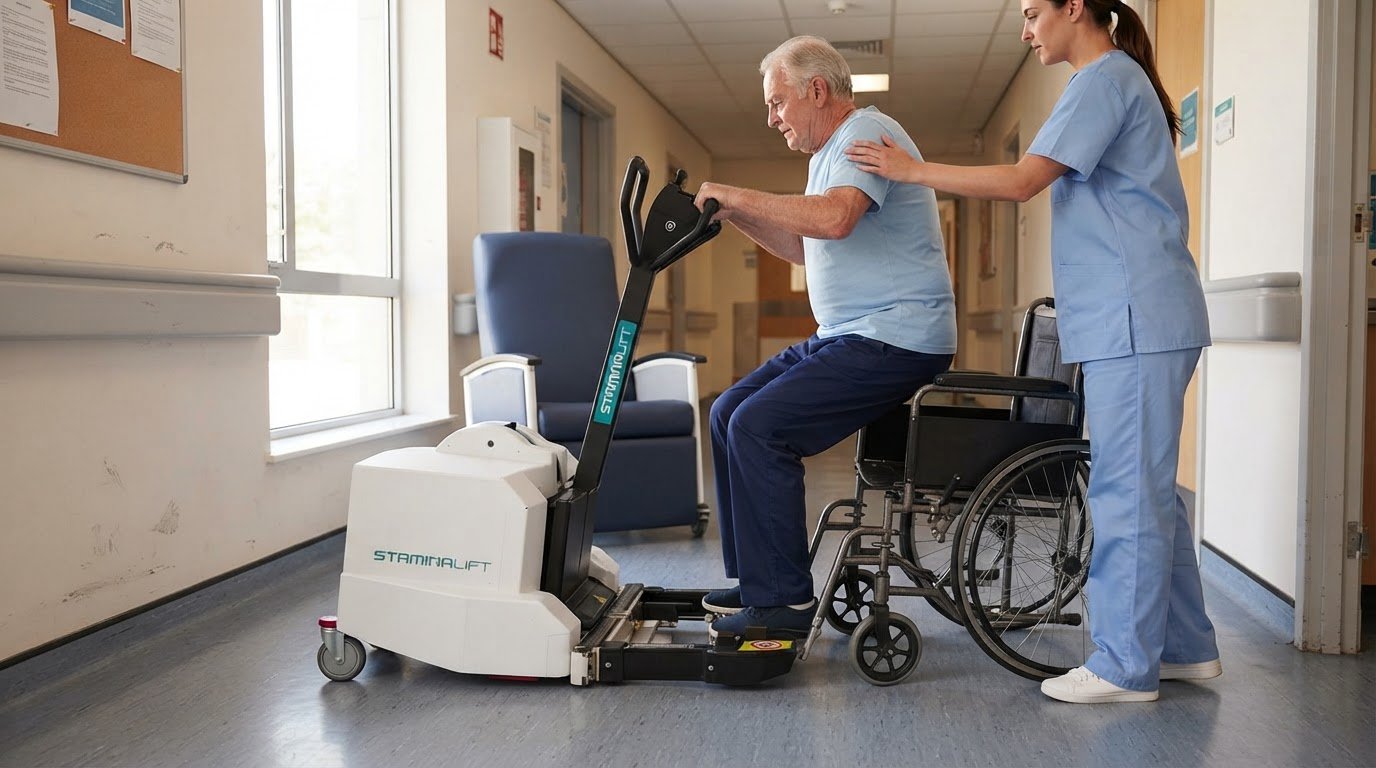
Patient-handling devices can reduce the need to lift or reposition a patient using body strength alone. Select equipment for the transfer, not simply because it is available: a lateral move between surfaces may call for a slide sheet or slide board, while a powered transfer system may assist with moving a patient between a bed and stretcher. The StaminaLift Transfer System 5000 and StaminaLift Transfer System 6000 are designed to integrate with existing hospital equipment. Their role is to support transfer, rather than remove the need for preparation and trained operators.
OSHA-related requirements depend on the workplace rules that apply and the task being performed. Healthcare teams should establish procedures for multi-person lifts and train staff in body mechanics for lifting, lateral transfers, vehicle entry and cot loading.
Before staff use new equipment in patient care, training should cover the device, its controls and the transfer sequence. Practical instruction lets handlers rehearse positioning and coordinated movement before using the equipment in a live transfer. Caregivers and family members who regularly assist with transport can also benefit from instruction in lifting techniques and patient handling.
Maintenance is essential too. Follow the equipment manufacturer’s maintenance instructions and arrange preventative maintenance and repairs to support reliable operation. Before a transfer, check for visible damage and confirm that moving parts and controls work as expected. If equipment appears faulty, don’t use it for patient care until it has been assessed and repaired.
To reduce physical strain in patient transport, make the handling plan specific: identify who will lead, how many people are needed, which device will support the move and where the patient will be transferred. This preparation helps the team manage each stage instead of relying on extra force when a stretcher or patient shifts unexpectedly.
2. How transport and treatment chairs support patient mobility
A well-matched chair can support a patient’s mobility and make movement easier to manage. Before choosing one, assess the patient’s condition, ability to sit upright, weight-bearing capacity and destination. Consider whether they can remain seated throughout the journey or need full-body support. These details help determine whether a transport chair, treatment chair or stretcher best suits the task.
For a patient who can sit upright temporarily, a stair chair may help with movement on stairs. It isn’t suitable for someone who must remain horizontal. A transport stretcher provides full-body support during transit and is more appropriate when the patient’s condition requires them to lie down. The route matters too: narrow doorways, turns and stairs can affect which equipment is practical.
Weight and stability also inform chair selection. Bariatric transport chairs have higher weight capacities and reinforced structures to support stability. Match the chair’s capacity to the patient, and consider how its frame and supports will perform during movement. A lightweight, foldable transport chair may be useful for frequent transport, particularly when staff need to handle equipment repeatedly or navigate compact spaces.
Chair features affect how caregivers position and assist patients. Reclining backrests, height adjustment and side access can make care tasks more manageable. Stable armrests and padded supports help support the patient during transport. Smooth-rolling wheels can help staff move the chair with controlled effort, while secure locks keep it stationary during positioning or transfer.
Treatment chairs serve a different purpose from transport chairs. An adjustable treatment chair can help staff reposition a patient with less effort. Reclining models allow positioning for lumbar support and pressure relief during extended treatment or recovery. Choose adjustments to suit the patient’s condition and the care task, rather than assuming one position works for every situation.
For frequent movement, lightweight, foldable designs may make equipment easier to handle. However, ease of transport shouldn’t come at the expense of patient support. Consider how the chair fits the route and transfer points, and whether the patient can remain seated comfortably. Someone who becomes uncomfortable or needs repeated repositioning may need another seating arrangement or a stretcher instead.
Transport and treatment chairs can help patients with limited mobility retain independence and dignity while supporting efficient movement. Explain the move, involve the patient in decisions where possible and use handling techniques suited to their condition. Chairs don’t replace safe patient-handling practices, but the right design can reduce awkward positioning and make assistance more controlled.
Healthcare facilities can reduce staff injury and patient falls by selecting suitable chairs and using them correctly. Include input from staff and ergonomics specialists when choosing equipment. Match the chair type, weight capacity, support features and route requirements to the patient’s needs, then train staff in handling the chair before use.
3. Physical strain and injury risks for patients and caregivers
Patient transfers can place physical demands on both the person moving and the person being moved. The National Safety Council reports that 53% of overexertion injuries involve lifting, while 52% affect the back. These figures underline why repeated lifts, awkward reaches and sudden shifts deserve attention during routine transport, not only emergency medical moves.
The risk increases when a caregiver must lift without suitable assistance, reach across a hospital bed or move a patient through a confined space. The patient’s weight, ability to bear weight and level of cooperation all affect the effort required. Twisting while carrying or trying to control a shifting load can add strain. Pause and reassess if the route or patient’s position makes the planned move difficult.
Manual lifting limits for inanimate objects shouldn’t be treated as patient-lifting targets. The Revised NIOSH Lifting Equation lists 51 pounds as the maximum lifting weight for preventing back injuries when lifting inanimate objects. Dr Waters gives 35 pounds as the maximum recommended weight for most patient-lifting tasks, with a lower limit in less-than-ideal circumstances. Patient movement involves unpredictable shifts, so equipment and assistance matter.
According to the BLS, musculoskeletal disorders account for one-third of reported causes of lost or restricted work time in the United States. Repeated effort can build across transfers, even when each individual move seems manageable. Plan around the patient’s condition, the available handling device and the number of people required. Don’t improvise a lift when the patient cannot help or the movement is complex.
Patients face risks too. An uncontrolled transfer can cause a fall, jolt or uncomfortable pressure against the support surface. Explain the next step, move at a controlled pace and check the patient’s comfort as you go. Secure IV lines, catheters and feeding tubes before transport, and keep essential supplies close so staff don’t need to leave the patient unattended to retrieve them.
Limited mobility can contribute to pressure sores, poor circulation and muscle stiffness. During an extended move, pressure can build where the body rests against a stretcher or chair. Air mattresses or memory foam padding can help reduce pressure points that may lead to bedsores. Choose support to suit the patient’s condition and repositioning needs, while keeping lines and tubes clear.
Careful preparation helps protect both patient and staff. Before moving someone from a hospital bed, identify the destination, check for obstacles and decide who will guide the patient and equipment. Lock the bed and receiving surface, then coordinate the transfer. If the patient’s weight or condition makes the move unsafe for the available team, stop and arrange appropriate assistance.
4. Choosing wheelchairs, stretchers, and transfer equipment
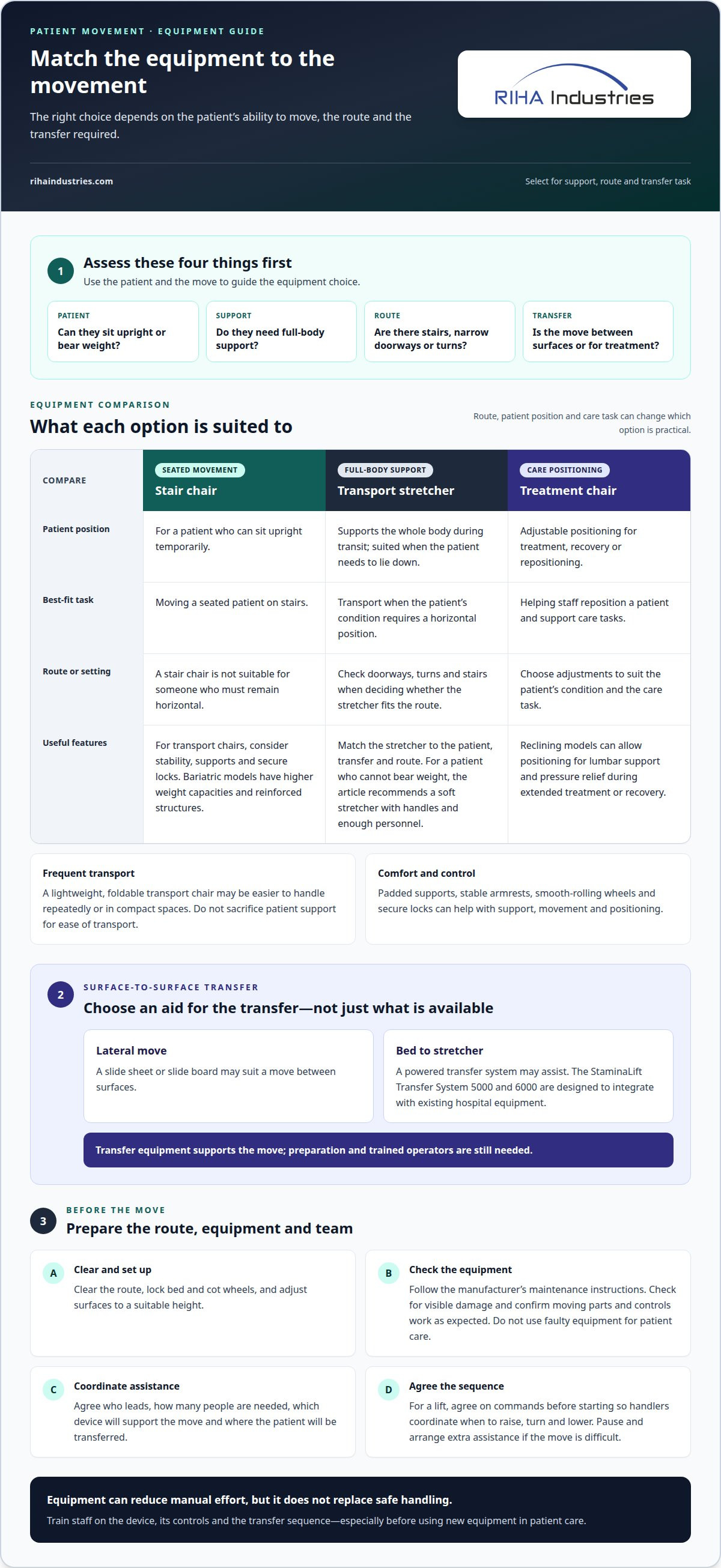
Choose equipment by matching the patient’s condition and movement needs to the task. A patient who can sit upright may use a transport chair, while someone needing full-body support may require a stretcher. Consider the route too: stairs, narrow doorways and tight turns can affect which equipment is practical. The right choice supports comfort and more controlled handling.
Different aids support different movements. Slide sheets and slide boards assist lateral transfers between surfaces, while a motorised lift supports raising or repositioning a patient. A stretcher provides full-body support during transit. The best option depends on whether the task involves moving sideways, lifting or transporting someone who needs to remain horizontal. Equipment doesn’t replace a handling plan or trained staff.
Patient weight matters, but no single weight limit applies to every chair, stretcher or transfer device. Match the patient’s weight to the specific equipment’s rated capacity, and consider their condition, position and ability to assist. Bariatric transport chairs have higher weight capacities and reinforced structures, but suitability still depends on the individual chair and the transfer.
Staffing needs also depend on the patient, task and equipment. A patient who cannot bear weight may need multiple handlers, while a device-assisted lateral transfer has different demands. Follow the equipment instructions and facility patient-handling procedures to determine the team required. Don’t assume one handler is enough just because a device is available: the patient’s mobility and the route also affect the work.
For movement on stairs, a stair chair may suit someone who can sit upright temporarily. A patient who must remain horizontal needs a different plan and equipment that supports that position. For frequent transport, a lightweight, foldable chair may be easier to handle and manoeuvre. Assess how each option fits the actual route, including turns and doorways, rather than judging it in an open space.
Comfort and stability depend on practical details. Check that the chair’s supports suit the patient’s posture and that its locking system can secure it during a transfer. Smooth-rolling wheels can help control movement along the route. For a bed-to-stretcher transfer, prepare both surfaces and use a suitable slide aid where appropriate. Keep the patient supported while staff move them between surfaces.
Equipment selection should involve staff who perform transfers and ergonomics specialists. Reviewing a frequent task, such as moving patients between a hospital bed and a treatment area, can reveal awkward reaches or repeated manual lifting. Record and report handling concerns through the facility’s process. Then assess whether a chair, stretcher, slide aid or motorised lift best suits the task and the patient’s needs.
5. Reducing caregiver physical strain during patient movement
Caregiver effort depends on preparation as much as on the transfer itself. Before an emergency or routine move, assess the patient’s mobility, the route and the equipment needed. In ambulance work, dispatch information about patient weight, location and mobility aids helps crews plan; follow-up during the journey can clarify access or movement challenges. A doorway, stairwell or uneven path may change the team and equipment required.
For a bed-to-wheelchair transfer, explain the movement and involve the patient where possible. Assess whether they can assist, clear the route, position the wheelchair close to the bed and lock both surfaces before starting. If the patient needs a lateral transfer, use a slide sheet or board where possible. If the move is complex or the patient is too heavy, arrange assistance rather than attempting it alone.
Prepare the route. Check for stairs, tight turns, loose objects and uneven ground before moving. In icy or snowy conditions, crews can spread grit or use traction devices.
Set up the transfer. Lock the bed and receiving surface, then adjust their heights to a suitable level. Keep the wheelchair close enough to reduce reaching, while allowing space for controlled movement.
Coordinate the team. Agree who leads and when the movement starts. Use clear instructions so staff move together, especially when the patient cannot bear weight or needs a lateral transfer.
Use body mechanics. Bend the knees rather than the back, keep the patient close and pivot the feet instead of twisting the spine. Move slowly through tight spaces to avoid jolting the patient.
Pause if conditions change. Stop if the patient shifts, equipment catches or the route becomes obstructed. Reposition the equipment or add assistance before continuing.
Vehicle loading requires planning too. When possible, ambulance crews should park on level ground, clear of hazards and obstacles. On uneven ground, position the vehicle to avoid lifting the cot’s head end during loading. Power cots and power loaders can reduce physical demands, but staff still need to coordinate loading and secure equipment for transport.
Safe patient handling involves a sequence, not just a lifting technique. Use suitable equipment, prepare the route and arrange enough assistance for the patient’s condition. If a hospital ceiling lift is available for a bariatric transfer, use it and seek help from hospital staff. Matching the method to the task reduces avoidable effort and keeps movement controlled for patients and caregivers.
RIHA Industries
RIHA Industries helps healthcare teams address physically demanding transfers with patient transfer systems and bed movers. Its StaminaLift Transfer System 5000 and StaminaLift Transfer System 6000 are designed to integrate with existing hospital equipment. For bed movement, the StaminaLift 2100 Bed Mover is another option; Easi Rider and Easi Mover tugs assist staff with moving heavy loads.
These solutions may be relevant when routine patient movement involves repeated transfers or moving beds, and teams are considering equipment to support their handling processes. The right choice depends on the task, the existing equipment and how staff carry out transfers. Contact RIHA Industries to discuss equipment options for your patient movement needs.
Plan your next patient-handling improvement
Start by reviewing one recurring movement. Identify where staff rely on manual effort, which transfers need the most coordination and how existing equipment fits the task. This practical assessment can show whether an equipment or workflow change merits consideration. Reducing physical strain in patient transport starts with a real handling need, not with choosing equipment in isolation.
RIHA Industries offers the StaminaLift Transfer System 5000, StaminaLift Transfer System 6000 and StaminaLift 2100 Bed Mover for patient transfer and bed movement needs. Consider these options when reviewing how equipment could support your facility’s existing handling processes.
Contact RIHA Industries today to discuss equipment options for your patient movement requirements. A clear understanding of your day-to-day transfer challenges is a useful starting point for planning more controlled handling.
Frequently Asked Questions
What are the best practices for reducing caregiver strain during patient transfers?
Reduce strain by planning the whole transfer, not just the lift. Confirm the destination is ready, clear obstacles and agree who will guide the patient and equipment. Choose an aid suited to the patient’s ability to participate, and pause if their condition or position changes. For repeated transfers, review where staff reach, push or reposition most often to identify practical ways to improve the handling process.
How do powered patient lifts, slide sheets, transfer boards, and gait belts differ?
These aids support different movement tasks. A powered patient lift raises and transfers a patient mechanically. A slide sheet reduces friction as staff move someone across a surface, while a transfer board bridges surfaces for a lateral transfer. A gait belt provides a handhold when assisting a patient who can participate in standing or walking. Choose the aid to suit the patient’s mobility and the transfer, and follow its instructions.
How can facilities assess patient mobility to choose the right transfer method?
Assess whether the patient can sit upright, bear weight, follow instructions and contribute to standing or repositioning. Consider changes in condition, pain or fatigue that could affect their participation during the move. Then match their abilities to the destination and route: someone who can sit may use a chair, while a patient needing full-body support may require a stretcher. Record the chosen method in the care plan so staff can prepare consistently.
What are the injury risks of manual patient lifting for caregivers and patients?
Manual lifting can injure caregivers through overexertion or awkward handling. A patient may also be hurt if they slip, shift unexpectedly or are moved without adequate support. A rushed transfer can jolt the patient or disrupt lines and tubes. Risk depends on factors such as the patient’s ability to assist, the available space and the movement required. Stop and reassess if the planned lift cannot be controlled safely.