How to Reduce Patient Transfer Anxiety With Clear Support
A safe transfer can still feel frightening when a patient is left out of the conversation. Knowing how to reduce patient transfer anxiety starts with explaining what will happen, listening to concerns and giving the patient a meaningful role wherever possible. Clear, compassionate communication can replace uncertainty with a greater sense of control.
A change in care or an unfamiliar transfer can understandably worry patients and their families. Practical reassurance helps: explain the plan in plain language, invite questions and make room for emotional support before and during the transition.
This article explores how patient education, thoughtful communication, family support and trust-building can ease anxiety. It also looks at how careful transfer planning and suitable equipment can help staff support a more secure, dignified experience for patients.
Table of Contents
1. Providing patient education and coping strategies
Explain the transfer before it begins, using plain language and a clear sequence. For a bed-to-chair move, describe the destination, who will assist and what the patient may feel. Invite questions, then ask the patient to repeat the key steps in their own words. This can reveal confusion before movement starts. Understanding how to reduce patient transfer anxiety begins with making the next step clear.
Tailor the explanation to the person’s needs. Explain why the transfer is happening, what comes next and which parts the patient can influence. If a procedure may cause brief discomfort, describe it honestly rather than promising it won’t hurt. For example, where appropriate, a clinician might compare an anticipated needle prick to a mosquito bite. A tailored explanation gives patients useful context instead of leaving them to imagine the worst.
Pair information with practical coping strategies. Before movement, guide the patient through slow breathing or agree on a simple cue to pause. Some people prefer a familiar calming practice, such as meditation; others may benefit from discussing anxiety with a counsellor. Exercise may also support anxiety management as part of an appropriate care plan. When considering how to reduce patient transfer anxiety, match the strategy to the person.
For children, prepare them for the transfer and what will follow at school. Families can work with educators and therapists on an Individualised Education Plan to support the transition and continuity of learning. Share relevant routines, support needs and learning information with the receiving team. An age-appropriate explanation can make the change easier to understand.
Protect dignity and privacy by explaining each action, closing curtains or doors, and keeping the patient covered wherever practical. Ask permission before touching them or adjusting clothing, and discuss who needs to be present. During the transfer, use calm instructions and avoid discussing private information where others can hear.
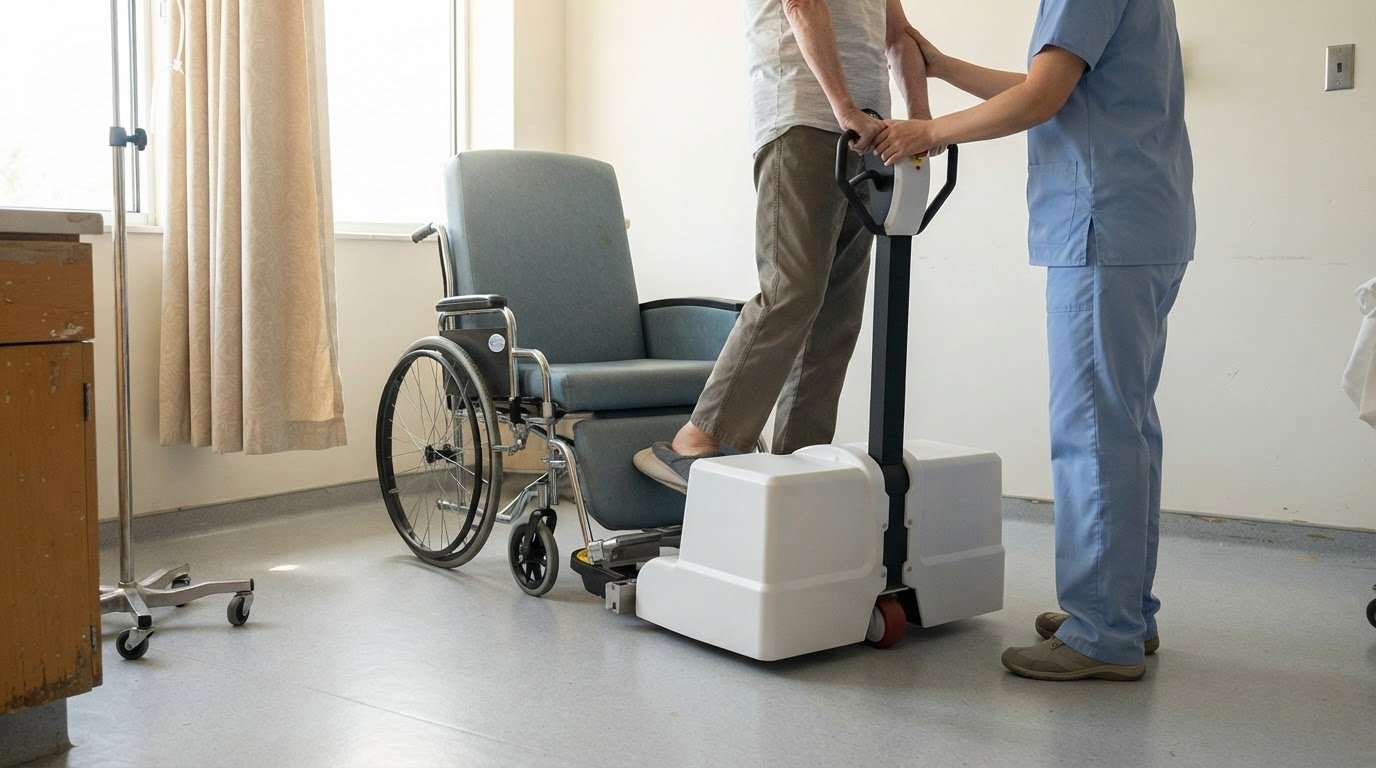
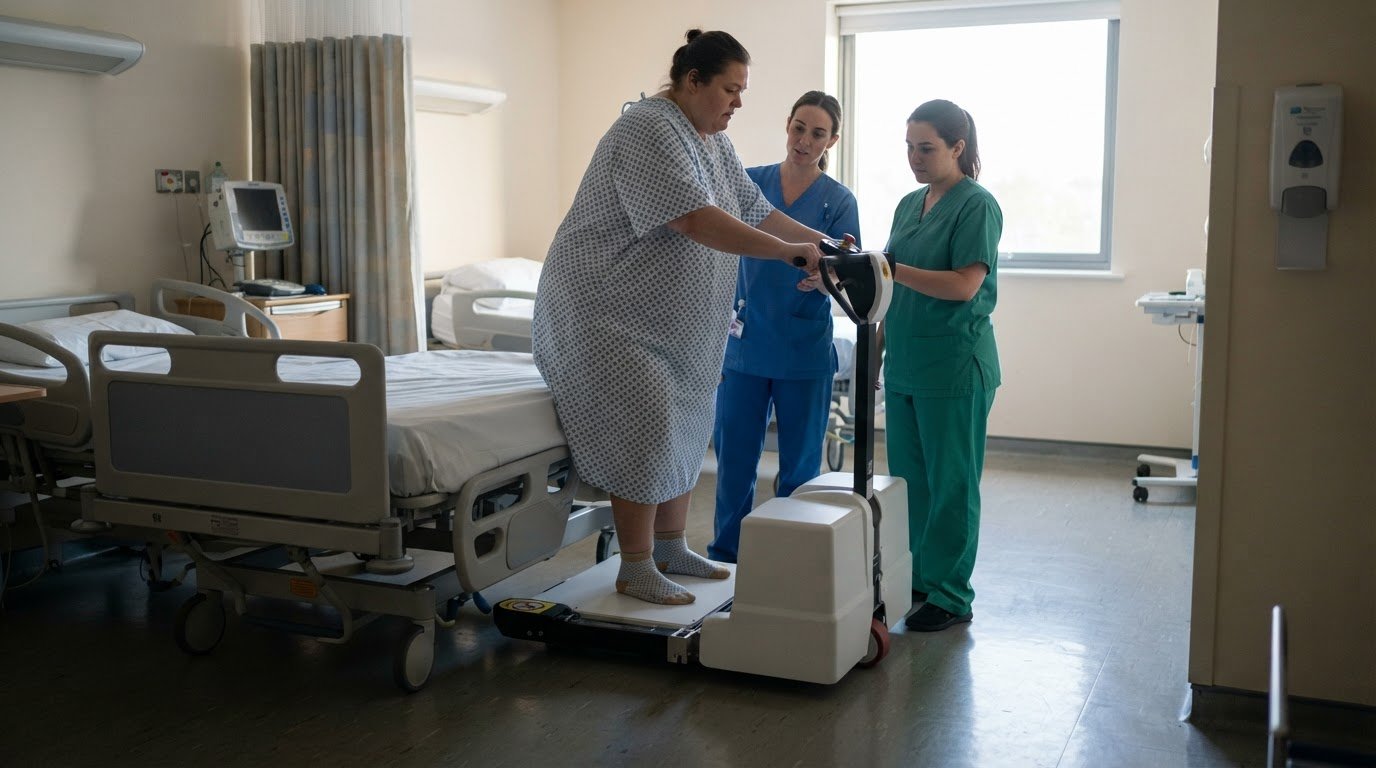
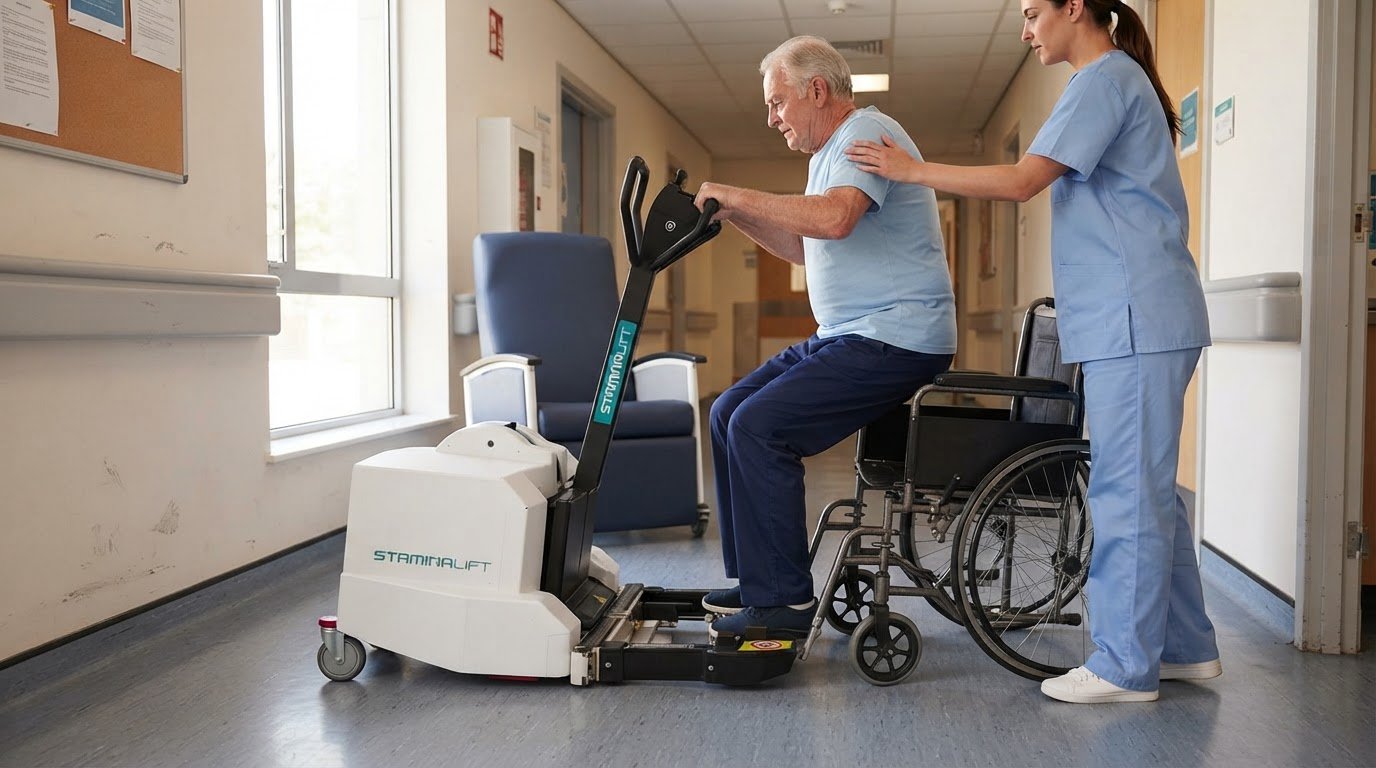
During a bed-to-chair or wheelchair transfer, explain the next movement, check the patient’s comfort and follow the agreed transfer plan. Give one instruction at a time, let the patient participate where appropriate and pause if they become distressed. A steady pace and clearly defined roles help prevent surprises.
Education also supports a smoother handover. Prepare a concise care plan covering medications, therapies and specific needs, then share it with the receiving team. Where possible, arrange time for outgoing and incoming teams to discuss essential details directly. Explain who will answer the patient’s questions after arrival.
Seek evaluation from a healthcare professional if severe transfer anxiety persists, prevents necessary care or causes marked distress before movement. A physician can assess the concern and may consider treatment options, including prescribed anti-anxiety medication before a medical visit. Note what triggers the fear, such as pain, loss of control or unfamiliar staff, to guide the discussion.
2. Communicating with patients about a transfer
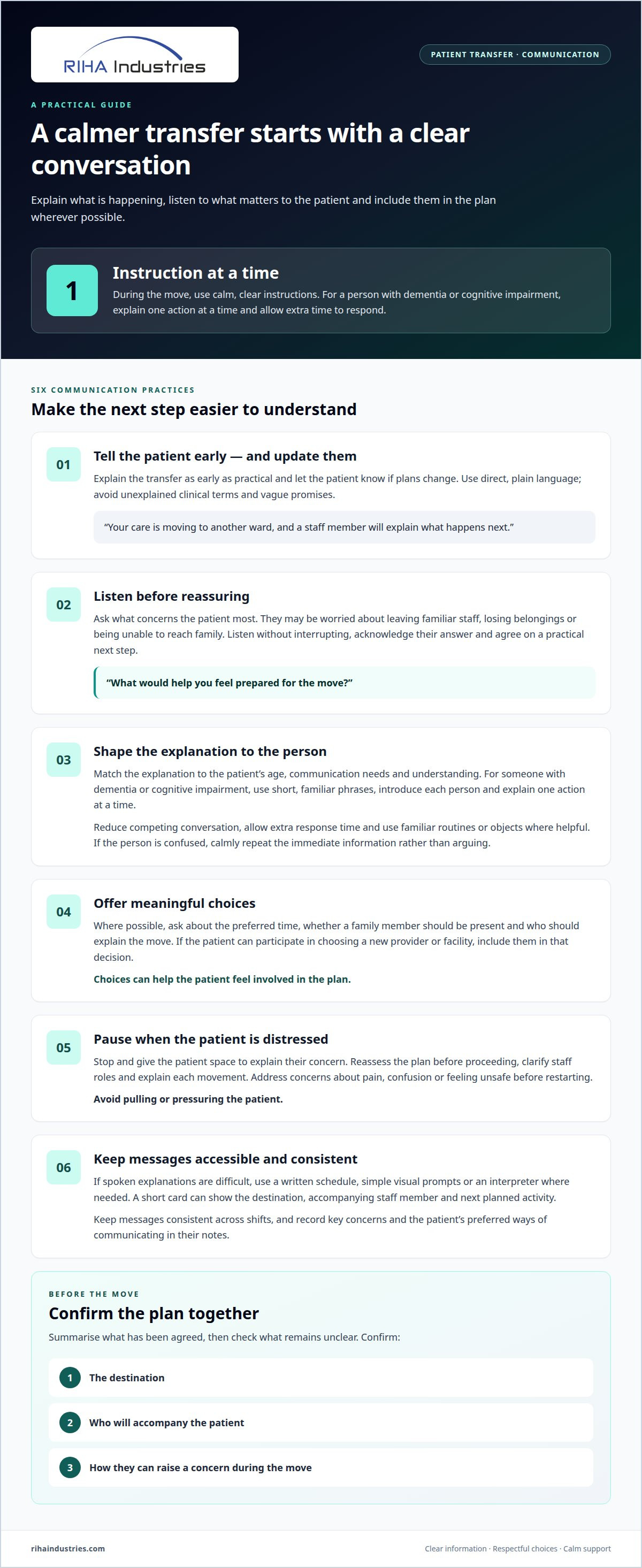
Tell the patient about the transfer as early as practical, and update them if plans change. Use direct language: “Your care is moving to another ward, and a staff member will explain what happens next.” Avoid unexplained clinical terms and vague promises. Ask what concerns them most, then respond to that concern instead of delivering a standard script. Listening before offering reassurance is a useful starting point for how to reduce patient transfer anxiety.
Questions can reveal fears that aren’t immediately obvious. A patient might worry about leaving familiar staff, losing belongings or being unable to reach family. Ask open questions, such as “What would help you feel prepared for the move?” Listen without interrupting, acknowledge the answer and agree on a practical next step. Medical assistants can also notice physical or psychological signs of anxiety and raise them with the care team.
Make explanations appropriate to the patient’s age, communication needs and understanding. For someone with dementia or cognitive impairment, use short, familiar phrases, introduce each person and explain one action at a time. Reduce competing conversation, allow extra time for a response and use familiar routines or objects to support recognition. If the person is confused, avoid arguing and calmly repeat the immediate information.
Offer choices wherever possible. The patient may prefer a particular time, want a family member present or have a preference about who explains the move. If they can participate in choosing a new provider or facility, include them in the decision. A sense of agency can ease emotional stress while keeping the discussion focused on realistic options.
Resistance during a transfer can disrupt coordinated movement and increase the chance of a rushed or poorly understood manoeuvre. Stop, give the patient space to explain their concern and reassess the plan before proceeding. Clarify staff roles, communicate each movement and avoid pulling or pressuring the patient. If the concern involves pain, confusion or feeling unsafe, address it before restarting.
If spoken explanations are difficult, use a written schedule, simple visual prompts or an interpreter where needed. A short card, for example, can show the destination, the accompanying staff member and the next planned activity. Keep messages consistent across shifts to avoid conflicting instructions. Record key concerns and preferred ways of communicating in the patient’s notes.
End the conversation by summarising the agreed plan and asking what remains unclear. Confirm the destination, who will accompany the patient and how they can raise a concern during the move. Clear, empathetic communication is central to how to reduce patient transfer anxiety: it helps patients understand what is happening and express their needs. Meaningful participation starts with listening and respectful updates.
3. Emotional support for patients and families
A familiar companion can make a medical appointment feel less isolating. If the patient wishes, a friend or family member can accompany them, offer a steady presence and help communicate preferences. They might hold the patient’s hand, bring a familiar item or stay nearby while staff prepare. Agree on the companion’s role beforehand so the patient remains central to decisions.
Base support on what the patient finds comforting. One person may want quiet company, while another prefers gentle conversation about a familiar topic. Ask whether they would like a relative nearby, music playing or a few moments to settle. Respect a request for space, too. Emotional support works best when it responds to the individual rather than assuming everyone wants the same reassurance.
Families may feel uncertain about how to help, especially when a transfer changes routines or separates the patient from familiar people. Give relatives a practical role, such as gathering a comfort item or being present at the agreed time. Explain who can answer their concerns and where they can wait. Clear roles can reduce confusion without making family members responsible for clinical decisions.
If worry continues beyond the immediate transfer, counselling or a support group can give patients and caregivers a place to discuss concerns. In a group, people may share coping ideas with others facing similar transitions. Counselling offers space to work through distress privately. The care team can help identify which support best suits the patient’s needs and preferences.
Caregivers also need support to remain calm and attentive. Before the move, they can identify what feels most difficult, such as leaving a familiar room or uncertainty about arrival. A brief conversation with someone they trust may help organise their thoughts. During the transfer, focus on the patient’s stated needs rather than trying to manage every detail at once.
After arrival, a family member can help restore familiarity by placing personal belongings within reach, if appropriate. A photograph, blanket or book that the patient recognises can make the new space feel less unfamiliar. Ask what would help them settle, then follow their preference. Small personal choices can support comfort without overwhelming them with decisions.
If a patient becomes distressed, pause and offer calm company rather than rushing to fill the silence. A caregiver might say, “I’m here with you,” then give the patient time to respond. If distress continues, tell the care team so they can consider further emotional support. This helps the patient feel supported and ensures families don’t have to manage serious concerns alone.
4. Building rapport and trust with patients
Trust grows through small, consistent actions before, during and after a transfer. Staff can introduce themselves, explain their role and use the patient’s preferred name. A nurse might say, “I’ll help coordinate your move, and Sam will assist with your care afterwards.” Clear introductions help patients know who is supporting them.
Listen for preferences that can shape the experience. A patient may want staff to explain each action before touching them, or feel more comfortable with a particular form of address. Ask directly, acknowledge the answer and follow it where appropriate. This shows that the patient’s views matter, rather than treating the transfer as a task to complete.
Record helpful details in the patient’s chart so future visits feel more familiar. Medical assistants can note preferences, communication needs and anything that helps the patient feel at ease. For instance, the patient may prefer a pause before repositioning. Staff can use that information next time instead of asking them to explain it again.
Consistency across the team also builds confidence. If one staff member explains the plan and another takes over, the incoming colleague should introduce themselves and confirm the next step. Avoid conflicting instructions, such as one person saying “we’re ready” while another is still preparing. A shared understanding helps the patient feel that the team is working together.
Respectful body language reinforces what staff say. Sit or stand at the patient’s level when practical, face them while speaking and allow time for a response. If a patient looks away or becomes tense during preparation, pause and ask whether they need clarification or a break. These observations can reveal discomfort that a general “Are you all right?” may miss.
Make commitments small and achievable. If staff say they’ll return after speaking with the receiving team, they should come back with an update, even if the plan hasn’t changed. If there’s a delay, explain what is happening and who will provide the next update. Following through can prevent silence from being mistaken for a problem or a loss of control.
After the transfer, ask the patient what went well and what could change next time. A question such as “Would you prefer more notice before we begin?” creates a practical opportunity to improve care. Share relevant feedback with the team and record ongoing preferences in the chart. This helps make future support more consistent and individualised.
5. What causes anxiety during patient transfers?
A transfer can feel unsettling because it changes a patient’s position, surroundings and sense of control. Moving from a familiar bed to a wheelchair may raise concerns about falling, pain or depending on others. A patient who cannot see the destination may also feel uncertain about what comes next. Identifying the specific fear helps staff address its cause.
Physical discomfort can make movement feel threatening. Stiffness, fatigue, past pain or sensitivity to touch may increase worry before staff begin. A patient might tense their shoulders when someone reaches to reposition them. Ask what feels uncomfortable and explain the next movement. If the patient reports pain or a change in condition, inform the care team before proceeding.
Past experiences can shape expectations of a new transfer. A patient who previously felt rushed or unsupported may expect the same difficulty again. Someone who has fallen may fear losing balance, even when the current plan is different. Ask whether an earlier event is influencing their concern. Understanding that history can help staff avoid repeating distressing actions and adapt their approach.
Unfamiliar people and surroundings can add to uncertainty. A new ward, different equipment or a change in staff may leave the patient unsure whom to trust. For someone with cognitive impairment, an unfamiliar face or busy room can make the situation harder to understand. Introductions, fewer distractions and a clear explanation of each immediate action can help address these sources of stress.
Loss of privacy or dignity may also cause concern. A patient may feel exposed if clothing or bedding shifts, or uncomfortable with several people nearby. Before repositioning, explain what needs to happen and keep the patient covered wherever practical. Ask permission before touching them, and discuss private details only with those who need the information.
Communication barriers can make a planned movement seem unpredictable. Hearing loss, language differences or difficulty processing several instructions may leave a patient unsure what staff expect. Calling out multiple directions in a noisy room, for instance, can overwhelm someone who needs time to respond. Reduce background noise, face the patient and give one clear instruction before the next movement.
Staff can identify the likely cause by noticing when distress begins and asking a focused question. Does anxiety rise when the patient sees equipment, hears a movement instruction or leaves the bed? Record the trigger and response in the care notes, then share it with colleagues involved in the next transfer. This practical pattern helps the team adapt rather than treating every expression of fear as the same.
For healthcare teams reviewing transfer equipment as part of a broader plan, explore patient transfer systems designed to integrate with existing hospital equipment.
RIHA Industries
RIHA Industries supports healthcare teams with patient transfer systems and bed movers designed for the demands of care environments. When transfer anxiety highlights the need for a more considered physical handling approach, suitable equipment can complement clear explanations, patient involvement and attentive support. The StaminaLift Transfer System 5000 and StaminaLift Transfer System 6000 are designed to integrate with existing hospital equipment. The StaminaLift 2100 Bed Mover is another option for healthcare settings where moving beds is part of the operational challenge.
Equipment is one part of a supportive transfer. Staff still need to understand each patient’s needs and communicate calmly throughout the process. To discuss patient transfer equipment for your healthcare environment, contact RIHA Industries.
Make the next transfer a more informed one
A practical way to reduce patient transfer anxiety is to treat every transfer as an opportunity to learn. After a move, note what helped the patient feel secure and what caused difficulty. Use those observations to refine the next plan, including communication, staff coordination and equipment suited to the task.
For healthcare teams, this connects the patient’s experience with transfer planning. Discussing equipment needs alongside individual care routines helps teams consider how the physical process can support dignity and confidence. A suitable approach combines attentive people, clear preparation and equipment that fits the care environment.
Discuss patient transfer equipment with RIHA Industries as your team considers its next steps. Each thoughtful adjustment can help make transfers feel more predictable and supportive for patients.
Frequently Asked Questions
How can caregivers prepare patients emotionally before a transfer?
Agree on a simple way for the patient to signal discomfort before movement begins. For example, raising a hand could mean “pause”, including when speaking is difficult. Ask which familiar person or personal item they’d like nearby, and include that preference in the immediate plan. This gives the patient a practical way to participate without asking them to manage the transfer themselves.
What communication techniques reduce patient transfer anxiety?
Use a calm, matter-of-fact tone, and don’t dismiss concerns with phrases such as “there’s nothing to worry about”. Instead, acknowledge the feeling and offer a useful next step: “You seem concerned. Would you like me to explain the movement again?” Agree on a spoken or visual pause signal before starting. This gives patients a clear way to communicate discomfort, even if interrupting staff is difficult.
Do breathing exercises or relaxation techniques help reduce transfer anxiety?
Breathing and relaxation exercises may help some patients manage anxiety, particularly when they choose a technique that feels comfortable. A caregiver might invite the patient to breathe slowly and release tension in their shoulders before movement begins. Don’t force a breathing pattern or ask the patient to continue if it feels uncomfortable. A quiet pause or focusing on a familiar sound can offer another option.
What equipment can make patient transfers feel safer and more comfortable?
Equipment suited to the care environment can support a more controlled transfer process, but it should match the patient’s needs and the task. RIHA Industries’ StaminaLift Transfer System 5000 and StaminaLift Transfer System 6000 are battery-powered, with joystick controls and a patented attachment mechanism. The StaminaLift 2100 Bed Mover is another bed-moving option. Staff should use equipment as part of an appropriate transfer plan, not as a substitute for patient-centred care.