
How to Implement a Powered Bed Transfer System: The Complete Hospital Safety Guide
- Jul 13
- 12 min read
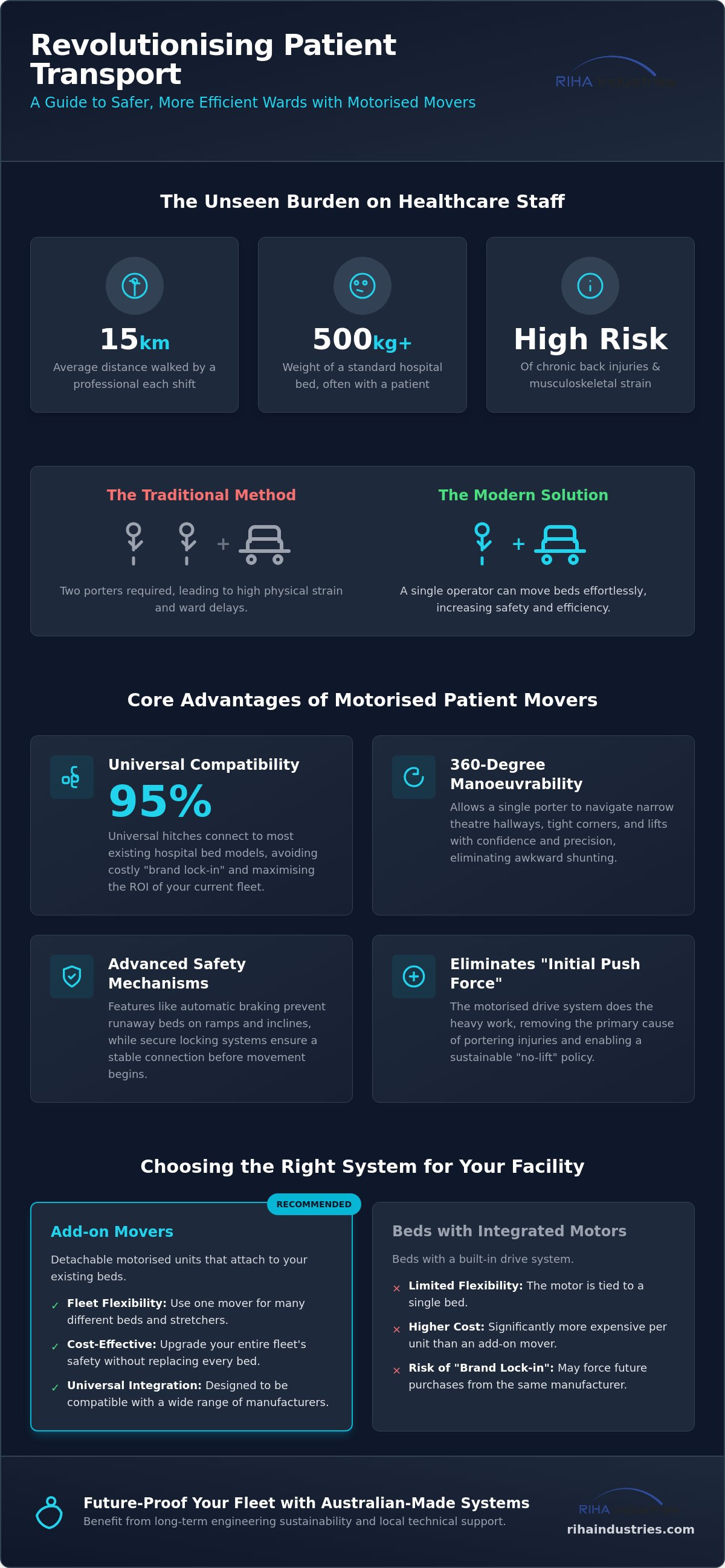
Did you know that healthcare professionals walk an average of 15km every single shift while pushing loads that can exceed 500kg? It is an exhausting reality that frequently leads to chronic back injuries and significant ward delays. You likely recognise that the traditional model of requiring two porters for every patient move is no longer sustainable for modern Australian hospitals. We understand the pressure to maintain safety standards while managing a diverse fleet of beds and stretchers that don't always play well with new technology. Achieving seamless patient transfer system integration is the essential link between high-risk manual handling and a safer, more efficient clinical environment.
This guide will show you how to transition to motorised solutions to eliminate physical strain and empower your team. We will explore how to select equipment, such as the StaminaLift TS5000, that is compatible with 95% of hospital beds to ensure your facility can achieve single-person operation for every transfer. By following these implementation steps, you can move toward a future with zero manual handling injuries and a more resilient, productive ward. We'll cover everything from assessing your current fleet to training staff for maximum safety and impact.
Table of Contents
What is a Powered Bed Transfer System in a Clinical Context?
The Mechanics of Safety: How Motorised Transfer Systems Protect Staff
How to Choose the Right Powered Bed Transfer System for Your Facility
Step-by-Step: Operating a Powered Bed Transfer System Safely
The Future of Portering: Why RIHA Industries Leads in Powered Transfer
What is a Powered Bed Transfer System in a Clinical Context?
In a clinical setting, a powered bed transfer system is a motorised device engineered to attach to hospital beds and stretchers, allowing a single operator to transport patients safely. While many healthcare administrators associate the term "integration" with digital dashboards or logistics software, physical patient transfer system integration focuses on the mechanical synergy between moving equipment and your existing bed fleet. These systems are the frontline tools for enforcing a "no-lift" or "minimal-lift" policy. They do this by removing the physical burden of the "initial push force," which is responsible for most portering injuries.
Modern Australian WHS guidelines increasingly view manual bed pushing as a high-risk activity. On any given workday, staff might move beds a total of 15km; when you consider that a standard hospital bed can weigh up to 500kg, the cumulative strain is immense. By adopting motorised movers like the StaminaLift series, facilities can ensure Patient transport services remain safe and efficient without compromising staff longevity. This shift from manual to mechanical handling is no longer just a luxury; it's a necessary step toward operational compliance and employee well-being.
Key Components of an Industrial Powered Mover
High-performance movers rely on sophisticated drive systems that provide the necessary torque to navigate steep ramps and heavy bariatric loads safely. Unlike basic trolleys, these units use ergonomic joysticks for precision movement, allowing porters to guide beds through narrow theatre corridors with millimetre accuracy. A critical differentiator is the attachment mechanism. While older designs rely on manual strapping, advanced systems like the StaminaLift TS5000 utilise patented jaw systems. These jaws provide a "connect and lock" functionality that secures the bed without tools, ensuring the connection is stable before the motor even engages.
Integrated vs. Add-on Systems
Choosing between a bed with an inbuilt motor and an add-on mover is a significant decision for equipment ROI. Add-on systems offer superior fleet flexibility because they aren't tied to a single piece of furniture. Successful patient transfer system integration relies on universal compatibility; for instance, RIHA Industries designs equipment that works with 95% of hospital beds currently in use across Australia. This universal approach prevents the common problem of "brand lock-in," where a facility is forced to buy specific beds just to match their movers. Investing in high-quality hospital bed handling equipment ensures that your existing infrastructure remains viable while significantly reducing the risk of workplace injuries.
The Mechanics of Safety: How Motorised Transfer Systems Protect Staff
While the logistical benefits of patient transfer system integration are clear, the mechanical advantages provide the most immediate relief for frontline staff. The primary culprit behind hospital portering injuries is the "initial push force" required to get a stationary 500kg bed into motion. Motorised systems eliminate this risk by taking over the heavy lifting, allowing the operator to steer with minimal physical exertion. Adhering to evidence-based guidelines for patient handling requires more than just policy; it requires equipment that physically removes the risk of musculoskeletal strain during these high-pressure moments.
Precision is just as vital as power when navigating the complex environment of a modern hospital. With a 360-degree turning radius, systems like the StaminaLift TS5000 allow a single operator to guide beds through narrow theatre corridors and into tight elevators without the "shunting" often required during manual moves. To ensure safety on the diverse terrain of a facility, automatic braking systems act as a critical fail-safe. These brakes prevent runaway beds on ramps and inclines, ensuring the load remains under total control even if the operator releases the controls. You can explore our full range of bed movers to see how these safety features perform in real-world clinical settings.
Addressing the Bariatric Challenge
Transporting bariatric patients presents a unique set of risks that often require four or more staff members to manage safely. The StaminaLift TS6000 is specifically engineered for these heavy-duty tasks, capable of handling loads up to 900kg even on a 7-degree gradient. By utilising "connect and lock" technology, the mover creates a rigid, secure bond with the bariatric bed. This mechanical synergy reduces the need for large transport teams, allowing a single operator to perform the task with total confidence and zero physical strain.
Ergonomics and Long-Term Staff Retention
The impact of mechanical assistance on staff longevity is well-documented. In a notable case at a large South Australian hospital, the implementation of motorised transfer systems helped reduce bed-moving injuries from 20 per year to zero within just two years. For an aging workforce, these tools are essential for continuing in physically demanding roles without the fear of career-ending back injuries. Providing the right equipment is a core component of any strategy on how to reduce nurse back injuries, as it addresses the root cause of physical fatigue. When staff feel protected by their equipment, retention rates improve and the overall culture of safety within the ward is strengthened.
How to Choose the Right Powered Bed Transfer System for Your Facility
Selecting the appropriate motorised mover requires a comprehensive audit of your current assets and physical environment. It isn't simply a matter of choosing the unit with the highest weight capacity; it is about how the device interacts with your ward's daily rhythm and existing infrastructure. Successful patient transfer system integration hinges on whether the device can handle your specific facility's terrain. High-torque motors are essential if your porters frequently navigate external paths or internal ramps. Additionally, you must measure the "added length" the mover provides to ensure the entire assembly fits comfortably within your standard hospital lifts without obstructing the doors.
Beyond physical dimensions, battery technology plays a pivotal role in operational uptime. Lithium-ion upgrades are now essential for high-turnover wards, providing the rapid charging and long-lasting power required for back-to-back transfers across a busy shift. When a mover is out of service due to a flat battery, staff often revert to manual pushing, which immediately increases the risk of injury. Ensuring your chosen system has a reliable power management programme is a fundamental step in maintaining a consistent safety standard.
Compatibility and Hitching Versatility
Australian hospitals often maintain a diverse fleet of beds from various global and local manufacturers. Patented jaw systems are the primary solution for this variety, as they accommodate wheel diameters ranging from 100mm to 300mm without requiring additional tools. This tool-free coupling is vital in fast-paced emergency departments where every second counts and porters cannot afford to waste time searching for specific attachments. For facilities using a high proportion of Australian-manufactured beds, the StaminaLift 2100 Bed Mover offers a specifically engineered design that ensures a seamless, stable connection every time.
Total Cost of Ownership (TCO) vs. Initial Price
Step-by-Step: Operating a Powered Bed Transfer System Safely
Safe operation begins long before the patient is in transit. To maintain the integrity of your patient transfer system integration, every shift should start with a rigorous pre-operational check. Operators must verify battery levels, ensure the patented jaw system is free from debris, and test the emergency stop functionality. These brief checks prevent mid-transfer failures that could compromise patient safety or ward efficiency. Once the equipment is cleared for use, the connection sequence is straightforward: approach the bed slowly and allow the automatic locking mechanism to engage securely without the need for manual tools or strapping.
Mastering the joystick control is essential for navigating the high-stakes environment of a diagnostic suite or intensive care unit. Unlike manual pushing, which requires significant physical effort to steer, a motorised mover allows for millimetre-perfect precision. The operator should use gentle, controlled movements to initiate travel, relying on the motor's torque to handle the heavy lifting. When the transfer is complete, safe disconnection is equally important. Ensure the unit is stored in a designated charging bay, maintaining its sleek profile to prevent tripping hazards for other clinical staff.
Navigating Common Hospital Obstacles
Hospital corridors are often crowded with equipment, making 360-degree manoeuvrability a non-negotiable feature. When turning tight corners with a patient in tow, the operator should swing wide to accommodate the bed's length, allowing the mover's central drive wheel to act as a pivot point. Entering and exiting elevators requires a steady hand; always ensure the bed is centred to avoid catching the side rails. For facilities with internal ramps, the automatic braking system provides peace of mind by maintaining a constant speed and preventing any uncontrolled acceleration on a gradient.
Maintenance and Daily Care
Infection control is a priority in any high-risk ward. Daily cleaning protocols should focus on the touchpoints and the jaw mechanism, using hospital-grade disinfectants that won't degrade the equipment's finish. Modern systems often include Bluetooth diagnostics, which allow facility managers to monitor battery health and usage history remotely. This data-driven approach ensures that your fleet is always ready for the 15km average distance porters cover each day. For more detailed advice on preserving your fleet, you can read our guide on hospital porter equipment. If you're ready to upgrade your facility's safety standards, contact us today to discuss your specific ward requirements.
The Future of Portering: Why RIHA Industries Leads in Powered Transfer
Choosing a partner for clinical safety is a decision that extends far beyond the initial purchase. As hospitals move toward more sophisticated patient transfer system integration, the focus shifts to long-term reliability and the sustainability of the equipment fleet. RIHA Industries maintains a unique position as an Australian manufacturer, providing FDA-registered equipment that is specifically engineered for the rigours of local healthcare environments. This local presence ensures that your facility isn't just buying a tool, but gaining a stable, long-term partner dedicated to eliminating manual handling risks across the country.
Engineering sustainability is a core pillar of our philosophy. We recognise that hospital budgets require equipment with a long operational life, which is why we utilize 3D-printed spare parts to support older machinery. This approach prevents premature equipment retirement and ensures that your investment remains productive for years to come. Reliability is backed by a national service coverage network and a commitment to 24-hour parts dispatch. When a critical piece of equipment requires maintenance, our local supply chain ensures that downtime is kept to an absolute minimum, even for facilities in more remote regions.
We believe that hands-on experience is the most effective way to understand the impact of motorised assistance. Traditional sales pitches can't replicate the sense of relief a porter feels when they move a 500kg load with a single hand for the first time. Our team focuses on direct engagement, providing on-site demonstrations that allow your staff to test the equipment in their own corridors and elevators. This transparent approach builds confidence and ensures that the transition to powered transfer is met with enthusiasm by the frontline team.
Custom Solutions for Unique Clinical Needs
Every ward has its own set of mechanical challenges, from specialised diagnostic suites to complex theatre environments. RIHA Industries frequently partners with hospitals to prototype and develop custom attachment systems, such as specialised clamps for theatre tables. This bespoke engineering ensures that patient transfer system integration is truly universal, regardless of how unique your equipment might be. While we offer various models, the StaminaLift Transfer System 5000 remains the global benchmark for its balance of power, precision, and ease of use.
Getting Started with Your Transition
Modernising your portering operations is a structured process that begins with a clear understanding of your current risks. Our specialists can help you organise a site-wide manual handling audit to identify the areas where motorised assistance will have the greatest impact on staff safety. Following the audit, we provide comprehensive training and certification programmes to ensure your nursing and portering staff are confident in every aspect of operation. It's time to transform your facility's safety profile and protect your workforce from the avoidable strain of manual bed moving. Explore the StaminaLift series today to see how thoughtful engineering can create a safer, more efficient ward for everyone.
Securing the Future of Clinical Mobility
The transition from manual bed pushing to motorised assistance is a vital step in protecting the longevity of your healthcare workforce. By focusing on successful patient transfer system integration, your facility can move away from the high-risk reality of musculoskeletal strain and toward a standard of care where single-person operation is the norm. We've seen how the right equipment can reduce bed-moving injuries from 20 per year to zero, proving that thoughtful engineering is the ultimate ally for busy ward staff. Whether you're managing standard acute care beds or complex bariatric loads, the solution lies in choosing universal, reliable technology that bridges the gap between physical effort and operational efficiency.
As a proudly Australian-made and owned manufacturer, RIHA Industries provides FDA-registered equipment designed to withstand the unique pressures of the local healthcare sector. Our commitment to your team's safety is backed by national support and a deep understanding of clinical workflows. It's time to empower your porters and nurses with tools that turn exhausting physical tasks into controlled, precise movements. To see these benefits in action, book a hands-on demonstration for your hospital team today. We look forward to helping you create a safer, more sustainable environment for both your staff and your patients.
Frequently Asked Questions
Is a powered bed transfer system compatible with all hospital beds?
Most motorised movers are compatible with 95% of hospital beds and stretchers currently in use across Australia. This universal fit is achieved through patented jaw systems that eliminate the need for brand-specific hitches, ensuring seamless patient transfer system integration regardless of your existing fleet. Whether you use local Australian-made beds or global brands, the tool-free coupling mechanism provides a secure and stable connection every time.
How much weight can a motorised bed mover actually push?
Standard motorised movers like the StaminaLift TS5000 are designed to transport safe working loads of 600kg. For bariatric care, the StaminaLift TS6000 increases this capacity to 900kg, allowing a single operator to move the heaviest patients without physical strain. These weight limits are specifically engineered to handle the combined mass of the patient, the bed, and any essential clinical equipment attached during transport.
Do I need a special licence to operate a powered bed transfer system in Australia?
You don't need a formal state-issued licence to operate these systems, though internal facility training is essential for compliance with Australian WHS standards. Most hospitals implement a short certification programme to ensure staff are confident with the joystick controls and safety protocols. This internal training focuses on precision steering and emergency stop procedures to maintain a high standard of ward safety.
Can these systems handle steep ramps and uneven outdoor surfaces?
Yes, these systems are specifically engineered with high-torque motors to navigate steep ramps and uneven outdoor paths safely. For example, the TS6000 can manage a 900kg load on a 7-degree gradient without the risk of runaway movement. Automatic braking systems ensure the bed remains under total control, providing the necessary stopping power even on slippery or textured surfaces.
How long does the battery last on a standard hospital shift?
A standard lithium-ion battery setup is designed to last through a full high-turnover shift, providing consistent power for numerous transfers. For wards with continuous demand, rapid charging capabilities allow the unit to be topped up during staff breaks. This ensures that the equipment is always ready for the 15km average distance a porter might cover in a single workday.
What happens if the battery runs out while moving a patient?
If a battery reaches a critical level during use, the system's fail-safe mechanisms will engage the automatic braking system to prevent any uncontrolled movement. You can then use a manual bypass to disengage the drive wheel, allowing the bed to be moved manually if necessary. To prevent this scenario, visual battery indicators and Bluetooth diagnostics provide early warnings so the unit can be returned to its charging bay before losing power.
How much length does the mover add to a standard hospital bed?
Motorised movers are designed with a sleek, compact profile to ensure the entire assembly still fits within standard hospital lifts. While they do add a small amount of length to the bed, the 360-degree turning radius allows the operator to pivot the bed into tight spaces more effectively than manual handling. This compact design is a critical part of successful patient transfer system integration within older hospital infrastructures.
Are these systems quiet enough for use in night wards?
Yes, the electric drive systems are engineered for near-silent operation, making them perfectly suitable for use in night wards and quiet clinical zones. Unlike the clatter often associated with manual bed shunting, these movers provide smooth acceleration and braking that won't disturb resting patients. This acoustic consideration helps maintain a calm environment while still allowing for efficient patient flow during the night.


