
Implementing a No Lift Policy in Healthcare: The 2026 Comprehensive Safety Checklist
- Jul 16
- 12 min read
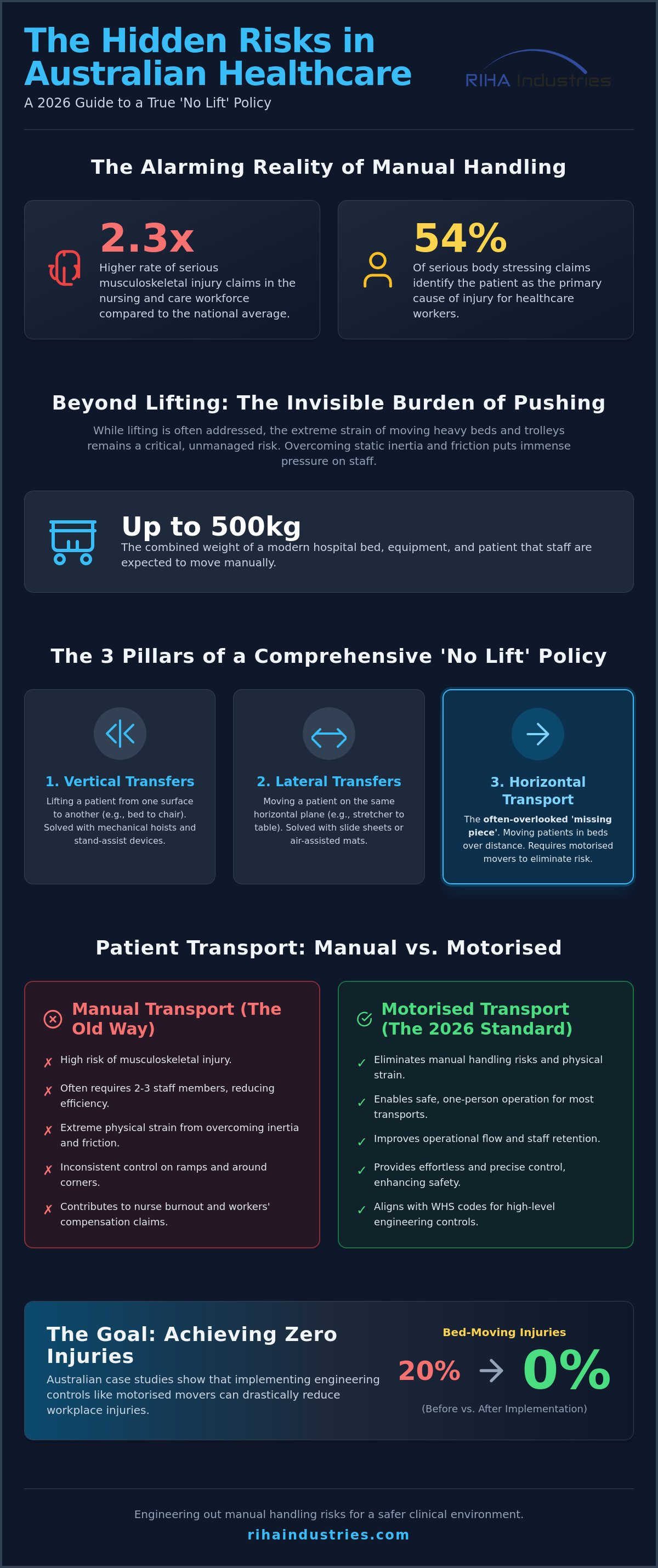
Did you know that the Australian nursing and care workforce experiences serious musculoskeletal injury claims at a rate 2.3 times the national average? It is a sobering reality that over 54% of serious body stressing claims in this sector identify the patient as the primary cause of injury. While most facilities have some form of safety protocols, a truly effective no lift policy healthcare organisations can rely on requires moving beyond simple lifting hoists to address the hidden strain of pushing beds and heavy trolleys. You likely recognise the heavy burden these physical demands place on your team, contributing to nurse burnout and the steady rise of workers' compensation premiums.
We understand that your priority is the well-being of your staff and the safety of your patients. This article provides a comprehensive 2026 checklist to help you bridge the gap between regulatory compliance and genuine injury prevention. You will discover how to eliminate manual handling risks through advanced motorised transport solutions while meeting the latest Australian WHS codes of practice. We will examine the essential engineering controls and operational shifts needed to achieve zero manual handling injuries; this approach fosters a more sustainable, efficient clinical environment for everyone.
Table of Contents
What is a No Lift Policy in Healthcare?
A no lift policy healthcare framework represents a comprehensive organisational commitment to engineering out the physical risks inherent in clinical environments. At its core, this strategy prohibits the manual lifting and moving of patients and heavy equipment, except in life-threatening or emergency situations. It marks a fundamental shift from the outdated "Safe Lifting" philosophy, which relied on teaching staff better body mechanics, to a "No Lifting" approach that mandates the use of mechanical assistance. By prioritising engineering controls over administrative training, hospitals can effectively eliminate the heavy physical strain that leads to chronic musculoskeletal disorders (MSDs).
This policy aligns directly with the Australian Work Health and Safety (WHS) Act and the 2025 Model Code of Practice for Hazardous Manual Tasks. Under these regulations, employers must eliminate risks as far as is reasonably practicable. In 2026, relying on a nurse's physical strength is no longer considered a "reasonably practicable" way to manage risk when motorised solutions are readily available. The primary goal is clear: protecting nursing and portering staff from career-ending injuries while ensuring patient dignity and safety during every transfer.
The Evolution of Patient Handling Standards
For decades, healthcare facilities relied on "back school" training to reduce injuries. These programmes taught staff how to bend their knees and keep their backs straight, yet injury rates remained high because the human spine is simply not designed to handle the unpredictable loads of patient care. Research into the risks of manual patient handling eventually led to a transition toward a "Zero Lift" culture in modern Australian hospitals. Current 2026 standards recognise that administrative controls, like training and signage, are the least effective way to manage hazards. Instead, the focus has shifted to high-level engineering controls that remove the need for physical exertion entirely.
The Scope of a Comprehensive Policy
A truly robust no lift policy healthcare practitioners can trust must cover three distinct areas of movement. If any of these are neglected, the safety chain breaks and staff remain at risk.
Vertical Transfers: These involve lifting a patient from one surface to another, such as from a bed to a chair, using mechanical hoists, slings, and stand-assist devices.
Lateral Transfers: These movements occur on the same horizontal plane, such as moving a patient from a stretcher to a diagnostic table, typically facilitated by slide sheets or air-assisted transfer mats.
Horizontal Transport: This is the often-overlooked "missing piece" of safety. It involves the long-distance movement of patients in beds or trolleys through corridors. Without motorised bed movers like the StaminaLift 2100, this remains a high-risk, labour-intensive task that bypasses the benefits of a No Lift policy.
By addressing all three categories, facilities create a seamless safety environment that protects staff from the moment a patient arrives until they are discharged.
Why Manual Handling Risk Persists in Australian Hospitals
Many clinical leaders are surprised to find that injury rates remain stagnant even after implementing a no lift policy healthcare staff are expected to follow. This persistence is often due to the "invisible burden" of horizontal transport. While vertical lifting is now largely motorised, the act of pushing a 500kg bed through a facility is frequently still performed manually. The physical forces required to initiate movement, known as overcoming static inertia, place extreme pressure on the operator's musculoskeletal system. This strain is exacerbated by friction from different floor surfaces and the mechanical resistance of bed castors.
Facility design often compounds these physical challenges. Staff frequently navigate long corridors, steep ramps, and tight elevator spaces that require awkward postures to maintain control of a heavy trolley. Over time, this leads to cumulative strain. This type of injury is particularly insidious because it doesn't result from one single event; instead, it is the result of months or years of micro-trauma to the spine and joints. To understand how to better protect your team, you might consider how RIHA Industries specialises in engineering out these specific manual handling risks.
The Weight of Modern Healthcare
The rise in bariatric patient admissions has fundamentally changed the physical landscape of the hospital. It is now common for a bed and patient combination to exceed 400kg. Manually initiating the movement of a 900kg load, which represents the upper capacity of high-end clinical equipment, requires a peak push force that is physically impossible for one person to perform safely. Relying on multiple staff members for a single move is not only inefficient but often leads to uncoordinated movements that increase the risk of acute injury. A modern safe patient handling program must prioritise mechanical assistance for these high-mass tasks to ensure staff longevity.
The Gap in Current Safety Strategies
A significant gap exists in facilities that provide hoists for nursing staff but leave the portering team to move heavy beds manually. This oversight creates a dangerous environment where "momentum-based" bed moving becomes the norm. Porters may feel forced to use their body weight to keep a heavy bed moving in high-traffic corridors, which compromises both their safety and the dignity of the patient. Without motorised intervention, the risk of collisions or loss of control on inclines remains a constant threat to the facility's safety goals. When we ignore the mechanics of transport, we leave the most vulnerable part of the patient journey unprotected.
Comparing Manual vs. Motorised Patient Transport Solutions
Choosing between manual and motorised transport is often the deciding factor in whether a no lift policy healthcare initiative succeeds or fails. While manual pushing might appear cost-effective on a balance sheet, the operational reality tells a different story. In most Australian hospitals, moving a standard bed with a patient manually requires at least two, and often three, staff members to ensure control and safety. By contrast, motorised solutions like the StaminaLift system allow a single operator to manage the same task with greater precision. This shift doesn't just reduce the risk of injury; it significantly improves staffing efficiency and patient flow throughout the facility.
Safety features also represent a major point of divergence. Manual trolleys rely entirely on the physical strength and reaction time of the porter to stop or steer. This lack of control is dangerous in high-pressure clinical environments. Motorised movers provide automatic braking and emergency stop functions, ensuring the load remains secure even on inclines. When you weigh the purchase price of high-quality equipment against the astronomical cost of a single back injury claim, the long-term ROI of motorised transport becomes undeniable. Adhering to OSHA Safe Patient Handling Guidelines reinforces that mechanical assistance is the only reliable way to protect staff longevity and maintain operational standards.
Manual Pushing: The Hidden Costs
The financial impact of manual handling extends far beyond the immediate medical costs of an injury. Facilities often face rising WorkCover premiums, the expense of hiring agency staff to cover shifts, and a noticeable dip in team morale. A particularly high-risk scenario is the "runaway" bed. Research indicates that maintaining control of a heavy load on a 7-degree incline is nearly impossible for a manual operator, creating a significant liability for the healthcare provider. You can learn more about these financial and operational risks in our detailed guide on The High Cost of Manual Bed Handling in Healthcare.
Motorised Advantage: Precision and Protection
Modern engineering has turned bed moving from a hazardous chore into a controlled, one-person operation. The StaminaLift TS5000, for example, is designed for universal compatibility, integrating seamlessly with 95% of global bed designs. This eliminates the need for staff to bend or use complex strapping, thanks to patented jaw systems that secure the bed automatically. The latest 2026 updates to the StaminaLift 2100 include Bluetooth diagnostics; this allows facility managers to monitor battery cycles and fleet health remotely. This technology ensures that your safety equipment is always ready for duty, providing a 360-degree turning radius that makes navigating even the tightest hospital corners effortless. By removing the physical burden, you empower your staff to focus on clinical care rather than mechanical exertion.
Checklist: Reducing Manual Handling Risk in Your Facility
Compatibility is the next critical step. Before investing in new technology, perform a thorough equipment review to ensure your movers work seamlessly with your existing beds and stretchers. For example, the StaminaLift TS5000 is designed for universal compatibility, yet verifying the specific castor configurations of your older fleet remains a best practice. To keep these systems running at peak performance, establish a maintenance plan that includes regular check-ups. RIHA Industries provides Preventative Maintenance and Repairs to ensure your motorised movers are available 24/7, preventing staff from reverting to manual methods when a machine is out of service.
The "No Lift" Equipment Audit
When conducting your audit, ask whether you have motorised movers for every bed likely to exceed 250kg. While the TS5000 is a versatile workhorse, bariatric units may require the heavy-duty capacity of the StaminaLift Transfer System 6000, which can move nearly one tonne. Don't overlook the logistics of the facility. Tugs like the Easi Mover are essential for handling heavy meal and linen trolleys, which often contribute to repetitive strain injuries. For a detailed breakdown of how these requirements align with national standards, refer to our Manual Handling Code of Practice healthcare guide.
Training and Culture Shift
The transition to a no lift environment is as much about psychology as it is about machinery. You must encourage a culture shift where staff move away from the "I can do it myself" mentality and embrace a "machine-first" approach. This is achieved through formal certification for all operators and the appointment of "Super-Users" in every ward. These champions provide peer-to-peer support, troubleshoot minor issues, and ensure that the no lift policy healthcare goals are met even during the busiest shifts. When staff see the physical relief that motorised transport provides, the "buy-in" becomes a natural outcome of their improved well-being.
If you are ready to identify the hidden risks in your facility, request a hazard audit from RIHA Industries to begin your journey toward a safer workplace.
Achieving Zero Injuries with StaminaLift and RIHA Industries
A no lift policy healthcare facilities adopt is ultimately a promise of safety made to every staff member. To honour this promise, organisations must look beyond administrative guidelines and invest in engineering solutions that physically remove the hazard. RIHA Industries exists to fulfil this mission by designing equipment that bridges the gap between clinical necessity and physical safety. This commitment to engineering excellence has yielded measurable results; in a South Australian hospital case study, the implementation of motorised transport solutions saw bed-moving injuries plummet from 20% to zero within just two years. This success demonstrates that when the right tools are provided, workplace safety becomes an achievable reality rather than just a target.
The versatility of the StaminaLift range ensures that every specific transport challenge is addressed. For standard operations, the StaminaLift 2100 Bed Mover provides an agile solution for everyday ward transfers. When the requirements become more demanding, the StaminaLift Transfer System 6000 offers the power to move nearly one tonne up a 7-degree incline, providing essential support for bariatric care. Because RIHA Industries is an Australian manufacturer, facilities benefit from local expertise and national service coverage. This ensures that your safety infrastructure is supported by people who understand the unique pressures of the Australian healthcare landscape.
Why StaminaLift is the Industry Standard
Reliability in a high-stakes environment is non-negotiable. StaminaLift equipment is engineered with patented hitching and jaw systems that secure beds automatically; this eliminates the need for staff to bend or strain during the connection process. These machines are remarkably compact. They are designed to fit into standard hospital lifts without the need to decouple from the bed, which saves time and maintains patient dignity during transit. Should maintenance be required, our South Australian facility offers 24-hour shipping for parts. This keeps your fleet operational and your staff protected without the frustration of long lead times.
Taking the Next Step Toward a Safer Ward
Transitioning to a motorised fleet is a strategic investment in your human capital. You can utilise the RIHA ROI calculator to clearly demonstrate how reducing injury claims and improving staffing efficiency justifies the equipment upgrade. Seeing the equipment in your own environment is often the most persuasive step. We encourage facility managers to organise an on-site demonstration to experience the 360-degree turning radius and intuitive controls first-hand. If you are ready to eliminate manual handling risks and support your team, Contact RIHA Industries today to secure your staff’s safety.
Future-Proofing Your Facility’s Safety Standards
Establishing a resilient no lift policy healthcare professionals can trust requires more than just administrative guidelines; it demands the right engineering controls. We've explored how the transition from manual pushing to motorised transport eliminates the "invisible burden" of static inertia and cumulative strain. By implementing a comprehensive checklist that includes universal movers like the StaminaLift TS5000, your facility can move beyond simple compliance to achieve genuine injury prevention. This shift empowers your team to focus on clinical excellence rather than physical exertion.
Our Australian-made, FDA-registered equipment has been proven to reduce bed-moving injuries to zero in clinical settings. With national service and support across Australia, you're never alone in your mission to protect your workforce. Providing your nursing and portering teams with these tools doesn't just improve staff retention; it ensures a safer, more dignified experience for every patient. Your team’s well-being is the foundation of excellent care, and we're dedicated to helping you protect it.
Request a 3D Demo of the StaminaLift TS5000 Today to see how we can help you eliminate manual handling risks for good. We look forward to partnering with you to create a safer healthcare environment.
Frequently Asked Questions
What is the primary goal of a No Lift policy in healthcare?
The primary goal of a no lift policy healthcare organisations implement is the total elimination of manual handling tasks that pose a risk of musculoskeletal injury. By replacing physical exertion with mechanical assistance, facilities protect their staff from the cumulative strain of moving patients and heavy equipment. This approach prioritises high-level engineering controls to ensure a sustainable and safe working environment for all clinical and support staff.
Does a No Lift policy mean staff can never touch a patient?
No, a No Lift policy doesn't prohibit clinical staff from touching or interacting with patients. It specifically targets tasks involving the bearing of a patient's weight or the forceful pushing and pulling of heavy equipment. Staff continue to provide essential bedside care and therapeutic support while relying on mechanical aids for the physically demanding aspects of transfers and transport.
How does motorised equipment help with WHS compliance in Australia?
Motorised equipment assists with WHS compliance by fulfilling the legal requirement to eliminate workplace risks as far as is reasonably practicable. Australian manual handling codes of practice emphasise the hierarchy of controls, which ranks engineering solutions like the StaminaLift TS5000 above administrative training. Using these systems provides documented evidence of a facility's commitment to modern safety standards and risk mitigation.
What is the maximum weight a StaminaLift bed mover can handle?
The maximum capacity depends on the specific model, with the StaminaLift Transfer System 6000 capable of moving nearly one tonne. This bariatric-grade mover can transport a 900kg load even up a 7-degree incline. This ensures that even the heaviest bariatric patient and bed combinations are moved without placing any physical strain on the operator.
Can one person safely move a bariatric bed using these systems?
Yes, a single operator can safely transport a bariatric bed using a motorised mover. The machine provides the necessary torque to overcome static inertia and maintain controlled momentum, leaving the staff member to focus on steering and navigation. This one-person operation significantly improves staffing efficiency compared to the three or four people often required for a manual bariatric move.
How do I choose between a walk-behind and a ride-on tug for my facility?
Choosing between these models depends on the distance of your transport routes and the layout of your facility. Walk-behind models like the StaminaLift 2100 offer exceptional manoeuvrability in tight wards and elevators. Conversely, ride-on solutions such as the Easi Rider are ideal for portering teams who must cover several kilometres per day across large hospital campus sites.
Are motorised bed movers compatible with older hospital bed models?
Motorised movers are designed for universal compatibility and work seamlessly with the vast majority of older hospital bed models. The StaminaLift TS5000 integrates with 95% of global bed designs through its patented adjustable jaw system. This allows facilities to upgrade their safety standards without needing to replace their entire existing bed fleet immediately.
What is the typical ROI for implementing motorised patient transfer systems?
The return on investment is primarily realised through the dramatic reduction in workers' compensation claims and staff turnover. In one South Australian hospital, bed-moving injuries were reduced from 20% to zero after implementing RIHA Industries equipment. Beyond financial savings, facilities see improved patient flow and a more empowered, less fatigued workforce that stays in the profession longer.


