Manual Bariatric Transfer Risks: 2026 Healthcare Guide
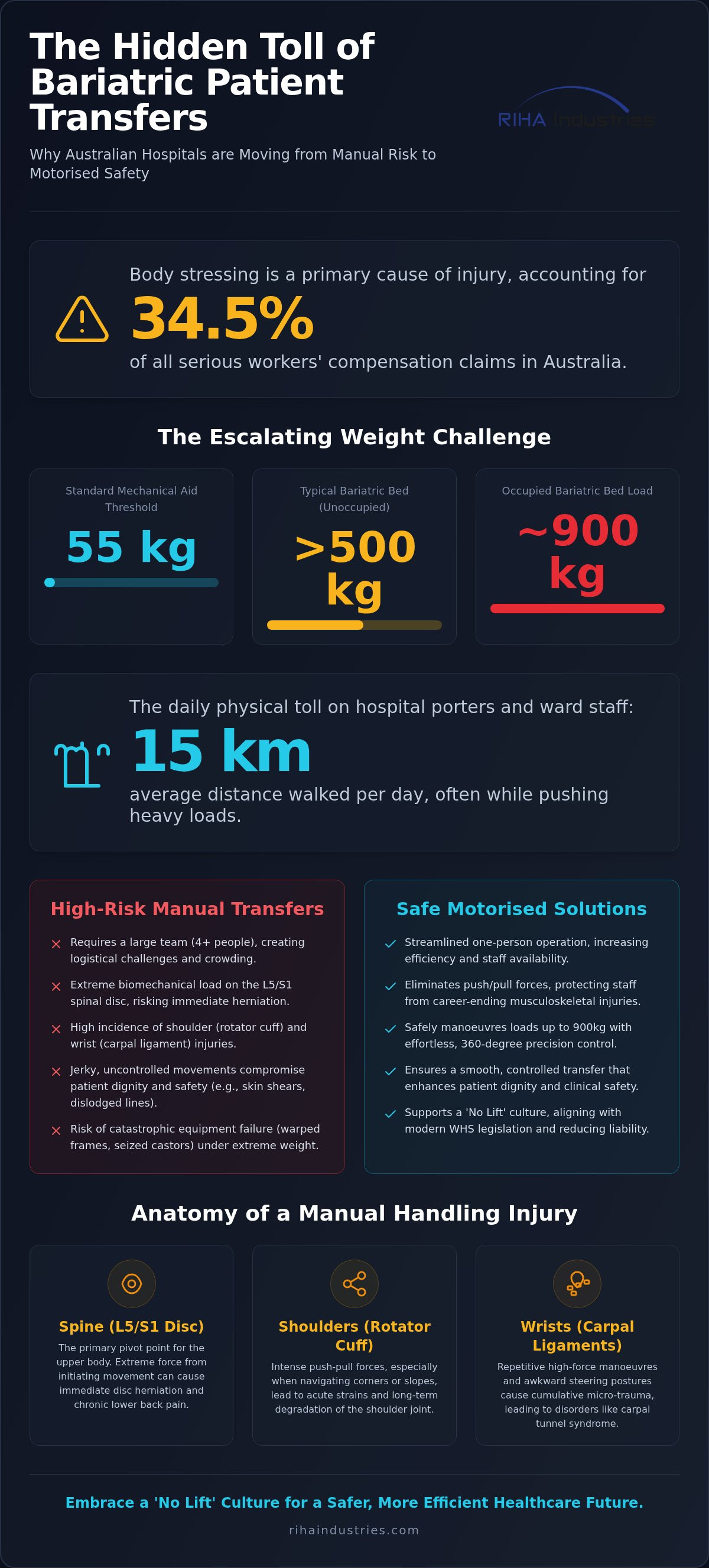
Did you know that body stressing is responsible for 34.5% of all serious workers' compensation claims in Australia? In high-pressure clinical environments, the physical burden of moving a patient who may weigh up to 900kg places an unsustainable load on your nurses and porters. Relying on legacy manual techniques creates significant risks of manual bariatric patient transfer, ranging from career-ending spinal injuries to complex legal liabilities under the latest WHS legislation. You likely recognise that the traditional team lift approach is no longer sufficient to manage the increasing volume of bariatric admissions while maintaining staff retention.
This 2026 guide provides a comprehensive look at how modern motorised technology can eliminate these hazards and transform your facility's safety culture. You'll discover how to transition from high-risk manual handling to a streamlined, one-person operation that ensures patient dignity and operational efficiency. We'll examine the specific physical and financial dangers your organisation faces and demonstrate how advanced engineering solutions, like the StaminaLift TS6000, are helping Australian hospitals reduce transfer-related injuries to zero.
Table of Contents
The Growing Challenge of Bariatric Patient Transfers in Australian Healthcare
Australian hospitals are witnessing a profound demographic shift that's redefining ward logistics. Bariatric admissions are no longer isolated events; they're daily occurrences in both metropolitan centres and regional facilities. In a clinical transport context, "bariatric" refers to weight thresholds that trigger specialised handling protocols. While standard guidelines suggest mechanical aid for loads over 55kg, modern bariatric beds often exceed 500kg. When occupied, these loads can reach nearly one tonne, making the Manual handling of loads in this category a high-risk activity that simply exceeds human physical capacity.
The Bariatric Boom and Hospital Infrastructure
Older hospital designs often present physical barriers that complicate modern bariatric care. Narrow corridors and vintage lift dimensions create significant "pinch points" that make the movement of wider bariatric beds difficult. Attempting to guide these heavy loads through tight spaces significantly increases the risks of manual bariatric patient transfer, as staff must adopt awkward postures to maintain control. Beyond the human risk, using standard transport equipment for bariatric patients frequently leads to catastrophic equipment failure. Castors can seize and frames can warp under the pressure, creating an unstable environment for both the patient and the clinical team.
Staff Physical Burden: The 15km Daily Reality
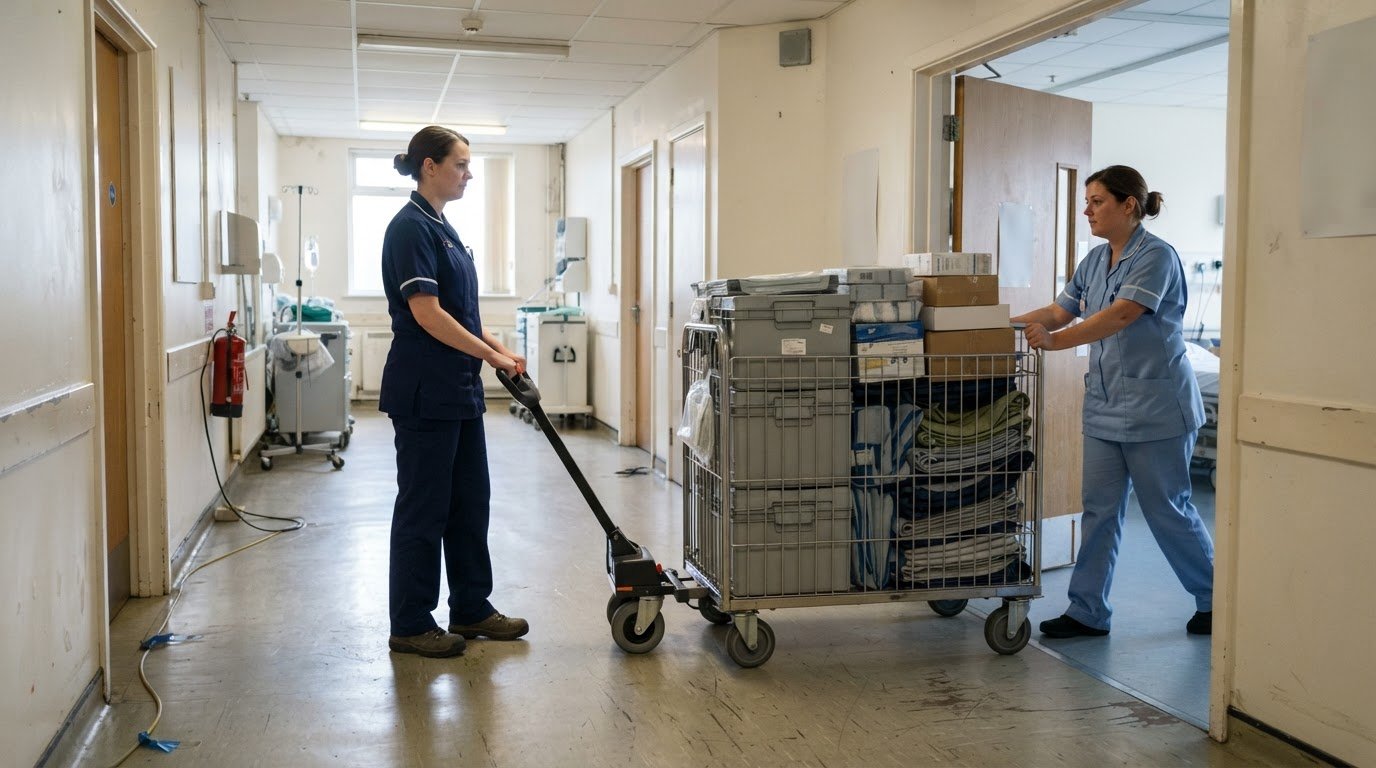
The physical toll on healthcare professionals is immense. Australian porters and ward staff often walk up to 75km per week, which averages out to roughly 15km per day. This distance is rarely covered empty-handed; it's spent pushing beds, trolleys, and heavy equipment. Exhaustion acts as a silent catalyst for workplace accidents. When a team is already fatigued from a long shift, their ability to safely manage a 900kg transfer is severely compromised.
This physical strain leads to more than just sore muscles. It's a primary driver for musculoskeletal disorders and increases the psychological stress on nursing teams who may dread the next bariatric admission. Transitioning to a one-person operation through motorised solutions like the StaminaLift TS6000 isn't just an upgrade in efficiency. It's a necessary step to protect the long-term health and well-being of the people providing the care. By removing the manual effort, hospitals can ensure that their staff are not only safer but also more capable of providing dignified patient support.
Key Physical and Clinical Risks of Manual Bariatric Handling
When a healthcare team attempts to push a 500kg bariatric bed, the biomechanical forces concentrated on the L5/S1 spinal disc are extreme. This specific lumbar region acts as a primary pivot point for the upper body, and the sheer force required to overcome initial inertia can lead to immediate disc herniation. These Key Physical and Clinical Risks are not always sudden accidents; they often manifest as micro-trauma. This represents a silent, invisible degradation of soft tissue that occurs long before a staff member feels a snap or pop. The damage is often silent. Safety shouldn't be a gamble.
Musculoskeletal Injuries: Beyond the Lower Back
While back pain is the most cited injury, hospital transport staff are increasingly reporting acute shoulder and wrist disorders. The risks of manual bariatric patient transfer involve intense push-pull forces that strain the rotator cuff and carpal ligaments. During emergency ward transfers, the pressure to move quickly often leads to over-exertion, where the body's natural protective mechanisms are bypassed to meet clinical urgency. For a porter covering a 15km daily average, repetitive strain is the cumulative physiological fatigue caused by performing hundreds of high-force manoeuvres without adequate mechanical recovery.
Patient Dignity and Clinical Safety
Manual handling doesn't just threaten the staff; it compromises the patient experience. Jerky, manual movements increase the risk of skin shears or dislodging critical clinical equipment like IV lines and catheters. Bariatric patients often feel vulnerable during transport, and the visible physical strain of a four-person team can lead to a distressing loss of dignity. Transitioning to smooth, motorised movement ensures the patient remains stable and comfortable throughout the journey, which is vital for those with complex respiratory conditions. Implementing advanced solutions from RIHA Industries can eliminate these erratic movements, providing a safer and more dignified clinical environment for every patient admission.
The Financial and Legal Burden of Manual Handling Injuries
The financial fallout of a workplace injury extends far beyond the initial medical bill. In the 2023-24 period, Australia saw over 146,700 serious workers' compensation claims, meaning roughly 400 serious injuries occur every single day across the country. Body stressing alone accounts for 34.5% of these claims. When facilities ignore the risks of manual bariatric patient transfer, they open themselves to escalating WorkCover premiums and substantial payouts. These direct costs are just the tip of the iceberg. Indirect expenses, such as hiring agency staff to cover absenteeism and the administrative burden of managing long-term claims, often triple the total financial impact on a ward's budget.
WorkCover and the Cost of Injury
Protecting your team is a strategic investment rather than a mere expense. While a single permanent disability claim can cost hundreds of thousands of dollars in legal and medical fees, motorised solutions offer a clear path to cost recovery. Facilities that have transitioned to advanced movers often see injury rates drop to zero, effectively eliminating the most common source of compensation claims. You can read more about the high cost of manual bed handling to understand how preventing one major injury can pay for an entire fleet of equipment. Beyond the balance sheet, reducing physical strain is vital for staff retention. Experienced nurses are leaving the profession because their bodies can't keep up with the demands of manual bariatric care, leading to a loss of institutional knowledge that's impossible to quantify.
WHS Compliance and Legal Liability
Australian law is clear about the duty of care. Under the WHS Act, employers must eliminate or minimise risks as far as is "reasonably practicable." In 2026, with motorised movers readily available, continuing to rely on manual team lifting for 500kg+ loads may be seen as a breach of this duty. The clinical risks of bariatric patient handling are well-documented, making it difficult to justify a lack of mechanical aid during a regulatory audit. A robust safety strategy must include:
Documented Safe Work Method Statements (SWMS) specifically for bariatric transport.
Regular risk assessments of ward corridors, lift capacities, and floor surfaces.
The provision of engineering controls like the StaminaLift TS6000 to "engineer out" the risks of manual bariatric patient transfer.
Failing to implement these measures doesn't just risk a fine; it undermines the trust your staff place in the organisation to keep them safe. When a hospital prioritises mechanical assistance, it sends a clear message that staff well-being is a core organisational value.
Implementing Safe Work Method Statements (SWMS) for Bariatric Transport
A robust Safe Work Method Statement (SWMS) serves as the operational backbone for any facility serious about eliminating workplace injuries. It moves beyond simple theory, providing a clear, step-by-step framework that prioritises mechanical assistance over human effort. By formalising a "No Lift" policy, hospitals can transition away from the hazardous practice of team lifting, where even four or five staff members remain at risk when handling a 500kg load. This structured approach ensures that the risks of manual bariatric patient transfer are identified and mitigated before the bed ever leaves the ward room.
Risk Assessment Protocols
Before any bariatric transport begins, a point-of-care risk assessment is essential. Staff must identify "red flag" scenarios such as 7-degree inclines, narrow doorway clearances, or high-traffic lift lobbies. Manual transfers in these environments are notoriously difficult to coordinate, often leading to uneven weight distribution and sudden strain. Motorised solutions solve this by allowing a single operator to navigate these obstacles with precision. When evaluating your facility's needs, it's vital to follow established patient handling equipment selection criteria to ensure your movers are compatible with your existing bariatric bed fleet. A mover that doesn't securely "lock" to the bed frame can introduce new stability hazards during transit.
The Role of Staff Training
Effective SWMS implementation relies on more than just reading a document; it requires hands-on competency. Classroom theory cannot replicate the experience of guiding a one-tonne load through a busy Australian hospital corridor. Practical demonstrations build staff confidence, particularly when using advanced joystick-controlled technology. Training programmes should focus on:
Mastering 360-degree manoeuvrability in confined spaces to avoid wall strikes.
Understanding the braking and docking mechanisms of the StaminaLift TS6000.
Recognising the signs of equipment fatigue or the need for preventative maintenance.
This hands-on approach removes the "fear factor" often associated with moving massive loads. When a porter or nurse feels in total control of the equipment, they're less likely to revert to dangerous manual habits during a busy shift. Empowering your team with the right skills is just as important as providing the right tools. To learn more about integrating these safety protocols into your daily ward routine, explore the solutions available at RIHA Industries.
Modernising Patient Flow with Powered Bariatric Movers
Shifting away from the high-risk era of team lifting requires equipment that matches the modern scale of bariatric care. While earlier sections detailed the physical and financial hazards, the focus now turns to engineering solutions that provide a controlled, predictable environment for every ward transfer. Modernising patient flow isn't just about speed; it's about creating a system where the risks of manual bariatric patient transfer are completely designed out of the daily workflow. By adopting powered technology, facilities can ensure that patient dignity and staff safety are never compromised by physical limitations.
The StaminaLift TS6000 Advantage
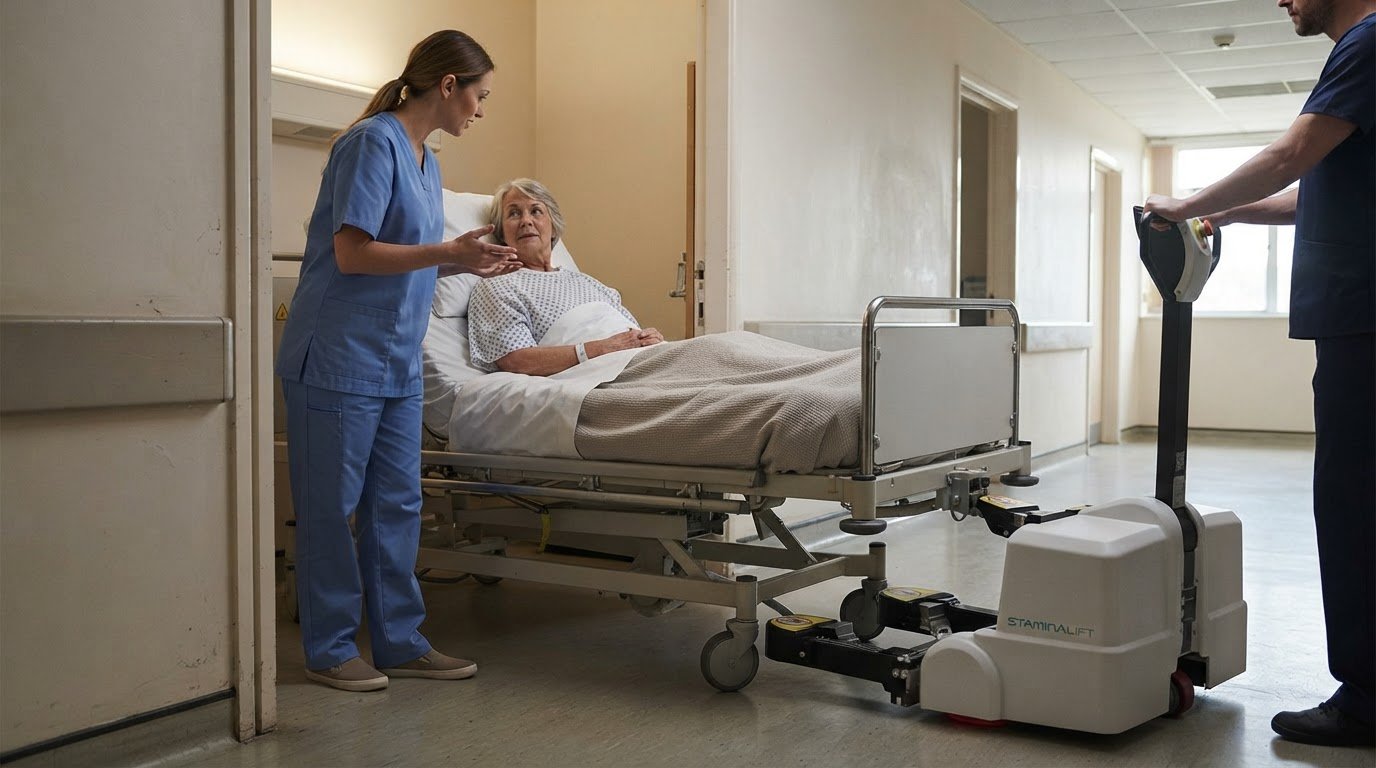
The StaminaLift TS6000 represents the gold standard for acute care and bariatric wards, specifically engineered to handle loads up to 900kg. This isn't merely a bed mover; it's a precision instrument designed to navigate the most challenging hospital environments. One of its most impressive features is the 360-degree turning radius, which allows a single staff member to manoeuvre massive bariatric beds through narrow corridors and into lifts with total confidence. It's a true one-person operation that solves the common problem of staff shortages during peak admission periods.
Efficiency gains are immediate when you replace a four-person manual team with a single motorised unit. The TS6000 handles 7-degree inclines under full load, removing the danger of a runaway bed on a ramp or slope. Its hands-free connection system is a significant ergonomic win, as it eliminates the need for staff to bend, strain, or use manual straps to secure the load. This seamless integration allows for rapid deployment across the facility, ensuring that patient flow remains fluid and safe at all times.
Engineering Sustainability in Healthcare
Future-proofing a healthcare facility requires equipment that is as durable as it is innovative. The latest TS6000 models incorporate lithium battery upgrades for extended run times and Bluetooth diagnostics to allow for rapid, remote troubleshooting. These technological advancements ensure that the equipment is always ready when a bariatric admission occurs. RIHA Industries, the Australian manufacturer, further supports this sustainability by using 3D-printed spare parts to maintain older equipment cycles. This dedication to long-term support means your investment is protected by a partner who understands the high-stakes nature of Australian clinical environments.
Choosing Australian-made quality also ensures access to 24-hour parts shipping, which is critical for maintaining a "No Lift" culture without interruption. When you empower your team with the right tools, you don't just reduce injuries; you improve the overall quality of care. It's time to move beyond legacy risks and embrace a safer, more efficient future for your staff and patients alike. Explore the StaminaLift TS6000 for your facility to see how we can help you achieve a zero-injury workplace.
Securing a Safer Future for Australian Healthcare Teams
Transitioning to a motorised patient flow is no longer just an operational choice; it's a fundamental requirement for modern safety standards. We've explored how the risks of manual bariatric patient transfer extend from career-ending spinal injuries to significant WorkCover liabilities that drain hospital budgets. By implementing robust Safe Work Method Statements supported by advanced engineering, facilities can protect their most valuable asset: their people.
The evidence for change is definitive. A major South Australian hospital case study demonstrated that injuries could be reduced to zero by replacing manual effort with intelligent motorised assistance. Our FDA-registered and Australian-made solutions are capable of moving nearly one tonne up a 7-degree incline with a single operator. This level of control ensures patient dignity while shielding staff from the cumulative physical toll of bariatric care.
It's time to empower your workforce with the tools they deserve to stay healthy and productive. Protect your staff and improve efficiency with RIHA Industries motorised solutions today. Your team's well-being is the foundation of a world-class healthcare environment.
Frequently Asked Questions
What is the maximum weight a manual bariatric transfer can safely handle?
Manual handling of loads exceeding 55kg is considered high risk and shouldn't be attempted without mechanical assistance according to Australian safety guidelines. While bariatric patients often weigh hundreds of kilograms, human physical limits make manual transfers of such weights fundamentally unsafe. Relying on team lifting for these massive loads significantly increases the risks of manual bariatric patient transfer, as the force required to overcome inertia exceeds safe musculoskeletal thresholds.
How many staff members are typically required for a manual bariatric bed move?
A manual bariatric transfer typically requires a minimum of four to six staff members to manage the weight and maintain control of the bed. This "team lift" approach is often inefficient and still leaves every participant vulnerable to injury due to uneven weight distribution. In contrast, using a motorised solution like the StaminaLift TS6000 allows a single staff member to complete the same transfer safely, precisely, and with total control.
Can motorised bed movers like the TS6000 handle steep hospital ramps?
Yes, the StaminaLift TS6000 is specifically engineered to navigate hospital gradients safely. It can transport nearly one tonne of weight up a 7-degree incline while under full load. This capability is a critical safety feature, as it prevents runaway incidents on ramps that would be impossible to control manually. The automatic braking system ensures the bed remains stationary the moment the joystick is released, even on a slope.
Are motorised patient transfer systems compatible with all bariatric bed brands?
RIHA Industries designs its transfer systems with unmatched compatibility in mind. Our patented attachment mechanisms, such as the tool-free coupling system, allow our movers to connect seamlessly to nearly any globally available hospital bed, stretcher, or trolley. Whether your facility uses standard bariatric models or specialised acute care frames, our adjustable hitches ensure a secure "connect and lock" fit that adds minimal length to the total equipment footprint.
What are the most common injuries associated with manual bariatric handling?
Musculoskeletal disorders caused by body stressing are the most frequent injuries reported by hospital staff. These often include acute lower back strain, specifically involving the L5/S1 spinal discs, as well as rotator cuff tears and wrist ligament damage. The risks of manual bariatric patient transfer also include cumulative micro-trauma, where repetitive strain from walking up to 75km per week while pushing heavy loads leads to long-term disability and staff burnout.
How does motorised equipment improve bariatric patient dignity?
Motorised equipment provides a smooth, controlled journey that eliminates the jerky movements and visible physical strain associated with manual team lifting. Patients feel more secure when their transport is handled quietly and efficiently by a single operator rather than a large, struggling team. This professional approach reduces the "spectacle" of bariatric transport, ensuring the patient's experience remains private, dignified, and clinically stable throughout the entire ward transfer.
Is there a specific Australian standard for bariatric patient handling equipment?
While there isn't one single "weight limit" standard, all bariatric equipment must comply with the Australian Work Health and Safety (WHS) Act and the Model Code of Practice for Hazardous Manual Tasks. These regulations require employers to implement the highest level of risk control that is reasonably practicable. In modern healthcare settings, this increasingly points toward the mandatory use of motorised engineering controls to replace hazardous manual handling of heavy bariatric loads.
How long does it take to train staff on a StaminaLift TS6000?
Most staff members become proficient with the StaminaLift TS6000 within a single hands-on training session. The intuitive joystick controls and programmable drive settings are designed for ease of use, allowing porters and nurses to build confidence quickly. RIHA Industries provides comprehensive training and certification programmes to ensure all users understand the safety lockout features and 360-degree manoeuvrability, ensuring the equipment is integrated safely into daily hospital operations.