
Powered Bed Transfer Systems: The 2026 Guide to Safer Patient Transport
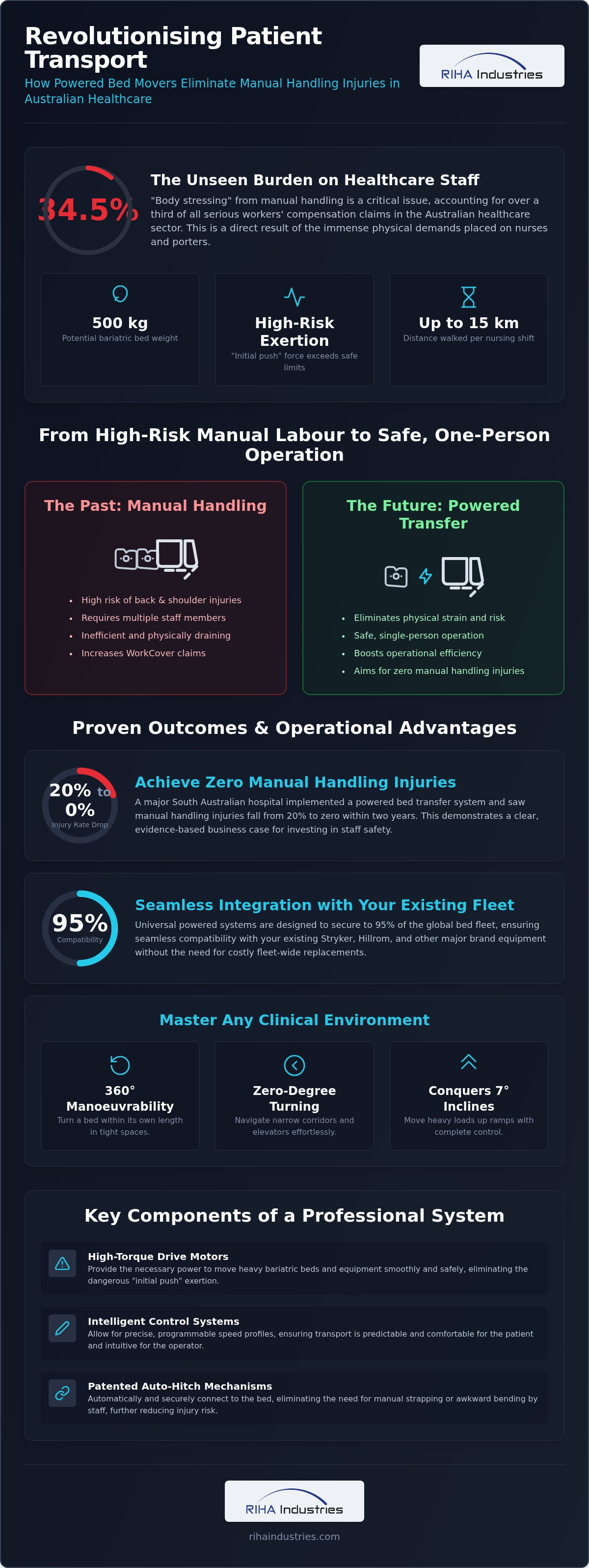
Can a single staff member safely move a half-tonne bariatric bed through a crowded clinical corridor without risking a career-ending injury? In the high-pressure environment of Australian healthcare, we've long relied on the physical resilience of our nurses and porters, yet "body stressing" still accounts for 34.5% of all serious workers' compensation claims. You've likely seen the daily toll of these demands, which is why many facilities are now turning to a powered bed transfer system to replace manual exertion with precision engineering. It's a physical burden that no amount of traditional training can fully offset.
This 2026 guide demonstrates how these systems transform high-risk tasks into streamlined, one-person operations. By prioritising mechanical assistance, healthcare providers can finally achieve the goal of zero manual handling injuries during patient transport. We'll examine how modern solutions like the StaminaLift TS5000 and TS6000 integrate seamlessly with your existing Stryker or Hillrom fleet to improve patient flow. From mastering 360-degree manoeuvrability to conquering 7-degree inclines, you'll discover how to protect your staff while enhancing operational efficiency across your facility.
Table of Contents
What is a Powered Bed Transfer System in a Clinical Context?
A powered bed transfer system is an FDA-registered clinical tool that eliminates the physical burden of patient transport. At its core, it's a battery-powered, motorised device designed to attach to and move hospital beds and stretchers without manual effort. This technology represents a fundamental shift in healthcare logistics. Instead of relying on the raw physical strength of nursing and portering staff to push and pull heavy equipment, facilities now utilise precision-controlled motorised movement. This transition is essential for safety. Research indicates that the force required to initiate the movement of a 500kg bariatric bed often exceeds safe physiological limits. By adopting a powered bed transfer system, hospitals replace high-risk manual handling with a controlled, ergonomic solution.
The Evolution of Patient Handling Equipment
The journey from basic manual trolleys to sophisticated engineering has been driven by the need for safer workplaces. While early aids were simple mechanical frames, modern solutions have evolved into advanced motorised tugs like the Easi Mover. These devices are more than just engines; they're designed to integrate with the latest "smart" hospital beds. Unlike a standard patient lift used for bedside transfers, these movers are built for transit across expansive hospital campuses. A key innovation in this evolution is 360-degree manoeuvrability. In the confined clinical spaces of older Australian hospitals, the ability to turn a bed within its own length is an operational necessity. It ensures that staff can navigate tight corners and elevators without the need for multiple handlers.
Key Components of a Professional System
A professional-grade system relies on several critical engineering elements to ensure safety and reliability. High-torque drive motors provide the necessary power to move heavy loads, while motorised drive wheels fitted with non-marking tyres protect hospital floors from damage. The interface is equally important. Intelligent control systems allow for programmable speed profiles, ensuring that transport is smooth and predictable for the patient. Finally, patented hitch mechanisms are vital. These mechanisms secure the bed automatically, eliminating the need for manual strapping or awkward bending by the operator. This combination of power and precision ensures that even the heaviest bariatric loads can be managed by a single person with total confidence. It's about empowering staff to do their jobs without compromising their physical well-being.
The WHS Business Case: Reducing Nurse and Porter Back Injuries
The physical demands placed on Australian healthcare workers are often unsustainable without mechanical intervention. On an average shift, a porter or nurse may walk up to 15 kilometres, frequently pushing patient loads that reach 500 kilograms. This "Heavy Lift" isn't just exhausting; it's a primary driver of musculoskeletal disorders. However, evidence suggests that the right engineering can reverse this trend. At a major South Australian hospital, the implementation of a powered bed transfer system saw manual handling injuries drop from 20% to zero within just two years. This shift demonstrates that safety isn't just a policy goal but a tangible outcome of smart procurement.
Beyond physical health, the business case is clear. Preventing a single serious back injury can save a facility tens of thousands in WorkCover claims, rehabilitation costs, and temporary staffing fees. In a competitive labour market where nurse retention is critical, providing ergonomic equipment serves as a protective ally. It signals that the facility values the long-term well-being of its staff, reducing the fatigue that often leads to burnout and high turnover rates.
Musculoskeletal Risk Factors in Manual Bed Handling
The most dangerous moment in patient transport is the "initial push". Overcoming static friction requires a burst of forceful exertion that places immense strain on the lower back and shoulders. Navigating ramps or carpeted corridors adds cumulative strain, as the operator must constantly adjust their posture to maintain control. To better understand these dynamics, you can read our guide on how to reduce nurse back injuries with proper equipment selection. These risk factors are exacerbated in bariatric care, where the physical limits of a single handler are easily exceeded.
Meeting Australian WHS Compliance Standards
A professional powered bed transfer system aligns perfectly with the "Hierarchy of Control" mandated by Australian WHS legislation. By substituting manual effort with motorised power, employers move from administrative controls, like training, to more effective engineering controls. These systems incorporate vital safety features such as automatic braking and emergency stop buttons to ensure operator and patient safety. Aligning with CDC Guidelines on Patient Safety, modern units often include Bluetooth diagnostics. This allows managers to monitor equipment usage and identify specific training needs before an incident occurs. For facilities looking to modernise their safety protocols, exploring Australian-made transport solutions is a logical first step toward a safer workplace.
Evaluating Compatibility: Will it Fit Your Existing Bed Fleet?
When upgrading facility infrastructure, the primary concern for clinical managers is whether a new powered bed transfer system will work with their current assets. Most Australian hospitals maintain a diverse fleet comprising Stryker, Hillrom, and various local brands. This variety often creates a "Universal Hitch" challenge, where a mover that works for one model fails to connect with another. To solve this, patented jaw systems like the Jaw System 300 have been engineered to accommodate varying wheelbases and castor sizes automatically. These systems ensure that the mover remains a versatile asset rather than a brand-specific tool, allowing for a unified approach to staff safety.
Space is a premium in any clinical environment. A professional system must maintain a compact footprint to ensure it doesn't obstruct corridors or lift access. By adding only 180mm to 200mm to the total bed length, these movers allow for safe transit without requiring significant changes to facility layout or storage protocols. The StaminaLift TS5000 is compatible with 95% of all hospital beds globally.
Patented Attachment Mechanisms
Efficiency in patient transport depends on how quickly a mover can be deployed without physical strain. The "Connect and Lock" jaw system allows for a secure attachment without the need for manual strapping or awkward bending by the operator. This is a critical component of Integrating with Hospital Systems, as it reduces the time spent on equipment setup and ensures a standardised workflow. For the Easi Mover series, electric adjustable hitches provide the flexibility to handle different bed heights and configurations. These tool-free coupling systems facilitate rapid ward-to-ward transfers, ensuring that patient flow remains uninterrupted even during peak hours.
Specialised Solutions for Bariatric and Acute Care
Standard movers often struggle with the extreme demands of bariatric transport, which is where specialised engineering becomes essential. For these high-stakes scenarios, the TS6000 capability is unmatched, as it can move nearly one tonne of weight with total control. This power is vital when navigating 7-degree inclines under full bariatric load, a task that would be impossible for manual teams. For a deeper look at how these technical specifications translate into daily clinical benefits, you can consult the definitive guide to the StaminaLift Transfer System 5000. By selecting a system designed for these extremes, facilities protect their staff from the most hazardous manual tasks in the hospital while maintaining a high standard of patient care.
Operational Integration: Navigating the Hospital Environment
Integrating a powered bed transfer system into a busy clinical workflow requires more than just raw power; it demands a nuanced understanding of the hospital's physical constraints. Modern facilities are often a maze of narrow corridors, sharp turns, and high-traffic zones. To address this, precision steering is a non-negotiable feature. Many systems now achieve a zero-degree turning radius, allowing a single operator to pivot a heavy bed within its own length. This level of control is essential when navigating tight corners or positioning a bed alongside theatre tables. It's about giving staff the confidence to move through crowded areas without the risk of collisions.
Patient comfort also plays a role in equipment selection. High-decibel machinery can be disruptive in recovery zones or quiet wards. Professional movers are engineered for quiet operation, typically maintaining a noise level of around 65 dB. This ensures that essential patient transport doesn't compromise the healing environment. Additionally, compact designs are vital for elevator etiquette. A well-designed mover fits into standard hospital lifts without requiring the bed to be detached, maintaining a smooth, continuous journey from ward to diagnostics. To ensure these units remain operational around the clock, integrated chargers and lithium battery upgrades support 24/7 facility operation with minimal downtime.
Managing Long-Distance Transfers
Large hospital campuses present a unique challenge where staff fatigue isn't just about the weight of the bed, but the distance travelled. For these environments, ride-on platforms like those found on the Easi Rider are invaluable. They allow porters to travel long distances without physical exhaustion, maintaining high throughput across the facility. Speed control settings are equally important, as they allow the operator to match the pace to the clinical environment. A slower, more deliberate pace is appropriate for a ward, while a slightly faster setting can be used in wide transit corridors. For more insights on improving workflow, you can read our guide on optimising hospital porter equipment for safety and efficiency.
Infection Control and Durability
In a clinical setting, every piece of equipment must meet stringent hygiene standards. The use of high-grade stainless steel in construction ensures durability and allows for easy cleaning with hospital-grade disinfectants. Sleek, low-profile designs are preferred because they fit underneath beds, reducing tripping hazards for other staff members. Furthermore, retractable charging cables help keep corridors clear of "cable spaghetti", which is a common safety concern in older buildings. These thoughtful engineering details ensure that the equipment is a seamless part of the ward rather than an obstacle. If you're ready to upgrade your facility's transport capabilities, explore our range of motorised movers to find the right fit for your clinical needs.
Choosing the Right StaminaLift System for Your Facility
Selecting the most effective powered bed transfer system requires a strategic assessment of your facility's clinical needs and ward layout. For aged care centres or environments utilising smaller, Australian-made beds, the StaminaLift 2100 Bed Mover is often the ideal choice. Its compact footprint allows for easy storage and transit in facilities where space is at a premium. In contrast, metropolitan acute care hospitals generally require the versatility of the StaminaLift Transfer System 5000. As the flagship universal mover, the TS5000 handles the diverse bed fleets typically found in high-volume environments with ease. When the task involves bariatric wards or moving heavy theatre tables, the StaminaLift Transfer System 6000 stands out as the heavy-duty powerhouse. It provides the necessary torque to move loads approaching one tonne with total precision. Beyond patient transport, facility logistics are frequently improved by the Easi Rider and Easi Mover, which are specifically designed to manage linen, meal, and medical equipment trolleys.
Selecting Based on Patient Demographics
Successful implementation depends on matching equipment weight capacities to specific ward specialities. While a paediatric unit might prioritise a smaller profile for tight spaces, a bariatric ward needs a system that won't struggle on inclines. Managers should also consider the clinical workflow, such as the need for integrated oxygen bottle holders or extended racks. We always suggest requesting a hands-on demonstration. It's the best way to ensure staff buy-in, as it lets nurses and porters feel how the technology acts as a protective ally during their shift. If they don't feel confident with the interface, the equipment won't be used to its full potential.
Long-Term Support and Maintenance
Reliability in a 24/7 hospital environment is built on local expertise and a stable supply chain. Because these systems are Australian-made, facilities benefit from 24-hour shipping on critical parts and direct access to the manufacturer. This proximity is vital for reducing equipment downtime that could otherwise stall patient flow. For facilities with in-house engineering teams, 3D-viewer tools offer a sophisticated way to access technical support and visualise repair processes. To keep your fleet in peak condition, you should follow our hospital bed mover repair and preventative maintenance guide. Regular servicing ensures that every safety feature remains fully functional, protecting your staff and your investment for years to come.
Modernising Patient Transport for a Safer Clinical Future
The transition to motorised patient handling is an essential step in protecting the clinical workforce from the physical toll of manual transit. By integrating a powered bed transfer system, facilities effectively eliminate the musculoskeletal risks that have long been a burden on nursing and portering staff. These systems ensure that single-person operation is both safe and precise, allowing for seamless movement through even the most confined clinical spaces. Because our technology is FDA-registered and Australian-made, you're investing in a solution specifically engineered for local healthcare standards.
Our systems are already trusted in leading hospitals across Australia and globally, with a proven track record of reducing manual handling injuries to zero. You now have the framework to evaluate compatibility with your existing fleet and select a mover that matches your specific patient demographics. Protecting your staff's well-being is the most effective way to ensure long-term operational success and improved staff retention.
Book a hands-on demonstration at your facility today to experience how these solutions can transform your daily workflows. We're ready to partner with you in creating a safer, more efficient environment for your team and your patients.
Frequently Asked Questions
Is the powered bed transfer system compatible with all hospital bed brands?
StaminaLift systems are compatible with 95% of all hospital beds globally. The TS5000 and TS6000 models use patented universal attachment mechanisms to connect with brands like Stryker and Hillrom. For beds with non-standard wheelbases, the Jaw System 300 expands compatibility to a range of 100mm to 300mm. This ensures that your facility can maintain a single mover fleet even if you use multiple equipment manufacturers across different wards.
Do staff need a special licence or extensive training to operate a bed mover?
No formal heavy vehicle licence is required, but we provide staff training and certification to ensure safe operation. The intuitive joystick controls and programmable drive programs make the system accessible for all healthcare workers. Most porters and nurses become proficient after a single hands-on demonstration. This structured approach to training helps facilities meet WHS compliance standards while empowering staff to move heavy loads with total confidence and minimal physical effort.
How much weight can the StaminaLift TS6000 actually move on a ramp?
The StaminaLift TS6000 is engineered to transport nearly one tonne of weight up a 7-degree incline under full load. It features a 450kg lift capacity and a 900kg push or pull capacity, making it the industry benchmark for bariatric care. This specialised powered bed transfer system ensures that even the heaviest acute care beds can be moved safely by a single operator without the risk of the load rolling back on a slope.
What is the battery life of a powered transfer system during a standard shift?
Every StaminaLift unit is designed to provide enough charge for a standard hospital shift under normal operating conditions. For example, the Easi Rider utilises six 12V20Ah batteries to maintain consistent performance. Facilities looking for even higher endurance can opt for a lithium battery upgrade. This enhancement boosts performance by up to 20% and offers shorter charging cycles, ensuring the equipment remains ready for 24/7 facility operation without long periods of downtime.
Can a single person operate the bed mover safely in a crowded ward?
The 360-degree manoeuvrability and zero-degree turning radius allow a single operator to navigate tight corners and crowded wards safely. The compact design adds only 180mm to 200mm to the total bed length, ensuring the unit fits into standard elevators with the bed attached. Safety features like automatic braking upon joystick release provide the operator with total control, reducing the need for additional staff to assist with steering or spotting during transit.
Is the system quiet enough to use in a quiet recovery or ICU environment?
Our systems operate at a quiet 65 dB, which is roughly equivalent to the level of a normal conversation. This low noise profile ensures that a powered bed transfer system can be used in recovery zones, ICUs, and overnight wards without disturbing patients. Maintaining a healing environment is a priority in clinical design, and our motorised movers are engineered to provide powerful assistance without the disruptive mechanical noise associated with older tug models.
How does the system attach to the bed without manual lifting or strapping?
The system utilises a patented "connect and lock" jaw mechanism that secures the bed at the press of a button. This hands-free connection process eliminates the need for the operator to bend, reach, or manually strap the equipment. By automating the hitching process, the system removes the ergonomic risks associated with traditional towing methods. It's a seamless integration that allows staff to focus on patient care rather than struggling with mechanical attachments.
What maintenance is required for a powered bed transfer system?
Maintenance involves regular preventative checks and occasional repairs to ensure long-term reliability. We provide national service coverage in Australia and offer a 3D viewer online to assist your in-house engineering team with basic part replacements. Because we manufacture our parts in South Australia, we can guarantee 24-hour shipping for critical components. This support structure ensures your fleet remains operational and compliant with the latest healthcare safety standards with minimal administrative burden.


