Safe Patient Handling Budget Justification: Build a Strong Business Case
A budget justification for safe patient handling is stronger when it shows not just what equipment costs, but what the full programme needs to work. Building the case can be challenging when injury risks, workforce wellbeing and operational pressures must all be weighed against competing priorities.
A credible proposal needs more than an equipment quote. It should reflect the facility’s handling tasks, implementation and training requirements, maintenance needs, and the outcomes leaders will track. Make assumptions visible, especially when estimating benefits that have not yet been measured at your facility.
This article explains how to build an evidence-led case around your facility’s risks and workflows. You’ll learn how to plan for the lifecycle of powered patient transfer equipment, connect workforce and operational needs with financial decisions, and set practical measures for reviewing safety, staff wellbeing and workflow after implementation. The aim is a balanced proposal that helps decision-makers assess value over time.
Table of Contents
Why safe patient handling deserves a clear budget case
Safe patient handling is a planned approach to reducing the physical demands placed on workers during care and patient transport. It combines appropriate work practices, equipment, training and review, rather than relying on staff to manage demanding tasks through individual effort alone. A considered approach can support staff wellbeing, service continuity and patient-centred care. Results depend on choosing suitable measures and putting them into practice effectively.
For administrators, the case for investment needs to explain the local problem and the proposed response. An equipment feature list may describe how a device works, but it won’t show whether it addresses the facility’s handling risks or fits clinical workflows. A strong budget justification for safe patient handling connects the tasks being done with a practical plan and a way to evaluate outcomes. This aligns with broader patient safety principles, which focus on preventing and reducing avoidable harm.
What decision-makers need from a safety budget proposal
Make the proposal specific to the people and tasks affected. Describe activities such as repositioning, transfers or moving a patient between care areas, and identify the workforce groups involved. Then explain the controls currently used and where gaps remain. For example, existing procedures or equipment may not address every task or suit a particular environment. Present this as a finding from your assessment, not an assumption.
Separate what facility records show from what still needs testing. Incident and injury reports, task observations, staff feedback and workflow records can help establish the current picture. Label estimates clearly, explain how they were developed and state how the facility will validate them. This gives finance and clinical leaders a transparent basis for weighing the proposal.
Frame the issue for Australian healthcare facilities
Use current Safe Work Australia guidance and the relevant state or territory work health and safety resources to inform the facility’s assessment. Requirements and guidance can vary by jurisdiction and change over time, so refer to the current material that applies to your location.
Local evidence is more useful than an unsupported national estimate. Review incident records alongside the frequency and nature of handling tasks, existing controls and consultation with affected staff. This helps show where risks arise and which outcomes the facility can track. For related equipment considerations, see the patient handling equipment selection criteria.
Powered equipment can form part of the response, but it doesn’t replace a broader risk-control programme. Training, implementation planning and ongoing review help ensure the chosen approach is understood and used appropriately. Explain how equipment fits into the facility’s overall safe-handling plan, rather than presenting a purchase as a stand-alone solution.
Build the evidence base: risks, workload and measurable outcomes
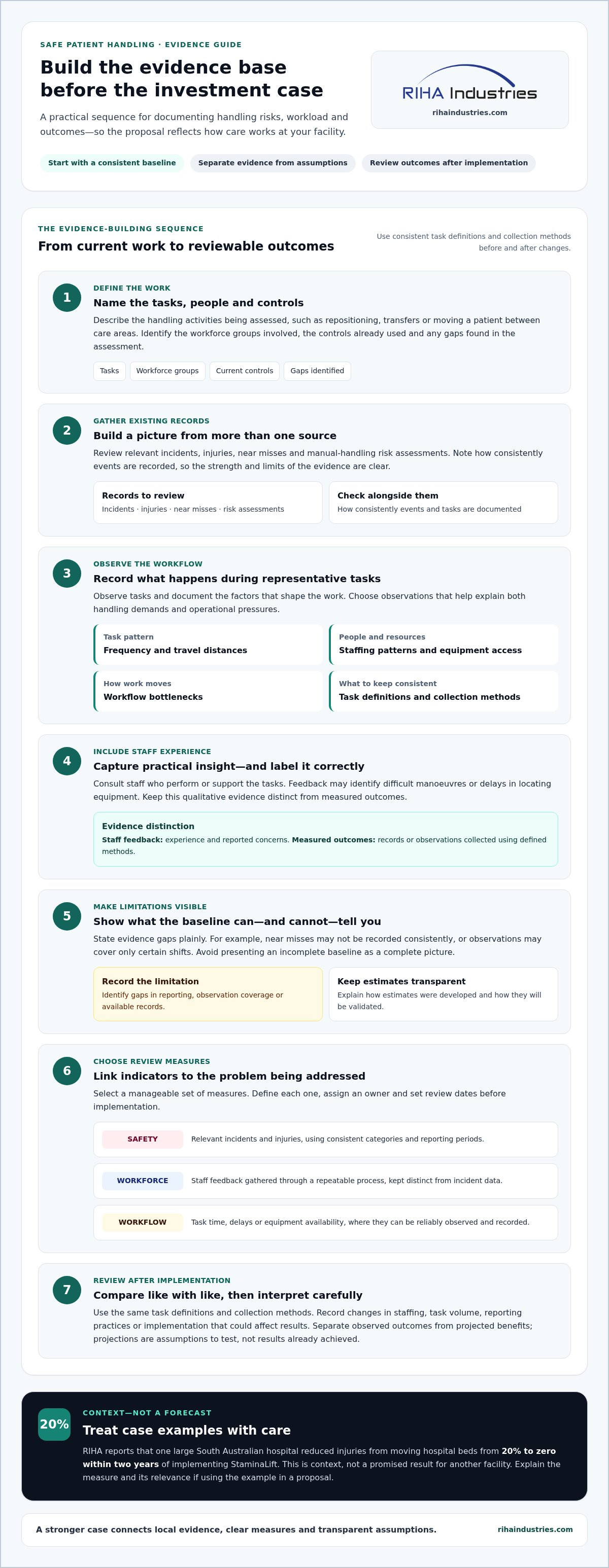
A credible investment case starts with a clear picture of how work is done now. Establish a baseline before introducing changes, using the same task definitions and collection methods you’ll use later. This helps distinguish a genuine shift from differences in reporting or observation.
Which baseline measures can support the case?
Combine existing records with practical observations rather than relying on a single data source. Review relevant incidents, injuries, near misses and manual-handling risk assessments, noting how consistently events are recorded. Observe representative tasks and document their frequency, travel distances, staffing patterns, equipment access and workflow bottlenecks.
Consult staff who perform or support these tasks. Their feedback may reveal concerns such as difficult manoeuvres or delays in locating equipment. Record this as qualitative evidence, separate from measured outcomes. The CDC safe patient handling guidelines provide background on manual handling risks and prevention approaches that can inform the facility’s assessment.
Be open about gaps. If near misses aren’t recorded consistently, or observations cover only certain shifts, state that limitation and avoid presenting the baseline as a complete picture.
Choose outcome measures that can be reviewed
Select a manageable set of indicators linked to the problem you’re addressing. Define each measure, assign an owner and set review dates before implementation. Depending on available data, the facility might track:
Safety: relevant incidents and injuries, using consistent categories and reporting periods.
Workforce experience: staff feedback gathered through a repeatable process, kept distinct from incident data.
Workflow: task time, delays or equipment availability, where these can be observed and recorded reliably.
Compare like with like. Record changes in staffing, task volume, reporting practices or implementation that could affect results. Separate observed outcomes from projected benefits, and describe projections as assumptions to test rather than results already achieved.
Use case examples carefully. RIHA reports that one large South Australian hospital reduced injuries from moving hospital beds from 20% to zero within two years of implementing StaminaLift. Treat this as context, not a promised result for another facility, and explain the measure and its relevance when using it in a proposal.
Bring the evidence together in one concise problem statement: “Our baseline shows [defined handling task and frequency] under [current controls]; we will assess change using [selected safety, workforce and workflow measures] over [review period].” This gives decision-makers a traceable line from need to evaluation. To consider equipment as one part of that response, explore RIHA’s patient transfer systems.
Compare options with a transparent whole-of-life budget
A fair comparison looks beyond the initial purchase and asks what each option requires to manage the facility’s identified tasks. Assess current practice, process changes and powered equipment against the same requirements, including task suitability, workflow fit, staff training and ongoing support. This lets decision-makers compare like with like, rather than weighing a visible equipment cost against less visible demands on staff time and operations.
What belongs in a whole-of-life assessment?
Build the budget from facility-specific inputs. For equipment, account for acquisition, delivery or installation requirements, training, preventative maintenance, repairs and any arrangements needed to keep work moving during implementation or servicing. For process changes, include the staff time and resources required to introduce and sustain them. Record each assumption, its source and the timeframe used so finance reviewers can reproduce the analysis.
Benefits may be uncertain, so show that uncertainty clearly rather than treating projected savings as guaranteed. Use conservative, expected and higher-impact scenarios only when the facility has a defensible basis for them. Identify which inputs would change the result and explain how post-implementation review will test those assumptions. The US Occupational Safety and Health Administration’s business case for safe patient handling offers useful background, but local decisions should rest on Australian facility evidence and applicable requirements.
How to assess powered handling equipment fairly
Check whether the proposed equipment suits the actual environment and tasks. Consider compatibility with existing beds and transfer devices, corridor access, manoeuvrability, storage, staff training and workflow. A practical demonstration lets teams assess fit in their own environment before finalising assumptions. Consider single-person operation only where the task assessment and facility procedures support it.
Use a comparison table to make trade-offs and unknowns visible:
This transparent structure strengthens a budget justification for safe patient handling by showing what is being funded and how each option will be assessed. For procurement-specific considerations, refer to the 2026 hospital bed mover procurement guide.
Turn the analysis into an approval-ready implementation plan
Decision-makers need to see how the proposed investment will move from identified need to practical use and review. A budget justification for safe patient handling is stronger when accountability, training and evaluation are built into the plan, rather than left until after approval.
What to include in the funding submission
Use a clear sequence that connects the operational problem to a decision and its follow-through:
State the problem: identify the handling tasks, affected teams and operational impact.
Present the evidence: summarise baseline findings and note important data gaps or assumptions.
Compare options: show the alternatives considered, proposed controls and whole-of-life resource requirements.
Assign accountability: name an executive sponsor, affected teams, an implementation owner and an evaluation lead.
Plan the rollout: set out staff communication, training, workflow integration, maintenance and continuity arrangements.
Set a review point: specify when outcomes will be assessed and what evidence will guide continuation or adjustment.
Make the submission easy to scan. Put a one-page summary at the front of the supporting evidence, so approvers can quickly see the essentials without losing access to the detail.
Adaptable one-page business-case structure
Problem and scope: task, location, affected workforce and reason for action.
Evidence: baseline measures, consultation findings, data sources and limitations.
Options and recommendation: alternatives assessed and the rationale for the proposed approach.
Resources and ownership: lifecycle requirements, sponsor, implementation owner, affected teams and evaluation lead.
Implementation and review: training, communication, workflow integration, maintenance arrangements, measures and review date.
How to make implementation measurable
Record the agreed baseline before equipment is introduced, then schedule training and staff feedback as part of the rollout. Define who will collect each measure, how often it will be reviewed and how changes in workload or reporting will be considered. This creates a fair basis for assessing whether the approach is working as intended, without treating projected benefits as established results.
For related context on the operational pressures behind manual bed handling, read about the high cost of manual bed handling. For information about powered transfer equipment in facility planning, view RIHA patient transfer systems.
How RIHA supports a safer patient handling investment
Powered patient transfer systems can help address handling demands when selected for suitable tasks and incorporated into a facility-wide programme. RIHA Industries designs and manufactures Australian-made patient transfer systems and bed movers, with preventative maintenance and repair services. For decision-makers, the practical question is how a system fits the facility’s equipment, workflows, staff training and ongoing support plan, not whether a device alone can resolve every handling risk.
Match the solution to tasks and equipment
Start with the tasks identified in your assessment, then consider how a proposed system will work alongside existing beds, transfer devices and movement routes. A practical demonstration lets staff assess compatibility, manoeuvrability and workflow fit in the facility’s own environment. Involve the people who will use and support the equipment, and document any limitations or process changes required.
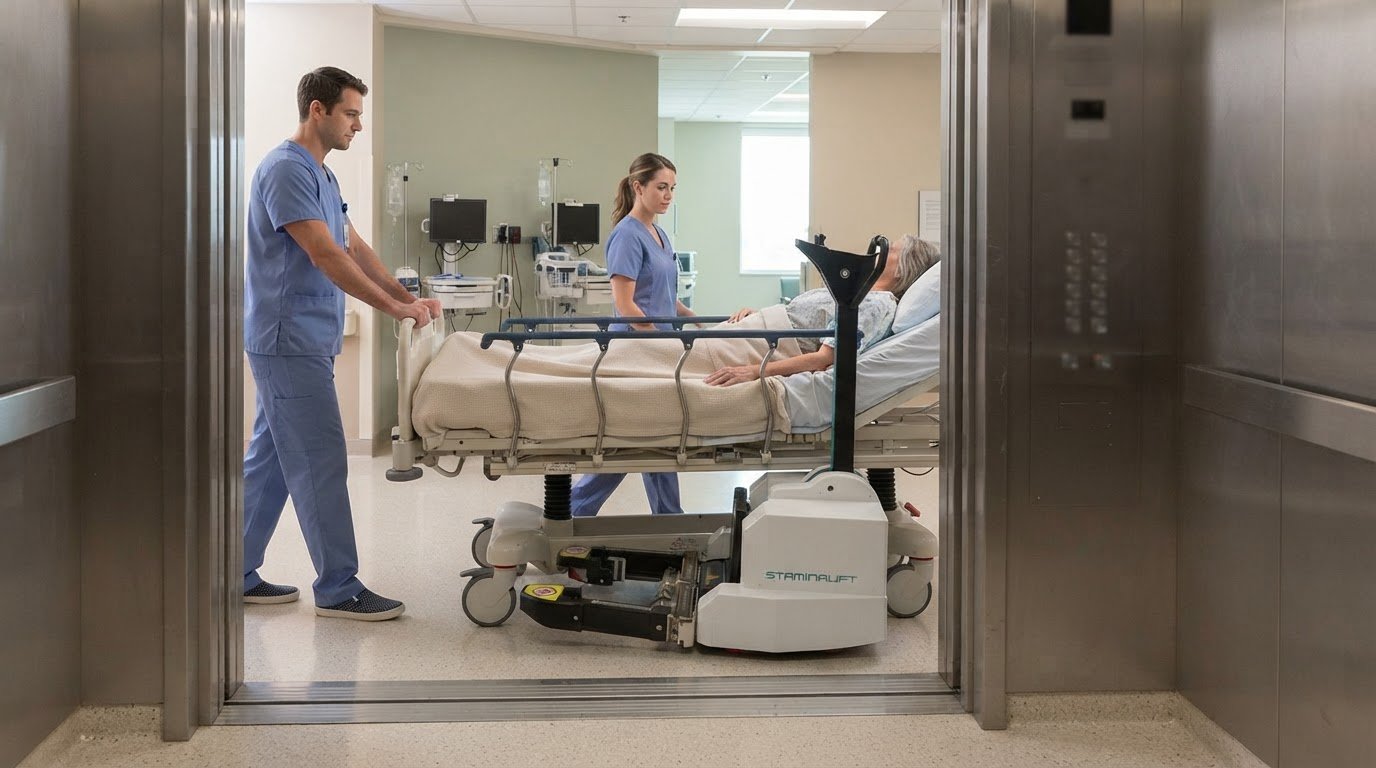
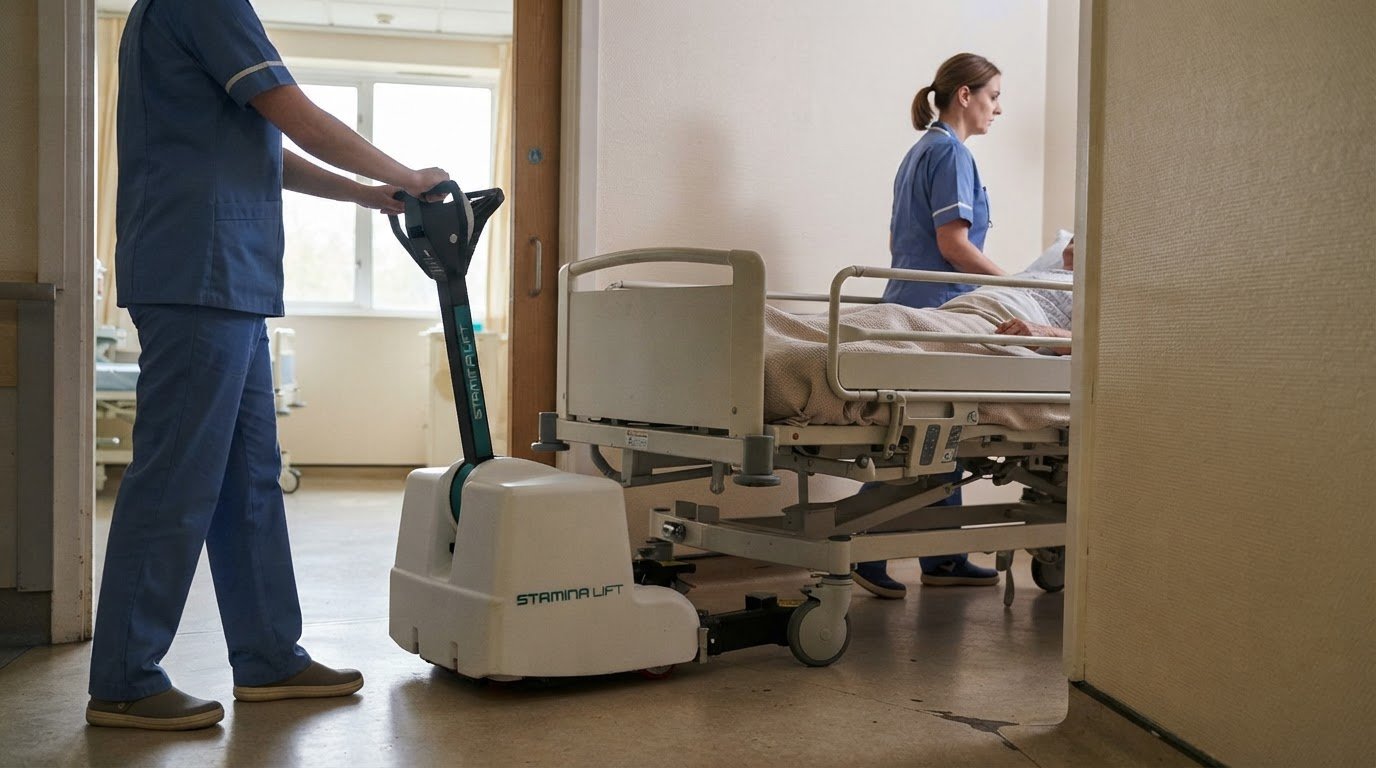
The StaminaLift Transfer System 5000 is compatible with 95% of hospital beds. Assess the bed models in your facility rather than assuming universal compatibility. Compare the TS5000 and TS6000 against the relevant tasks and requirements: the TS5000 has a 300kg lift capacity and can push or pull up to 600kg, while the TS6000 has a 450kg lift capacity and can push or pull up to 900kg. The TS6000 is designed for bariatric and acute care beds. The StaminaLift 2100 is suited to Australian-manufactured beds found in Australia and Hong Kong. Any single-person operation should be considered only where the task assessment and facility procedures support it.
Plan for support beyond the initial purchase
Include staff training, communication and workflow integration in the implementation plan, alongside preventative maintenance and repairs. These elements help decision-makers understand the ongoing resources required to keep equipment ready for use and staff familiar with its operation. RIHA provides preventative maintenance and repair services, with national service coverage in Australia. Include these requirements in lifecycle planning without treating them as a guarantee of uninterrupted operations or savings.
A practical demonstration and staff training can inform the rollout plan, while scheduled reviews help the facility check whether equipment is being used as intended and remains suitable for the tasks assessed. Keep equipment within a broader safe-handling approach, guided by local procedures and risk controls.
A well-supported proposal explains not only which equipment is selected, but how it will be integrated, maintained and evaluated. To discuss your facility’s handling needs or arrange a practical demonstration, explore RIHA’s patient transfer solutions.
Make the next step evidence-led
A strong budget justification for safe patient handling connects facility-specific risks with a practical plan, transparent whole-of-life assumptions and clear measures for reviewing outcomes. It also recognises that equipment is one part of a wider programme supported by staff training, implementation and ongoing maintenance.
RIHA’s Australian-made StaminaLift patient transfer systems can be assessed against facility needs, with preventative maintenance, repairs and national service coverage across Australia included in lifecycle planning. RIHA reports that one large South Australian hospital reduced injuries from moving hospital beds from 20% to zero within two years of implementing StaminaLift. Consider the case in its context, and don’t treat the result as a guaranteed outcome for another facility.
Ready to assess powered patient transfer equipment against your facility’s handling requirements? Discuss a safer patient handling approach with RIHA. A clear baseline and measured implementation plan can help you make a considered case for safer work and patient care.
Frequently Asked Questions
How do you justify a safe patient handling budget?
Connect facility-specific handling risks with a practical response and a plan to measure results. Use local incident records, task observations and staff consultation to describe the problem, then compare current practice, process changes and equipment against the same requirements. Include implementation, training and ongoing maintenance. Clearly label projections and assumptions so decision-makers can distinguish what the evidence supports from what still needs evaluation.
What should a safe patient handling business case include?
A decision-ready case sets out the handling problem, affected tasks and teams, baseline evidence, existing controls and options considered. Explain the recommended approach, whole-of-life resource assumptions, implementation responsibilities and key risks. Name an accountable sponsor, implementation owner and evaluation lead. Finish with defined measures and a review point, so the facility can assess whether the approach is suitable, needs adjustment or should continue.
How can a hospital measure the return on investment in patient handling equipment?
Compare documented costs and operational measures before and after implementation, using consistent definitions and timeframes. Track relevant injury and incident records, task time, equipment availability and staff feedback where reliable data exists. Use facility-specific inputs in any financial model and show assumptions, including equipment, training, maintenance and operating requirements. Separate measured results from projected benefits, and don’t treat estimates as guaranteed savings.
Does safe patient handling equipment reduce workplace injuries?
Appropriately selected equipment may help reduce physical handling demands for tasks it is designed to support, but it can’t guarantee fewer injuries. Outcomes depend on task suitability, implementation, staff training, maintenance and consistent use within facility procedures. Establish a baseline and review injury and incident data after introduction, noting changes in reporting or workload. Use local evidence to judge impact rather than assuming results will match another facility’s experience.
What costs should a patient handling budget consider?
Consider the full lifecycle, not just the purchase. Depending on the proposed approach, budget inputs may include equipment acquisition, delivery or installation requirements, staff training, implementation time, preventative maintenance, repairs and arrangements for operational continuity. Include the resources needed to review performance and maintain procedures. Use facility-specific figures, record their sources and state assumptions clearly. Avoid relying on generic prices or projected savings that haven’t been tested locally.
How do you get staff support for a patient handling investment?
Involve affected staff before decisions are finalised. Ask them to identify demanding tasks, workflow barriers and practical requirements, then show how their feedback informed the assessment. Give staff opportunities to assess equipment fit and include training, communication and time for questions in the rollout plan. Continue gathering feedback after implementation. Staff views can help shape the proposal, but record them separately from measured outcomes such as incident reports or task times.
What should be measured after introducing patient handling equipment?
Choose a small set of measures tied to the original problem and record them consistently. Depending on available data, these may include relevant injuries and near misses, staff experience, handling task time, workflow delays and equipment availability. Assign an owner to each measure and set review dates before rollout. Record changes in staffing, task volume or reporting practices too, so decision-makers can interpret results fairly and distinguish observed outcomes from assumptions.
Can powered bed movers fit into an existing hospital budget proposal?
Yes. A powered bed mover can be assessed as one option within a broader safe-handling proposal. Define the bed-moving tasks, assess compatibility with the facility’s existing beds and workflows, and include training, maintenance and operational needs in the comparison. RIHA’s Australian-made StaminaLift bed movers can be assessed against those requirements. A practical demonstration helps staff evaluate manoeuvrability and workflow fit before assumptions are finalised.