Structuring a Hospital Equipment Maintenance Programme: The 2026 Safety Framework
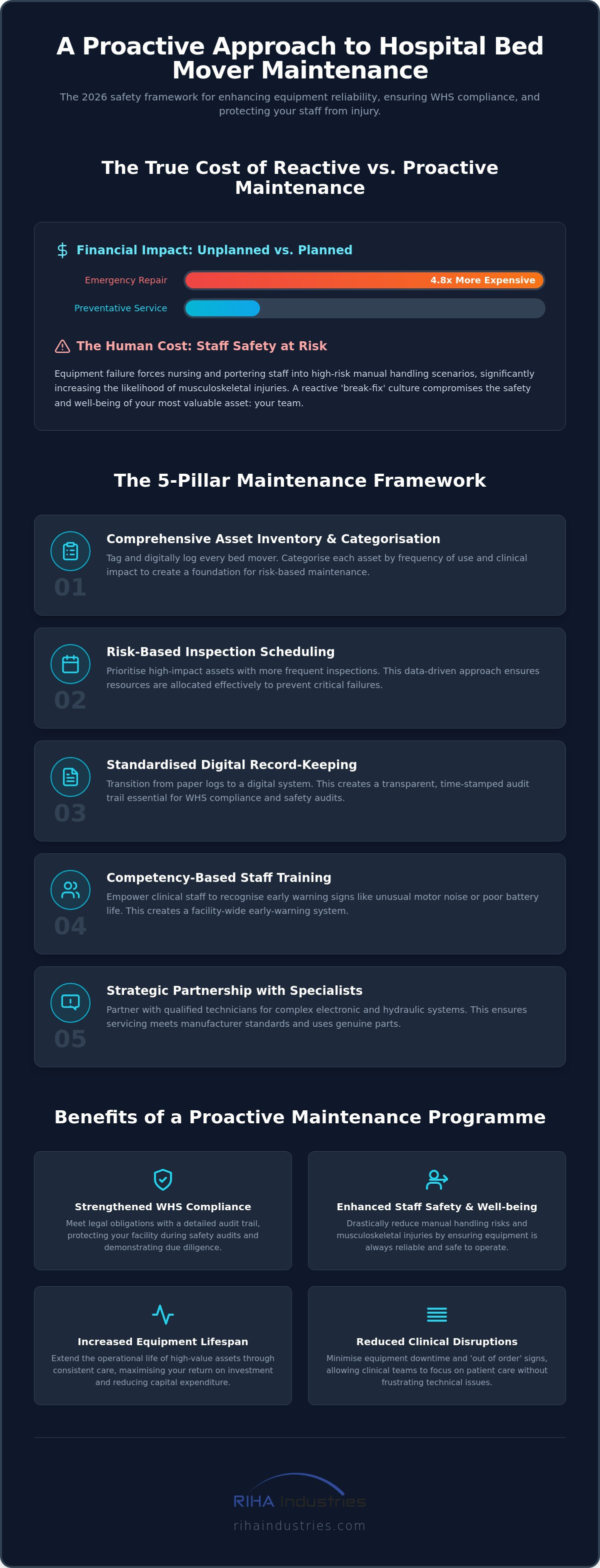
Did you know that an emergency repair for a hospital bed mover can cost up to 4.8 times more than a scheduled preventative service? For healthcare facility managers, this financial sting is often secondary to the human cost of equipment failure. When a bed mover is out of action, it isn't just the budget that suffers; it's the safety of your nursing and portering staff who are suddenly forced back into high-risk manual handling scenarios.
We understand that managing a fleet of specialised equipment while juggling WHS compliance and budget constraints is a complex challenge. You want to ensure your team is protected from musculoskeletal injuries without the constant stress of reactive 'break-fix' repairs. This guide provides a definitive 2026 safety framework to help you build a robust hospital bed mover maintenance program that prioritises both mechanical reliability and staff well-being.
We will walk through the latest IEC 80601-2-52:2026 standards and provide a practical template for equipment inspections. You will learn how to extend the lifespan of your high-value assets, reduce injury rates toward zero, and create a culture of safety that satisfies even the most rigorous audits.
Table of Contents
Understanding the Essentials of a Hospital Equipment Maintenance Programme
A hospital equipment maintenance programme is far more than a simple checklist; it is a systematic, lifecycle-based approach to ensuring every asset performs at its peak. By integrating Medical Equipment Management Principles into daily operations, facility managers can move away from the chaotic 'break-fix' cycle. Reactive maintenance often leads to budget blowouts, as emergency repairs for motorised units can cost up to 4.8 times more than a planned service. A proactive hospital bed mover maintenance program shifts the focus toward prevention, identifying wear and tear before it results in a critical failure during a patient transfer.
This proactive stance is vital for maintaining high standards of patient care. When equipment is reliable, clinical staff can focus entirely on the patient's needs rather than wrestling with a malfunctioning bed or a depleted battery. In the high-stakes environment of an Australian hospital, the seamless integration of technology and care is only possible when the underlying mechanical infrastructure is flawlessly maintained. Precision in maintenance directly translates to precision in care.
The Core Objectives of Preventative Maintenance
The primary goal of a structured hospital bed mover maintenance program is to ensure that every device meets its original manufacturer specifications throughout its entire service life. This level of precision minimises clinical disruptions, as nurses and porters don't have to deal with the frustration of 'out of order' signage on essential moving equipment. By adhering to a rigorous schedule, facilities also reduce the total cost of ownership for high-value assets. Extending the operational life of a bed mover through consistent care can save a hospital significant capital expenditure over the long term.
WHS Compliance and Legal Obligations in Australia
Hospital administrators in Australia carry a significant duty of care to provide a safe working environment for all employees. Under national Work Health and Safety (WHS) laws, regular equipment inspections are not optional; they are a legal requirement to mitigate risk. Maintaining a detailed audit trail of every service and repair is essential for compliance. These records serve as evidence that the facility is actively managing hazards, protecting the organisation during safety audits and ensuring that the equipment used to move patients is as safe as the clinical care being provided. Proper documentation transforms maintenance from a technical task into a robust risk management strategy.
The 5-Pillar Framework: A Maintenance Programme Template
A reliable framework transforms maintenance from a series of reactive tasks into a predictable safety strategy. To build a truly effective hospital bed mover maintenance program, facility managers should adopt a five-pillar approach that addresses both mechanical integrity and human safety. This structure ensures that no critical component is overlooked and that the programme remains scalable as the facility grows.
Pillar 1: Comprehensive Asset Inventory and Categorisation. You cannot maintain what you haven't documented. Every bed mover and tug must be tagged with a unique identifier and categorised by its clinical impact and frequency of use.
Pillar 2: Risk-Based Inspection Scheduling. Not all equipment requires the same level of attention. High-impact assets, such as those essential for Safe Patient Handling and Mobility, should be prioritised for more frequent, rigorous inspections.
Pillar 3: Standardised Documentation and Digital Record-Keeping. Move away from paper logs; digital records provide a transparent, time-stamped audit trail that is essential for WHS compliance.
Pillar 4: Competency-Based Staff Training and User Feedback. Maintenance isn't just for technicians. Training staff to recognise early warning signs, such as unusual motor noise or reduced battery life, creates an early-warning system for the maintenance team.
Pillar 5: Strategic Partnership with External Service Specialists. While in-house teams handle daily checks, partnering with specialised technicians ensures that complex electronic and hydraulic systems are serviced to original manufacturer standards.
Step-by-Step Implementation for Facility Managers
Success begins with an initial audit of all patient handling equipment to establish a baseline for your fleet's current health. Once the audit is complete, you can set realistic maintenance intervals. For high-traffic metropolitan hospitals, this might mean quarterly professional inspections, while smaller facilities may find bi-annual services sufficient. Integrating these safety goals into a broader hospital equipment maintenance program ensures that preventative care is recognised as a core operational necessity rather than a negotiable expense. This proactive budgeting prevents the 4.8x cost spike associated with emergency repairs. For long-term reliability, consider scheduling a professional assessment to identify potential failure points in your current fleet.
Digital Tools and Bluetooth Diagnostics
Modern engineering has introduced sophisticated tools that take the guesswork out of equipment care. Many current models, including the StaminaLift series, now feature Bluetooth-enabled diagnostics. This technology allows maintenance teams to track usage history and battery health in real-time, identifying units that are being over-utilised or those that require a battery upgrade before they fail mid-shift. For rural facilities where immediate on-site support might be delayed, using 3D-viewers for remote technical guidance can bridge the gap. Transitioning to automated maintenance alerts ensures that no service window is missed, keeping your staff safe and your assets operational.
Specialised Maintenance for Powered Bed Movers and Tugs
Motorised equipment like the StaminaLift Transfer System 5000 requires a higher level of technical scrutiny than traditional manual trolleys. These machines are engineered with sophisticated electronics and high-torque drive systems that demand precision care to remain safe and efficient. A comprehensive hospital bed mover maintenance program focuses on these unique mechanical requirements, ensuring that the technology designed to reduce staff strain doesn't become a liability due to neglect. By maintaining the integrity of these specialised components, you protect both your capital investment and the physical health of your porters and nursing staff.
Battery health is a critical factor in maintaining fleet uptime. Transitioning to lithium-ion upgrades can significantly improve performance, but these systems require specific charging protocols and monitoring. Retractable charging cables are another high-wear item; if they aren't inspected for fraying or tension loss, they can lead to charging failures that leave a unit stranded mid-shift. While global standards vary, adhering to CMS guidelines on equipment maintenance provides a solid foundation for managing these electrical assets, even within an Australian regulatory context. Beyond power, technicians must verify the precision of patented hitch mechanisms and 360-degree rotation components, which are essential for navigating tight hospital corridors without compromising floor protection or drive wheel traction.
Critical Components Checklist for the StaminaLift Series
Safety is built into the details of the StaminaLift series. A thorough inspection must include testing the automatic braking system and the emergency jaw release to ensure they engage instantly under load. Joystick controls should be checked for responsiveness to prevent erratic movement in crowded areas. Additionally, the 'Back Off Button' on walk-behind movers is a non-negotiable safety feature; it must be tested regularly to ensure it protects the operator from being pinned in confined spaces. These small checks prevent large-scale incidents.
Ensuring Compatibility with Modern Hospital Beds
As hospital bed designs evolve with wider wheelbases and plastic shrouds, your maintenance team must ensure that jaw systems remain compatible. A well-structured StaminaLift maintenance plan accounts for these variations, including the calibration of custom theatre table clamps. Verifying the 'connect and lock' mechanisms for hands-free operation is vital for maintaining the ergonomic benefits of the equipment. When these systems are perfectly aligned, the hospital bed mover maintenance program guarantees that your staff can move any patient with confidence and ease.
The Human Element: Maintenance as an Injury Prevention Strategy
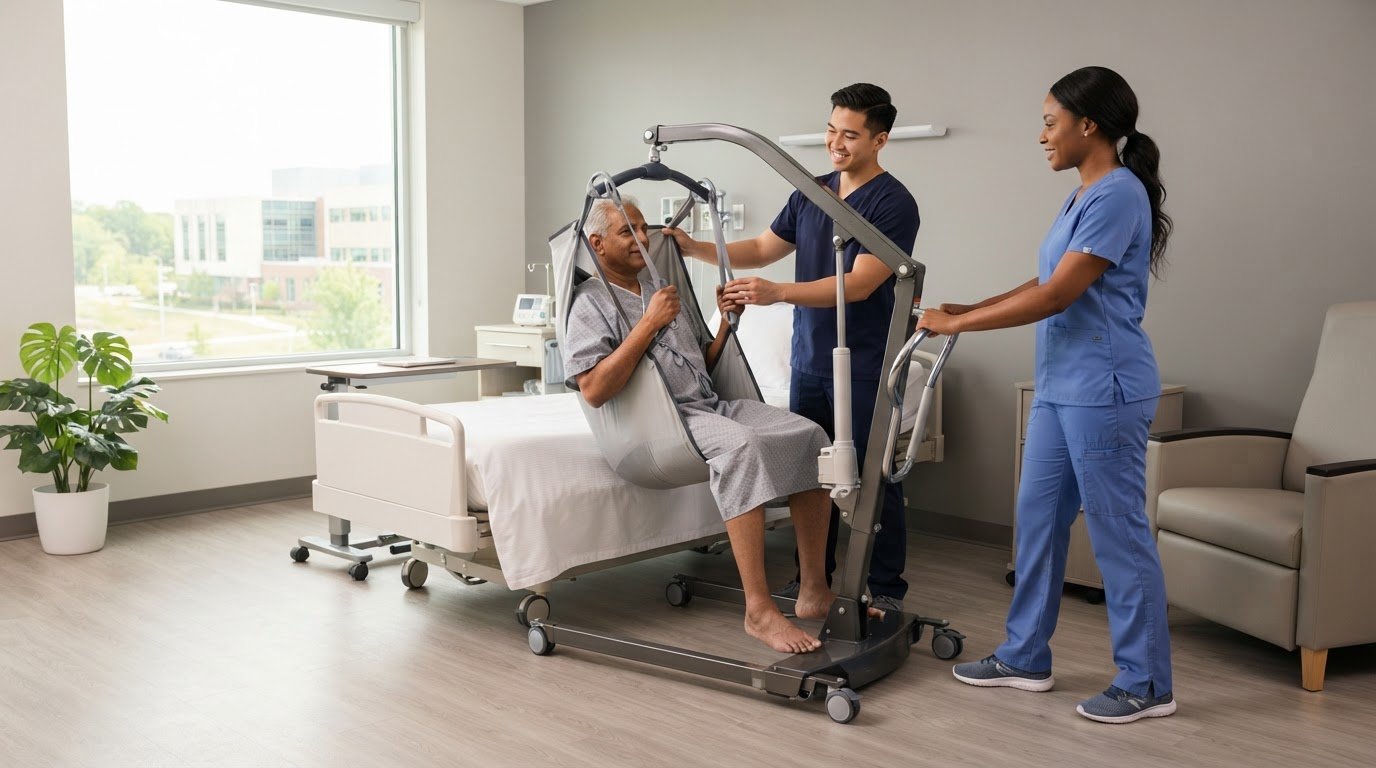
A well-executed hospital bed mover maintenance program is, at its heart, a strategy for protecting people. When equipment is neglected, its performance degrades; wheels become stiff, motors lose torque, and sensors fail to respond. This mechanical decline forces nurses and porters to compensate with their own physical strength, leading to the very musculoskeletal injuries the technology was designed to prevent. In a large South Australian hospital, the implementation of a dedicated patient transfer solution combined with rigorous care protocols saw bed-related staff injuries plummet from twenty per year to zero within just twenty-four months. This result demonstrates that reliability is not just a technical metric, but a human safeguard.
The "hidden cost" of reactive maintenance often appears in the human resources budget rather than the facility ledger. Staff turnover due to chronic back and shoulder strain is a significant burden for Australian healthcare providers. Portering staff often walk up to 15 kilometres during a single shift, often while pushing or pulling heavy loads. When a bed mover operates smoothly, it eliminates the hazardous peak forces required to initiate movement, drastically reducing the cumulative physical toll on the body. Ensuring your fleet is in peak condition is a direct investment in the longevity of your workforce.
Training Staff for Proactive Equipment Care
Educating porters and nurses on proactive care is a vital component of any risk management strategy. By teaching operators to identify early warning signs, such as unusual vibrations or sluggish steering, you can address issues before they lead to a workplace incident. Staff should be trained on 'what not to do,' such as forcing a jaw mechanism or ignoring low-battery alerts, to prevent avoidable damage. Integrating a professional bed mover maintenance service into your facility's routine boosts staff confidence, as they know the tools they rely on are being managed by experts. When workers feel supported by reliable technology, their job satisfaction and safety increase simultaneously.
Ergonomics and Staff Retention in 2026
Positioning your maintenance programme as a 'staff-first' initiative is essential for supporting an ageing healthcare workforce. Older professionals bring invaluable clinical experience but may be more susceptible to the physical rigours of manual handling. By maintaining equipment to original manufacturer standards, you ensure that the physical burden of patient transport remains near zero, regardless of the operator's age or strength. Motorised movers protect staff from long-term disability by absorbing the high-torque stresses of patient transport that would otherwise be transferred to the human musculoskeletal system. If you're ready to prioritise your team's well-being, explore our comprehensive service and repair options to keep your safety framework on track.
Partnering with RIHA Industries for National Service Excellence
A world-class hospital bed mover maintenance program is only as strong as the technical support that underpins it. Reliability requires a partner who understands the high-stakes nature of healthcare logistics and the critical importance of staff safety. By manufacturing our systems in Edinburgh North, South Australia, we maintain total control over engineering quality and component availability. This local foundation allows us to offer national service coverage, ensuring that whether your facility is a major metropolitan trauma centre or a remote rural clinic, you have access to expert technicians who specialise in the StaminaLift and Easi series.
Downtime is the enemy of any efficient facility. To combat this, we provide 24-hour parts shipping directly from our South Australian facility, allowing your maintenance team to resolve issues with minimal disruption to clinical workflows. We don't believe in one-size-fits-all solutions. Instead, we work with facility managers to develop customised service contracts that align with specific usage patterns and budgetary requirements. This bespoke approach ensures your equipment remains a reliable asset rather than a source of compliance anxiety.
Engineering Sustainability through Custom Parts
Preserving the life of your existing fleet is a core tenet of our service philosophy. We utilise industrial 3D printing and advanced CAD technology to produce precision parts for older equipment, effectively preventing the premature decommissioning of high-value assets. This capability is particularly valuable for facilities looking to maintain a diverse fleet without the immediate capital expense of total replacement. Our direct engagement model means you bypass third-party distributors, gaining immediate access to the engineers who designed your equipment. This streamlined communication results in faster diagnostic support and more accurate technical resolutions.
Next Steps for Your Facility
Transitioning to a proactive safety framework is a journey that begins with a clear understanding of your facility's unique needs. We invite you to request a hands-on demonstration of the StaminaLift series to see how our latest ergonomics can integrate with your current workflows. To assist with your business case, our team can provide an ROI calculator that helps justify the investment in a structured maintenance programme by quantifying the savings in injury prevention and asset longevity. Ready to secure your facility's future? Contact RIHA Industries for a tailored maintenance consultation and let us help you build a framework that protects your staff and your bottom line.
Advancing Toward a Zero-Injury Healthcare Environment
Building a resilient healthcare facility requires a shift from reactive repairs to a structured, safety-first culture. By implementing a robust hospital bed mover maintenance program, you don't just protect your high-value assets; you create a workplace where staff well-being is the priority. This framework ensures that your specialised equipment meets the rigorous safety standards of 2026 while eliminating the 'break-fix' cycle that leads to unpredictable budget blowouts.
The human impact of this strategy is undeniable. In a major South Australian hospital, the transition to ergonomic transfer solutions and professional care protocols reduced bed-related injuries from twenty per year to zero. As an Australian-made and owned leader, RIHA Industries supports your mission with 24-hour parts shipping from our Edinburgh North facility, ensuring your fleet remains operational when it's needed most. Reliable equipment is the foundation of exceptional patient care and professional confidence.
Secure your facility's safety with a RIHA Industries maintenance programme and take the first step toward a safer, more efficient workplace today.
Frequently Asked Questions
What are the core components of a hospital equipment maintenance programme?
A robust programme includes a comprehensive asset inventory, risk-based inspection schedules, and standardised digital record-keeping. It also integrates competency-based training for operators to ensure equipment is handled correctly. By combining these elements, facility managers create a transparent audit trail that satisfies WHS requirements while ensuring every patient transfer device remains in peak condition for clinical use.
How often should powered bed movers like the StaminaLift be serviced?
Motorised units require a tiered approach consisting of daily operator visual checks, comprehensive quarterly professional inspections, and a major annual service. This frequency ensures that high-torque components and battery systems are monitored before wear leads to failure. Adhering to this schedule is essential for maintaining the basic safety and performance standards outlined in the 2026 international benchmarks for medical equipment.
Does a maintenance programme really reduce staff injury rates?
Yes, a structured hospital bed mover maintenance program is a proven strategy for injury prevention. When equipment is flawlessly maintained, it eliminates the need for nurses and porters to use manual force to compensate for mechanical stiffening or motor failure. One major South Australian hospital reported reducing bed-related staff injuries from twenty per year to zero within twenty-four months of implementing such a programme.
What is the difference between preventative and corrective maintenance in hospitals?
Preventative maintenance involves scheduled inspections designed to identify and resolve wear before a failure occurs. In contrast, corrective maintenance is a reactive 'break-fix' approach that takes place after equipment has already broken down. Choosing a preventative model is significantly more cost-effective, as emergency repairs in a hospital setting can cost up to 4.8 times more than planned service visits.
Can internal engineers perform maintenance on StaminaLift equipment?
Internal biomedical engineers can perform daily checks and basic troubleshooting, but specialised motorised systems often require factory-trained expertise. The sophisticated electronics and patented hitch mechanisms in StaminaLift equipment demand specific diagnostic tools and technical knowledge. Partnering with specialised service providers ensures that complex repairs meet original manufacturer specifications and maintain the high safety standards required for patient transport.
How does RIHA Industries support rural hospitals with equipment maintenance?
RIHA Industries provides national service coverage and 24-hour parts shipping from our South Australian facility to support rural facilities. We also utilise Bluetooth diagnostics to monitor equipment health remotely, allowing rural maintenance teams to identify issues early. This direct support model ensures that geographical distance doesn't compromise the safety or reliability of essential patient handling equipment in country hospitals.
What documentation is required for OHS compliance regarding medical movers?
Compliance requires a detailed digital audit trail that includes service history, risk assessments, and staff competency records. Every inspection must be documented with time-stamped logs to prove that the facility is meeting its duty of care under Australian WHS laws. These records are vital during safety audits, providing evidence that all motorised transfer devices are being managed according to manufacturer guidelines.
Are spare parts for Australian-made bed movers readily available in 2026?
Yes, spare parts for Australian-made bed movers are readily available and can be shipped within 24 hours from our Edinburgh North manufacturing centre. Being a local manufacturer allows us to bypass the long lead times often associated with international distributors. We also use industrial 3D printing to support older fleets, ensuring that your facility isn't forced into premature equipment decommissioning due to part scarcity.