
The Ultimate Guide to Bed Mover Maintenance Service for Australian Hospitals
Updated: Jul 9
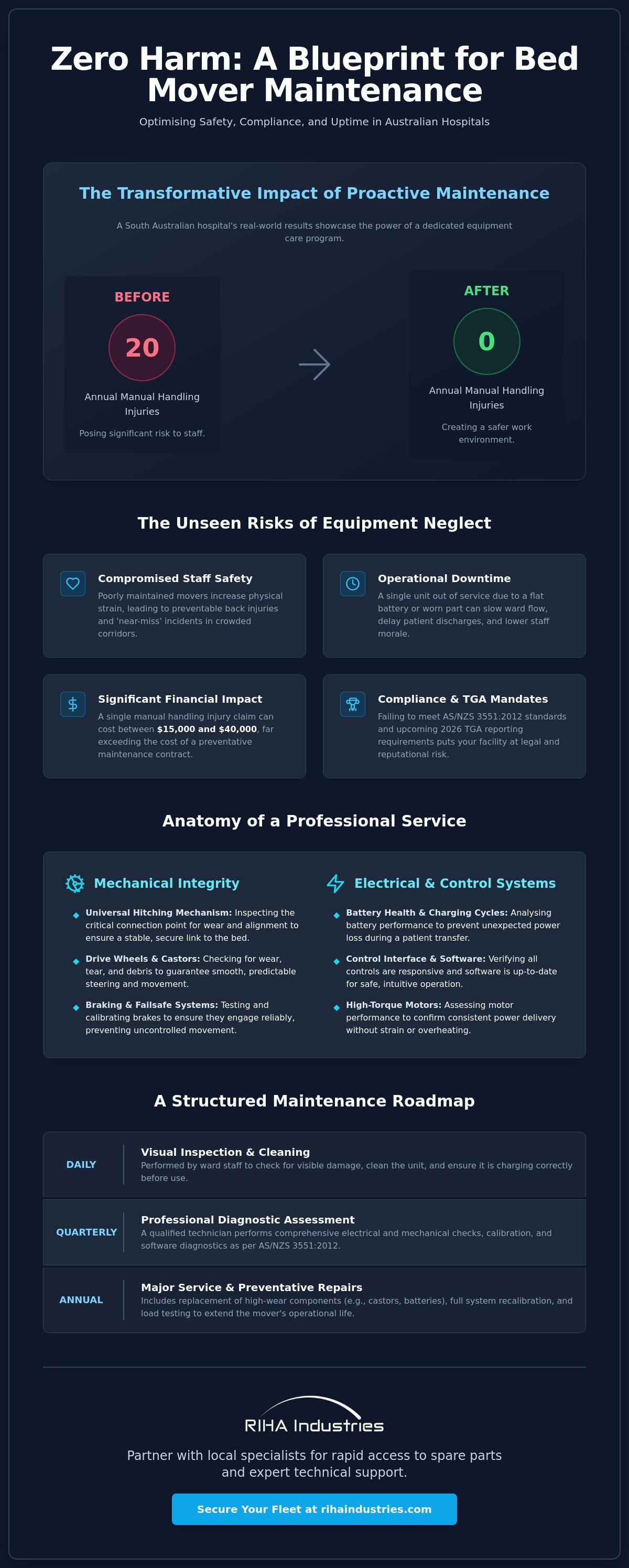
Could your hospital's safety record improve from twenty annual manual handling injuries to zero simply by prioritising equipment care? In a large South Australian hospital, this exact transformation occurred after implementing specialised transfer technology and a rigorous bed mover maintenance service. We understand that when a motorised mover sits idle in a corridor due to a flat battery or a worn castor, it isn't just a technical glitch. It's a ward delay that puts extra physical strain on your nursing staff and risks non-compliance with the latest Therapeutic Goods Administration (TGA) mandates.
You likely recognise that keeping your fleet operational is a constant balancing act between budget constraints and the urgent need for staff safety. This guide will show you how to optimise the lifespan of your patient transfer equipment while meeting the strict AS/NZS 3551:2012 standards. We'll preview the new 2026 mandatory adverse event reporting requirements and provide a clear roadmap for achieving zero downtime. By the end of this article, you'll know exactly how to manage your maintenance schedules to ensure full WHS compliance and long-term reliability for your facility.
Table of Contents
Why Bed Mover Maintenance is Essential for Australian Hospitals
A professional bed mover maintenance service is far more than a simple mechanical check; it's a structured regime of inspections, calibrations, and preventative repairs designed to keep your transfer fleet in peak condition. In the high-pressure environment of an Australian hospital, these motorised units are critical tools that bridge the gap between patient care and staff safety. Without a disciplined approach to maintenance, even the most advanced equipment can become a liability rather than an asset. Systematic servicing ensures that every component, from the drive wheels to the control interface, functions exactly as the manufacturer intended.
Under Australian WHS legislation, hospital administrators and engineering teams hold a strict Duty of Care to provide a safe working environment. This responsibility is particularly acute when managing motorised equipment used for patient transport. When you consider the complex features of modern hospital beds, which often include heavy integrated electronics and specialised mattresses, the physical demand on the person moving that bed is immense. Rigorous maintenance directly correlates with a reduction in nurse back injuries, as it ensures the equipment does the heavy lifting so the staff don't have to. If a mover is poorly maintained, it requires more physical effort to steer or stop, which quickly leads to the manual handling strains that bed movers were designed to prevent.
The financial impact of equipment downtime in a busy emergency department or an aged care wing is significant. When a unit is out of service, ward flow slows down, patient discharge is delayed, and staff morale often drops as they struggle with manual transfers. Research indicates that a single manual handling injury claim in New South Wales or Victoria can cost a facility between $15,000 and $40,000 in direct costs. Investing in a regular bed mover maintenance service is a proactive strategy to avoid these expenses while ensuring your facility remains compliant with the AS/NZS 3551:2012 standards for medical equipment management.
The Link Between Maintenance and Staff Safety
Safety in the ward relies on equipment predictability. Faulty brakes or steering in a StaminaLift 5000 can lead to unpredictable movement during a transfer, especially in tight corridors or on slight inclines. Regular servicing prevents these 'near-miss' incidents by identifying mechanical fatigue before it causes a failure. There's also a vital psychological benefit for porters and nurses; knowing their gear is top-notch and reliable allows them to focus entirely on patient comfort rather than worrying about equipment failure.
Protecting Your Facility's Capital Investment
A well-structured service contract is a fraction of the cost of a total fleet replacement. By extending the operational life of units like the StaminaLift 2100 through proactive care, hospitals can stretch their capital budgets further and ensure a lower total cost of ownership. Preventative maintenance serves as the primary driver of equipment ROI by mitigating the high costs associated with emergency repairs and early asset disposal. This approach transforms maintenance from a reactive expense into a strategic investment in the hospital's long-term operational efficiency.
Anatomy of a Service: Key Checkpoints for Powered Bed Movers
To the casual observer, a patient transfer system may look like a simple motorised tug. In reality, it is a sophisticated synergy of high-torque electrical motors, precision hydraulics, and complex control software. Maintaining this synergy requires a comprehensive medical equipment maintenance programme that looks beyond the surface. When an engineer performs a bed mover maintenance service, they aren't just checking if the unit moves; they're verifying that every fail-safe and performance metric meets the original factory specifications. This level of detail is what separates a reliable fleet from one that fails at the most critical moment of a patient transfer.
One of the most vital mechanical checkpoints involves the universal hitching mechanism. This component is the only point of contact between the mover and the bed. If the hitch is worn or misaligned, the connection becomes unstable, potentially damaging the bed frame or causing the unit to disengage during transport. Similarly, tyre and drive wheel inspections are paramount. Hospital floors vary from polished linoleum to high-grip vinyl, and a drive wheel with flattened spots or embedded debris will lose traction. This loss of grip forces the motor to work harder and reduces the operator's control, particularly when navigating the 1:12 gradients found in many older Australian healthcare facilities.
Electrical Systems and Battery Management
The heartbeat of the StaminaLift series is its battery system. During a professional service, technicians perform a deep-cycle analysis to ensure the battery capacity can handle a full eight-hour shift without power degradation. We often find that charging ports and cables suffer the most wear in a busy ward environment. Inspecting these for fraying or loose connections prevents electrical shorts and ensures consistent charging. In 2026, digital maintenance has become just as critical as mechanical care. Updating the firmware ensures that the latest safety algorithms and power management profiles are active, allowing the hardware to operate with maximum efficiency.
Mechanical Integrity and Hydraulics
Quiet wards require silent machinery. Regular lubrication of all moving parts ensures that the unit operates without the squeaks or rattles that can disturb resting patients. Beyond acoustics, the emergency stop and fail-safe braking systems must be tested under a full load. A mover must be able to hold a 300kg bed on an incline without slipping. Finally, technicians check the alignment of the drive system. If the unit begins "crabbing" or pulling to one side, it increases the physical burden on the porter. Proper alignment ensures the unit tracks straight, allowing for effortless movement down long corridors. To keep your equipment performing at this high standard, consider scheduling regular preventative maintenance and repairs to catch these issues before they escalate.
Evaluating Service Models: In-House Engineering vs. Manufacturer Service
Deciding between an internal biomedical engineering team and an external bed mover maintenance service often comes down to the complexity of the task at hand. While on-site engineers are invaluable for immediate troubleshooting and minor adjustments, certain technical milestones require the precision that only manufacturer-trained specialists can provide. This dual-layered approach ensures that daily operational needs are met without compromising the long-term integrity of the patient transfer fleet. Finding the right balance between these two models is the key to maintaining both fiscal responsibility and equipment reliability.
Internal teams typically excel at high-frequency, low-complexity tasks. However, as medical equipment becomes more digitised, the gap between general mechanical repair and specialised system calibration widens. Relying solely on in-house staff for complex electronics can lead to overlooked software glitches or the use of non-standard components. In contrast, a specialised service provider brings diagnostic tools specifically engineered for your fleet, ensuring that every adjustment aligns with original factory specifications. This expertise is vital for navigating the stringent Australian WHS and TGA requirements that govern motorised hospital equipment.
The Role of the On-Site Clinical Engineer
Internal engineers are your hospital's first line of defence. They manage the daily pre-start checks that keep the portering team safe and identify early warning signs like grinding noises or a sluggish response from the drive system. By training ward staff to report these faults immediately to the maintenance centre, internal teams can prevent minor wear from escalating into a catastrophic failure. Their proximity allows for rapid response to simple issues, such as cleaning debris from castors or re-seating a loose charging cable, which keeps the fleet moving during peak ward hours.
Why Manufacturer-Led Servicing Wins on Compliance
Regarding deep-level diagnostics and regulatory adherence, the advantage shifts to manufacturer-backed support. Specialists have exclusive access to proprietary diagnostic software for the StaminaLift Transfer Systems, allowing them to pinpoint electronic faults that generic multimeters might miss. This specialised access is crucial for maintaining full compliance with the AS/NZS 3551:2012 standards. Using genuine parts rather than generic alternatives is another critical factor; in a high-stakes healthcare setting, a non-standard component can void warranties and create safety risks that lead to OHS incidents. Professional preventative maintenance and repairs provide a detailed service log and an immutable audit trail. This documentation is essential for insurance purposes and mandatory TGA reporting. Knowing that factory-trained technicians have certified your gear provides a level of peace of mind that is difficult to replicate with a generalist approach.
A Step-by-Step Guide to Routine Bed Mover Maintenance
Reliability in a patient transfer system is built through a tiered maintenance schedule that addresses immediate hygiene and long-term mechanical health. While previous sections highlighted the strategic importance of care, this guide provides a practical framework for the engineers and ward managers who keep these units moving. Implementing a structured bed mover maintenance service ensures that every StaminaLift 2100 or Easi Mover in your fleet remains a safe, compliant tool for your staff.
Step 1: Visual inspection and cleaning. Every maintenance session should begin with a thorough wipe-down using hospital-grade disinfectants. This prevents the spread of healthcare-associated infections while allowing the engineer to spot hairline cracks in the chassis or worn hitching pins that might otherwise be obscured by dust or grime.
Step 2: Functional testing of controls. Test the joystick response and the hitching mechanism for fluid, unhindered movement. If the hitching arm shows any hesitation or unusual noise, it indicates a need for immediate lubrication or alignment to prevent a mid-transfer failure.
Step 3: Battery and charging system verification. Check the integrity of the charging lead and the terminal connections. A unit that doesn't hold a full charge effectively becomes a manual handling risk if it fails while transporting a patient between wards.
Step 4: Load testing and brake calibration. This is the most critical safety check. Verify that the electromagnetic brakes can hold the unit stationary on a standard hospital ramp under a maximum load. If the braking distance has increased, the system requires immediate recalibration.
Daily and Weekly Maintenance Tasks
Nurses and porters play a vital role in the daily upkeep of the equipment. Sanitising touchpoints like handles and control panels should be a standard part of every shift to meet infection control standards. Weekly checks should focus on the 'E-stop' button and the horn; these safety features must respond instantly to prevent accidents in crowded corridors. Ensuring that units are plugged into a dedicated charging station overnight prevents deep-discharge damage to the batteries, which significantly extends their operational life.
Quarterly Professional Inspections
Every three months, a more technical assessment is required to ensure the unit is 'properly sorted' for WHS audits. This involves measuring the drive motor current draw to identify internal friction that could lead to motor burnout. Technicians must also verify the structural integrity of the hitching arm and frame, looking for signs of metal fatigue. Updating the maintenance logbook after these inspections is mandatory; it provides the documented evidence needed for Australian healthcare safety standards. To ensure your fleet meets these rigorous requirements, you can book a comprehensive bed mover maintenance service with our factory-trained team.
Securing Your Fleet’s Future with RIHA Industries
Choosing a dedicated partner for your bed mover maintenance service ensures that your facility's safety standards never waver. RIHA Industries provides more than just mechanical repairs; we offer a comprehensive support ecosystem designed specifically for the unique demands of Australian healthcare. Our approach focuses on eliminating the friction between equipment management and frontline care, allowing your staff to work with complete confidence. By aligning our technical expertise with your hospital's operational goals, we help you maintain a fleet that is always ready for the next patient transfer.
A primary advantage of our service is the focus on precision and longevity. We understand that a StaminaLift 2100 or an Easi Rider is a significant capital investment. Our maintenance programmes are engineered to protect that investment by using diagnostic protocols that catch wear before it leads to failure. This proactive stance is essential for meeting the mandatory adverse event reporting requirements introduced by the TGA in 2026. With RIHA Industries, you aren't just maintaining a machine; you're securing a safer workplace for your entire team.
Australian-Made Reliability and Support
Dealing with a South Australian manufacturer provides a level of responsiveness that international vendors simply cannot match. Because we design and build the equipment locally, we maintain an exhaustive inventory of genuine spare parts, ensuring that a breakdown doesn't result in weeks of ward delays. Our technicians integrate seamlessly with your existing hospital equipment maintenance programmes, providing the specialised knowledge required for the StaminaLift Transfer System 5000 and the wider Easi series. This local expertise translates to faster turnarounds and a deeper understanding of Australian WHS regulations.
Booking Your Maintenance Service
During a RIHA Industries service visit, our factory-trained team conducts a multi-point assessment covering every electrical and mechanical system discussed in this guide. We provide detailed reports that simplify your compliance audits and help you plan for future equipment needs. Whether you manage a small aged care wing or a major metropolitan emergency department, we can customise a service contract that fits your specific fleet size and usage patterns. We invite you to contact RIHA Industries today to organise your bed mover service and receive a tailored quote for a preventative maintenance contract that guarantees your equipment's reliability for years to come.
Empowering Your Team with Reliable Transfer Solutions
A robust equipment care strategy transforms your patient transfer fleet from a potential liability into a high-performing asset. By prioritising a regular bed mover maintenance service, you're doing more than just ticking a compliance box; you're actively protecting your staff from manual handling injuries and ensuring ward flow remains uninterrupted. We've explored how structured daily checks and professional quarterly audits work together to create a safer, more efficient healthcare environment.
Maintaining full compliance with Australian WHS standards and TGA regulations is a complex task; however, you don't have to manage it alone. Our South Australian owned and operated team provides the local expertise and factory-trained technicians required to keep your StaminaLift systems in peak condition. Taking a proactive approach today prevents the high costs of emergency repairs and equipment downtime tomorrow. Book your specialised bed mover maintenance service with RIHA Industries to ensure your fleet remains a stable, long-term partner in patient care.
Investing in the longevity of your equipment is an investment in the well-being of your staff and patients. Let's work together to achieve zero downtime and total safety across your facility.
Frequently Asked Questions
How often should a hospital bed mover be serviced?
A hospital bed mover should undergo a comprehensive service every six to twelve months to remain compliant with Australian safety standards like AS/NZS 3551:2012. High-volume facilities often benefit from more frequent quarterly inspections to prevent minor wear from escalating into a mechanical breakdown. This regular schedule ensures that critical components, such as electromagnetic brakes and drive motors, are always performing at their peak factory specifications.
Do I need a special qualification to perform maintenance on a StaminaLift?
Internal biomedical engineers can perform routine visual checks and basic cleaning; however, technical repairs and deep system calibrations require factory-trained certification. Our specialists possess the proprietary diagnostic tools and specific mechanical knowledge needed to maintain the integrity of the StaminaLift series. Entrusting complex repairs to certified experts protects your staff from the safety risks associated with improper equipment adjustment or non-standard part replacement.
What are the most common signs that a bed mover needs urgent repair?
Unusual grinding noises, a noticeable drift or "crabbing" during transport, and a sudden drop in battery life are the most common indicators that a unit requires attention. If the unit struggles to hold a load on a ramp or the emergency stop button feels unresponsive, it should be removed from service immediately. Addressing these early warning signs through a professional bed mover maintenance service prevents minor issues from becoming costly OHS incidents.
Is on-site maintenance available for hospitals in rural Australia?
RIHA Industries provides national service coverage, ensuring that hospitals in rural and regional Australia have access to expert technical support at their facility. We understand the logistical challenges faced by remote healthcare providers and work to coordinate service visits that minimise equipment downtime. Our goal is to provide every Australian facility with the same level of safety and reliability, regardless of their geographical location.
How does regular maintenance affect the warranty of my Easi Rider tug?
Adhering to a documented preventative maintenance schedule is essential for keeping your Easi Rider warranty valid and your equipment compliant. Using non-genuine parts or neglecting required service intervals can void your coverage and lead to higher long-term repair costs. Consistent, manufacturer-approved care ensures that your equipment remains eligible for support and continues to meet the high safety standards expected in Australian hospitals.
Can RIHA Industries service other brands of medical tugs and movers?
Our technicians possess the expertise to service a wide variety of medical tugs and movers beyond our own primary product lines. While we are specialists in the StaminaLift and Easi series, our deep understanding of healthcare ergonomics and motorised transfer systems allows us to maintain diverse fleets. This versatile approach simplifies your facility's maintenance management by providing a single, reliable point of contact for a professional bed mover maintenance service.
What is the typical downtime for a standard preventative maintenance check?
A standard preventative maintenance check typically takes between 60 and 90 minutes per unit, allowing for a thorough assessment without significantly disrupting ward operations. We schedule these visits to align with your hospital's quietest periods to ensure minimal impact on patient care. This brief investment in time provides months of reliable service and helps your team avoid the lengthy delays caused by unexpected equipment failure during peak periods.
How do I maintain the batteries to ensure they last for a full shift?
Ensuring the unit is connected to a dedicated charging station at the end of every shift is the most effective way to maintain battery health. You should avoid letting the battery level drop into the "red zone," as deep discharging can permanently reduce the system's total capacity over time. Regular terminal cleaning and software-based battery health checks during a professional service visit will also help guarantee full-shift reliability for your porters.


