Hospital manual handling policy template checklist and use
A hospital manual handling policy template should explain how staff identify handling hazards, assess risks, choose controls and follow safe procedures. It should define responsibilities, required competencies, escalation steps and the records that demonstrate compliance. A useful template supports decisions at the point of care, rather than relying on general reminders.
Patient handling involves changing needs, equipment and environments, so a clear, practical policy helps staff understand what to do and when to seek support. It must also fit the hospital’s workflows, roles and equipment.
This article explains what to include, how to prepare supporting procedures and forms, and how to review, approve, issue and maintain them. You’ll also find a practical checklist for confirming each document has a clear owner, review history and completion evidence.
Table of Contents
Compliance checklist ownership and evidence
A checklist supports safe practice only when each item has an owner, review frequency and evidence of completion. For a manual handling check, assign a role, such as the ward manager, and record the equipment or procedure reviewed, any issues found and the action taken. Link the record to the relevant ward and date. This makes follow-up clearer than a tick alone.
Match review timing to the work being checked. Hospital compliance checks might be scheduled daily for crash-cart seals, medication refrigerator temperatures and isolation signage; weekly for steriliser cycle logs, eyewash stations and hand-hygiene observations; and monthly for code drills, fire extinguishers, sharps disposal and falls-risk rounding. These examples show how hospitals can set different frequencies across checklists. For manual handling, set a suitable schedule for reviewing procedures and related equipment, and document who completes each review.
Choose a tool that makes ownership and evidence easy to find, rather than simply storing files. Useful options include:
A controlled spreadsheet: tracks checklist items, responsible roles, due dates, findings and action status. It suits a small register with straightforward reporting.
Document-control or compliance-management software: organises current policies, assigns review tasks and keeps completion records together. Configure access so staff can locate current procedures while authorised owners manage changes.
An incident and complaints log: captures reports, investigation steps, actions and closure notes. Use consistent fields so recurring handling concerns can be reviewed alongside checklist findings.
For federal and state regulatory compliance, map each checklist or policy requirement to the relevant jurisdiction and responsible department. Requirements vary by location, so a hospital operating across jurisdictions should record which version applies at each site. Legal counsel can review medical office policy documents against applicable federal and state laws and regulations. Keep the review decision and resulting changes with the policy record.
In the United States, OSHA healthcare safety resources can inform a hospital’s internal review, but they do not replace checking the rules that apply to the facility’s location. Hospitals elsewhere should use the relevant local framework. Record which resource informed a checklist update, who assessed its relevance and what action followed.
Treat patient and family complaints as potential signals for review. For example, a complaint about a difficult transfer can prompt the responsible manager to record the concern, examine the procedure and equipment used, and assign follow-up. Protect identifying details through the hospital’s records process. Close the loop by documenting the response, action owner and completion evidence, then consider whether staff need an updated procedure.
Preparing, reviewing, approving, and issuing documents
Give each policy a defined purpose, scope, owner and approval route. Separate the policy’s principles from supporting procedures, forms and checklists. For example, a manual handling policy can set expectations, while a procedure describes the steps staff follow during a transfer. Check that infection control, equipment use and staff responsibilities are consistent across related documents. A controlled document register helps editors track owners, review dates and current versions.
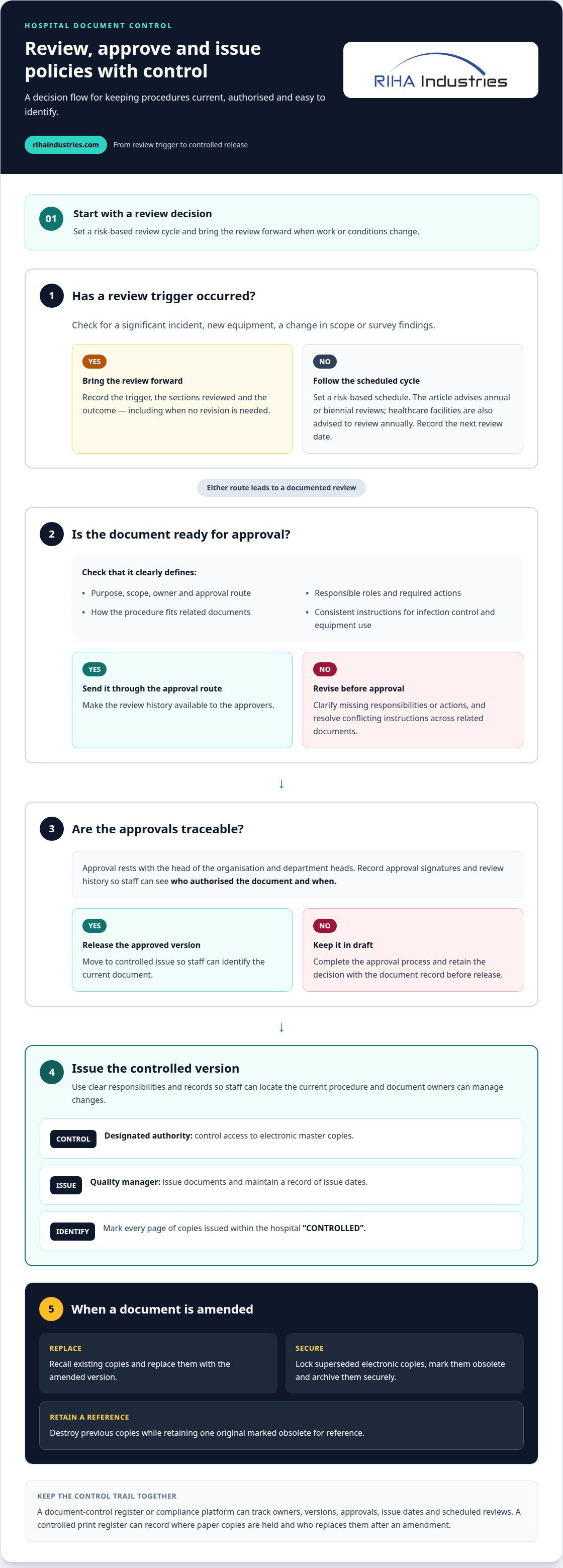
Set a review cycle that reflects risk and operational change. Hospitals are advised to review policies annually or biennially, adjusting the cycle according to risk. Healthcare facilities are also advised to review and revise policies annually. Choose a schedule that makes responsibilities clear, and record the next review date on each document. Bring a review forward after a significant incident, new equipment, a change in scope or survey findings, as these events can change the procedures staff need to follow.
Use risk-based reviews to focus attention where work or conditions have changed. A ward introducing new equipment may need to revisit handling procedures, staff instructions and related checklists. Changes to infection control processes can also affect linked procedures. Record the trigger, sections reviewed and outcome, including when no revision is needed. A shared review calendar helps policy owners schedule work, while document-management software can route drafts and retain review history.
Make approval visible and traceable. Hospital document approval rests with the head of the organisation and department heads. Record approval signatures and review history so staff can see who authorised each document and when. A workflow tool can route drafts to the right approvers and retain decisions. Before approval, check that the procedure names responsible roles, describes required actions and aligns with related documents. Resolve conflicting instructions before release.
Control the issue process so staff can identify the current version quickly. A designated authority should control access to electronic master copies. The quality manager should issue documents and maintain a record of issue dates. Mark every page of copies issued within the hospital “CONTROLLED”. When a document is amended, recall existing copies and replace them with the amended version. Lock superseded electronic copies, mark them obsolete and archive them securely. Destroy previous copies while retaining one original marked obsolete for reference.
A document-control register or compliance platform can support this process by tracking versions, approvals, issue dates and scheduled reviews. Use a controlled print register to record where paper copies are held and who replaces them after an amendment. If a policy review involves transfer-equipment procedures, equipment integration considerations can inform the document update.
Document identification details
Clear identification helps staff select the right policy, procedure or form before acting. Give every hospital document a unique identification number. Use a consistent naming convention, such as a subject prefix followed by a document type. For example, a manual handling policy and its transfer procedure should have distinct identifiers. Keep the identifier stable for minor edits, and record substantive revisions in the version details.
Place essential metadata together on the first page or in a controlled document register. Include the document title, identifier, version, owner, approving authority, approval date, effective date and next review date. Add the department or facility covered and a brief scope statement. These details help a medical team identify whether instructions apply to its practices, location and patient group. A document-control system can store them as searchable fields.
For supporting documents, clarify how each item relates to the main policy. A transfer procedure might refer to a staff competency record, equipment inspection form and incident report. A discharge procedure may sit elsewhere in the hospital’s document set, but its title and owner should remain distinct. A document register or spreadsheet can map these relationships, helping staff find related instructions without treating separate processes as interchangeable.
Useful identification fields and tools include:
Document register: lists titles, unique identifiers, owners and locations, helping administrators find current records.
Version history: records changes, approval dates and previous versions, supporting traceability during reviews.
Metadata template: prompts authors to enter scope, department, document type and review details consistently.
Searchable document-management software: helps staff find policies by identifier, title or department, while supporting controlled access.
Keep the visible identifier consistent across the document, register and electronic filename. If a printed copy has a different title or version from the register, staff may follow outdated instructions. Use a readable naming pattern, such as “Manual handling policy, Ward services, Version B”. Avoid relying on colour alone to show status, because printing or copying may obscure the distinction.
Document structure can also clarify where an item sits within a larger management system. An ISO 9001 document organisation hierarchy has four levels. A hospital may use this concept to separate overarching policies from procedures, work instructions and records. Treat it as an organising model, not a substitute for local document controls. The practical test is simple: can a staff member identify the governing policy, locate its supporting procedure and recognise the current approved version?
An ISO 9001 document organization hierarchy has 4 levels. A hospital SOP sets out the step-by-step process for carrying out a specific activity, so its title and identifier should distinguish it from related forms and policies. Emergency procedures can also identify the documentation required after a patient is stabilized or transported, making follow-up records easier to locate.
Healthcare organisations should identify hazards, assess risks and establish controls as core parts of a health and safety policy. Hospital policy templates should identify responsibilities and required qualifications or competencies, so staff know who acts and what capability is expected. Practices developing or using legal documents based on the templates are advised to consult an attorney familiar with the laws in their jurisdiction.
Incident reporting and adverse-event prevention
A clear reporting pathway turns a handling incident into information the hospital can act on. About 400,000 hospitalized patients experience preventable harm annually. For a manual handling policy, define which events staff report, how they record them and who reviews each report. Include patient injuries, staff strains, near misses, equipment problems and transfers that required an unexpected change of approach. Make the process accessible to clinical teams across wards and shifts.
Describe the response in practical steps. First, address immediate patient and staff needs through the relevant clinical process. Then record what happened, where and when, who was involved, the task being performed, the equipment used and any contributing conditions. Direct the report to a named role, such as the ward manager or safety lead. The procedure should also identify the escalation route for serious events and the operational records requiring follow-up.
Use a consistent incident form or digital reporting system. Useful fields include:
Event details: capture the task, location, people involved and outcome, so reviewers can understand the situation.
Contributing factors: record equipment condition, staffing context, patient needs and environmental factors without assigning blame.
Immediate response: note actions taken, notifications made and any required clinical documentation.
Follow-up: assign an action owner and record completion evidence, such as a procedure change or equipment inspection.
Review reports for patterns, not just individual errors. A spreadsheet or incident-management dashboard can group events by ward, task, equipment type or contributing factor. For example, repeated reports of a difficult bed-to-chair transfer may prompt a review of the relevant procedure, staff competency records and equipment suitability. A manual handling risk-assessment form helps document hazards and controls identified during that review. Record the findings and action in the hospital’s established system.
Prevention depends on linking reports to procedures and guidelines. After an event, compare the documented actions with the current protocol. Check whether staff could find the procedure, whether its steps matched the task and whether escalation instructions were clear. If the review identifies a gap, assign an owner to update the relevant document or training material. Communicate the change to affected teams and retain the review outcome with the event record.
Close the loop with staff who report incidents. Tell them what actions followed while protecting patient and staff confidentiality. A reporting system can track this communication and outstanding actions; a trend dashboard can show whether similar events continue. Include near misses in reviews, since a transfer interrupted before injury can still reveal an unclear procedure, hazard or equipment issue. Feed relevant findings into the next policy review.
Manual handling policy template considerations
CDC and NIOSH materials can inform local safe patient handling procedures, alongside applicable regulations. Translate relevant guidance into task-specific risk assessments, controls, equipment choices and staff competencies for each setting.
Assess transfer and lifting risks by identifying the patient’s mobility needs, task, environment and equipment. Record hazards, assess risks, choose controls, then specify who acts and when.
Manual handling risks can affect healthcare workers and patients alike. A policy should address worker strain, patient injury, falls, unsuitable equipment and unclear transfer instructions as hazards requiring controls.
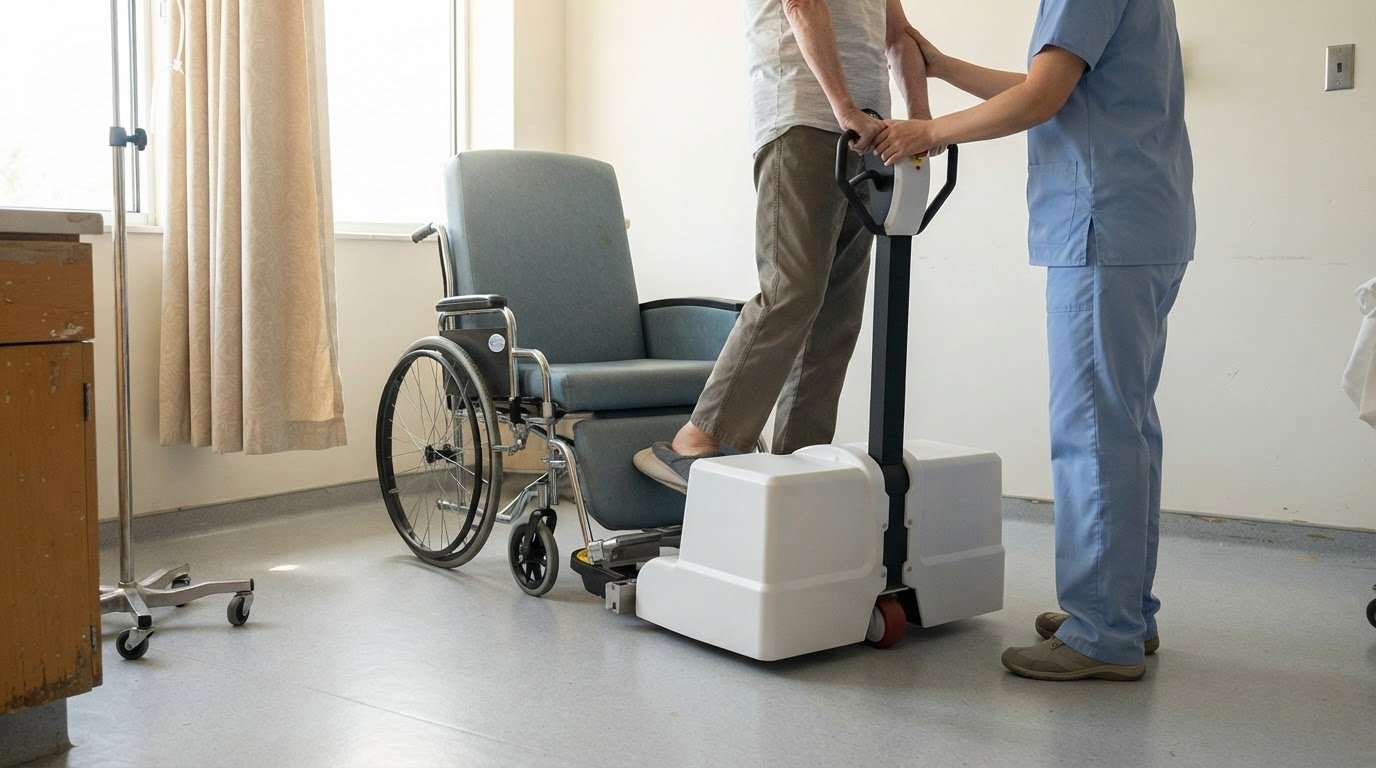
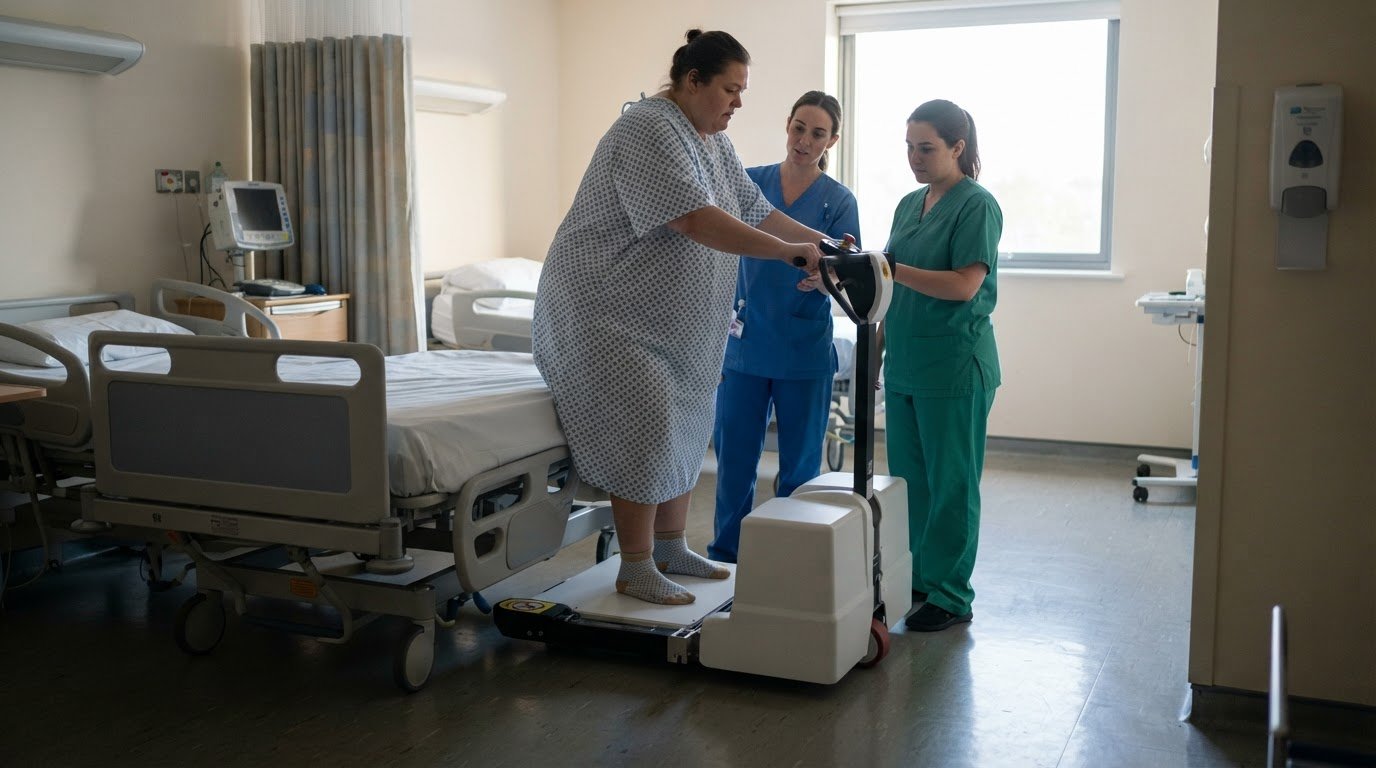
For bariatric patients or people with limited mobility, assess individual needs and the planned task. Specify appropriate equipment, staff roles, communication steps and escalation procedures rather than relying on one standard transfer method.
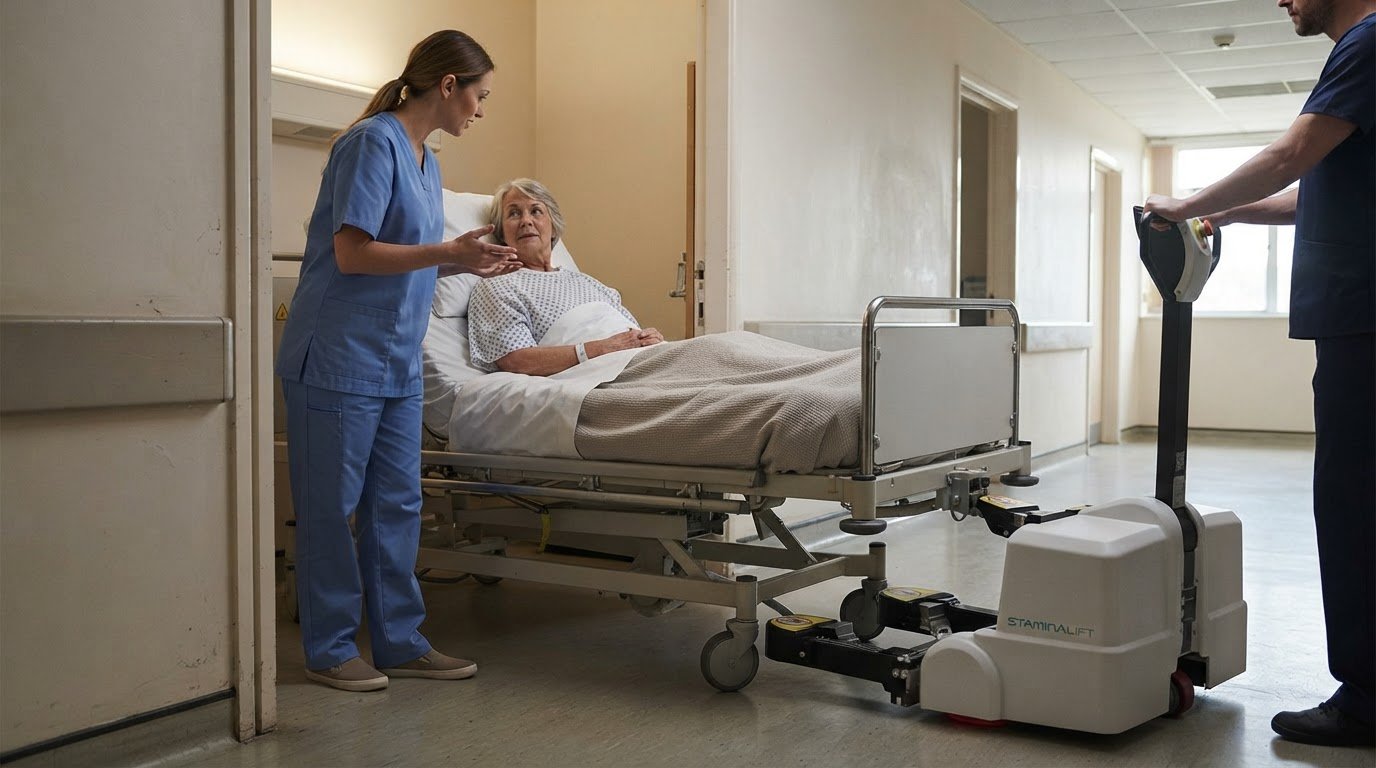
Hospitals should provide equipment suited to assessed transfer and repositioning tasks. Options can include transfer systems and other handling aids selected for the patient, task and clinical setting. The StaminaLift Transfer System 5000 and StaminaLift Transfer System 6000 are designed to integrate with existing hospital equipment; explore transfer-system options.
Staff procedures should explain the steps for transfers and repositioning, including preparation, communication, equipment use and escalation. Emergency lifting procedures should identify who coordinates the response and which actions staff follow in that setting.
Specify required training and competencies by role and task. Explain how staff learn procedures, demonstrate competence and receive further instruction when equipment or protocols change. A competency record helps managers identify completed training and outstanding needs.
A strong policy and procedure connect hazards, controls, responsibilities, qualifications and step-by-step actions. Use a risk-assessment form to record hazards and controls, a competency matrix to track staff capability, and a procedure template to standardise task instructions. Review these tools against relevant regulations and standards for the facility’s jurisdiction.
In the United States, American Academy of Pediatrics sample policy templates can serve as adaptable references, but they do not represent AAP policy or guidelines. OSHA provides healthcare safety resources. Use these materials as starting points, then adapt documents to the hospital’s practices and applicable federal and state requirements.
Use CDC and NIOSH guidance to shape task-specific risk assessments, controls, equipment selection and staff competencies. Assess the patient, task, environment and equipment, then define responsibilities, communication, training and escalation procedures.
In the United States, American Academy of Pediatrics sample policy templates can be used as adaptable references, and OSHA provides healthcare safety resources. Adapt these materials to the hospital’s setting and applicable requirements.
Healthcare employers are legally required to minimise health and safety hazards through all reasonable measures. Policies should describe step-by-step actions, decision points and escalation paths. Assess regulations covering manual labour and patient handling, hazardous chemicals, biological agents, display screen equipment and pregnant employees.
RIHA Industries: StaminaLift Transfer System 5000
RIHA Industries’ StaminaLift Transfer System 5000 is designed to integrate with existing hospital equipment. It may be relevant when a hospital is reviewing transfer procedures and assessing how equipment fits its care setting. Use the policy’s risk assessment to define transfer needs, staff responsibilities and equipment requirements, then consider whether the system aligns with those documented requirements.
A well-maintained policy connects equipment decisions with practical procedures. Specify how staff use the selected system, where it applies and which competencies are required. RIHA Industries also offers the StaminaLift Transfer System 6000, another option to consider as part of equipment planning. Keep the final procedure specific to the hospital’s assessed needs and approved equipment.
To discuss transfer-system options for your hospital, contact RIHA Industries or visit rihaindustries.com.
Put the policy into practice
Make the next step a practical implementation plan. Choose a ward or transfer task, then align the approved procedure, staff instructions and equipment requirements before extending the approach across the facility. This helps teams apply the hospital manual handling policy template to real workflows and identify where local procedures need clarification.
Set a clear owner for putting each change into practice. They can coordinate staff communication, keep training records aligned with the procedure and bring operational feedback into future reviews. For equipment planning, compare the documented transfer needs with the options available, including RIHA Industries’ StaminaLift Transfer System 5000, StaminaLift 2100 Bed Mover and StaminaLift Transfer System 6000.
To discuss how RIHA Industries’ equipment may fit your hospital’s transfer requirements, contact the team about your needs. A considered implementation plan can help translate written procedures into consistent practice and support safer, more confident care.
Frequently Asked Questions
What should a hospital manual handling policy include?
A hospital manual handling policy template should explain how staff choose a safe approach for each patient-handling task. Include a decision pathway for situations where a patient’s mobility, cooperation or condition changes during care. For example, staff should know when to pause a planned transfer, reassess the task and use an alternative procedure. Define how the policy applies across wards and other care areas, so teams can adapt instructions to their setting.
What sections should a hospital manual handling policy template contain?
Organise the template so readers can move from scope to action: purpose and application, key terms, responsibilities, risk-assessment approach, control selection, equipment and competency expectations, task procedures, escalation and records. Separate the main policy from detailed instructions for specific activities. For example, a transfer procedure can explain preparation and communication, while a repositioning procedure addresses a different task. Add a document-control panel so staff can identify the approved version.
How should hospitals report and investigate manual handling injuries and near misses?
Hospitals should record injuries and near misses promptly, then investigate the circumstances before deciding on corrective action. Preserve relevant records, such as the applicable procedure, equipment inspection details and staff accounts, and distinguish observations from assumptions. Involve people familiar with the task and care setting. Identify contributing factors, assign actions to an owner and review whether those actions address the causes. Share relevant learning with affected teams while protecting confidential information.