
Hospital Porter Equipment: The Ultimate Guide to Safety and Efficiency in 2026
Updated: Jul 8
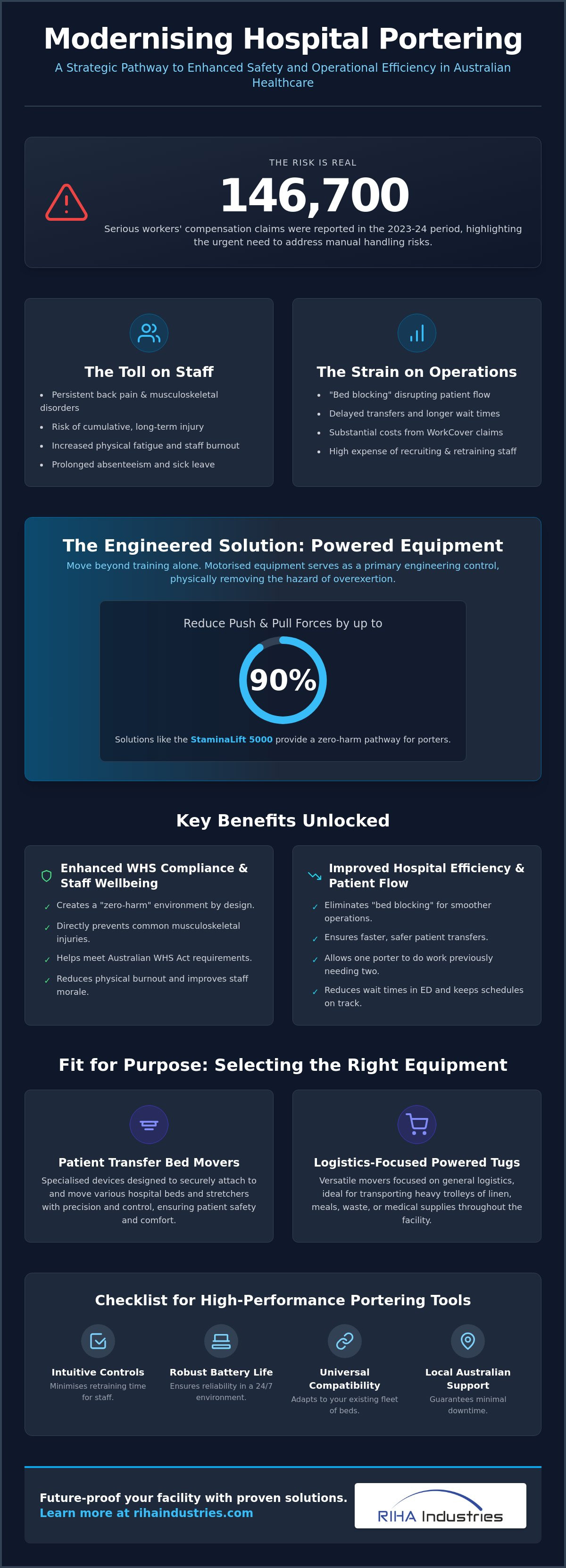
Safe Work Australia reported 146,700 serious workers' compensation claims in the 2023-24 period; a stark reminder that manual handling remains a critical risk in our healthcare facilities. You've likely seen the toll this takes on your team, from persistent back pain to long-term leave that disrupts your facility's rhythm. Investing in specialised hospital porter equipment isn't just about moving beds. It's about honouring a commitment to staff safety and operational excellence.
We understand that your goal is a zero-harm workplace where patient flow is seamless and staff feel protected. This guide will show you how the latest advancements in portering technology can help you meet the mandatory TGA reporting requirements taking effect in 2026. You'll discover how engineered solutions like the StaminaLift 5000 can reduce push and pull forces by up to 90%, ensuring your team stays healthy while patients reach their destinations faster. We'll also look at the importance of universal compatibility and local Australian support to keep your facility moving without interruption.
Table of Contents
The Evolution of Hospital Porter Equipment and Patient Flow
The Hospital porter serves as the essential logistics backbone of the Australian healthcare system. Without their constant movement of patients, specimens, and supplies, clinical operations would quickly grind to a halt. In previous decades, this role relied almost entirely on physical strength and manual trolleys. However, modern hospital porter equipment has evolved into a sophisticated category of motorised, ergonomic transfer solutions designed to handle the heavy lifting of a 24/7 medical environment. This shift represents a strategic response to the increasing complexity and scale of our medical facilities.
When portering is delayed, the entire facility suffers from "bed blocking." This occurs when patients who are ready for discharge or transfer remain in wards because there isn't enough capacity to move them promptly. By integrating intelligent, powered movers, hospitals can significantly improve patient flow. Faster transfers mean beds are cleared sooner, which reduces wait times in emergency departments and ensures that surgical schedules remain on track. Just as strength athletes rely on specialised gear from Team Industry UK to perform safely at their limits, hospital facilities must provide the right tools to ensure porters can maintain patient flow without risking their health. Efficient movement is the invisible thread that connects every department in a high-functioning hospital.
Beyond Manual Handling: The Shift to Powered Solutions
Large-scale modern facilities often feature long corridors and ramps that make manual pushing physically unsustainable. As patient weights increase and bariatric care becomes more common, the risk of musculoskeletal injury to staff grows exponentially. Traditional manual handling techniques simply cannot keep pace with these demands without compromising safety. Powered portering equipment is a specialised tool designed to eliminate the physical strain of manual transfers and prevent workplace injuries. These systems allow porters to navigate heavy loads with precision, regardless of the incline or distance involved.
Impact on Hospital Operational Efficiency
Efficiency in a hospital is often measured in minutes. Reducing the time taken to move a patient from the emergency department to a theatre can have a direct impact on clinical outcomes. High-performance hospital porter equipment allows a single porter to complete a transfer safely that might have previously required two or more staff members. This capability frees up personnel for other critical tasks and reduces the overall physical fatigue that leads to burnout. When staff feel supported by the right technology, morale improves, and the entire facility operates with greater precision and confidence. Providing the right tools empowers your team to focus on patient care rather than the physical burden of the journey.
Mitigating Manual Handling Risks: The WHS Perspective
Australian facility managers face increasing pressure under the Work Health and Safety (WHS) Act to eliminate risks to health and safety so far as is reasonably practicable. Safe Work Australia reported 146,700 serious workers' compensation claims in the 2023-24 period. This data highlights the urgent need to move beyond administrative controls like training alone. While manual handling education is essential, it's often insufficient when dealing with the physical realities of modern wards. Motorised hospital porter equipment serves as a primary engineering control, physically removing the hazard of overexertion from the workplace.
The financial burden of portering injuries extends far beyond the initial incident. A single back injury can lead to substantial WorkCover claims, prolonged absenteeism, and the high cost of recruiting and retraining temporary staff. High-risk zones like steep ramps, heavy fire doors, and the narrow corridors of older hospitals exacerbate these risks daily. Implementing motorised solutions creates a "zero-harm" environment by ensuring that the most dangerous physical tasks are handled by machines rather than muscle. This proactive approach turns safety from a compliance obligation into a strategic operational advantage.
Common Musculoskeletal Disorders in Portering Teams
Portering teams frequently suffer from cumulative musculoskeletal disorders (MSDs) caused by repetitive "push-pull" forces. These forces place immense pressure on the lumbar spine, often exceeding safe limits during the initial move. While many employers rely on the HLTWHS005 "Conduct manual tasks safely" training unit, even the best technique cannot protect a worker moving a 500kg bariatric bed manually. According to OSHA safe patient handling guidelines, the use of assistive technology is vital to prevent chronic shoulder and wrist strain. Ergonomic handle designs on modern movers ensure that the porter remains in a neutral posture, which significantly reduces the risk of long-term disability.
Australian Standards and Compliance for Hospital Tugs
Compliance requirements are tightening across the country. As of March 21, 2026, all Australian hospitals must report medical device-related injuries to the Therapeutic Goods Administration (TGA). Additionally, major changes to NSW WHS laws taking effect on July 1, 2026, will increase enforcement expectations for high-risk manual tasks. When selecting equipment, managers must ensure it features essential safety mechanisms like "dead-man" brakes, which stop the unit instantly if the operator releases the controls. Choosing a solution that aligns with the Safe Work Australia Model Code of Practice for healthcare ensures your facility stays ahead of regulatory shifts. To ensure your team is protected by the latest safety innovations, consider exploring the StaminaLift range of engineered movers.
Essential Equipment Categories: Bed Movers vs. Powered Tugs
Selecting the right hospital porter equipment requires a clear understanding of the distinct roles within a facility’s logistics network. While the terms are often used interchangeably, there is a significant engineering difference between a dedicated bed mover and a universal electric tug. Patient-facing equipment must prioritise clinical compatibility and smooth movement, whereas back-of-house logistics tools focus on high-capacity towing and navigating service corridors. Matching the specific tool to the environment, whether it is the high-stakes precision of an ICU or the heavy-duty demands of the loading dock, is vital for maintaining a fluid operational rhythm.
For large-scale hospital campuses with sprawling corridors, ride-on solutions like the Easi Rider provide a significant advantage. These units allow porters to cover vast distances without physical exhaustion, ensuring that response times remain consistent across the entire site. In contrast, compact walk-behind units are better suited for general wards where space is at a premium and pedestrian traffic is high. By categorising your fleet based on function, you ensure that staff always have the most efficient mechanism for the task at hand.
Motorised Bed Movers: Precision and Compatibility
Clinical environments demand a level of manoeuvrability that standard industrial tugs cannot provide. Motorised bed movers, such as the StaminaLift Transfer System 5000, are engineered to integrate seamlessly with a wide variety of existing bed frames. A critical feature of these systems is the 360-degree turning circle, which allows a single operator to navigate a heavy bed through narrow clinical corridors and into tight elevator spaces with ease. Universal hitching systems are equally important; they ensure that one mover can securely attach to your entire fleet, regardless of the bed brand or model, which eliminates the need for multiple specialised attachments.
Electric Tugs for General Hospital Logistics
While bed movers handle patient transfers, electric tugs like the Easi Mover serve as the workhorses for daily facility operations. These compact units are designed to move linen skips, meal trolleys, and waste bins through service lifts and basements. Because these loads often lack the sophisticated braking systems found on hospital beds, the tug provides the necessary stopping power and control. When selecting a tug, managers should consider payload capacities to ensure the equipment can handle the facility’s heaviest trolley loads. Using a dedicated tug for logistics prevents unnecessary wear and tear on clinical movers, extending the lifecycle of your entire equipment pool.
Key Features to Look for in High-Performance Portering Tools
Reliability in a clinical setting depends on more than just raw towing capacity. High-performance hospital porter equipment must be designed for 24/7 operation, featuring battery systems that support extended shifts without frequent recharging. When the battery does run low, the charging process should be simple and accessible to ensure the unit returns to service quickly. Because hospitals often rely on agency staff or experience high personnel turnover, the control interface must be intuitive. Simple, standardised layouts reduce the training burden and allow new team members to operate the machinery with confidence from their first shift.
Safety in high-traffic public areas is non-negotiable. Advanced obstacle detection and safety sensors prevent accidental collisions with patients, visitors, or medical carts, providing peace of mind in busy thoroughfares. Beyond physical safety, the equipment must respect the healing environment. Quiet motors and non-marking tyres ensure that transfers don't disrupt patient rest or damage the facility's infrastructure. To see how these features come together in a professional solution, view our full range of specialised portering equipment today.
Ergonomic Handle Design and Control
Preventing repetitive strain injuries requires a focus on how the operator interacts with the machine. Ergonomic handles that promote a natural wrist position are vital for long-term staff health, as they mitigate the risk of carpal tunnel and other joint issues. Variable speed settings provide the operator with the precision needed to position heavy beds in tight bays or navigate crowded elevators. Thumb-throttle controls allow for effortless speed regulation, significantly reducing the physical exertion required to initiate and maintain movement.
Durability and Infection Control
Maintaining high hygiene standards is easier when equipment is built with non-porous, medical-grade materials. High-performance tools utilise stainless steel and high-impact polycarbonates that withstand the frequent application of harsh disinfectants and cleaning agents. This durability ensures the machine doesn't degrade over time due to chemical exposure. Seamless designs also reduce the number of crevices where bacteria can hide, making it simple for staff to decontaminate the unit as it moves between different ward zones or sterile environments. Choosing equipment that prioritises these engineering standards ensures your facility remains both safe and compliant for years to come.
Future-Proofing Your Facility with StaminaLift and Easi Solutions
Selecting the right hospital porter equipment is a long-term investment in your facility's infrastructure and the well-being of your workforce. The StaminaLift Transfer System 5000 has become the industry standard for acute care because it provides universal compatibility with approximately 95% of hospital beds globally. It handles Safe Working Loads (SWL) of up to 600kg, allowing porters to move bariatric patients with the same ease as a standard transfer. For environments where space is more restricted, such as aged care centres or smaller clinics, the StaminaLift 2100 Bed Mover offers a compact footprint without sacrificing the power needed for daily tasks.
Strategic Equipment Implementation
Modernising a facility requires a methodical approach that considers both current needs and future growth. It starts with a comprehensive audit of your current portering tasks, identifying where manual handling risks are highest. Phasing out manual equipment allows you to align with modern safety benchmarks and reduce the likelihood of preventable injuries. To see how these systems perform in your specific environment, you can organise a site trial for your portering team. This hands-on experience allows staff to feel the immediate relief from physical strain and helps managers justify the transition through tangible performance data.
The Importance of Preventative Maintenance
A proactive maintenance programme is essential for ensuring OHS compliance and protecting your capital investment. Regular mechanical inspections identify potential issues before they lead to equipment failure or workplace incidents. A specialised service contract extends the life of your equipment by years, providing a higher return on investment and consistent performance. Because we prioritise local parts availability, your facility avoids the long downtimes associated with international shipping. Reliable support ensures that your hospital porter equipment remains a dependable asset in your mission to provide a safe, efficient, and zero-harm workplace for all staff.
Empowering Your Team Through Engineered Precision
Modernising your facility's logistics is a critical step toward achieving a zero-harm workplace and a more fluid patient journey. By replacing manual handling with advanced motorised solutions, you address the root cause of musculoskeletal injuries while simultaneously resolving operational bottlenecks. We've explored how the right hospital porter equipment acts as a vital engineering control, ensuring compliance with evolving Australian WHS standards and TGA reporting requirements. This transition doesn't just protect your staff; it transforms the efficiency of your entire ward.
Investing in these tools is about more than just immediate safety. It's a commitment to long-term reliability and operational excellence. RIHA Industries offers the StaminaLift series, the world’s most advanced bed mover technology, which is proudly designed and supported in Australia. Our comprehensive preventative maintenance programmes are specifically tailored to ensure 100% uptime, protecting your capital investment and your team for years to come.
Protect your staff and improve efficiency with RIHA Industries solutions today. Creating a safer, more productive healthcare environment starts with providing your porters the world-class support they deserve.
Frequently Asked Questions
What is the most important piece of equipment for a hospital porter?
A motorised bed mover is the most essential piece of hospital porter equipment because it manages the highest-risk manual handling task in any facility. While porters use various trolleys, the ability to move heavy beds safely is the primary factor in preventing staff injury. These movers provide the mechanical power required to initiate movement without the porter needing to exert dangerous push or pull forces.
How do motorised bed movers improve hospital efficiency?
Motorised bed movers improve efficiency by enabling a single staff member to perform transfers that traditionally require two or more people. This capability significantly reduces wait times for patient transport between departments like Emergency and Radiology. By accelerating these movements, the facility can maintain a better flow, ensuring that beds are occupied by patients needing care rather than those waiting to be moved.
Can one bed mover work with different brands of hospital beds?
Universal hitching systems ensure that a single bed mover can work across a diverse fleet of hospital beds and stretchers. High-quality movers are designed with adjustable connection points that secure different frame types regardless of the manufacturer. This compatibility allows your facility to prioritise its equipment pool without needing to replace existing bed assets or invest in multiple brand-specific towing attachments.
What are the WHS requirements for manual handling in Australian hospitals?
Australian WHS requirements mandate that employers must eliminate or minimise risks associated with manual tasks so far as is reasonably practicable. This duty of care involves following the hierarchy of controls, which prioritises engineering solutions like motorised equipment over administrative controls such as manual handling training. Facilities must also conduct regular risk assessments and provide equipment that meets Australian safety standards to protect workers from musculoskeletal disorders.
How much training is required to operate a powered tug safely?
Safe operation of a powered tug typically requires only a short orientation session because of the intuitive joystick or thumb-throttle controls. Most staff members can become proficient within thirty minutes of hands-on practice. This ease of use is particularly beneficial for managing agency staff or new hires, as it ensures they can contribute to facility logistics immediately without the need for extensive or technical certification programmes.
Is ride-on porter equipment better than walk-behind models?
Ride-on models are superior for large hospital campuses where porters must travel long distances between buildings or across sprawling basement levels. These units reduce staff fatigue and maintain high response speeds throughout a shift. However, walk-behind models remain the preferred choice for navigating high-traffic clinical wards and tight patient bays where maximum visibility and precise, low-speed manoeuvrability are the primary safety priorities.
What happens if a motorised bed mover runs out of battery during a transfer?
If a motorised mover runs out of battery, the automatic "dead-man" braking system engages to ensure the load remains stationary and safe. Most professional units include a manual override or release mechanism that allows the porter to move the equipment and bed manually in an emergency. To prevent this scenario, modern systems feature clear battery indicators and fast-charging capabilities that allow for "opportunity charging" during quiet periods.
How do I justify the cost of powered portering equipment to hospital board members?
Justifying the investment in hospital porter equipment involves demonstrating the long-term return on investment through reduced WorkCover premiums and lower absenteeism. Board members respond well to data showing how motorised movers decrease patient transfer times, which directly impacts the facility's ability to admit new patients. Highlighting the reduction in recruitment costs for replacement staff after manual handling injuries further strengthens the financial case for engineered safety controls.


