How to Weigh Costs and Savings in a Safe Patient Handling Business Case
A safe patient handling investment should be weighed against both direct savings, such as fewer injury claims, and wider benefits, including reduced lost workdays and staff turnover. A clear safe patient handling business case sets out the full programme costs, compares them with the organisation’s own baseline, and uses published studies as a benchmark. Reported return-on-investment periods range from 1-3 years.
It’s understandable to focus first on equipment costs, but a credible safe patient handling business case also accounts for training, implementation and ongoing support, alongside savings that may be harder to measure. This guide explains how to organise those figures, interpret published results without treating them as a guarantee for your facility, and present a balanced investment case. You’ll see how to build a practical projection that connects safer patient handling with workforce and operational outcomes.
Table of Contents
Workers’ compensation and replacement-staff savings
Safe patient handling programmes can reduce caregiver injuries by changing how transfers and repositioning tasks are performed. To assess how they may affect compensation costs, review injury outcomes, claim expenses and replacement staffing together, then separate observed results from projected savings.
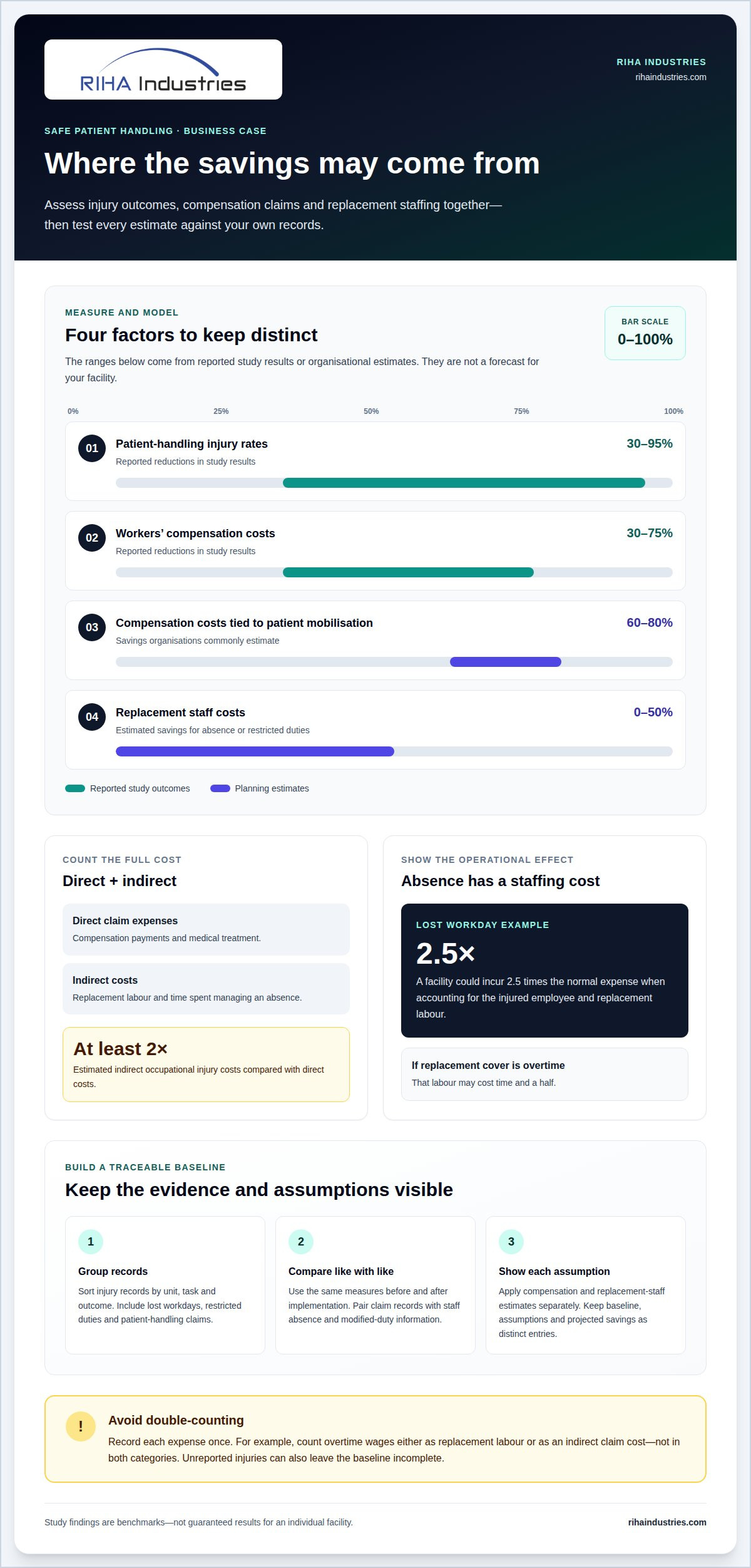
Review worker injury and compensation outcomesStart by grouping injury records by unit, task and outcome, including lost workdays and restricted duties. Compare the same measures before and after programme implementation, and include compensation claims linked to patient handling. Reported reductions in patient-handling injury rates range from 30-95%, while workers’ compensation costs range from 30-75%. Treat these as study results, not an assumed result for your facility.Also examine reporting patterns: unreported injuries can leave the baseline incomplete. Pair claim records with staff absence and modified-duty information to see whether recorded costs reflect the operational impact.
Account for compensation costsList direct expenses for each claim, including compensation payments and medical treatment. Then capture indirect costs, such as replacement labour and time spent managing an absence. Indirect occupational injury costs are estimated at at least twice direct costs. Avoid counting the same expense in both categories. For example, record overtime wages once, whether finance classifies them as replacement labour or an indirect claim cost.This range illustrates potential exposure, but it is not a current local claim estimate. Use your own records to calculate the baseline.
Estimate compensation and replacement-staff savingsApply a cautious reduction scenario to patient-handling compensation costs, then calculate staffing effects separately. Organisations commonly estimate savings of 60% to 80% on compensation costs related to patient mobilisation. They estimate savings of zero to 50% on replacement staff for employees away from work or on restricted duties. Keep both assumptions visible rather than combining them into one figure.For a lost workday, a facility could incur 2.5 times the normal expense when accounting for the injured employee and replacement labour. If the replacement employee works overtime, that labour may cost time and a half.
Include compensating actions and body mechanics training. Record actions used alongside handling equipment, such as assistance from another staff member or a change in transfer method. Include body mechanics training as a programme activity, but don’t treat training alone as proof that injuries or claims will fall. Compare the cost and outcomes of the full approach with the baseline.
Keep savings assumptions traceable. Show the baseline, selected reduction assumptions and resulting savings as separate entries. For example, apply a compensation reduction to patient-mobilisation claims, then estimate replacement-staff savings from absence and restricted-duty records. This makes each part of the estimate clear to hospital management and helps prevent projected savings from being mistaken for recorded results.
Safe patient handling and mobility programmes
Build the programme around safer patient movement, staff practice and measurable outcomes. In the United States, management should assess benefits, applicable requirements, practical barriers and tracking methods together.
Set out programme benefitsIdentify the staff and patient outcomes the programme is designed to improve. Published results report reductions of up to 66% in lost-workday injury rates and up to 38% in restricted workdays. Successful programmes have also reported worker injury reductions of up to 95%. Use these findings to frame possible benefits, not as a forecast for your hospital.Include patient outcomes alongside workforce measures. After a Safe Patient Handling programme, patient skin-shearing and pressure-ulcer events improved significantly, with results below the national average. This shows why the case can assess both caregiver safety and patient experience.
Review applicable regulations and standardsMap the federal, state and facility requirements relevant to patient handling before setting programme procedures. In the United States, applicable rules and standards depend on the jurisdiction and activity being addressed. Which states require safe patient handling programmes or policies is a state-specific question, so identify the requirements that apply where the hospital operates.Then record how the programme aligns with relevant standards and internal policies. Avoid treating one facility’s approach as a national requirement or assuming a policy used in one state automatically applies elsewhere.
Assess barriers, risks and limitationsList practical barriers that could prevent staff from using the programme consistently, including access to suitable equipment, training and clear procedures. The Veterans Health Administration introduced programmes in 23 high-risk units across seven Southeast facilities, showing a structured, multi-site approach. Use that example to consider coordination across units, rather than assuming one rollout plan will suit every ward.Also identify risks from inconsistent use, unclear responsibilities or incomplete outcome records. A written procedure cannot demonstrate effectiveness by itself; compare staff practice and recorded outcomes to assess whether the programme is operating as intended.
Plan outcome trackingChoose a baseline and track the same measures after implementation. Include injury rates, lost-workday rates, restricted workdays and patient skin-shearing or pressure-ulcer events. The reported reductions of up to 66% and 38% show why separate workforce measures can reveal different effects.Review results by unit and over consistent reporting periods. Record programme changes alongside the data so management can distinguish an outcome change from a change in reporting or implementation.
Set responsibilities before rollout. Assign responsibility for training records, procedure updates and outcome reviews. For a multi-unit hospital, name the teams responsible for collecting each measure and sharing results with management. This connects daily practice with the programme’s stated aims and gives leaders a clear view of implementation and progress.
Safe patient handling equipment and program costs
Build the cost model around injury exposure, staff turnover, equipment and the people needed to operate the programme. Equipment and staffing needs depend on patient-handling tasks, facility layout, training needs and ongoing maintenance requirements.
Gather injury rates and costsStart with the facility’s recorded injury claims and related costs, then compare consistent reporting periods.Use these figures as an example of tracking, not as a forecast for your hospital. Keep periods and categories consistent so the comparison remains meaningful.
Include direct and indirect injury costsSeparate direct claim expenses from wider operational effects. Direct costs can include workers’ compensation and medical treatment; indirect effects can include staff time spent managing an incident and arranging coverage. Indirect occupational injury costs are estimated at at least twice direct costs, so a model limited to claim payments can understate the potential burden.Prevent double-counting. If replacement overtime is recorded under staffing, don’t add the same expense again as an indirect injury cost.
Estimate turnover and replacement costsInclude recruitment and training when estimating the effect of staff turnover. These figures represent different estimates and should not be combined as though they describe one calculation.Model the impact using your facility’s turnover records and recruitment processes. Keep injury-related absence separate from permanent departures.
Identify equipment and staffing needsList the handling tasks the programme must support, then map equipment needs to those tasks and the facility environment. Include implementation, training, maintenance and repair in the cost model. Staffing plans should identify who coordinates equipment use, supports training and reviews programme records.For example, distinguish equipment required for patient transfers from equipment used to move beds. Avoid assuming that one equipment type or staffing arrangement suits every unit.
Make replacement assumptions explicit. Estimate recruitment, training and temporary coverage separately, using the facility’s own records. A healthcare organisation reduced strain injury costs by 46% from January-October 2024 to January-October 2025, while claims fell from 40 to 23. Present the two measures separately; cost changes and claim counts are related, but not interchangeable.
Using published studies to justify an investment
Use published hospital examples to show how safe patient handling investments have produced measurable results. Compare their scope and outcomes with your proposed programme before applying any figures to your own forecast.
Compare hospital return-on-investment case studiesStart with examples that report both investment and outcomes. For instance, in a well-documented acute care facility evaluation, ceiling lifts paid for themselves in just 15 months through reduced injury costs.Compare what each study counted, including programme costs and savings categories. A hospital’s size, implementation and measurement period affect how closely its results resemble your own.
Separate direct savings from wider programme value. A Stanford risk-management study published in the April 2011 issue of the Journal of Healthcare Risk Management found the programme’s total value, including harder-to-quantify benefits, exceeded twice the value of reduced workers’ compensation costs and lost or restricted workdays alone. This supports considering broader outcomes, not only claim reductions.Stanford University Medical Center’s analysis also attributed roughly half of its safe lifting programme savings to workers’ compensation and roughly half to reducing patient pressure ulcers. Consider how patient and staff outcomes can contribute to a programme’s value, while keeping each category distinct in your own calculations.
Assess return on investment and paybackCalculate payback by comparing the initial investment with savings over time. Sacred Heart Medical Center’s 15-month payback provides one hospital example, while the Veterans Health Administration programme recovered its initial capital investment in approximately four years. Reported return-on-investment periods for safe patient handling programmes range from 1-3 years.Present those periods as reference points, not a promise. Different programme costs, savings definitions and follow-up periods can produce different payback estimates.
Match each study to your investment question. Use this example when considering results across multiple units, but don’t transfer its annual savings directly into a hospital forecast with a different scope.For each case study, record the organisation, investment, timeframe, outcomes and included benefits. This makes differences visible and helps management judge whether the comparison is relevant.
Explain assumptions alongside the figures. A published result can support an investment proposal, but it cannot replace a local model. Show how projected savings depend on implementation, equipment use and staff participation. A culture that supports consistent safe handling practices may shape whether expected benefits are realised, so describe those operational conditions alongside the financial return.
Elements of a safe patient handling and mobility business case
Give hospital management a decision-ready proposal by connecting the safety need, full programme costs and measurable outcomes. Structure the case so each forecast has a clear basis and timeframe.
Define the decision and scope. State which patient-handling tasks, units and workers the proposal covers. Separate the immediate decision, such as funding equipment for a specific unit, from later programme expansion. A clearly bounded scope helps management assess what the investment will deliver and which costs belong in the initial approval.
Set out the baseline and intended outcomes. Use the facility’s recorded injury claims, lost workdays, restricted duties and replacement staffing as starting measures. Identify patient outcomes the programme will track, too. For example, include pressure-ulcer events if they are relevant to the proposed intervention, then specify how management will compare outcomes after implementation.
Show the complete cost picture. Itemise equipment, implementation, staff training, maintenance and programme administration. Include the staff time needed to coordinate use and review results. Project programme costs and benefits over 5 years, as a longer view can show how initial expenditure relates to ongoing costs and potential savings.
Make assumptions visible. Separate observed savings from forecast benefits, and identify the baseline, time period and categories behind each estimate. This frames injury costs in operational terms without treating reimbursement as a direct saving.
Explain timing and design implications. State when expected costs occur and when projected benefits may accrue. A decision analysis for a safe patient handling and mobility programme generally costs much less than 1% of programme cost. The cost of adding ergonomics and safety features after construction or equipment purchase increases by 100% compared with including them during design or purchasing.
Present decision points and accountability. Identify who will oversee implementation, maintain outcome records and report progress to management. State what the organisation will review at each stage, including whether actual costs and outcomes align with projections. To connect this investment framework with equipment planning, discuss patient transfer system requirements as part of the proposal development.
Stanford analysis estimated reduced staff turnover could increase the total value of its safe patient handling and mobility program from about $4 million to $6.5 million.
RIHA Industries
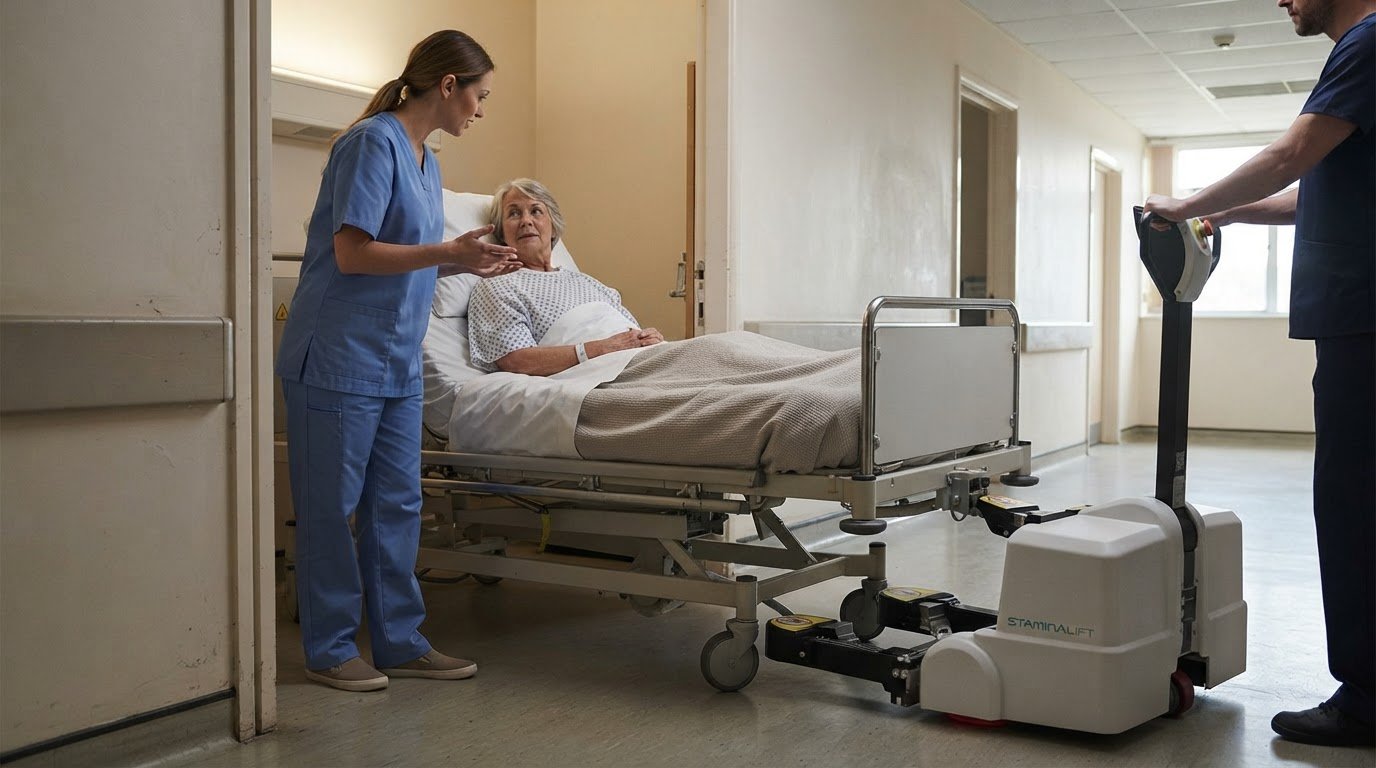
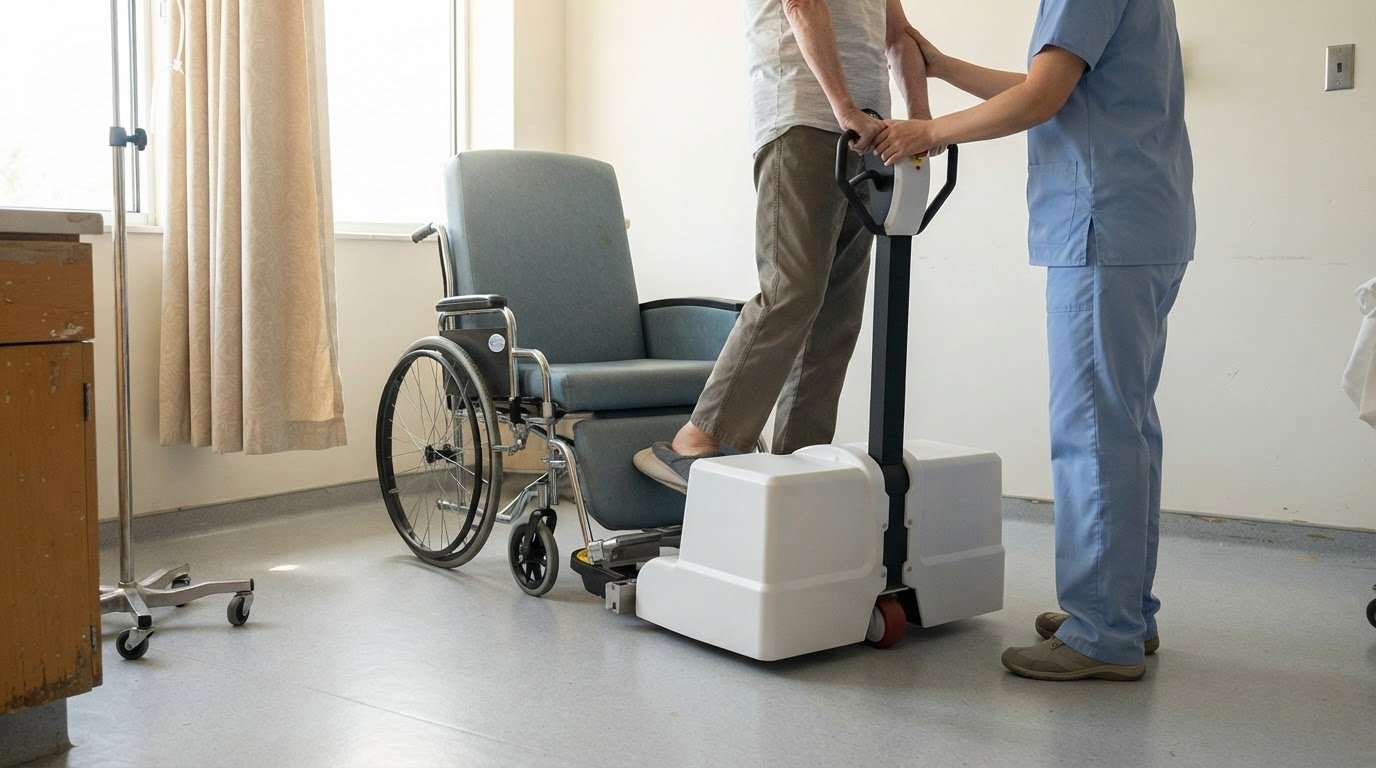
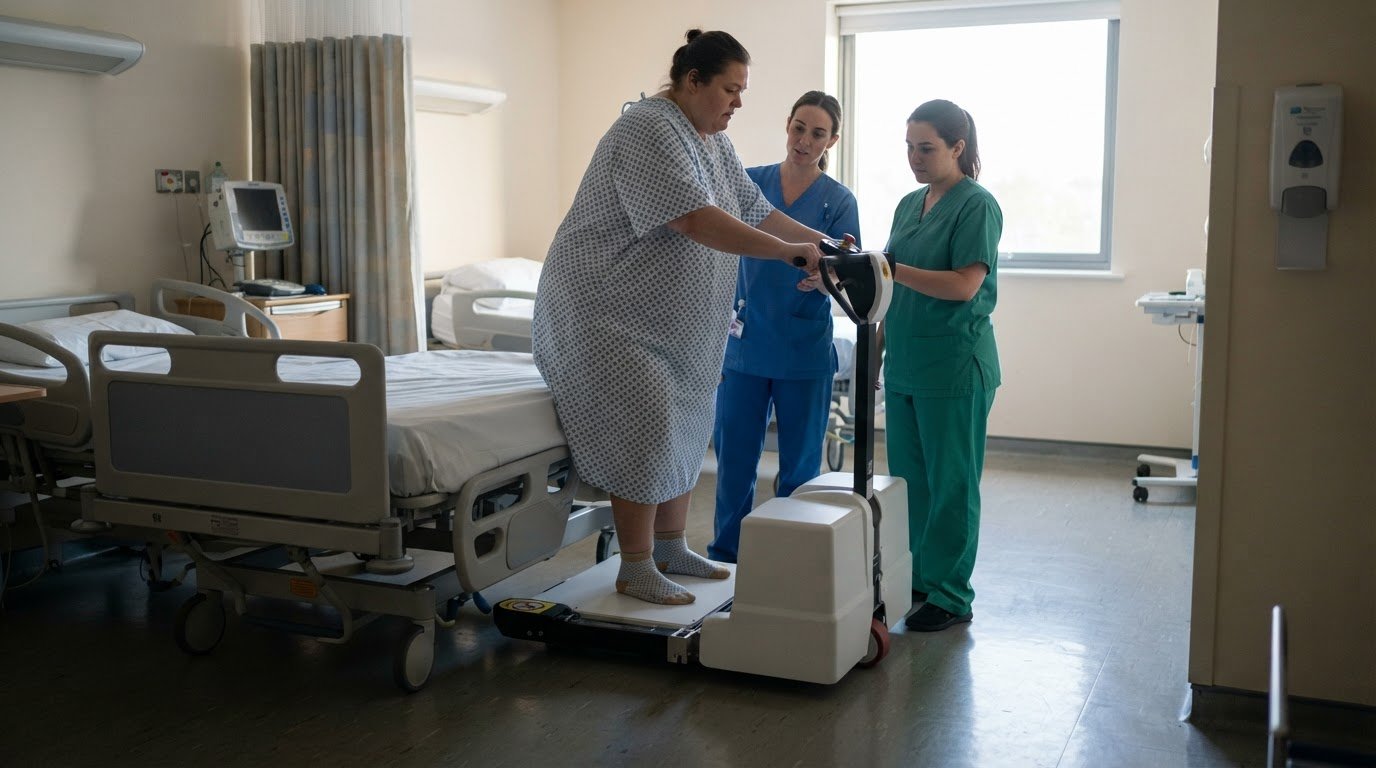
RIHA Industries helps hospitals consider patient transfer systems and bed movers as part of equipment planning for safe patient handling. Its StaminaLift Transfer System 5000 and StaminaLift Transfer System 6000, alongside the StaminaLift 2100 Bed Mover, are designed to integrate with existing hospital equipment. Easi Rider tugs assist staff with moving heavy loads.
Consider these equipment categories when your investment case identifies patient transfers or bed movement as operational needs. Matching proposed equipment to those tasks connects the business case with practical requirements in your facility.
Contact RIHA Industries to discuss your patient-handling equipment requirements.
Turn the investment case into a practical next step
A safe patient handling business case becomes actionable when management can see how the proposed investment will move from approval into daily practice. The next step is to connect the decision with operational ownership: clarify who will coordinate implementation, how staff feedback will inform changes, and when leaders will review progress. This keeps the focus on making the programme workable, not simply securing approval.
Equipment planning can also translate the proposal into practical requirements for patient transfers and bed movement. RIHA Industries offers solutions for these needs, including patient transfer systems and bed movers. Discussing the tasks your facility needs to support can help shape the next planning conversation.
Contact RIHA Industries to discuss options for your patient-handling requirements. A clear next step can help your team move forward with care and confidence.
Frequently Asked Questions
What is a safe patient handling programme in healthcare?
A safe patient handling programme is a coordinated approach to moving and supporting patients while reducing hazardous manual tasks. It brings together procedures, appropriate equipment, staff instruction and clear roles. For example, before a bed-to-chair transfer, staff can assess the patient’s mobility, select a suitable method and coordinate the movement. This helps make safe handling part of routine care rather than an isolated equipment decision.
What are the financial benefits and ROI of safe patient handling programmes?
Financial benefits may include reduced injury-related expenditure and less spending on staff cover. Assess return on investment by comparing the programme’s net benefits with its full investment, including implementation and ongoing costs. Keep measurable financial savings separate from benefits that are harder to value, such as improved staff confidence. Showing both categories helps management understand the financial calculation without treating broader benefits as cash savings.
How much do patient lifts and safe handling equipment cost?
The price depends on the case and is provided after a quote request; key factors include equipment type, configuration, intended application and maintenance requirements. A patient transfer system and a bed mover serve different tasks, so equipment choice affects the proposal. For a meaningful budget, define the tasks and operating requirements first, then assess appropriate equipment and any ongoing support needs.
What evidence shows safe patient handling improves patient safety and outcomes?
Published evidence can show patient outcomes when studies define measures clearly and report results separately from staff injury data. Look for a stated baseline, consistent event definitions and a clear follow-up period. For example, a study tracking transfer-related patient events should explain how those events were recorded. These details help hospital leaders judge whether the findings are relevant to their own care setting.
How do hospitals calculate the business case and payback period for patient lift equipment?
Hospitals estimate payback by tracking cumulative programme costs and savings over consistent reporting periods, then identifying when savings offset the initial investment. Include equipment, implementation and ongoing operating costs in the calculation. A safe patient handling business case can also distinguish capitalised expenditure from recurring costs; capitalised items have useful lives greater than 1 year. State assumptions clearly so management can see how the estimate was developed.