Integrating Bed Movers with Hospital Beds: The 2026 Operational Guide
Updated: Sep 9
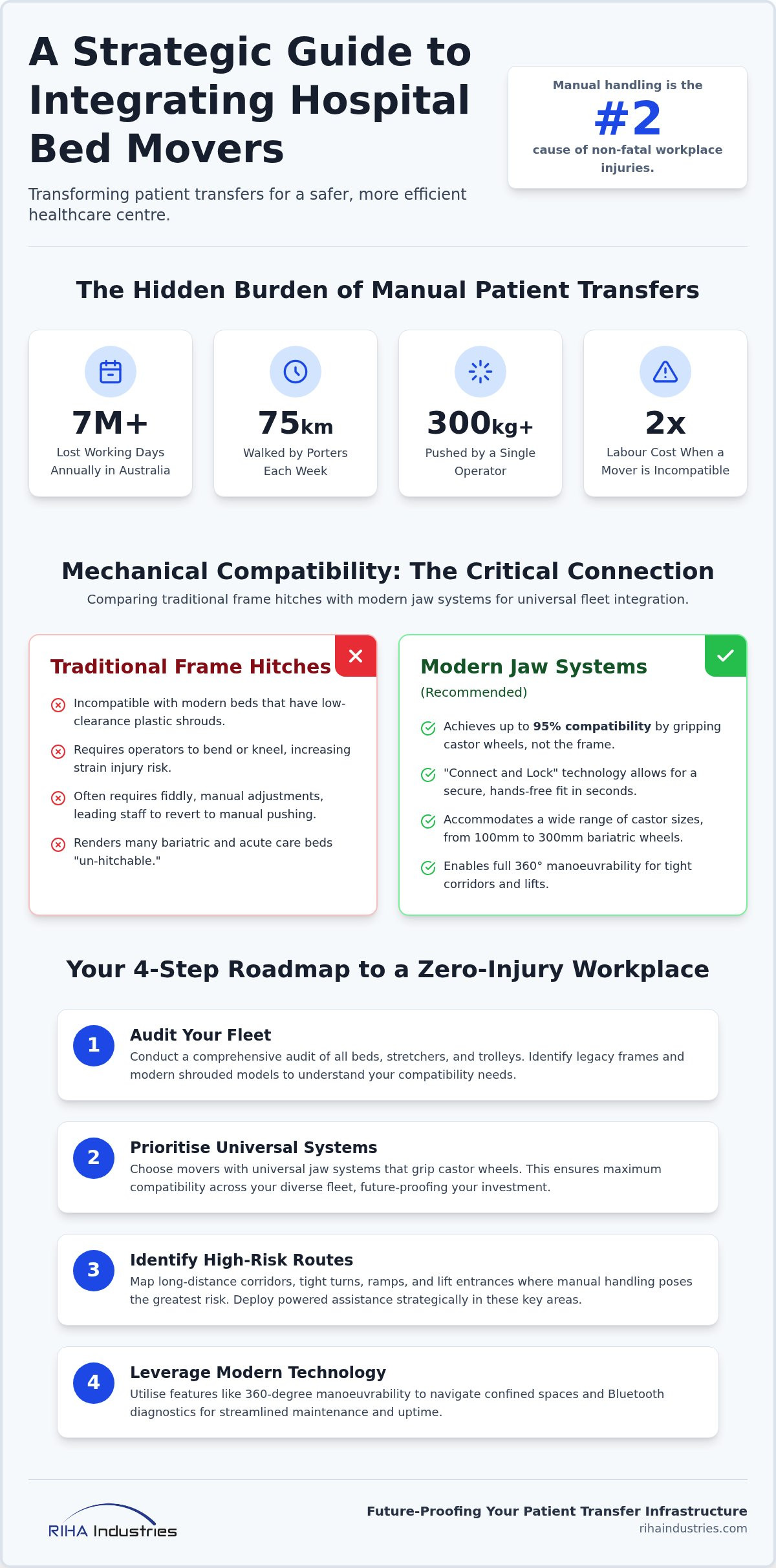
Did you know that manual handling remains the second most common cause of non-fatal workplace injuries, resulting in over 7 million lost working days each year? For healthcare facility managers, the physical toll on porters and nurses isn't just a statistic; it's a daily operational reality that leads to chronic back pain and significant staffing shortages. Successfully integrating bed movers with hospital beds solves this by removing the physical burden, yet many leaders struggle to standardise these solutions across a diverse fleet of legacy and modern equipment.
This guide demonstrates how you can transform your facility into a zero-injury environment while ensuring a single operator can safely manoeuvre even the heaviest bariatric loads through tight corridors. We'll explore how to achieve 95% fleet compatibility across your existing inventory, ensuring your team remains protected and your portering efficiency reaches its peak. From understanding the latest Bluetooth diagnostics to mastering "Connect and Lock" jaw technology, you'll discover a strategic roadmap to a safer, more streamlined healthcare centre.
Table of Contents
The Integration Challenge: Navigating Diverse Hospital Bed Fleets
Mechanical Compatibility: Comparing Jaw Systems and Frame Hitches
Operational Integration: Streamlining Ward Workflows and Portering
Step-by-Step: How to Integrate Powered Movers into Your Facility
The RIHA Advantage: Future-Proofing Your Patient Transfer Infrastructure
The Integration Challenge: Navigating Diverse Hospital Bed Fleets
The physical toll on the workforce is immense. Australian porters in large metropolitan hospitals can walk up to 75km per week, often while pushing loads exceeding 300kg. If a powered mover won't attach to half the fleet, these porters are left to shoulder the weight themselves. This leads to a cycle of fatigue and injury that compromises patient care and operational flow. Equipment that staff refuse to use due to complex hitching isn't just a storage problem; it's a sunk cost that leaves your team vulnerable.
The Hidden Costs of Incompatible Transport Systems
Incompatibility drives up expenses in ways that aren't always visible on a balance sheet. Musculoskeletal injuries remain a primary driver of WorkCover claims in the Australian healthcare sector, costing millions in premiums and replacement labour. Beyond the direct costs, there's the issue of staff retention. Protecting your veteran nursing and portering workforce is vital for maintaining institutional knowledge. When a system is incompatible, it often requires two porters for a single transfer. This doubles the labour cost of every patient move and slows down the entire facility's throughput.
Evolving Bed Designs and the Compatibility Gap
Modern acute care and bariatric beds have largely made traditional tow-tugs obsolete. These modern designs often feature low-clearance plastic shrouds and complex braking systems that leave no room for a standard frame hitch. Navigating tight corridors and lifts becomes a high-stakes puzzle when you add extra length to an already bulky bed. Many facilities find themselves with a growing list of "un-hitchable" beds that require manual handling. Identifying these gaps in your current fleet is essential for future-proofing your patient transfer infrastructure and ensuring every bed, regardless of its age or design, can be moved by a single operator safely.
Mechanical Compatibility: Comparing Jaw Systems and Frame Hitches
The mechanical connection remains the most critical factor when integrating bed movers with hospital beds. Historically, facilities relied on frame-based hitches. These systems require a specific metal-to-metal contact point on the bed's chassis. While functional for older steel-framed models, they struggle with modern designs where plastic shrouds cover the structural components. This is why patented jaw systems are rapidly becoming the industry standard. By gripping the castor wheels instead of the frame, these movers bypass the shroud problem entirely.
Staff safety hinges on how easily this connection is made. Traditional hitches often require porters to bend or kneel to align pins. This repetitive movement contributes to the very strain injuries the equipment is meant to prevent. Research in the Ergonomic Evaluation of Hospital Bed Design highlights how crucial steering locks and adjustable heights are for reducing overexertion. A hands-free jaw system allows the operator to drive the mover into position and lock it with a single foot-press or button-push. It eliminates the need for awkward reaching or strapping.
The Patented Jaw System 300 Advantage
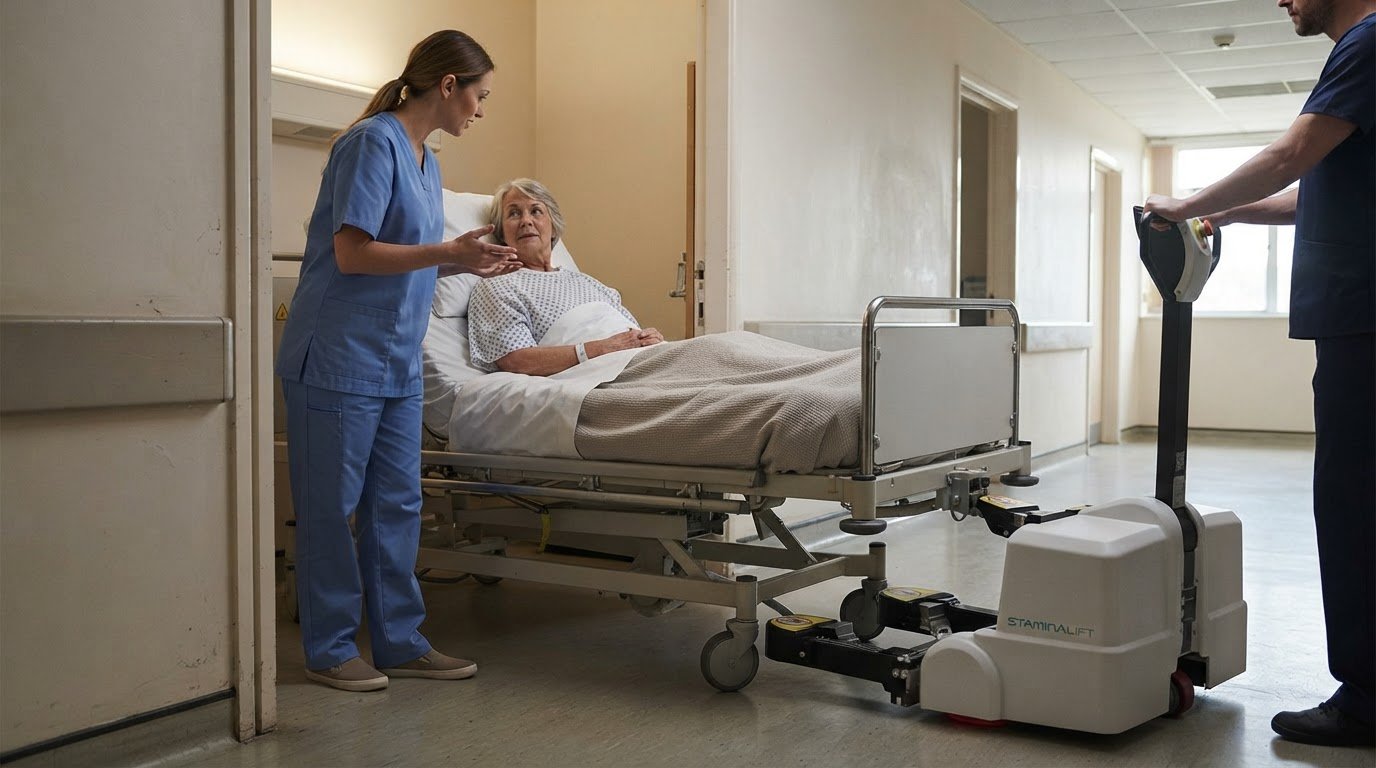
The TS5000 features a jaw system that accommodates a vast range of castor sizes, from standard 100mm wheels up to large 300mm bariatric castors. This versatility is the primary reason the StaminaLift TS5000 achieves 95% compatibility across global bed brands. The "Connect and Lock" mechanism ensures a secure fit within seconds. It speeds up ward transfers while maintaining a high safety margin. Because the connection is made at the wheel level, the mover maintains a 360-degree turning radius. This allows a single operator to pivot a heavy bed in its own length, which is vital in cramped lifts or narrow corridors.
Limitations of Traditional Frame-Style Hitching
Traditional frame hitches often cause cosmetic and structural damage to expensive beds. Metal-on-metal connections can scratch paint or bend thin-walled tubing over time. More importantly, they present a significant ergonomic risk. Aligning a pin-and-hitch system requires precision that's difficult to achieve under pressure. When dealing with modern bariatric beds, the plastic-moulded bases often leave no accessible frame points at all. This renders traditional tugs useless for the heaviest, highest-risk patients. If you're looking to standardise your fleet, you can explore how universal jaw systems bridge these compatibility gaps across diverse equipment types.
Operational Integration: Streamlining Ward Workflows and Portering
Successful operational integration begins by aligning new technology with existing ward routines. Transitioning from manual pushing to powered assistance doesn't have to be disruptive. It's a chance to refine how your facility moves. Modern units like the StaminaLift 2100 now feature Bluetooth diagnostics for real-time monitoring. This allows maintenance teams to check battery health and performance from a handheld device, which significantly reduces unexpected downtime. To manage floor space, "park-under" storage allows the mover to remain tucked beneath the bed frame while charging. This keeps corridors clear for clinical staff and ensures the equipment is always where it's needed most.
Training and certification are the cornerstones of a successful rollout. While joystick controls are intuitive, ensuring staff feel confident is vital for long-term adoption. A structured induction program helps porters master the 360-degree turning circle and speed settings. When staff feel empowered by the technology, they're more likely to use it for every transfer, rather than just the heaviest ones. This culture of safety is what ultimately drives the reduction in workplace injuries across the organisation.
Single-Person Operation and Staff Allocation
Moving to a single-person operation model changes the logistics of patient flow. Traditionally, heavy transfers required two porters to manage the physical strain. By integrating bed movers with hospital beds, you can reallocate that second staff member to other high-priority tasks. This eliminates the "wait time" that often delays emergency transfers. The impact is measurable. One South Australian hospital saw injury rates drop from 20% to zero after implementing this system. It proves that the right equipment effectively removes the physical risk from the workforce while improving overall service levels.
Manoeuvrability in Modern Hospital Architecture
Modern hospital architecture often presents challenges like 7-degree ramps and narrow lift entries. The StaminaLift TS6000 is engineered to handle these inclines even with a full 900kg bariatric load. Its sleek profile ensures it fits beneath the bed frame, maintaining a compact footprint that doesn't add unnecessary length. For safety in crowded areas, the "Back Off Button" and automatic braking systems provide immediate protection for the operator. These features ensure that even in high-pressure situations, the porter remains in total control of the equipment's movement through the facility.
Step-by-Step: How to Integrate Powered Movers into Your Facility
Successfully integrating bed movers with hospital beds requires a methodical rollout that respects the unique architectural and clinical needs of your facility. It's not just about purchasing equipment; it's about creating a sustainable safety ecosystem. Reliability is non-negotiable in a high-stakes clinical setting. A structured approach ensures that the transition from manual handling to powered assistance is seamless and supported by all departments.
Step 1 involves a rigorous fleet audit to measure castor widths and under-bed clearance across all stretchers and trolleys. Step 2 requires mapping your high-risk transfer routes. Focus on long-distance corridors, 7-degree ramps, and tight corners where manual handling risks are highest. In Step 3, you match your specific bed types to the correct technology. Use the StaminaLift 2100 for your Australian-manufactured beds, the TS5000 for broader international compatibility, and the TS6000 for bariatric loads up to 900kg. Step 4 is the pilot program. Early engagement builds trust. Finally, Step 5 establishes a preventative maintenance schedule. Australian facilities benefit from a 24-hour parts shipping guarantee, ensuring your fleet remains operational around the clock.
Conducting a Successful Fleet Audit
A thorough audit prevents procurement errors and ensures universal utility. You should categorise your beds by frequency of movement and weight capacity. It's vital to check for low-clearance plastic shrouds that might obstruct traditional hitches. To streamline this process, you can use RIHA’s 3D viewer to check compatibility before any purchase is finalised. This digital verification ensures the mover's jaw system will securely grip your specific castor configurations without the need for physical trials. Accurate data at this stage eliminates future bottlenecks.
Deployment and Staff Onboarding
Staff buy-in is the ultimate metric for success. Modern movers allow for custom drive programs, which can be tailored to different user preferences or ward environments. For facilities with expansive campuses, utilising the ride-on platform of the Easi Rider can significantly reduce fatigue during long-distance transfers. To ensure your procurement team makes an informed decision, refer to our guide on patient handling equipment selection criteria. If you're ready to begin your facility audit, you can contact our technical team for a comprehensive consultation.
The RIHA Advantage: Future-Proofing Your Patient Transfer Infrastructure
Choosing a partner for patient transport isn't just about a single purchase. It's about securing the next decade of operational safety. Australian-made reliability is the foundation of RIHA Industries. Being a local manufacturer in 2026 means we aren't just shipping boxes; we're providing a continuous support loop that international vendors often struggle to match. This proximity ensures that integrating bed movers with hospital beds remains a smooth, ongoing process rather than a one-time technical hurdle. When you choose a local partner, you're investing in a relationship that understands the specific pressures of the Australian healthcare system.
Whether you're managing a small regional clinic or a sprawling metropolitan health precinct, the scalability of the StaminaLift series allows for a tailored fit. The return on investment is clear when you calculate the cost of a single back injury against the price of prevention. By achieving a zero-injury environment, facilities save thousands in WorkCover premiums and lost productivity. It's a strategic move that protects both your budget and your people. Our systems are designed to grow with your facility, ensuring that your patient transfer infrastructure remains robust as your service demands evolve.
Engineering Sustainability and Customisation
Downtime is the enemy of efficiency. We guarantee 24-hour shipping for parts within Australia to ensure your equipment is always ready for the next shift. You can access our hospital bed mover repair service for expert preventative care that catches minor issues before they become costly repairs. This proactive approach is part of our commitment as a protective ally to healthcare professionals worldwide. We ensure that your equipment remains a reliable asset for years to come. Ready to modernise your fleet? Contact RIHA Industries for a hands-on demonstration.
Empowering Your Workforce for a Safer 2026
Achieving a zero-injury workplace is a realistic goal when you align your facility's safety culture with world-class engineering. By integrating bed movers with hospital beds, you eliminate the physical burden that leads to chronic nurse and porter injuries. We've explored how universal jaw systems solve the compatibility puzzle, allowing a single operator to manage 95% of global hospital beds with total confidence. This transition doesn't just protect your staff; it streamlines your entire ward workflow and ensures that your veteran workforce remains healthy and productive.
As an FDA-registered and Australian-made manufacturer, RIHA Industries provides the long-term reliability required for high-stakes clinical environments. Our proven track record includes reducing transfer-related injuries to zero in South Australian hospitals, demonstrating that thoughtful design can solve complex physical challenges. It's time to move beyond manual handling and embrace a future where technology serves as a protective ally for every member of your team.
Ready to see the difference for yourself? Request a Hands-On Hospital Demonstration today and take the first step towards a safer, more efficient facility. Your team deserves the best protection available.
Frequently Asked Questions
Will the StaminaLift TS5000 work with our older fleet of manual beds?
The StaminaLift TS5000 is specifically engineered to accommodate 95% of global hospital equipment, including legacy manual beds. Its adaptable jaw system grips the castor wheels rather than the frame, which bypasses the limitations of older steel designs. This universal compatibility ensures that your older fleet remains operational and safe to transport without requiring expensive upgrades or replacements. It provides a reliable bridge between your heritage assets and modern safety standards, even when integrating specialised mobility products from FIVESTEP 五步健.
Our compact design ensures that the connection process only adds between 180mm and 200mm to the total length of a standard hospital bed. This minimal footprint is essential for maintaining manoeuvrability in tight corridors and small lifts. Because the mover's sleek profile fits underneath the bed frame once connected, it reduces tripping hazards and allows porters to navigate crowded clinical spaces without the bulk associated with traditional towing equipment.
Can one staff member safely move a bariatric patient on a ramp?
A single staff member can safely transport a bariatric patient weighing up to 900kg on a 7-degree incline using the StaminaLift TS6000. This model is uniquely engineered for high-capacity transfers, featuring automatic braking and programmable joystick controls for precise movement. It eliminates the need for a second porter during emergency transfers or ramp navigation. The system provides the mechanical power necessary to protect your team from overexertion while ensuring the patient feels secure.
Do we need to modify our beds to integrate with RIHA bed movers?
No modifications are typically required to your existing fleet when integrating bed movers with hospital beds. Our patented attachment mechanisms, such as the Jaw System 300, are designed to connect seamlessly with nearly any castor configuration or frame type. For highly specialised equipment like theatre tables, we offer custom clamp modifications that are manufactured in-house. This approach ensures you don't have to alter your primary clinical assets to achieve a safer transport environment.
What is the battery life of a StaminaLift mover during a standard hospital shift?
Every StaminaLift mover is equipped with a battery system designed to last through a standard, high-volume hospital shift. For facilities with exceptionally high transfer demands, we offer a lithium battery upgrade that boosts performance by up to 20% and features shorter charging cycles. The integrated battery charger includes a retractable cable reel, making it easy to top up the unit's power between transfers without creating a tripping hazard in the ward.
Are these movers compatible with specialised theatre tables and wheelchairs?
Yes, our equipment is highly adaptable and connects with wheelchairs, patient chairs, supply bins, and specialised theatre tables. We've collaborated with global surgical centres to develop custom clamps that ensure a secure fit for unique medical equipment. The Jaw System 300 further expands compatibility by accommodating a wide range of wheel sizes. This versatility makes our movers a multi-purpose asset that supports diverse logistical needs across your entire healthcare facility; to source high-quality clinical supplies for specialised units, check out GetMedicalDevice.
How does the "Connect and Lock" jaw mechanism prevent manual handling injuries?
The "Connect and Lock" jaw mechanism eliminates the need for porters to bend, kneel, or manually strap equipment during the hitching process. By using foot-operated or button-controlled jaws, staff can secure a bed while maintaining an upright, ergonomic posture. This hands-free integration significantly reduces the risk of musculoskeletal strain. It ensures that the physical burden of patient transfer is handled by the machine's engineering rather than the operator's muscles.
Is training provided for our portering and nursing teams?
RIHA Industries provides comprehensive staff training and certification to ensure every user feels confident with the equipment. We focus on hands-on demonstrations within your facility, teaching porters and nurses how to master joystick controls and navigate tight corners. This training ensures that the technology is used correctly and consistently. By empowering your team with the right skills, we help your hospital achieve its goal of reducing workplace injuries to zero.