Motorised Equipment for Hospital Porters: Improving Safety and Patient Flow in 2026
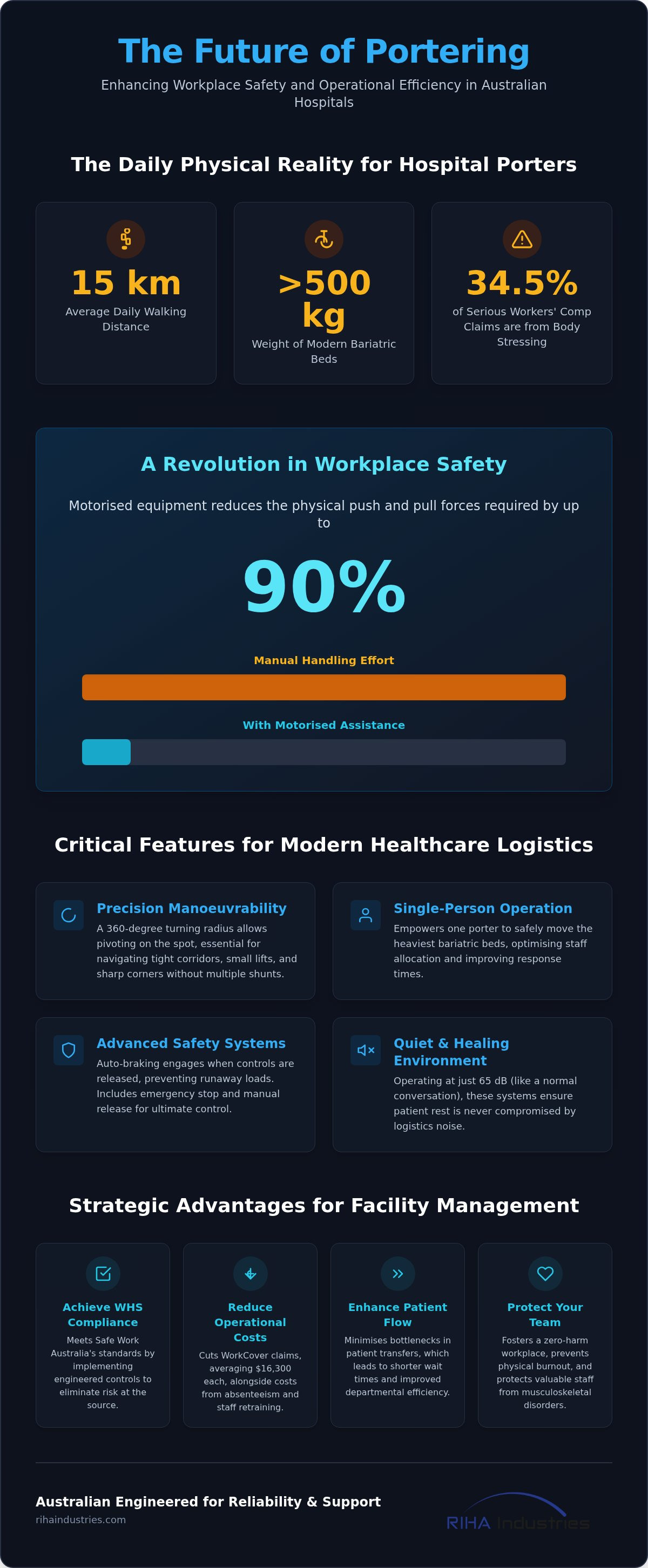
Body stressing accounts for 34.5% of all serious workers' compensation claims in Australia, a statistic that highlights the immense physical pressure placed on your frontline staff. When porters are required to walk up to 15 kilometres a day while pushing beds that can weigh over 500 kilograms, the risk of injury is an operational certainty. Integrating motorised equipment for hospital porters is no longer a luxury; it is a necessary evolution for facilities facing rising WorkCover costs and chronic staff shortages. You know that a tired, injured team cannot provide the seamless patient flow your hospital requires to function at its peak.
This guide demonstrates how the latest motorised portering equipment reduces workplace injuries, streamlines patient transfers, and protects your healthcare team from physical burnout. We will explore how these Australian-made solutions can reduce physical exertion by 90% and navigate tight corridors with a 360-degree turning radius. You will learn how to achieve a zero-harm workplace while extending the life of your existing equipment through smarter, safer movement technology that prioritises the well-being of every staff member. By the end of this article, you will understand how to bridge the gap between mechanical capability and human impact.
Table of Contents
The Physical Reality of Portering in Australian Hospitals
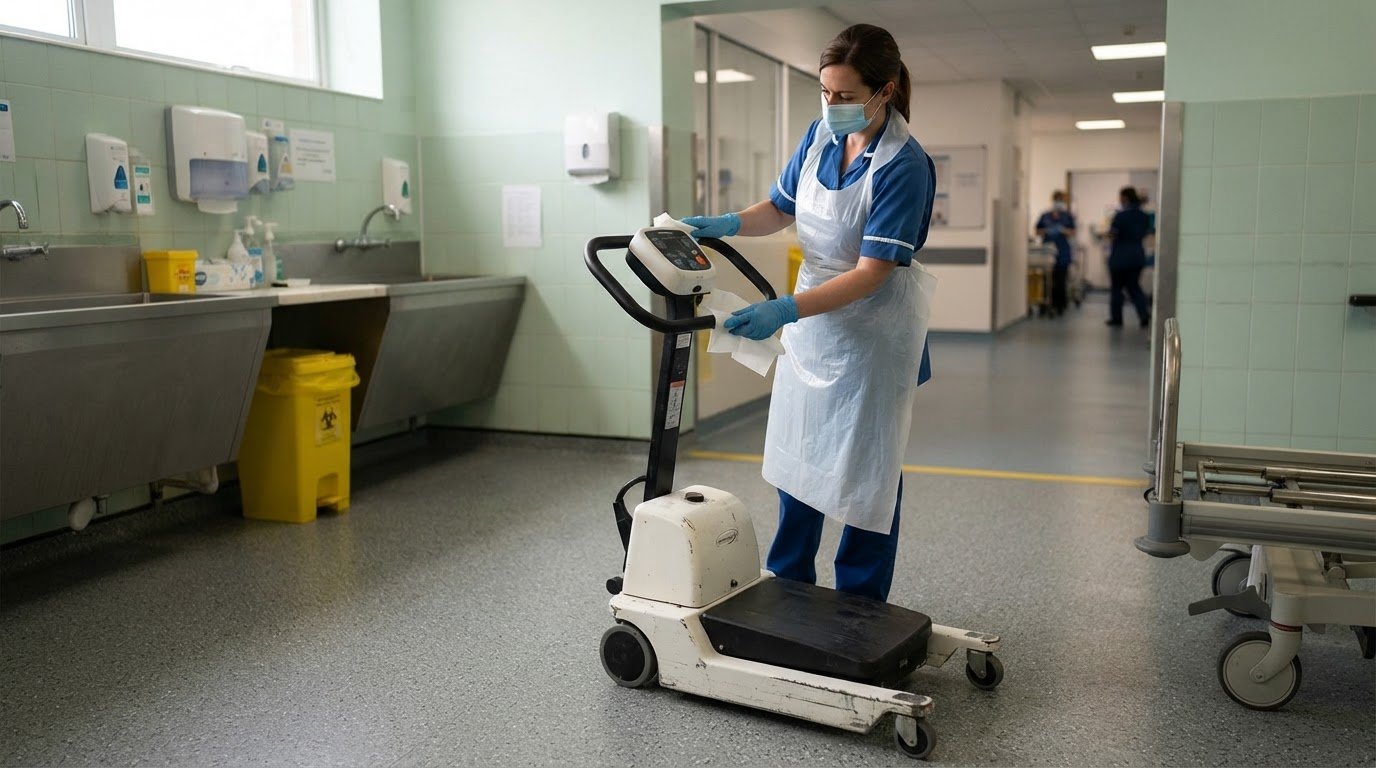
Hospital porters serve as the logistics backbone of the Australian healthcare system, ensuring that patients, diagnostic samples, and life-saving equipment reach their destination on time. In a modern facility, this role is far more than simple transport; it's a high-pressure discipline that requires constant movement across sprawling hospital campuses. On average, a porter covers 15 kilometres every single shift. When you combine this distance with the physical force required to push modern bariatric beds and equipment, which can weigh over 500 kilograms, the strain becomes unsustainable. By 2026, the sheer volume of patient transfers means that relying on manual trolleys or standard wheelchairs is no longer a viable strategy for maintaining flow or protecting staff.
The Hidden Costs of Manual Handling
The financial impact of manual handling extends far beyond the immediate pain of an injury. When a porter is sidelined by a strain, the hospital faces a cascade of expenses including WorkCover claims, which average $16,300 for serious claims in Australia. Musculoskeletal disorders (MSDs) are defined as injuries or pain in the body's joints, ligaments, muscles, nerves, tendons, and structures that support limbs, neck and back, often caused by repetitive or forceful movements. Staff absenteeism and the high cost of retraining new personnel create significant budget leaks. Most importantly, every injured staff member represents a bottleneck in patient flow, leading to longer wait times and reduced departmental efficiency.
Regulatory Pressures and WHS Compliance
Safe Work Australia has set rigorous standards for manual handling, moving the focus away from simple administrative controls like lifting technique training. The current shift emphasises engineered controls, such as the implementation of motorised equipment for hospital porters, as a primary method of risk elimination. Under the Work Health and Safety (WHS) Act, facility managers have a clear duty of care to provide tools that prevent injury rather than just managing it after the fact. Meeting 2026 TGA reporting requirements also means that facilities must be more transparent about equipment safety and performance. Investing in motorised equipment for hospital porters isn't just about efficiency; it's about meeting a legal and ethical obligation to ensure a zero-harm environment for every healthcare worker.
How Motorised Equipment Redefines Workplace Safety
The transition from manual pushing to motorised assistance represents a fundamental shift in how hospitals manage occupational risk. Motorised equipment for hospital porters absorbs up to 90 per cent of the physical effort required to initiate and maintain movement. This reduction is critical because the initial push force is where most spinal injuries occur. By utilising ergonomic joystick controls, operators can guide heavy loads with minimal thumb pressure, which is essential to reduce work-related musculoskeletal disorders among frontline staff. These systems don't just move beds; they protect the long-term health of the people moving them.
Safety in a high-traffic ward requires more than just power. Advanced systems include auto-braking features that engage the moment the controls are released, preventing runaway loads on uneven floors. Emergency stop buttons and manual releases ensure that the equipment remains safe even in the event of a power failure. Furthermore, maintaining a healing environment is vital. At 65 dB, these systems operate at a volume similar to a normal conversation, ensuring that patient rest is never compromised by the sounds of heavy logistics. Facilities looking to modernise their fleet can explore advanced bed moving solutions that integrate seamlessly into existing workflows.
Precision Manoeuvrability in Tight Spaces
Navigating a crowded clinical environment requires surgical precision. A 360-degree turning radius allows operators to pivot on the spot, making it possible to guide a bed into a small lift or around a sharp corner without multiple shunts. This level of control is particularly important when navigating ramps and inclines. Equipment rated for a 7-degree gradient ensures that porters can maintain a steady, controlled pace when moving between different facility levels. The compact design of modern movers ensures they fit inside standard hospital lifts alongside the operator, eliminating the need for separate trips or awkward positioning.
The "Single-Person Operation" Advantage
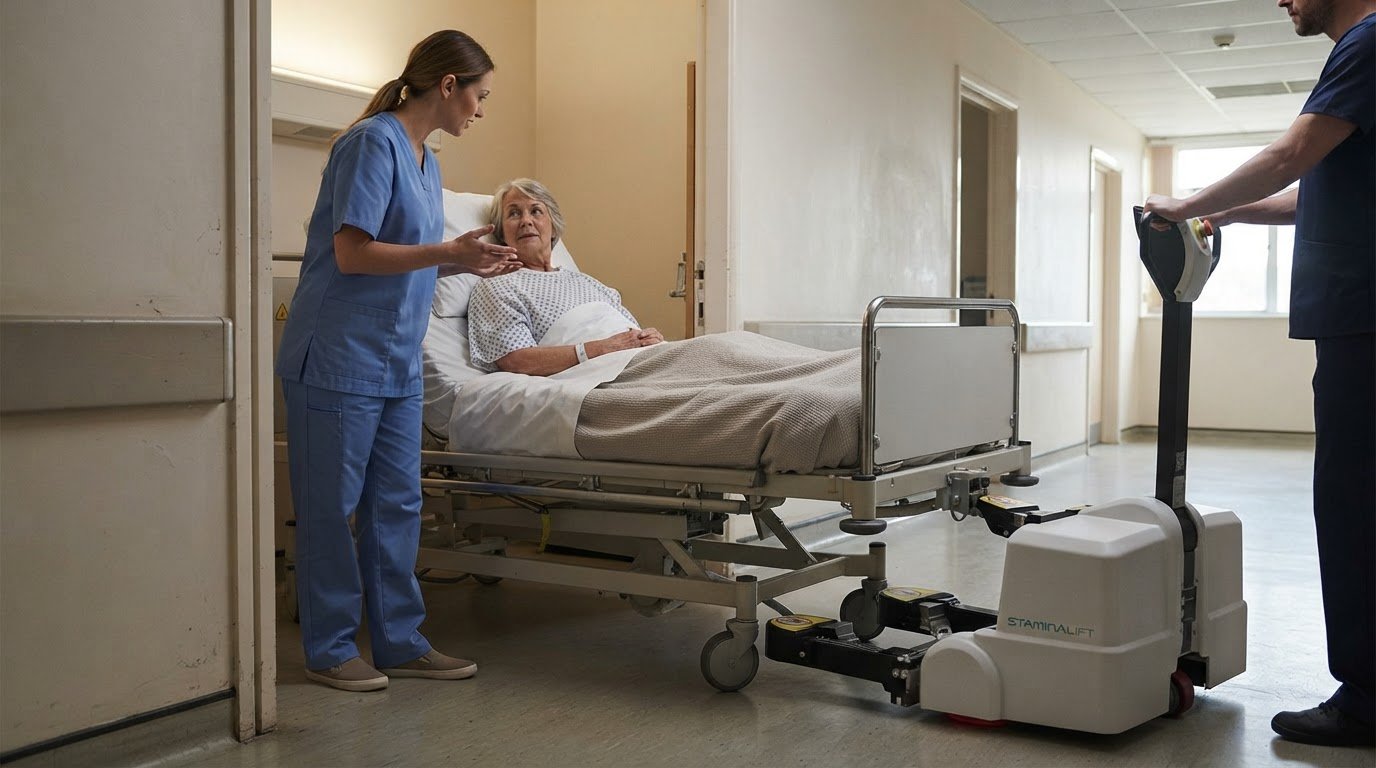
One of the most significant operational gains is the move toward single-person operation. Traditionally, moving a bariatric patient or a fully equipped intensive care bed required two or even three porters to manage the weight and steering. Motorised equipment for hospital porters changes this dynamic by providing the mechanical strength needed for one person to handle loads up to 600kg safely. This allows hospital managers to reallocate precious portering hours to high-value patient care tasks rather than doubling up on transport duties. The "connect and lock" jaw mechanism provides a secure, under-bed attachment that reduces the overall footprint of the transport unit, minimising trip hazards in busy hallways.
Categorising Portering Equipment: Bed Movers vs. Powered Tugs
Selecting the correct tool depends on whether the porter is managing a clinical patient transfer or a logistical haul. Clinical patient transfers require specialised motorised equipment for hospital porters that prioritises patient stability and smooth acceleration. General logistics, such as transporting linen or meal trolleys, demand high-torque tugs designed for heavy, repetitive movement across long distances. Universal compatibility remains the most critical factor in procurement. If a mover cannot connect to your existing fleet of beds and stretchers, it becomes a stranded asset. Modern systems solve this by offering adjustable attachment points that fit almost any brand of hospital furniture, protecting your facility's existing investment.
Recent advancements in battery technology have introduced Lithium upgrades, providing a 20 per cent performance boost over traditional lead-acid alternatives. These batteries are lighter, charge faster, and offer a significantly longer operational life. To support maintenance teams, Bluetooth connectivity is now a standard feature in premium models. This enables real-time diagnostics and battery monitoring via a mobile app. Maintenance staff can identify issues before they lead to downtime, ensuring that the equipment is always ready for the next shift and reducing the risk of mid-transfer failures in high-pressure environments.
Motorised Bed Movers for Patient Transfers
The StaminaLift Transfer System 5000 is the industry benchmark, compatible with 95 per cent of globally available hospital beds and stretchers. For more demanding environments, the StaminaLift Transfer System 6000 addresses the unique challenges of bariatric and acute care transfers. It provides the additional power needed to move loads up to 900kg on inclines. Both models utilise a patented "connect and lock" jaw system. This mechanism secures the bed automatically, which eliminates the need for porters to bend down or manually strap equipment, significantly reducing the risk of back strain and repetitive movement injuries.
Powered Tugs for General Hospital Logistics
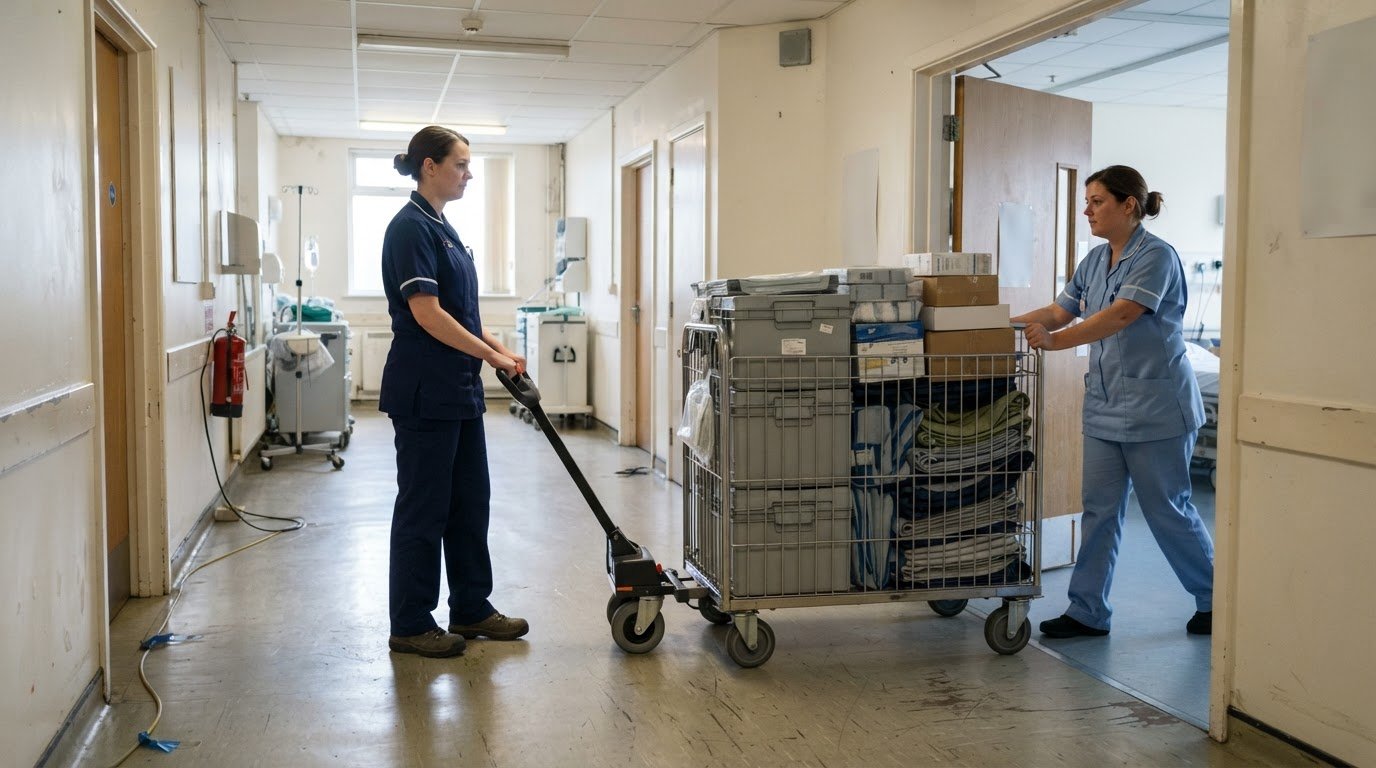
While bed movers are clinical specialists, products like the Easi Rider and Easi Mover are the workhorses of hospital support services. These tugs are designed to handle linen cages, meal trolleys, and gas bottle racks with ease. When selecting between models, distance is the deciding factor. Walk-behind models like the Easi Mover are ideal for short, precise movements in laundry or kitchen areas. For transfers across large campuses, ride-on models like the Easi Rider reduce fatigue over long distances. Versatile hitching systems, including pin hitches and adjustable hitches, ensure these tugs can integrate with varied trolley fleets without requiring expensive modifications to your existing equipment.
Critical Selection Criteria for Portering Teams in 2026
Selecting the right motorised equipment for hospital porters requires a focus on interoperability. Universal compatibility is the primary hurdle for modern hospitals. Many contemporary beds feature complex plastic cladding and low-clearance frames that make traditional clamping difficult. Your equipment must feature adaptable jaw mechanisms that secure these varied designs without damaging the bed's exterior or compromising its structural integrity. If a mover cannot adapt to your existing fleet, it will quickly become an underutilised asset.
Infection control is a non-negotiable priority in clinical environments. High-grade stainless steel and easy-clean surfaces are essential to ensure the equipment survives rigorous sanitisation protocols. Beyond the hardware, staff training and ease of use determine the success of any technology rollout. Intuitive joystick programming allows for custom speed settings and soft-start acceleration. This ensures that even staff with limited technical experience can operate the movers with confidence, which reduces the likelihood of accidents in busy hallways during high-pressure shifts.
Local support remains the final pillar of a successful procurement strategy. When a machine requires attention, waiting weeks for international parts is not an option for a busy hospital. Reliable providers offer comprehensive preventative maintenance contracts and maintain a local inventory of components to ensure 24-hour parts shipping. This level of service is what keeps a portering team operational and ensures that equipment downtime doesn't lead to patient flow bottlenecks.
Future-Proofing Your Equipment Fleet
Choosing FDA-registered equipment provides a guarantee of safety standards that non-regulated alternatives simply cannot match. This certification ensures the device is manufactured under strict quality controls suitable for the healthcare environment. For facilities with legacy or non-standard trolleys, the ability to integrate with 3D-printed custom hitches ensures that no piece of equipment is left behind. Using high-quality hospital porter equipment as your baseline ensures your facility meets the evolving safety expectations of the 2026 healthcare landscape.
Calculating Return on Investment (ROI)
A robust ROI calculation includes more than just the initial purchase price. It factors in the significant reduction of WorkCover premiums and the hidden costs of injury leave. By enabling single-person transfers, hospitals can often see labour savings that pay for the equipment within the first 12 to 18 months. When supported by preventative maintenance and repairs, these machines can easily achieve a service life exceeding 10 years, making them a highly sustainable investment for long-term facility management.
The RIHA Advantage: Australian Engineering for Global Healthcare
Choosing a partner for facility logistics requires more than just a equipment purchase; it's an investment in long-term operational stability. Being "Certified Australian-made" is a core component of the RIHA Industries philosophy, providing a level of supply chain security that imported alternatives can't match. By manufacturing locally in South Australia, we offer a 24-hour global parts shipping guarantee that ensures your motorised equipment for hospital porters stays on the floor where it's needed most. This commitment to local engineering also drives our sustainability initiatives, such as using 3D-printed replacement parts to extend the life of legacy machines and reduce waste.
The real-world impact of this engineering focus is best illustrated through our work with a large South Australian hospital. Before implementing our specialised movers, the facility faced a significant injury rate among its portering staff. Within two years of integrating motorised equipment for hospital porters, injury rates dropped from 20 per cent to zero. This wasn't just a win for workplace safety; it transformed the hospital's patient flow and significantly reduced the financial burden of WorkCover claims. Our national service coverage ensures that this same level of reliability is available to healthcare facilities across the country, regardless of their location.
Innovative Attachment Systems
Precision engineering is evident in our Jaw System 300, which is designed to adapt to the widest range of wheelbases in the industry. Whether you're moving standard ward beds or specialised theatre tables, our attachment systems provide a secure, hands-free connection that serves as a primary safety feature. We also provide custom modifications for unique surgical equipment, ensuring that even the most awkward loads can be moved with a single operator. This universal compatibility means your team can transition between different departments without needing multiple sets of transport tools.
Ongoing Support and Maintenance
Reliability is maintained through a proactive approach to equipment care. We emphasize the role of hospital equipment preventative maintenance as a baseline for operational success. To support rural facilities, we provide 3D online viewers that allow in-house maintenance teams to conduct servicing with expert guidance, even from remote locations. This transparency ensures that every aspect of the product lifecycle is managed with precision. If you're ready to see how these solutions can empower your team, Book a hands-on demonstration at your facility today and experience the difference of Australian-engineered safety.
Empowering Your Team Through Engineered Safety
The physical demands of a 15-kilometre daily walk while pushing half a tonne are no longer a standard your porters should have to endure. By integrating motorised equipment for hospital porters, you're transitioning from reactive injury management to a proactive culture of zero harm. We've seen this transformation firsthand, where a large Australian hospital reduced bed-moving injuries from 20 per cent to zero within just two years.
As an FDA-registered manufacturer that's been Australian-made and owned since 2003, RIHA Industries provides the precision and local support needed to keep your facility moving safely. You can now bridge the gap between mechanical capability and human impact while protecting your most valuable asset: your people. Modernising your fleet isn't just an operational upgrade; it's a commitment to staff well-being and seamless patient flow that will define high-performing hospitals in 2026.
Take the next step toward a safer, more efficient workplace today. Request a personal ROI calculation and product demonstration to see how these solutions fit your specific facility needs. Your team deserves a workplace where safety is engineered into every movement.
Frequently Asked Questions
What is the most important feature to look for in a motorised bed mover?
Universal compatibility and attachment safety are the most critical features to consider when selecting transport technology. If the device cannot securely attach to your existing fleet of beds and stretchers, its utility is severely limited. You should look for patented "connect and lock" jaw mechanisms that eliminate the need for manual strapping or bending. This ensures the equipment can handle the wide variety of wheelbases found in modern Australian hospitals while prioritising operator safety.
Can one person safely move a bariatric patient using motorised equipment?
Yes, motorised equipment for hospital porters is specifically engineered to enable single-person operation even with bariatric loads. The StaminaLift TS6000, for example, is capable of transporting nearly one tonne of weight safely. By providing the necessary mechanical power, these systems allow a single staff member to manage transfers that would traditionally require two or three people. This significantly reduces the risk of strain and frees up resources for other essential clinical tasks.
Do motorised tugs work on hospital ramps and sloped corridors?
High-quality motorised movers are rated for secure use on hospital ramps and sloped corridors. RIHA Industries equipment is designed to navigate a maximum 7-degree incline while under a full load. This capability is supported by automatic braking systems that engage as soon as the joystick is released, preventing any uncontrolled movement. This ensures that porters maintain total control over heavy beds or trolleys even when moving between different facility levels or through older ward wings.
Are motorised bed movers compatible with all hospital bed brands?
While no single device can claim 100 per cent compatibility, the StaminaLift TS5000 is designed to work with 95 per cent of globally available hospital beds. For facilities with non-standard equipment, the Jaw System 300 expands compatibility to accommodate wheelbases ranging from 100mm to 300mm. This versatility is essential for hospitals that maintain a diverse fleet from multiple manufacturers, ensuring that your investment in motorised assistance remains useful across every department in your facility.
How long does the battery last on a standard portering shift?
Modern motorised movers are designed to provide enough power for a standard eight-hour shift on a single charge. For facilities with exceptionally high transfer volumes, a Lithium battery upgrade is available to boost performance by up to 20 per cent and offer shorter charging cycles. Integrated battery chargers with retractable cable reels make it easy for staff to top up the charge between tasks, ensuring the equipment is always ready for the next patient transfer.
What maintenance is required for motorised hospital equipment?
Regular preventative maintenance is essential to ensure long-term operational reliability and safety. This typically includes periodic checks of the battery health, drive wheels, and attachment mechanisms. RIHA Industries provides national service coverage across Australia to handle these requirements. For rural or remote facilities, we offer 3D online viewers and diagnostic tools that assist in-house maintenance teams with part identification and basic servicing. This ensures that equipment downtime is kept to an absolute minimum.
Is staff training included with the purchase of motorised movers?
Yes, comprehensive staff training and certification are provided with the purchase of motorised movers. Proper instruction is vital to ensure that porters understand how to use the programmable joystick controls and safety features effectively. This training focuses on safe connection techniques, navigating confined spaces, and understanding battery management. By ensuring every operator is certified, hospitals can maximise the safety benefits of their motorised equipment for hospital porters and ensure a smooth rollout.
How does motorised equipment help with WHS compliance in Australia?
Motorised equipment helps facilities meet their duty of care under the Work Health and Safety (WHS) Act by implementing engineered controls to eliminate manual handling risks. These systems reduce the push and pull forces required for transport by up to 90 per cent, directly addressing the primary cause of musculoskeletal injuries. By providing tools that mechanically handle the weight of heavy beds, hospitals move beyond simple training and actively prevent the conditions that lead to WorkCover claims.