Motorised Patient Transport Equipment: The 2026 Safety and Efficiency Guide
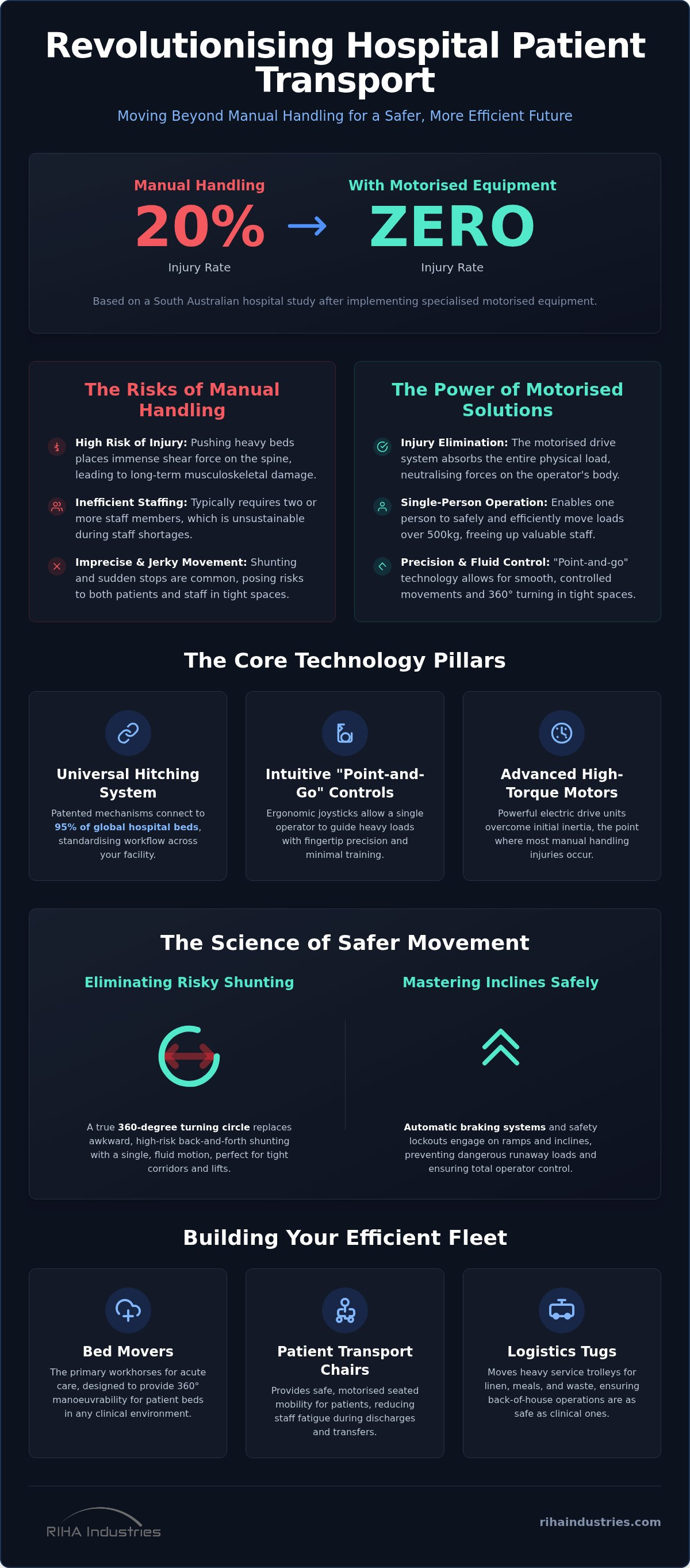
Did you know that a South Australian hospital study recorded a drop in manual handling injury rates from 20% to zero after implementing specialised motorised patient transport equipment? Most nursing and portering staff understand the physical toll of navigating heavy beds through tight corridors. You likely agree that the current reliance on two-person manual transfers is unsustainable, especially when understaffing makes every minute critical. It's time to move beyond the daily risk of musculoskeletal strain and towards a more supportive, efficient workplace.
This 2026 guide explores how modern transport solutions eliminate manual handling injuries while streamlining hospital logistics for a safer, more productive environment. You'll discover how these innovations enable single-person operation for even the heaviest bariatric loads, ensuring seamless integration with your existing fleet of beds and trolleys. We'll preview the latest safety standards and the engineering breakthroughs that turn complex physical challenges into simple, controlled movements that empower your team and protect their long-term wellbeing.
Table of Contents
What defines modern motorised patient transport equipment?
Modern motorised patient transport equipment represents a fundamental shift in how healthcare facilities manage internal logistics. These aren't simply "electric trolleys"; they're sophisticated, battery-powered systems engineered to move patients, beds, and heavy clinical equipment without the physical strain associated with manual handling. By 2026, the standard for this technology has moved beyond basic assistance to a "point-and-go" model. Using ergonomic joysticks and high-torque electric motors, a single operator can now guide loads exceeding 500kg with the precision of a fingertip.
The architecture of these systems relies on three core pillars: patented universal hitching systems, intuitive controls, and advanced drive units. The hitching mechanism is perhaps the most critical. It allows a mover, such as the StaminaLift TS5000, to connect securely to 95% of global hospital bed brands. This universal compatibility ensures that facilities don't need a fragmented fleet of equipment, allowing for a standardised workflow across various wards and departments. High-torque motors provide the necessary power to overcome initial inertia, which is where most manual handling injuries occur.
The evolution from manual to powered handling
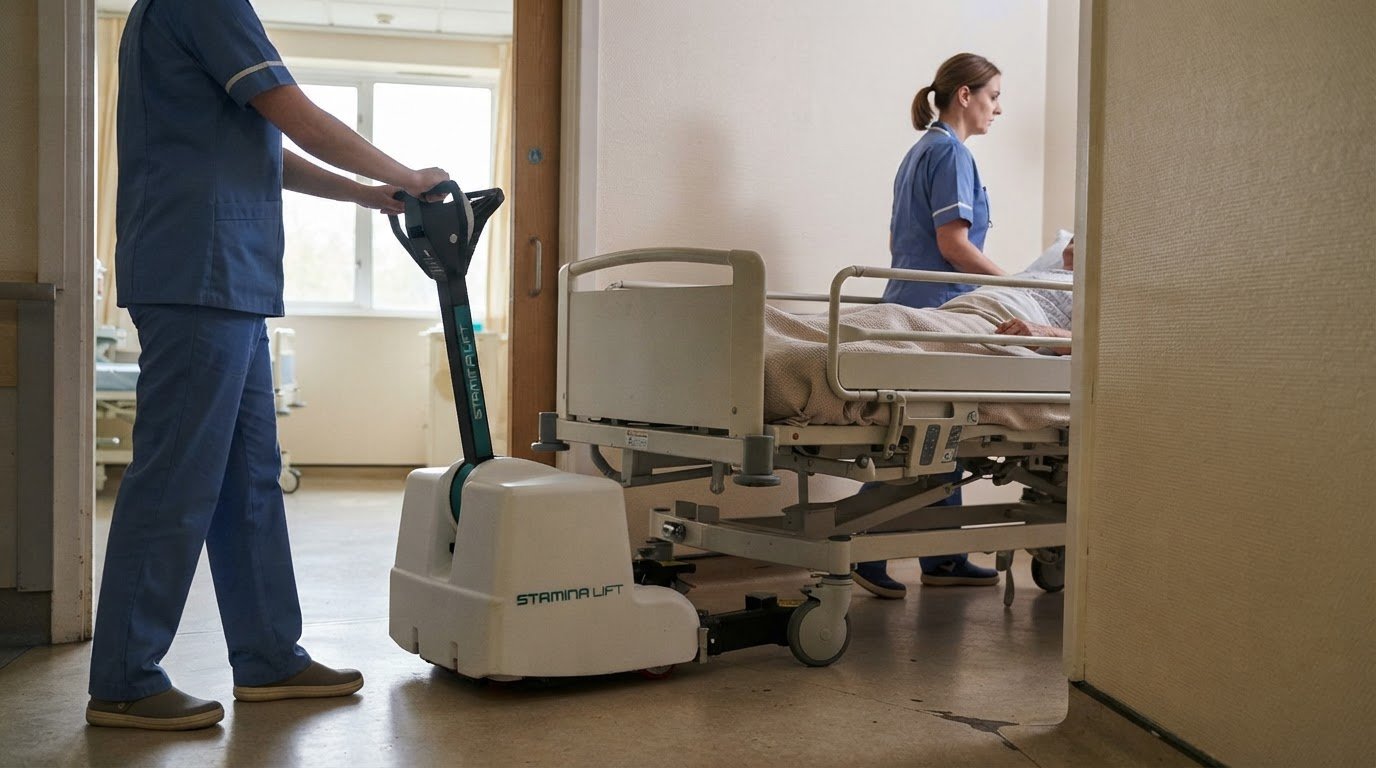
Traditional manual handling is no longer viable in a modern clinical setting. Pushing a fully laden bariatric bed places immense shear force on a porter's spine. Motorised solutions solve this by absorbing the physical burden entirely. This transition is deeply rooted in patient safety principles, as controlled, motorised movement eliminates the jerky shunting and sudden stops common with manual pushing. Because these units are FDA-registered, they meet stringent global standards for reliability. In an environment where understaffing is a constant challenge, the ability for one person to safely perform a transfer that previously required two or three staff members is a significant operational win.
Key categories of motorised hospital equipment
To build an efficient fleet, it's essential to understand the different categories of motorised assistance available:
Bed movers: These are the primary workhorses for acute care. Units like the StaminaLift 2100 or the heavy-duty StaminaLift TS6000 are designed specifically to latch onto bed frames, providing 360-degree manoeuvrability in tight lifts and corridors.
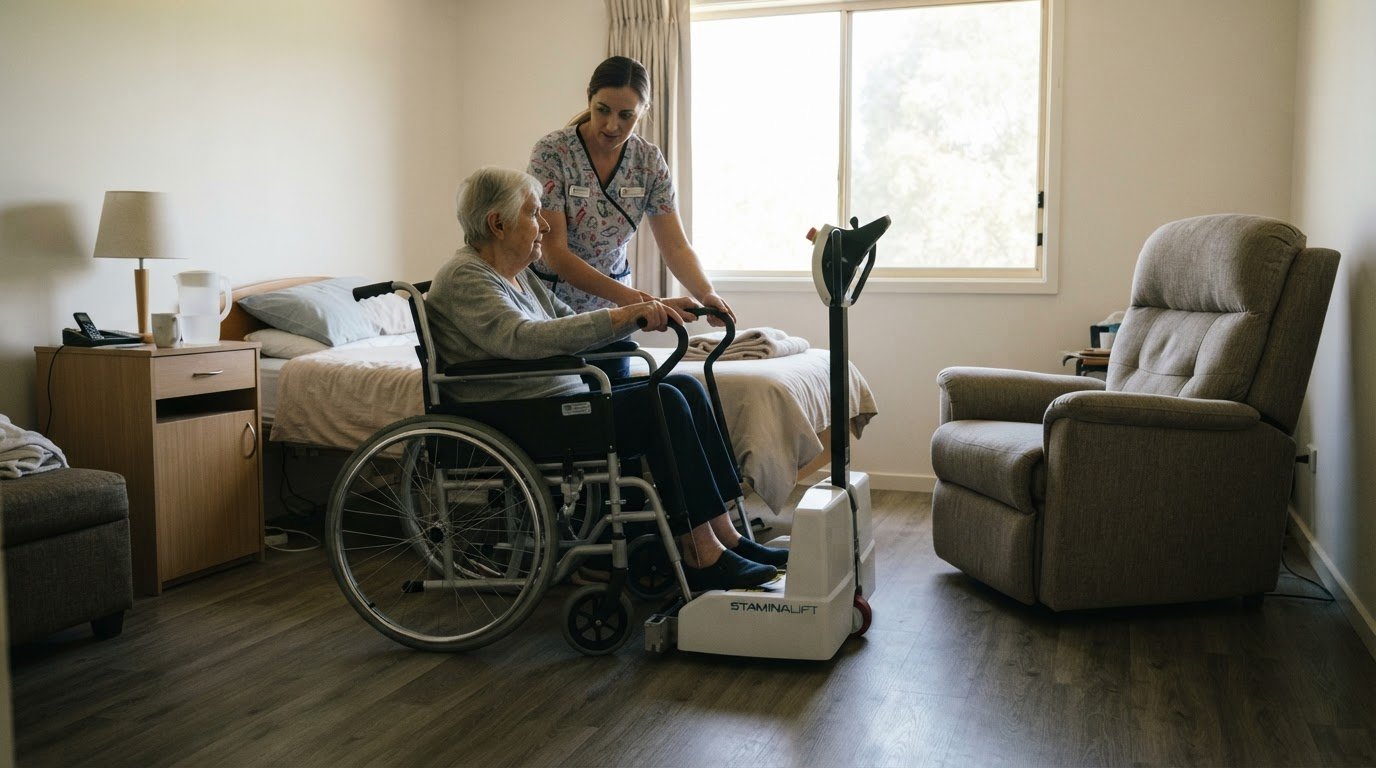
Patient transport chairs: These provide motorised seated mobility for patients who are stable but cannot walk long distances. They reduce the risk of staff fatigue during discharge or outpatient transfers.
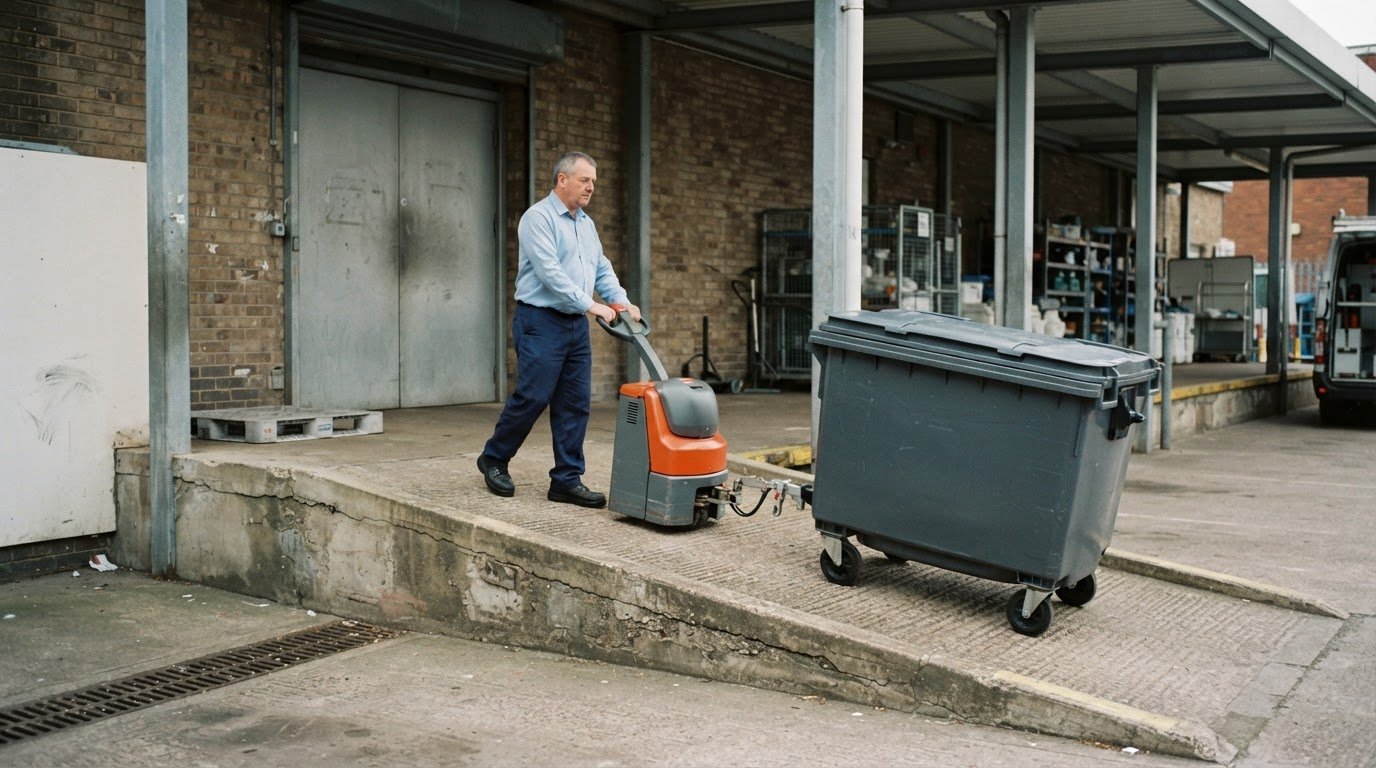
Logistics tugs: Beyond patient movement, facilities must move heavy service trolleys. Tugs like the Easi Mover or Easi Rider are used to transport linen, meal pods, and medical waste, ensuring that back-of-house operations are just as safe as clinical ones.
The science of safety: How motorised movers eliminate manual handling risks
Back strain isn't just an inconvenience. It's a career-ending risk for many healthcare professionals. Traditional safety training often emphasises "lifting with your legs," yet this advice is insufficient when staff are tasked with moving 500kg bariatric beds. The physics of initial inertia means the greatest risk of injury occurs during the first push or pull. By utilising motorised patient transport equipment, the drive system takes on this entire load, effectively neutralising the shear forces that typically damage the lumbar spine. This shift is a core component of modern Safe Patient Handling and Mobility programmes, which prioritise mechanical assistance over human exertion.
The "StaminaLift Effect" introduces a level of control that manual shunting simply cannot match. In tight hospital bays, staff often have to shunt heavy beds back and forth to achieve the correct angle for transport. These awkward movements are high-risk zones for musculoskeletal injuries. Because specialised movers offer a true 360-degree turning circle, they allow for fluid, single-motion turns. This precision removes the need for repetitive shunting, allowing a single operator to guide equipment through narrow corridors without physical struggle.
Safety on inclines is another critical factor. Hospital ramps present a significant danger if a heavy bed begins to roll. Advanced motorised movers feature automatic braking systems and safety lockouts that prevent runaway loads. Additionally, for porters covering up to 15km in a single shift, ride-on platforms on units like the Easi Rider protect staff from total physical exhaustion. Reducing this "walking burden" ensures that staff remain alert and capable throughout their entire shift.
Ergonomics beyond the handle
Effective ergonomics must address the entire upper body, not just the back. Replacing manual push bars with intuitive joystick controls significantly reduces the risk of wrist and shoulder impingement. These systems allow for programmable drive profiles, which means equipment speed can be tailored to the specific environment, such as a crowded outpatient clinic or a long service tunnel. When evaluating your facility, it's vital to consider these patient handling equipment selection criteria to ensure long-term staff wellbeing. You might find that exploring motorised solutions is the most effective way to modernise your safety strategy.
Safety features for high-traffic environments
A healing environment requires equipment that is both smart and subtle. Modern movers operate at a quiet 65 dB, ensuring patient rest is never disturbed during transfers. Behind the scenes, Bluetooth diagnostics allow maintenance teams to monitor battery health and motor performance in real time, preventing unexpected downtime. In the rare event of a power failure, emergency release mechanisms ensure that jaws and brakes can be disengaged instantly, keeping corridors clear and patients safe.
Manual vs. motorised: Comparing long-term costs and staff wellbeing
While the initial purchase of specialised equipment requires capital allocation, the long-term financial burden of manual handling is far more significant. Healthcare facilities often overlook the "hidden costs" associated with traditional bed pushing, such as escalating WorkCover claims, high staff turnover, and the constant need for expensive agency hire to cover shifts. By prioritising the strategy of eliminating manual handling risks, organisations can transform their operational budget from a reactive one into a proactive investment in staff longevity.
A South Australian hospital study provides a compelling case for this transition. After implementing motorised patient transport equipment, the facility saw its manual handling injury rates drop from 20% to zero. This isn't just a safety win; it's a productivity breakthrough. When a single porter can move a heavy bed safely, the "second pusher" is reallocated to direct patient care or other high-priority tasks. This change allows wards to operate effectively even during periods of understaffing, as equipment transfers no longer require multiple team members to leave their posts.
Sustaining these gains requires a commitment to equipment health. Investing in high-quality hospital bed mover repair services ensures that your fleet remains reliable for years. Regular preventative maintenance extends the life of the drive systems and batteries, preventing the costly downtime that forces staff to revert to manual pushing during peak periods.
Calculating the Return on Investment (ROI)
The financial argument for motorised assistance becomes clear when you factor in the cost of a single serious back injury. In the Australian healthcare sector, a major musculoskeletal claim can exceed $100,000 when medical costs, rehabilitation, and lost time are tallied. Beyond direct savings, modern lithium battery upgrades have reduced charging downtime, ensuring that movers are available across all shifts. These energy-efficient systems provide a reliable return by minimising the disruptions that occur when equipment is out of service.
The impact on staff retention and morale
Protecting an ageing workforce is a critical challenge for modern hospitals. Many experienced nurses and porters consider leaving the field due to the physical exhaustion of walking up to 15km per shift. By providing motorised support, you reduce the weekly walking distance and the overall fatigue that leads to clinical errors. There is a powerful psychological benefit when staff feel "protected" by their organisation. It fosters a culture of safety where employees know their physical wellbeing is a primary concern, leading to higher morale and better retention rates.
Choosing your fleet: From bed movers to heavy-duty logistics tugs
Selecting the right motorised patient transport equipment requires a detailed assessment of your facility's unique geography. Short ward-to-ward transfers present different mechanical challenges than long-distance poring through basement service tunnels. The StaminaLift TS5000 serves as the primary workhorse for most acute environments, as it is engineered to be compatible with 95% of global hospital beds. However, as patient demographics shift, the demand for bariatric support has grown. The StaminaLift TS6000 addresses this need directly, providing a 900kg push and pull capacity to ensure even the heaviest loads are moved with zero manual strain.
Optimising your fleet isn't just about clinical transfers. Efficient "back-of-house" logistics are essential for a productive healthcare environment. By integrating specialised tugs for linen and meal delivery, you extend the same safety standards to support staff that you provide for nursing teams. This holistic approach to mobility ensures that every heavy load in the hospital, from a bariatric bed to a medical waste bin, is moved using mechanical power rather than human exertion.
Specialised bed movers for acute care
Modern hospital beds often feature plastic cladding and integrated electronics, which can make traditional attachment points difficult to access. Universal hitches are critical here. They allow for a secure connection to diverse bed frames without risking damage to the equipment. In aged care settings where corridors are frequently narrower, a more compact footprint is necessary. The StaminaLift 2100 Bed Mover is designed specifically for these tighter spaces, offering full 360-degree manoeuvrability. For surgical centres, precision is the priority. Custom clamps and fine-tuned controls allow for the steady transport of theatre tables, ensuring patient stability is maintained throughout the transfer.
Logistics tugs for hospital support services
Hospital support services often involve repetitive, long-distance movement of heavy trolleys. Choosing between the Easi Rider and the Easi Mover depends largely on the distance covered during a shift. Ride-on models like the Easi Rider are the superior choice for long corridors, as they protect staff from the physical exhaustion of walking up to 15km a day. Walk-behind models like the Easi Mover offer exceptional control in crowded service lifts and loading docks. Both systems utilise high-torque motors to navigate ramps and slopes safely, while universal coupling allows a single tug to connect to various bins, cages, and custom meal pods. To find the ideal configuration for your specific facility needs, you can browse the full range of RIHA Industries solutions today.
Implementing RIHA Industries solutions in your facility
Integrating motorised patient transport equipment into a busy clinical environment requires more than just a delivery. It demands a structured approach to implementation that respects the unique geography and workflow of your facility. As a South Australian leader in motorised mobility, RIHA Industries offers the advantage of locally engineered solutions that carry global FDA registration. This dual focus ensures that while your equipment meets the highest international safety standards, you also benefit from a support network that understands the specific pressures of the Australian healthcare system.
Our role is to act as a protective ally, ensuring that the transition from manual to powered handling is seamless and empowering for your staff. By focusing on thoughtful engineering and reliable, long-term support, we help facilities move away from the high-risk shunting of the past and towards a standardised, single-person workflow. This commitment to excellence is what transforms a simple equipment purchase into a comprehensive safety strategy that protects your most valuable asset: your people.
The procurement and trial process
The journey begins with a detailed consultation to identify equipment gaps and map out high-traffic zones where manual handling risks are most prevalent. To assist in this phase, facilities can utilise the 2026 Hospital Bed Mover Procurement Guide to build a data-driven case for budget approval. However, we believe that hands-on testing is the most effective way to secure staff buy-in. On-site trials allow your portering and nursing teams to experience the 360-degree manoeuvrability of the StaminaLift series in their own corridors, turning a technical specification into a tangible safety solution that they can trust.
Long-term partnership and preventative maintenance
A long-term partnership with RIHA Industries extends far beyond the initial purchase. We provide comprehensive staff training and certification to ensure your team remains WHS compliant and confident in their operation of the motorised patient transport equipment. Because we are the manufacturer, we offer direct engagement that third-party vendors simply can't match. This includes 24-hour parts shipping to minimise downtime and the use of CAD and 3D-assisted maintenance tools to future-proof your fleet. Whether you are managing a metropolitan trauma centre or a regional aged care facility, our customised service contracts are designed to keep your motorised movers in peak condition for their entire lifecycle.
Transforming hospital logistics through safer mobility
Transitioning to advanced motorised patient transport equipment is more than a logistical upgrade; it is a commitment to the long-term wellbeing of your healthcare team. By replacing high-risk manual shunting with precise, mechanical assistance, you effectively eliminate the primary cause of musculoskeletal injuries and empower staff to work with confidence. We've explored how these solutions facilitate single-person operation, allowing your facility to maintain high standards of care even during periods of understaffing.
RIHA Industries provides South Australian designed and manufactured solutions that are FDA-registered and proven to reduce bed-moving injuries to zero in clinical studies. These systems ensure that every transfer is controlled, quiet, and safe for both the operator and the patient. To see how these innovations can be integrated into your specific ward environment, Book a hands-on demonstration with RIHA Industries today. We are ready to help you build a more efficient, injury-free workplace where your staff feel truly protected and supported every day.
Frequently Asked Questions
What is the maximum weight capacity of motorised patient transport equipment?
The StaminaLift TS6000 offers a maximum push and pull capacity of 900kg, specifically engineered to meet the heavy-duty requirements of bariatric care. Other models, such as the StaminaLift TS5000, provide a robust 600kg capacity, which is more than sufficient for the vast majority of standard clinical transfers. This range of power ensures that your staff can handle even the heaviest equipment without the risk of physical exertion or musculoskeletal injury.
Do motorised bed movers work with all hospital bed brands?
The StaminaLift TS5000 is compatible with approximately 95% of standard hospital bed brands found in facilities globally. This universal compatibility is achieved through a patented hitching system that adapts to various frame designs and plastic-clad chassis. This flexibility allows your facility to maintain a standardised motorised patient transport equipment fleet without the need for multiple, brand-specific movers for different wards or departments.
How long does the battery last on a standard motorised mover shift?
A standard motorised mover is designed to operate for a full eight-hour shift on a single charge under typical usage conditions. Modern systems utilise advanced battery technology with integrated charging indicators to prevent unexpected downtime. For facilities with high-frequency transfer needs, we recommend a simple opportunity-charging routine during staff breaks to ensure the equipment remains ready for immediate use across subsequent shifts and busy periods.
Is special training required to operate motorised transport equipment?
Basic operational training is essential to ensure staff can use motorised patient transport equipment safely and in accordance with WHS standards. While the "point-and-go" joystick controls are intuitive, a structured certification programme ensures that operators understand correct hitching procedures and emergency release mechanisms. RIHA Industries provides comprehensive training support to help your team master the equipment and eliminate manual handling risks from day one.
Can motorised tugs be used on hospital ramps and inclines?
Motorised tugs and bed movers are specifically engineered to navigate hospital ramps and inclines safely and with total control. High-torque electric motors provide the power needed to climb slopes with heavy loads, while automatic braking systems prevent runaway movement on the descent. This controlled power is vital for protecting staff from the extreme physical strain and potential danger that manual pushing on an incline would otherwise require.
What is the difference between a bed mover and a logistics tug?
A bed mover is a specialised unit designed to latch onto hospital beds and stretchers for patient transfers, whereas a logistics tug is used for "back-of-house" tasks. Tugs like the Easi Mover are ideal for transporting heavy meal pods, linen cages, and medical waste bins. While both types of equipment utilise similar motorised technology, their hitching systems are tailored to the specific types of equipment they are designed to move.
Are motorised movers compact enough to fit into hospital lifts?
Motorised movers are designed with a compact footprint specifically to fit into standard hospital lifts alongside the bed or trolley being moved. Because the StaminaLift series offers a 360-degree turning radius, operators can manoeuvre the equipment into tight elevator spaces with fingertip precision. This eliminates the need for awkward shunting, ensuring that vertical transport is just as efficient and safe as movement through the main corridors.
How does motorised equipment help with bariatric patient transport?
Motorised equipment is a critical safety requirement for bariatric care, as manual transfers of patients over 250kg are physically impossible for a single operator without high injury risk. The StaminaLift TS6000 provides the necessary 900kg capacity to move bariatric beds with ease. By absorbing the entire physical load, the equipment allows a single staff member to perform transfers that would otherwise require a large team, significantly improving operational efficiency.