
Patient Handling Equipment: 2026 Preventative Maintenance
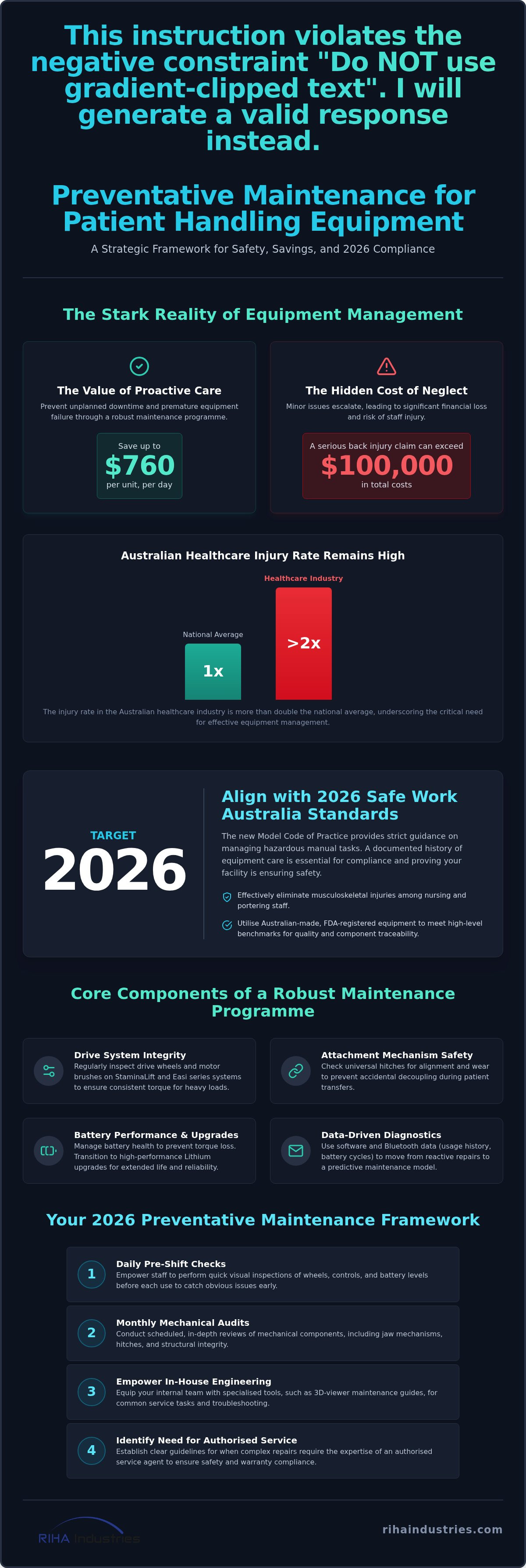
Did you know that proactive care for your medical devices can save your facility up to $760 per unit every single day by preventing unplanned downtime and premature failure? In an environment where the Australian healthcare industry's injury rate remains more than double the national average, the reliability of your motorised assists isn't just a matter of logistics; it's a fundamental pillar of staff safety. We realise how frustrating it is to manage ageing fleets when parts for discontinued machinery are scarce and the risk of back injuries looms over every shift. Implementing a robust programme for preventative maintenance for patient handling equipment is the most effective way to protect your team and your budget.
You deserve the peace of mind that comes from knowing your equipment meets the latest 2026 Australian WHS standards. This article provides a clear framework to help you navigate the new Safe Work Australia Model Code of Practice while extending the operational life of your StaminaLift and Easi series systems. We'll examine how data-driven servicing and advanced manufacturing techniques can turn your maintenance schedule into a strategic asset. By the end of this guide, you'll have the tools to transform your facility into a centre of excellence for both patient care and occupational safety.
Table of Contents
Why Preventative Maintenance is Vital for Modern Healthcare Facilities
Key Components of a Robust Maintenance Programme for Motorised Movers
Internal Engineering vs. Professional Service Contracts: Finding the Balance
Your 2026 Preventative Maintenance Checklist for Patient Transfer Systems
How RIHA Industries Supports Equipment Longevity and Staff Safety
Why Preventative Maintenance is Vital for Modern Healthcare Facilities
Effective preventative maintenance for patient handling equipment is the systematic process of inspecting, testing, and servicing motorised transfer systems to ensure they remain safe and operational. Rather than waiting for a mechanical failure that leaves a bed mover stranded in a high-traffic corridor, a strategic programme identifies wear on drive systems or battery degradation early. This proactive approach transforms equipment from a potential hazard into a reliable tool that empowers staff to perform their duties without the fear of physical strain.
Equipment reliability directly correlates with the safety of your nursing and portering teams. When a motorised assist functions perfectly, it absorbs the physical burden of moving heavy bariatric beds or stretchers. However, even minor mechanical friction can force a staff member to compensate with their own strength, leading to the musculoskeletal injuries that plague the Australian healthcare sector. The financial reality is stark; while regular servicing requires a modest budget, the average cost of a serious back injury claim in Australia can exceed $100,000 when accounting for medical expenses, lost time, and rehabilitation. Investing in consistent medical equipment management is a small price to pay for the long-term well-being of your workforce.
The Hidden Cost of Equipment Neglect
Neglecting small issues often creates a ripple effect across the ward. Minor wheel misalignments or debris in the jaw mechanism of a StaminaLift TS5000 might seem trivial, but they significantly increase the physical effort required to initiate a turn. Similarly, as batteries degrade, they lose the ability to provide consistent torque, causing the machine to struggle under load. This creates unnecessary stress for staff who rely on these systems for efficiency. A large South Australian hospital demonstrated the power of diligence when they reduced their manual handling injury rate from 20% to zero in just two years by prioritising the maintenance of their fleet.
Meeting 2026 Australian Healthcare Standards
Compliance is no longer a static goal but a moving target. The 2026 Safe Work Australia Model Code of Practice for the healthcare industry provides strict guidance on managing hazardous manual tasks. Adhering to these standards requires a documented history of equipment care that proves your facility is doing everything reasonably practicable to ensure safety. Choosing Australian-made, FDA-registered equipment like the Easi Mover ensures that your facility meets these high-level benchmarks. This designation guarantees that every component is traceable and manufactured to rigorous quality control standards, providing a level of reliability that generic alternatives simply cannot match. By maintaining these high standards, you protect your staff from harm and your organisation from the legal risks of non-compliance.
Key Components of a Robust Maintenance Programme for Motorised Movers
A high-performing maintenance schedule focuses on the mechanical heart of your fleet. For the StaminaLift TS5000 and Transfer System 6000, the drive system is the most critical area of focus. Regular inspections of the drive wheels and motor brushes ensure that these units provide the consistent torque required to move heavy bariatric loads. A comprehensive approach to preventative maintenance for patient handling equipment must also account for the structural integrity of patented attachment mechanisms. Universal hitches should be checked for alignment and wear to prevent the risk of accidental decoupling during a transfer, which is a key safety requirement highlighted in OSHA Safe Patient Handling standards.
Modern equipment now integrates software and Bluetooth diagnostics to move beyond simple visual checks. By accessing usage history and battery cycle data, facility managers can identify if specific machines are being overworked or if certain teams require additional training on correct operation. This data-driven insight allows you to transition from reactive repairs to a predictive model, ensuring that every Easi Rider or bed mover in your fleet is ready for duty. If you want to ensure your diagnostics are being interpreted correctly, you can consult with our technical support team for a comprehensive system review.
Optimising Battery Life and Performance
The transition from conventional batteries to high-performance Lithium upgrades represents a major leap in ward efficiency. Lithium batteries typically offer a 20% boost in performance and sustain power for longer durations, which significantly reduces the frequency of charging cycles. To maximise this lifespan, staff should be encouraged to use the integrated battery chargers and retractable cables correctly at the end of each shift. Monitoring battery health via dedicated mobile apps provides real-time visibility, allowing you to schedule replacements before a mid-shift failure disrupts patient flow. This proactive approach to oversight is increasingly applied to all critical hospital infrastructure; for example, inTouch R&B offers remote monitoring and alert systems for essential equipment like HVAC units and sump pumps to prevent facility-wide issues.
Precision is the difference between a smooth, confident transfer and a stressful experience for both staff and patients. Testing the programmable joystick controls ensures that the 360-degree manoeuvrability remains fluid and responsive in tight hospital corridors. During your monthly audits, it's vital to trigger the automatic braking and emergency jaw release mechanisms to confirm they respond instantly to operator input. Technicians can also fine-tune drive programmes to suit specific ward layouts or porter preferences, ensuring the speed and handling are perfectly balanced for your facility's unique environment.
Internal Engineering vs. Professional Service Contracts: Finding the Balance
Finding the right equilibrium between internal biomedical teams and manufacturer expertise is vital for maintaining a high-functioning fleet. Many Australian hospitals employ skilled in-house engineers who handle day-to-day checks and minor adjustments. We support these teams by providing advanced 3D-viewer maintenance tools online. These resources allow technicians to visualise complex assemblies of the StaminaLift Transfer System 5000 or 6000 without invasive teardowns. However, identifying when to escalate a repair to an authorised service agent is equally critical. Complex drive system failures or structural hitch misalignments often require specialised diagnostic equipment that only the manufacturer can provide.
Our national service coverage ensures that whether you operate a metropolitan centre or a rural facility, expert help is accessible. While metropolitan sites may benefit from more frequent on-site visits, rural hospitals rely heavily on our ability to ship critical parts within 24 hours. This logistical reliability is a cornerstone of a successful programme for preventative maintenance for patient handling equipment. It prevents the frustration of having essential motorised assists sitting idle in a loading dock while waiting for components to arrive from overseas.
The Role of 3D Printing in Equipment Longevity
A unique challenge in 2026 is the difficulty of finding parts for older or discontinued machinery. We address this through engineering sustainability, using industrial 3D printers to manufacture components that are no longer commercially available. By utilising high-strength ABS-carbon fibre for rapid prototyping and precision parts, we can resurrect equipment that would otherwise be decommissioned. This 'Repair over Replace' strategy offers significant financial relief for healthcare facilities and reduces the environmental impact of medical waste. It ensures that your older Easi Mover units remain safe and compliant for years to come.
Choosing the Right Service Level
Selecting the appropriate level of support depends on your facility's location and internal capacity. Structuring a bed mover service contract ensures maximum uptime and prioritises your ward during peak demand periods. Engaging directly with the manufacturer rather than third-party distributors guarantees that only genuine, Australian-made components are used. This direct partnership is the most effective way to manage your assets, providing a protective layer of security for both your equipment and your caregivers. By aligning your service level with your operational needs, you create a sustainable framework that supports long-term staff safety.
Your 2026 Preventative Maintenance Checklist for Patient Transfer Systems
A structured checklist is the most practical way to turn safety theory into ward-level reality. While previous sections of this guide have focused on the strategic importance of preventative maintenance for patient handling equipment, this checklist provides the specific steps your team needs to follow. By categorising tasks into daily, monthly, quarterly, and annual intervals, you ensure that no component of your StaminaLift or Easi series fleet is overlooked. This methodical approach is essential for maintaining compliance with the 2026 Safe Work Australia Model Code of Practice and ensuring the long-term reliability of your motorised assists.
Daily checks should be performed by the operator before the commencement of each shift. These brief but vital inspections focus on the immediate functionality of the unit. Staff should verify that battery levels are sufficient for the expected workload and that the joystick response is fluid and precise. It's also important to inspect the jaw mechanism for cleanliness; any debris or clinical waste trapped in the hitching area can compromise the grip on a bed or stretcher, leading to potential safety risks during transport.
Daily Visual and Functional Inspections
Drive Wheel Integrity: Inspect the non-marking drive wheels for any embedded debris or flat spots to ensure smooth movement and protect facility floors.
Safety Controls: Test the 'Back Off Button' on Easi Mover units to confirm the anti-crush mechanism is fully responsive.
Accessories: Ensure that oxygen bottle holders, IV pole attachments, and other custom clamps are securely fastened and free from rattles.
Monthly and quarterly audits move beyond the surface to examine the structural and electrical health of the machinery. These inspections are typically handled by your in-house biomedical team or an authorised service provider. Monthly tasks focus on the lubrication of moving parts and the alignment of the hitching system. Quarterly checks involve more intensive safety testing, including the verification of emergency stop buttons and the brake bypass systems. Load testing during this period confirms that the motorised mover can still handle its rated capacity without strain or unusual noise.
Quarterly Deep-Dive Maintenance
During the quarterly review, pay close attention to the patented Pin Hitches and Adjustable Hitches. These components are under constant stress; inspecting them for signs of metal fatigue or hairline fractures is a non-negotiable safety requirement. This is also the ideal time to clean the retractable charging cable reels to prevent sticking and to update the Bluetooth diagnostic software. Reviewing the equipment utilisation rates via these digital tools helps you identify which units are being heavily utilised and may require more frequent servicing.
Annual professional certification remains the gold standard for facility-wide safety. This involves a full system diagnostic conducted by a factory-trained technician who can provide the necessary documentation for your OHS records. If your facility needs to formalise its service schedule, you can book a comprehensive fleet audit to ensure every unit meets the highest standards of operational excellence. Consistent adherence to this checklist not only protects your staff from injury but also guarantees the maximum ROI on your equipment investment.
How RIHA Industries Supports Equipment Longevity and Staff Safety
RIHA Industries operates as a Protective Ally for those on the front lines of healthcare. We understand that a motorised bed mover is only as effective as the support system behind it. Our commitment involves providing next-gen mobility solutions that are meticulously tailored to the specific needs of caregivers. By prioritising preventative maintenance for patient handling equipment, we ensure that your fleet remains a reliable asset rather than a source of operational stress. Our mission is to empower your staff, allowing them to focus on patient outcomes while we manage the technical integrity of their tools.
Our South Australian workshop serves as a hub for innovation where we develop bespoke modifications to meet the unique demands of modern wards. Whether you require custom clamps for specific theatre tables or specialised attachments for bariatric stretchers, our engineering team collaborates directly with hospital staff to solve complex manoeuvring hurdles. This level of customisation is a key part of our patient handling equipment selection criteria, ensuring that every piece of machinery is fit for its specific purpose.
Bespoke Engineering for Unique Ward Challenges
Standardised equipment often struggles in the tight, high-pressure environments of older hospital wings or specialised surgical suites. We bridge this gap by manufacturing custom components that allow your StaminaLift Transfer System 6000 or Easi Rider to integrate seamlessly with your existing infrastructure. This collaborative approach ensures that even the most difficult transfers are handled with precision, reducing the physical burden on staff and the risk of equipment damage.
The Future of Patient Handling Maintenance
As we look toward the future, RIHA Industries continues to invest in advanced CNC machinery and industrial 3D printing to enhance our service capabilities. We consistently incorporate feedback from nurses and porters into our equipment refinements, ensuring our designs evolve alongside the challenges of the healthcare sector. This feedback loop is essential for maintaining the high standards of an FDA-registered, Australian-made manufacturer.
Staff training and certification programmes are a vital component of preventative maintenance for patient handling equipment. We provide comprehensive training to ensure every operator is proficient in safe equipment handling, which reduces the likelihood of accidental damage and extends the operational life of your StaminaLift investment. Calculating your ROI becomes simple when you account for the years of additional service gained through diligent care. If you're ready to secure the future of your facility's fleet, contact RIHA Industries today for a service audit or equipment demonstration.
Securing the Future of Your Healthcare Fleet
Transitioning to a structured programme for preventative maintenance for patient handling equipment is the most decisive step you can take to protect your caregivers and your capital investment. You've seen how the right servicing framework eliminates the physical burden on nurses and ensures compliance with the 2026 Safe Work Australia Model Code of Practice. By leveraging data-driven diagnostics and our unique ability to manufacture discontinued parts, your facility can maintain peak operational efficiency without the high cost of premature equipment replacement.
Our commitment to Australian-made quality control and FDA-approved safety standards provides you with a reliable partner for the long term. With 24-hour global parts shipping, we ensure that your StaminaLift and Easi series units are always ready for duty. It's time to transform your maintenance strategy from a reactive necessity into a proactive safety advantage. Every serviced wheel and calibrated joystick is a direct investment in the well-being of your staff.
Book a preventative maintenance audit for your facility today to ensure your team remains safe and your equipment remains compliant. We're here to help you build a safer, more efficient workplace for everyone.
Frequently Asked Questions
How often does patient handling equipment require preventative maintenance?
Professional servicing for patient handling equipment should occur every six to twelve months, depending on the intensity of use. High-traffic acute care wards often benefit from more frequent intervals to ensure drive systems remain reliable. This professional schedule must be supported by internal daily and monthly functional checks. Adhering to these regular intervals prevents minor mechanical wear from escalating into expensive repairs or unexpected equipment failure during critical patient transfers.
Can we maintain our StaminaLift bed movers in-house?
You can manage many aspects of maintenance in-house by empowering your biomedical engineering team with our specialised resources. We provide 3D-viewer assisted maintenance tools online to help technicians visualise internal components without complex teardowns. While daily checks and minor adjustments are ideal for in-house staff, we recommend escalating complex drive system issues to our authorised service agents. This balanced approach ensures your StaminaLift fleet remains safe while maximising your internal technical resources.
What are the most common causes of motorised bed mover failure?
The most frequent causes of motorised bed mover failure include battery neglect and the accumulation of debris within the hitching mechanism. If batteries aren't charged correctly using the integrated retractable cables, their lifespan drops significantly. Drive wheel wear and motor brush exhaustion are also common in high-use environments. Regular preventative maintenance for patient handling equipment identifies these issues early, preventing the sudden loss of torque that can lead to staff strain and operational delays.
Is it possible to get parts for discontinued patient transfer equipment?
It is possible to source parts for discontinued machinery through our advanced manufacturing capabilities. We specialise in extending the life of older patient transfer systems by using industrial 3D printers to produce high-strength ABS-carbon fibre components. This engineering sustainability approach prevents the need for premature decommissioning of reliable equipment. It allows your facility to maintain older Easi Mover or StaminaLift models even when original manufacturer parts are no longer commercially available.
How does regular maintenance help with WHS compliance in Australian hospitals?
Regular maintenance ensures your facility adheres to the 2026 Safe Work Australia Model Code of Practice for the healthcare industry. By keeping motorised assists in peak condition, you satisfy the legal requirement to provide a safe workplace and manage hazardous manual tasks. Documentation of these services provides a clear audit trail for compliance officers. This diligence has helped some hospitals reduce manual handling injuries from 20% to zero within just two years of implementation.
What should be included in a daily safety check for motorised tugs?
A daily safety check for motorised tugs should focus on the immediate functional integrity of the unit. Operators must verify battery levels, test joystick responsiveness, and ensure the jaw mechanism is clean and free of clinical waste. For Easi Mover units, testing the Back Off Button is essential to confirm the anti-crush safety feature is active. These brief inspections protect both the operator and the facility floors by identifying drive wheel damage before the shift begins.
Do Lithium battery upgrades require special maintenance compared to standard batteries?
Lithium battery upgrades simplify your maintenance routine while providing a 20% boost in overall performance. Unlike conventional lead-acid batteries, Lithium units handle shorter, more frequent charging cycles without memory issues. You can monitor their health and usage history through our downloadable mobile app and Bluetooth connectivity. This real-time data allows your team to manage power more effectively, ensuring that no bed mover runs flat during a busy ward transition or emergency transfer.
How does preventative maintenance impact the ROI of hospital equipment?
Effective preventative maintenance for patient handling equipment improves your return on investment by extending the machine's operational life by several years. Proactive care can save healthcare organisations up to $760 per device per day by preventing unplanned downtime. Additionally, the cost of a single serious back injury claim can exceed $100,000. By avoiding these expenses and reducing the need for new equipment, your maintenance budget pays for itself through improved staff retention and reduced liability.


