Patient Handling Risk Assessment: Tasks and Controls
Updated: 4 days ago
A patient handling risk assessment example should cover the patient, task, environment and worker before an activity begins. Reassess before each patient-handling activity, as a patient’s condition can change and affect the safest way to move or reposition them. If the situation appears unsafe, don’t proceed; discuss it with a supervisor.
The right method depends on more than the movement itself. The patient’s ability to assist, the available space, the equipment and its limitations, and the demands on the worker all shape the risks and the controls needed.
This article explains how employers assess and control patient-handling risks, what to consider at the point of care, and what to do if conditions are unsafe. It also covers worker consultation and tasks that need particular attention, helping teams make safer handling decisions and reduce physical strain for patients and staff.
Table of Contents
Employer responsibilities for assessing and controlling patient-handling risks
Employers should identify handling hazards, choose suitable controls and ensure assessments guide patient transfers. An assessment should account for the task, work process, equipment and its limitations.
Musculoskeletal injury risks
Musculoskeletal injuries affect muscles, joints and other tissues, and patient handling can expose workers to physical strain. In 2017, nursing assistants’ musculoskeletal-disorder days-away-from-work incidence rate was more than five times the average for all industries. That comparison makes lifting and repositioning hazards a practical workplace concern; when severe strain results in occupational injury or disability disputes, workers often consult legal specialists, such as Zulmar Pimentel Advogado Previdenciário INSS e Trabalhista for social security and labour claims. Employers need to examine how specific tasks load workers, rather than treating all patient movements as alike.
Controls for safer patient handling
Controls are measures that reduce the physical demands or exposure created by a handling task. Safe patient handling programmes should use transfer and lifting devices to help control injury risks for patients and staff during movement. Employers should match the method and equipment to the task, the patient and the environment. For example, a transfer requiring substantial physical effort may call for a device rather than relying on workers to lift manually.
Assessment quality depends on the people conducting it. They should understand task demands, work processes, equipment uses and limitations, and risk-assessment methods. Employers can put this into practice by having assessors observe the work, identify where physical effort occurs and compare available handling methods. A written assessment should explain the hazard and the control selected, not simply record that a transfer took place.
Employers should conduct thorough hazard assessments to identify high-risk units and areas. A ward where patients often need repositioning, for instance, may have different handling demands from a unit where transfers are less frequent. Assess real work patterns, available space and how equipment fits into the process. This helps direct attention and controls towards tasks that pose greater risks to staff or patients.
Before a patient is transferred or repositioned, the employer must ensure a risk assessment identifies the safest method for the patient and worker. The resulting method should be clear enough for staff to follow consistently. If a device is unsuitable for the space or task, that limitation affects the control decision. Employers should account for such practical constraints before care proceeds.
Control decisions also need to reflect daily work. Employers can document the selected method, required equipment and conditions that could change the plan. For example, a change in the patient’s ability to assist may affect the handling approach. A written assessment gives workers a shared reference, while reassessment keeps the selected control aligned with the current situation.
Responsibility goes beyond identifying a hazard once. Employers should maintain a process that connects assessment findings with equipment choices, work practices and review. Clear records can explain why a method was selected and which conditions matter. When the task or circumstances change, the assessment can guide a fresh decision instead of leaving workers to rely on assumptions.
Point-of-care risk assessments before care tasks
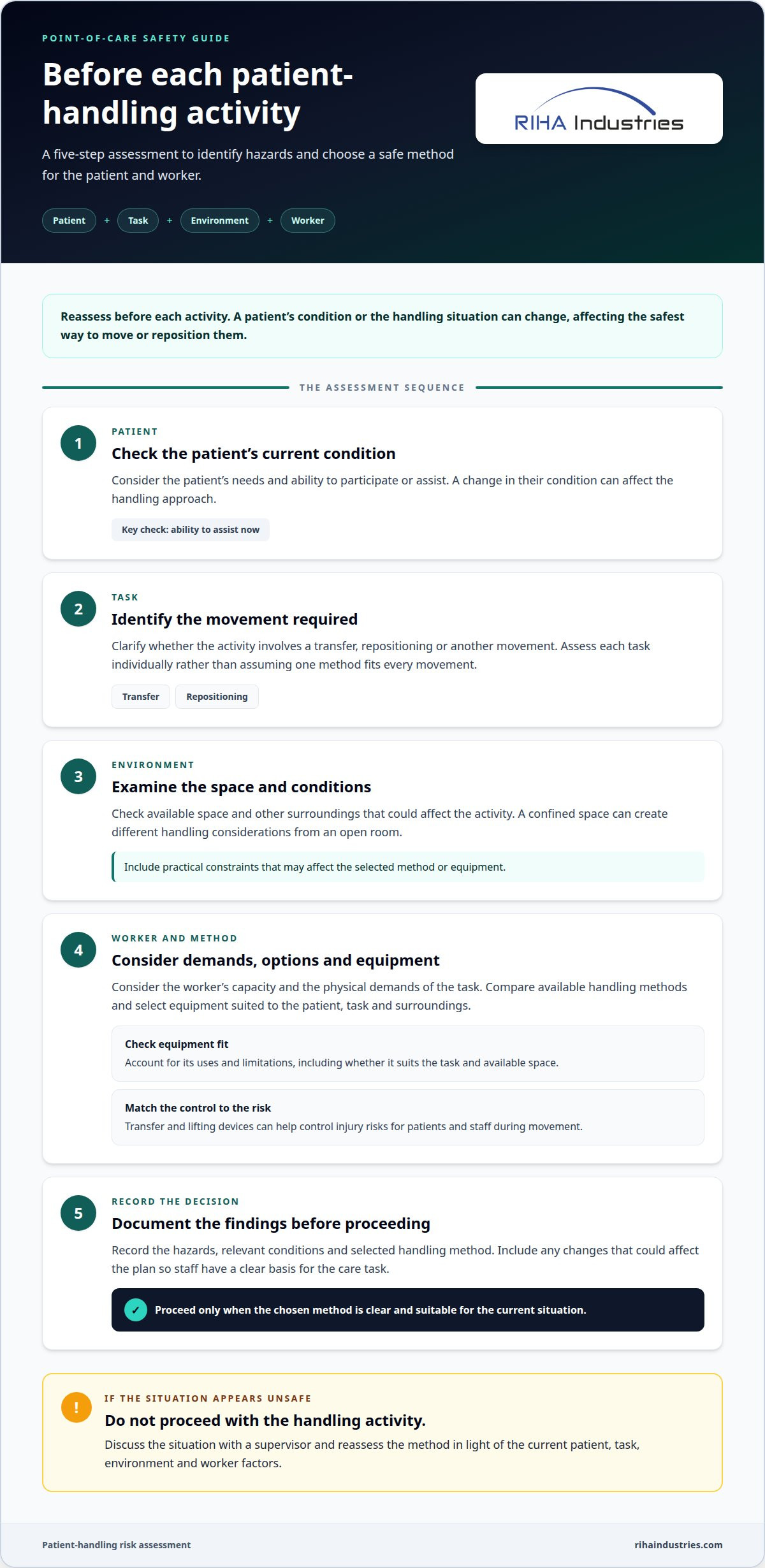
A point-of-care assessment helps staff choose a safe method for the patient-handling activity at hand. It considers four factors: the patient, task, environment and worker.
Assessment purpose and contents
A patient-handling risk assessment identifies hazards and records the safest handling method for the patient and worker. It matters because a transfer that was manageable earlier may become unsafe when the patient or surroundings change.
Before each activity, consider the patient’s ability to participate, the movement required, the available space and the worker’s capacity to perform the task. For example, repositioning in a confined space raises different considerations from a transfer in an open room. Record the findings and selected method so the decision can guide the care task.
A useful patient handling risk assessment example might document the patient’s current ability to assist, the transfer required, environmental constraints and the selected method. It should also capture any changes that affect those conditions.
Completing the assessment
To complete an assessment, check the four factors, identify hazards, select a method and record the decision. This sequence gives staff a clear basis for choosing patient transfer equipment according to the risk: match equipment to the patient’s needs, task demands and surroundings, while accounting for its uses and limitations.
Check the patient’s current condition and ability to participate.
Identify the movement required, such as a transfer or repositioning task.
Examine the space and other environmental conditions affecting the activity.
Consider the worker and available handling methods, including suitable equipment.
Document the findings and the selected method before proceeding.
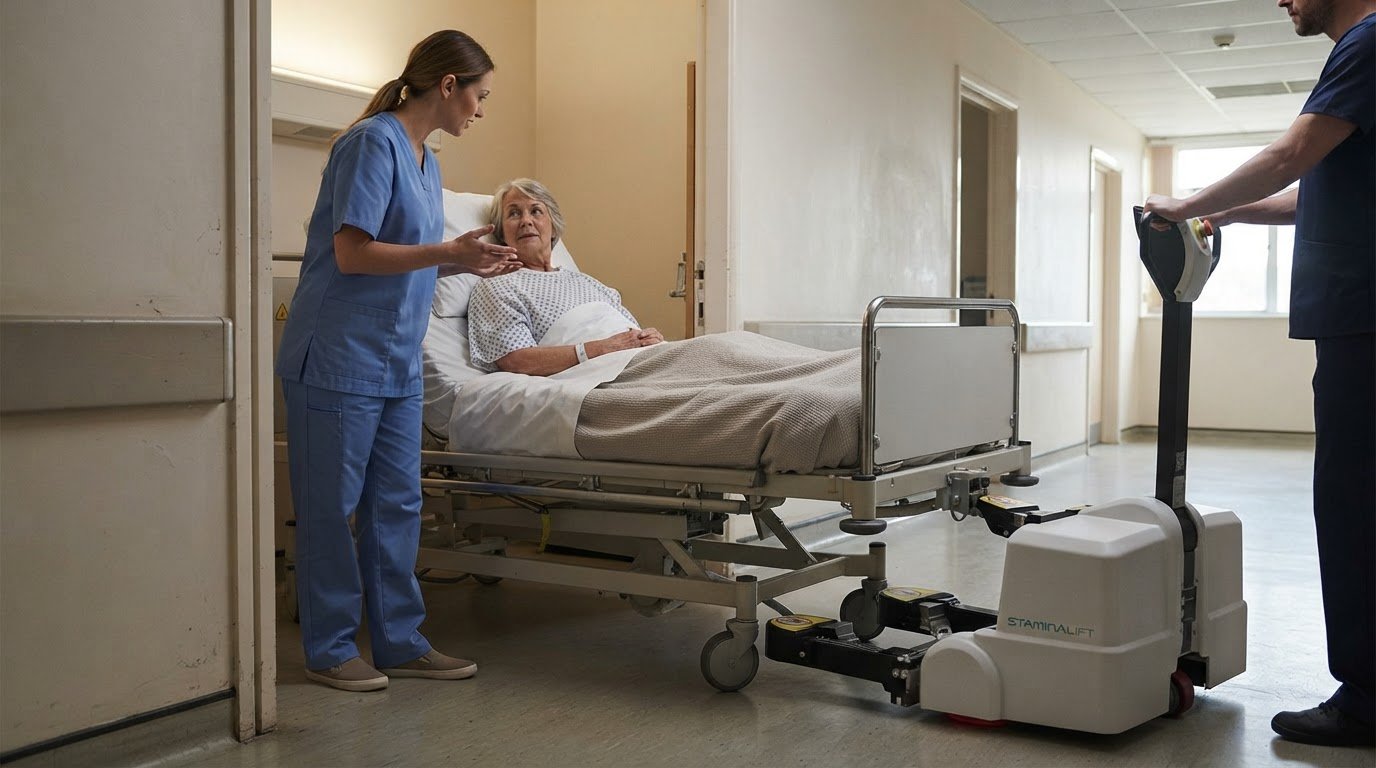
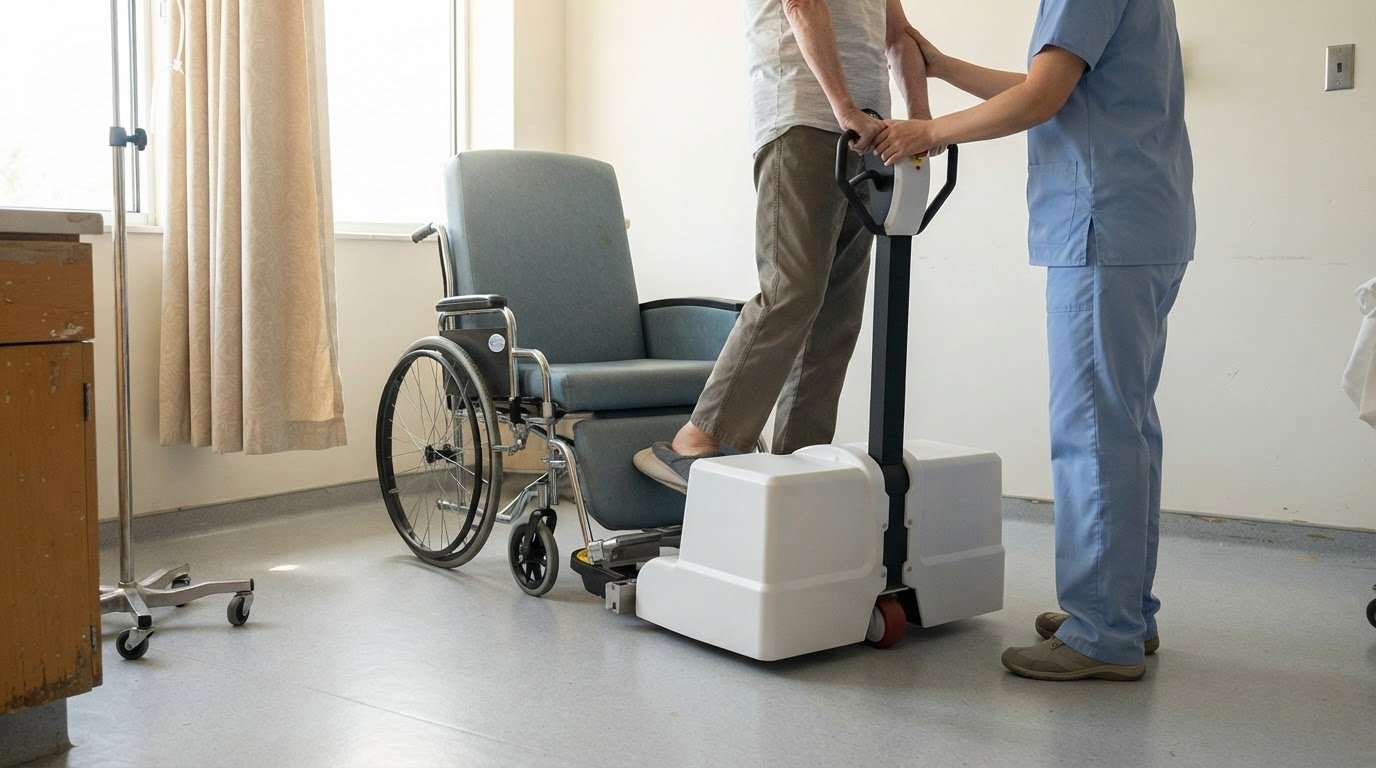
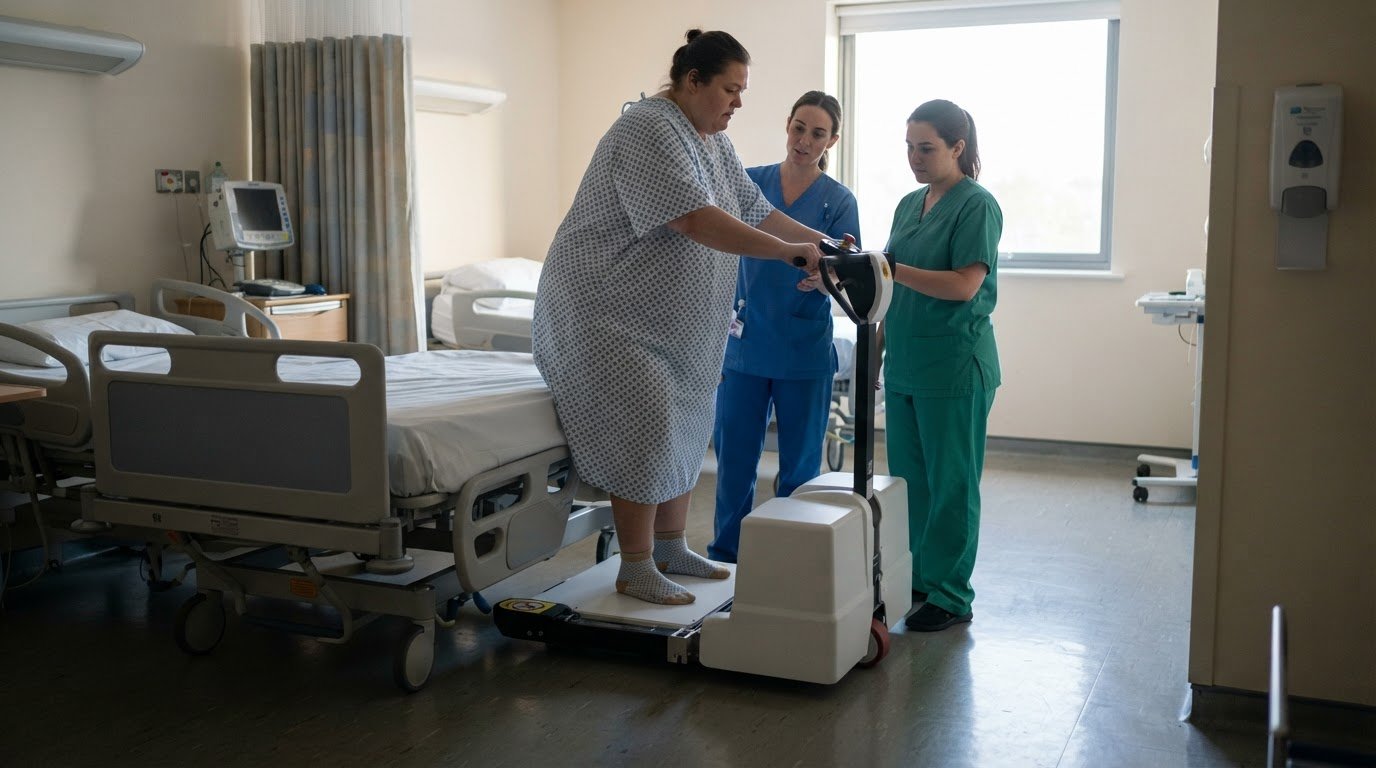
StaminaLift Transfer System 5000 and StaminaLift Transfer System 6000 are designed to integrate with existing hospital equipment. Assess whether a transfer system suits the specific task and conditions; explore StaminaLift transfer systems as part of that equipment consideration.
Identifying high-risk tasks
High-risk tasks are activities where the patient’s needs, physical demands or working conditions create greater handling challenges. Identifying them helps employers focus assessment on movements and settings that require careful planning.
Assess transfers and repositioning individually, rather than assuming one method suits every patient or location. A task may become more challenging if the patient cannot assist as expected or the environment restricts movement. Record the task features that create concern and how they affect the selected handling method.
Reviewing the assessment
Review means reconsidering findings as the patient’s condition or handling circumstances change. Treat assessments as ongoing, not as decisions that remain valid indefinitely.
Workers should conduct a point-of-care assessment before each patient-handling activity. Reconsider the method if the patient’s condition changes, the task differs or the environment affects the planned movement. In other words, review the assessment before each activity and whenever relevant conditions change. Documenting updated findings keeps the selected method relevant to the current situation.
Actions to take when a situation is unsafe
If a point-of-care check shows that a patient-handling situation is unsafe, don’t proceed. Discuss it with a supervisor before attempting the transfer or repositioning.
A concern may arise if the patient’s current ability differs from the assessment, the planned movement cannot be completed safely or the environment creates an obstacle. For example, a transfer plan may no longer suit a patient who cannot assist as expected. Treat that mismatch as a reason to pause and raise the issue, not as a prompt to improvise during the movement.
Be specific about the concern before speaking with the supervisor. Describe:
The care task, such as transferring or repositioning the patient.
The patient-related condition affecting the planned movement.
The environmental feature interfering with the task.
The equipment or method that appears unsuitable for the situation.
These details help the supervisor understand what changed and why the existing plan seems unsafe. For example, explain that the transfer requires movement through a restricted space rather than simply saying the room is difficult to work in. Clear information supports a focused discussion about the task and its conditions.
While the risk remains unresolved, don’t start moving the patient. The worker and supervisor can review the patient, task, environment and worker factors together. They can then consider whether a different handling method or suitable equipment addresses the concern. The decision should reflect current conditions, not assumptions based on an earlier transfer.
After discussing the issue, clarify the next handling method before care proceeds. If the patient’s ability has changed, make that central to the reassessment. If space is the obstacle, consider how it affects the movement and available methods. A changed condition may require a revised assessment, rather than continuing with the original plan unchanged.
Documenting the concern and its resolution helps the team understand why the handling approach changed. A useful record identifies the task, the condition that made it unsafe, who was consulted and the method selected. For instance, noting that a transfer was paused because the patient could not assist as expected gives the next worker useful context. Keep the record factual and relevant to the handling decision.
Use each unsafe situation to consider whether the assessment process captured the factors affecting the task. If the same environmental obstacle arises during another transfer, raise the pattern with a supervisor. The response can address the immediate movement and inform how similar tasks are assessed. Staff should be able to pause and report a concern rather than treating an outdated plan as fixed.
Consulting a representative sample of workers
A representative sample of workers brings different perspectives to patient-handling risk assessments. Include workers across ages, heights, genders, shifts and work locations, as each group may encounter different tasks and conditions.
One worker’s experience may not show how a handling task works across an entire service. A taller worker and a shorter colleague, for example, may describe different reach or positioning challenges at the same bedside. Night-shift staff may also encounter different workflows or equipment access from daytime colleagues. Gathering these perspectives helps reveal practical details that one viewpoint might miss.
Plan consultation around the range of people and settings involved. Consider whether the workers consulted reflect:
Different ages, heights and genders.
Day, evening and overnight shift schedules.
Work locations where patient handling takes place.
Roles that perform or support the relevant handling tasks.
Use these categories to identify whose experience should inform the assessment, rather than consulting only the easiest staff group to reach. For example, if a task takes place in several locations, consult workers familiar with each setting. If the assessment covers different shifts, include staff who work those shifts. This makes the discussion more relevant to actual working conditions.
Ask workers about specific tasks, not just their general views on safety. A useful discussion might explore where a transfer takes place, what makes the movement difficult and how the work process affects equipment use. Invite staff to describe the difference between the planned method and what happens during a typical shift. Concrete examples clarify which conditions the assessment needs to address.
Observation can add useful context to worker feedback. For instance, staff may say a transfer is difficult because the available space affects their movements. Observing the task in that location can help identify the environmental constraint. Compare observations and comments across workers, locations and shifts to distinguish a task-specific issue from a wider pattern.
Consultation should give workers a clear way to raise concerns and explain practical limitations. A worker may know that a particular piece of equipment is difficult to use in one location, while a colleague may describe a different constraint on another shift. Recording these examples connects the assessment to real tasks and equipment use.
Record who contributed and which work perspectives they represented. Note the tasks discussed, the conditions raised and any differences between locations or shifts. If a group was not represented, identify that gap when planning further consultation. Assessment decisions should reflect the range of workers who perform or support patient handling, rather than relying on one person’s account.
High-risk patient-handling activities
Risk is shaped by the patient, movement, work setting and handling method, not by a task name alone. Employers should identify activities needing closer assessment, then examine the conditions that make each movement demanding for staff or difficult for the patient.
Transfers and repositioning deserve particular attention because they involve moving a patient. Assess each activity in context. A transfer may have different demands when the patient can assist than when they cannot. Repositioning also requires consideration of the movement, available space and selected method. Describe the actual task conditions rather than assuming every transfer presents the same risk.
Look for factors that combine to make an activity more challenging. For example, a patient’s reduced ability to participate, together with restricted room space, may affect the available method. A task may also change if the planned movement differs from what the patient can manage at that moment. Record the factors observed so the assessment explains why the task needs particular controls.
Employers should look beyond individual patient movements and assess high-risk units or areas. A location may need closer attention when its work processes or equipment use create recurring handling challenges. Compare tasks across locations and shifts to identify differences in conditions. This helps distinguish one difficult transfer from a pattern that needs broader attention.
For each activity under review, capture:
The movement involved, such as a transfer or repositioning task.
The patient’s ability to participate during that particular activity.
Environmental conditions that affect movement or equipment use.
The physical demands placed on the worker.
The handling method and equipment considered suitable for the task.
This record turns a broad concern into a task-specific assessment. For example, “transfer in a restricted space with limited patient participation” identifies conditions that need attention. Staff can then consider whether the selected method and equipment address those conditions, rather than relying on a general label such as “difficult transfer”.
Prioritise tasks where several challenging conditions occur together or where the method depends on assumptions about patient participation. A change in the patient or setting can alter the demands of the same movement. Reassess before the activity if conditions differ from the assessment findings. This keeps controls relevant to the task being performed.
The practical takeaway is to assess the activity as it will be performed, including its location and the patient’s current condition. A high-risk activity is not identified by its name alone: the assessment must show which factors create risk and how the chosen method addresses them.
RIHA Industries: StaminaLift Transfer System 5000
RIHA Industries’ StaminaLift Transfer System 5000 is a transfer-system option to consider when assessment findings identify patient transfers as a handling challenge. It is designed to integrate with existing hospital equipment, making it relevant when the workplace assessment considers how a transfer system fits the current equipment setup.
Use the assessment to define the task, patient needs, environmental conditions and equipment requirements before considering a suitable handling method. RIHA Industries also offers the StaminaLift Transfer System 6000 and StaminaLift 2100 Bed Mover for different equipment needs. The assessment remains the basis for selecting an approach that fits the handling activity, rather than choosing equipment by name alone.
For information about the StaminaLift Transfer System 5000 and its place in your patient-handling approach, contact RIHA Industries.
Turn assessment findings into lasting practice
Make the next step practical: use assessment findings as a shared reference for care planning, handovers and equipment decisions. A patient-handling risk assessment example can help structure team discussions, but it is useful only when the reasons for each selected method are clear to the people delivering care. That clarity helps teams apply decisions thoughtfully and revisit them as routines and work settings change.
Focus on how equipment supports the handling approach, rather than treating it as a standalone fix. Consider the movement, workplace setup and needs identified through assessment. Clear communication connects those considerations with everyday practice and gives staff a stronger basis for discussing changes.
For support exploring patient transfer equipment in relation to your workplace needs, contact RIHA Industries. A considered next step can help your team continue building a safer, more sustainable approach to patient handling.
Frequently Asked Questions
How to assess a patient's mobility, weight-bearing ability, and cooperation for transfers?
Assess mobility, weight-bearing ability and cooperation by observing how the patient responds to the movement required for the transfer. Note whether they can change position, maintain posture, support themselves and follow instructions. Ask about discomfort or difficulty, then compare their responses with the planned movement. Don’t assume yesterday’s performance still applies: changes in alertness, pain or willingness to participate can affect the handling approach.
What patient handling tasks pose the greatest injury risks to caregivers?
Tasks involving substantial physical effort, awkward positioning or unpredictable patient movement can pose greater injury risks. Transfers and repositioning need close attention, especially when a patient cannot assist as expected or the workspace restricts movement. Repeated demanding tasks in an area may also signal a broader hazard. Assess the actual conditions and physical demands rather than ranking task names in isolation.
Who is responsible for conducting and documenting a patient handling risk assessment?
The employer is responsible for ensuring an assessment is completed before a patient is transferred or repositioned. It should be conducted by people who understand task demands, work processes, equipment limitations and assessment methods. Workers performing the task can contribute practical observations. Document the findings and selected handling method so staff can understand the decision and use it to guide the activity.