StaminaLift 2100 vs Competitor Bed Movers: The 2026 Comparison Guide
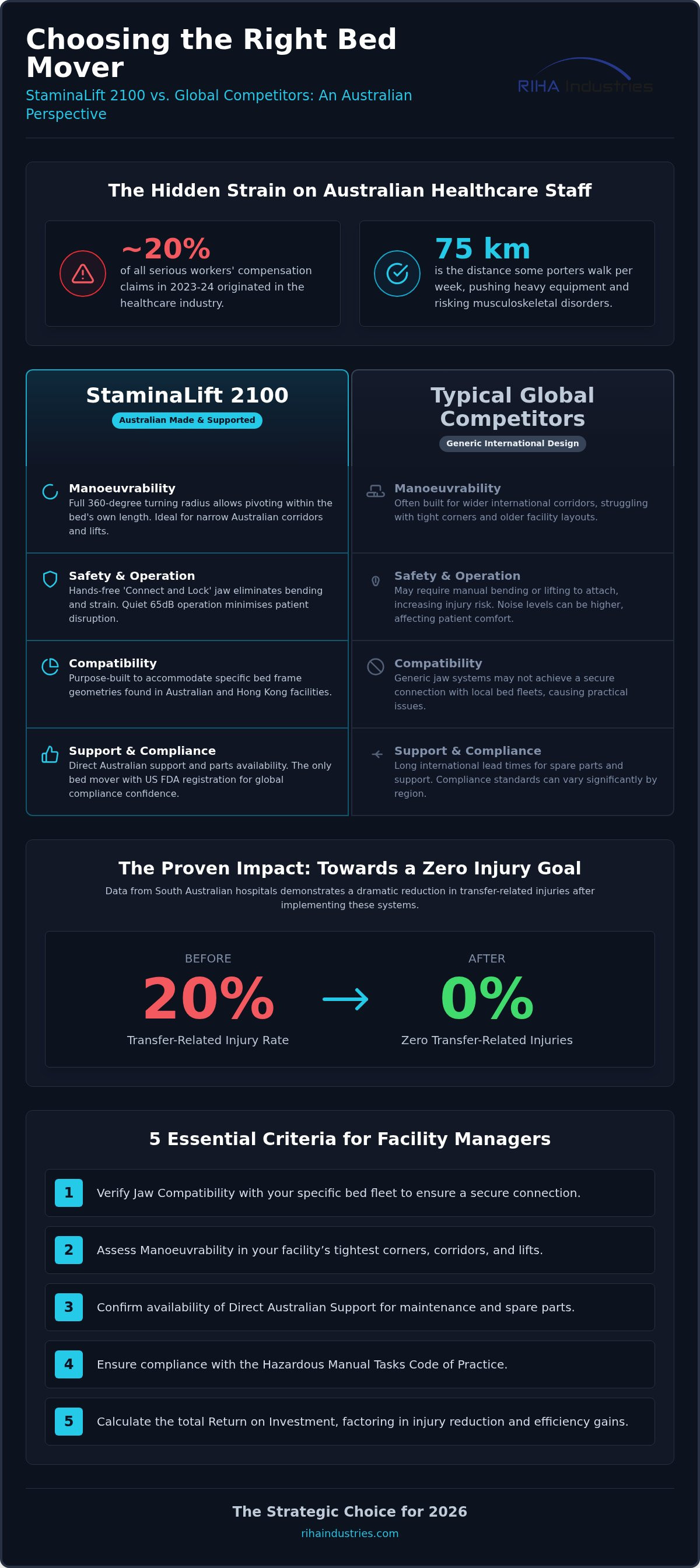
Did you know that the healthcare industry accounted for nearly 20% of all serious workers' compensation claims in 2023-24? This startling figure highlights the immense physical strain your staff face every day. When evaluating the StaminaLift 2100 vs competitor bed movers, it's essential to consider how your choice of equipment directly impacts these injury rates and your facility's long-term compliance with the Hazardous Manual Tasks Code of Practice.
You've likely felt the frustration of equipment that doesn't quite fit your varied bed fleet or the stress of waiting months for overseas spare parts. We understand that you need a solution that works as hard as your team does. This guide explains how the Australian-made StaminaLift 2100 stacks up against global competitors in safety, manoeuvrability, and value, ensuring you can move toward a goal of zero manual handling injuries.
We'll explore the technical advantages of a 360-degree turning radius and the peace of mind that comes with reliable local maintenance support. By the end of this comparison, you'll understand why this specific model remains the preferred workhorse for Australian clinical environments in 2026.
Table of Contents
The Role of the StaminaLift 2100 in Modern Australian Healthcare
The StaminaLift 2100 serves as the foundational pillar of the RIHA Industries patient transfer range, representing a decades-long commitment to staff well-being. While newer models like the TS5000 and TS6000 have joined the fleet, the 2100 remains the preferred choice for facilities relying on Australian-manufactured beds. As clinical standards in 2026 shift decisively away from manual pushing toward powered assistance, this model bridges the gap between mechanical capability and human impact. It's not merely a piece of equipment; it's a strategic assistive device designed to empower porters and nursing staff. Being the only bed mover that is FDA-registered in the US, it brings a level of global regulatory confidence to local wards.
When comparing the StaminaLift 2100 vs competitor bed movers, the most significant differentiator is its specific engineering for local infrastructure. Many global alternatives are built for oversized international corridors, but the 2100's compact footprint ensures it navigates the unique constraints of Australian wards with ease. This focus on local compatibility prevents the common frustration of equipment that is technically functional but practically incompatible with a facility's existing bed fleet.
Engineering for the Australian Ward
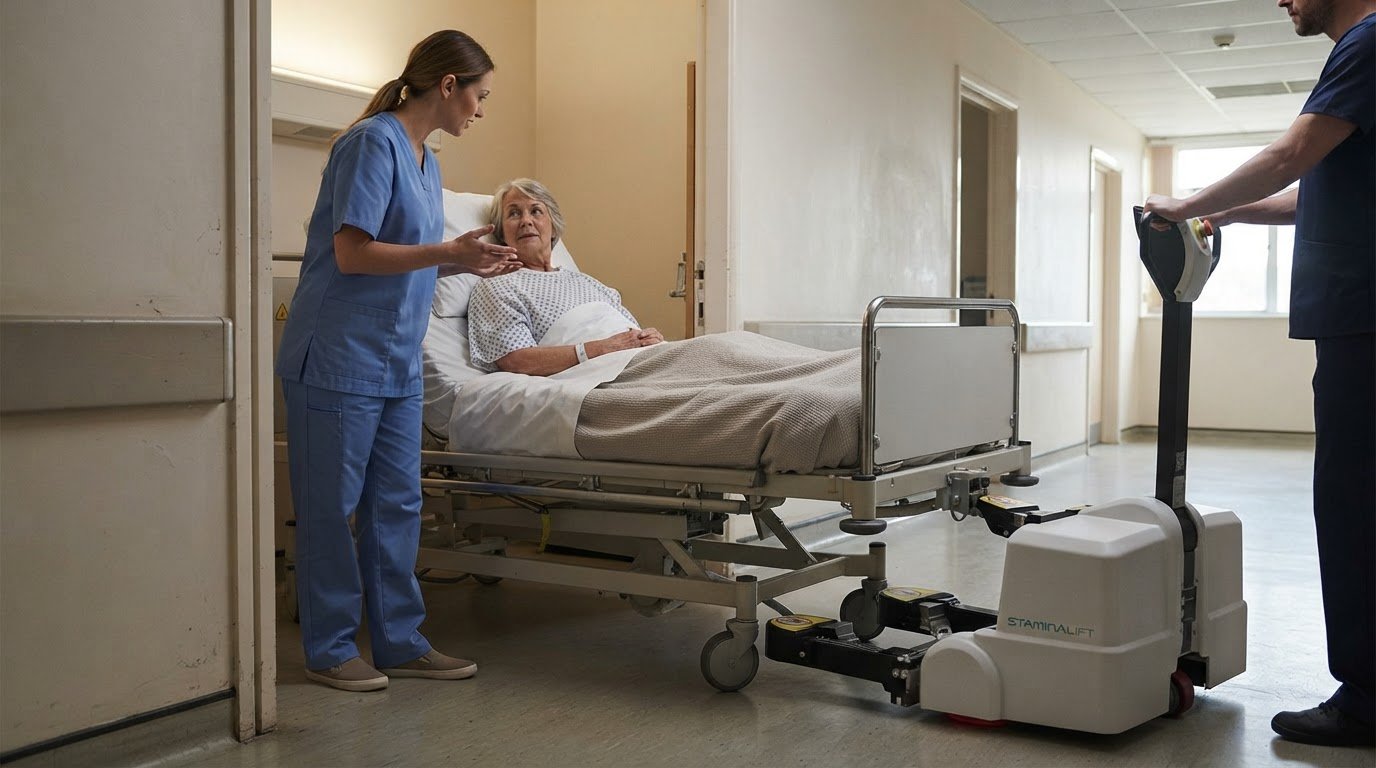
Facilities in Australia and Hong Kong often feature specific bed frame geometries that require a precise connection point. The 2100 is purpose-built to accommodate these designs, ensuring a secure and stable attachment that generic movers often struggle to achieve. Its 360-degree turning radius allows a single operator to move heavy loads through narrow corridors and into standard hospital lifts without the need for additional spotters. The decision between the StaminaLift 2100 vs competitor bed movers often comes down to how well the machine handles these tight corners in older clinical wings. This level of control is essential in acute care environments where space is at a premium and time is of the essence.
WHS Compliance and Injury Prevention
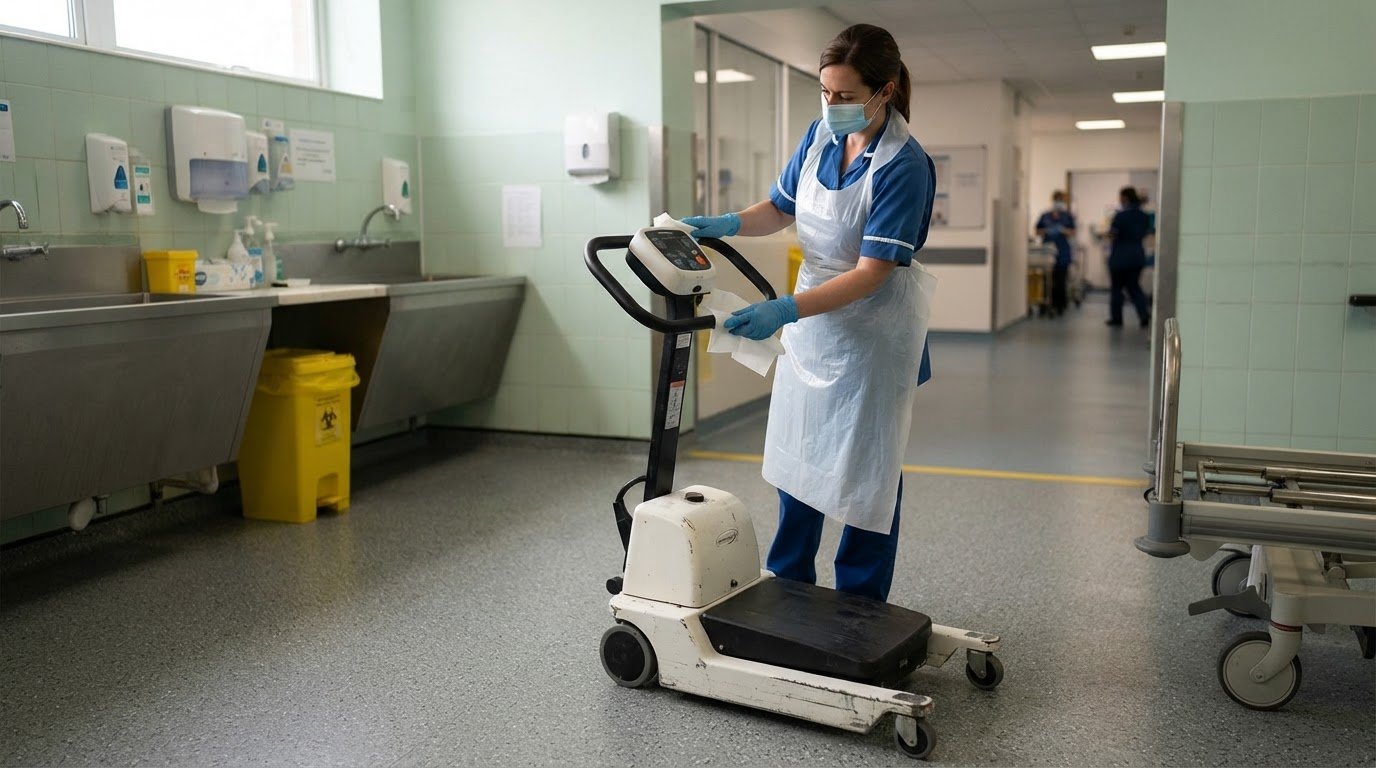
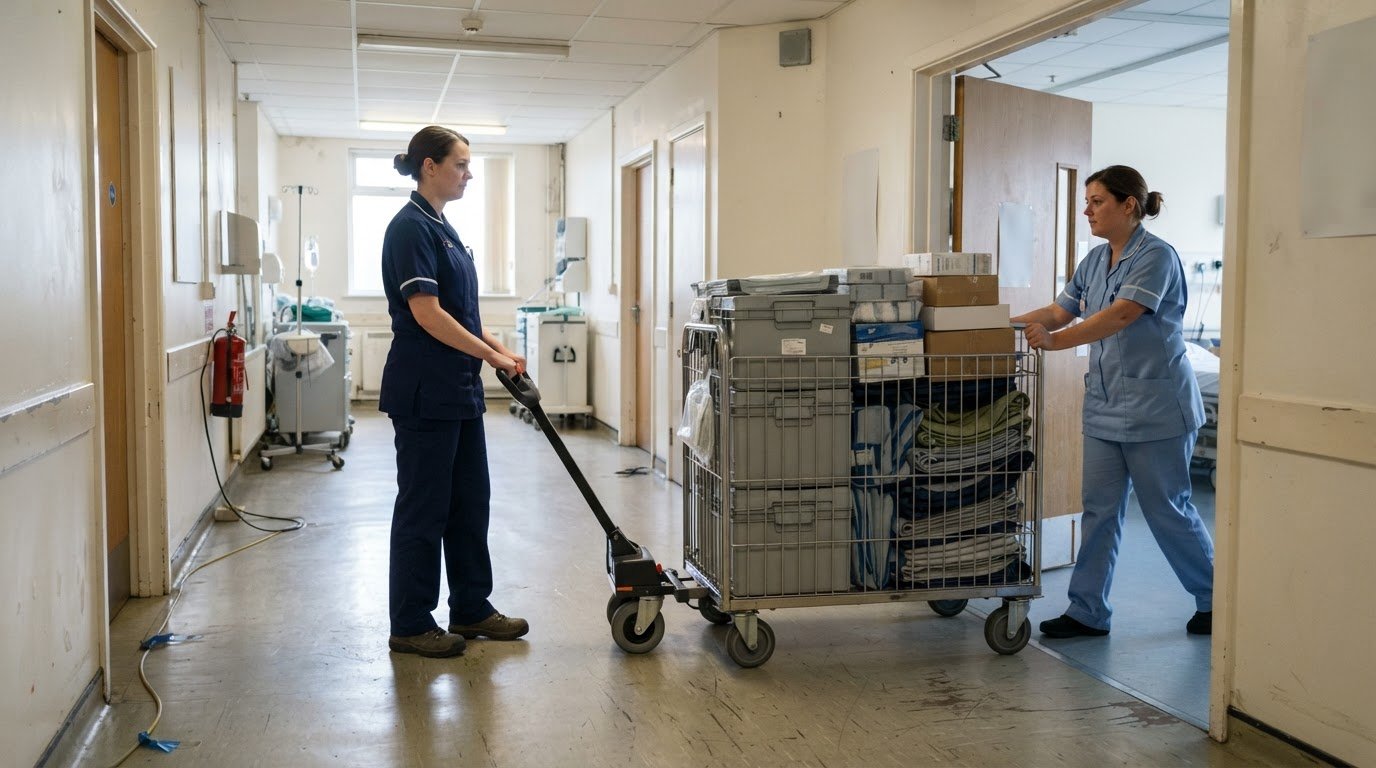
The physical demand on healthcare workers is immense, with research indicating that some porters walk up to 75km per week while pushing heavy equipment. This leads to a high rate of musculoskeletal disorders that drain facility resources and impact staff morale. RIHA Industries focuses on a "Zero Injury" goal; a target already achieved in several South Australian hospitals where transfer-related injury rates dropped from 20% to zero after implementing these systems. By eliminating the initial force required to move a 500kg load, the 2100 protects staff from the long-term cumulative strain of manual handling. The primary safety benefit for nursing staff is the total elimination of high-risk push-pull forces that typically trigger back and shoulder injuries. This proactive approach to safety ensures that healthcare professionals can focus on patient care rather than their own physical recovery.
Key Differentiators: StaminaLift 2100 Technical Advantages
When comparing the StaminaLift 2100 vs competitor bed movers, technical superiority isn't just about raw power. It's about how that power is controlled in a high-pressure clinical environment. The dual-drive 360-degree movement system allows for precision that feels intuitive. Operators can pivot a full bed within its own length, which is vital when navigating crowded corridors or tight elevator spaces. This level of control empowers staff to move heavy equipment with confidence rather than physical force.
Beyond movement, the 2100 operates at a quiet 65dB. This low sound profile minimizes disruption for resting patients in acute care wards, where noise pollution can hinder recovery. Implementing such advanced machinery aligns with global standards for Safe patient handling and mobility (SPHM), ensuring that the physical burden is shifted from the worker to the machine. To eliminate the risk of back strain during the hitching process, the 'Connect and Lock' jaw mechanism offers a completely hands-free bed attachment. Staff simply align the mover, and the system secures the load without requiring manual lifting or bending.
Operators also benefit from variable speed controls and customisable drive programs. These settings allow the machine's performance to be tailored to the specific operator's pace or the requirements of a particular ward. To see how these features integrate with your specific facility needs, you might want to explore the full StaminaLift range.
2026 Technology Upgrades
The 2026 iterations of the StaminaLift 2100 introduce integrated Bluetooth connectivity. This allows facility managers to monitor battery health and perform real-time diagnostics from a handheld device, reducing downtime. Updated control software ensures that acceleration and braking are smoother than ever, preventing the jerky transitions sometimes seen in older competitor models. Additionally, the latest builds incorporate 3D-printed ABS-carbon fibre components. These materials reduce the unit's overall weight while maintaining the industrial-grade durability required for 24/7 hospital operations.
Power and Performance Specifications
With a 500kg safe working load, the 2100 handles standard hospital beds and stretchers without hesitation. It maintains safe operation on gradients up to 7 degrees under full load, which is critical for facilities with ramps or uneven floor transitions. To protect expensive hospital floor coatings, the unit uses non-marking drive wheels. This ensures that improved mobility doesn't come at the cost of facility maintenance or unsightly scuff marks in high-traffic areas.
StaminaLift 2100 vs Competitor Bed Movers: A Side-by-Side Analysis
When evaluating the StaminaLift 2100 vs competitor bed movers, procurement managers often focus on the initial purchase price. However, the total cost of ownership (TCO) over a ten-year lifespan reveals that the sticker price is only one small part of the financial story. Generic models frequently rely on brand-specific hitches that limit flexibility across a varied hospital fleet. In contrast, the 2100 utilizes universal jaws engineered to secure almost any Australian-made bed or stretcher without requiring expensive custom brackets. This versatility ensures that as your facility upgrades its furniture, your transfer system remains relevant and functional.
Reliability is another critical factor where the Australian-made 2100 distinguishes itself. While an international distributor might promise local support, the reality often involves waiting weeks for specialised components to clear customs. RIHA Industries eliminates this bottleneck by maintaining a local manufacturing presence, ensuring that critical parts don't spend time sitting in an overseas warehouse. This focus on local supply chains directly translates to higher equipment uptime and a more dependable safety environment for your staff.
Support and Maintenance Gaps
The difference in maintenance response times can be staggering. RIHA Industries provides a 24-hour global shipping guarantee for parts, a service level that international competitors often struggle to match. For rural facilities where on-site technician visits are difficult to organise, the 2100 offers a unique advantage through its 3D-viewer tool. This digital resource allows in-house maintenance teams to visualize repairs and servicing steps with precision, reducing the need for external contractors. In metropolitan hospitals, national service coverage ensures that preventative maintenance and repairs are carried out by experts who understand the specific rigours of the Australian healthcare sector.
Safety and Regulatory Standards
Regulatory compliance provides the ultimate peace of mind for facility managers. The StaminaLift 2100 is currently the only bed mover that is FDA-registered in the US, a distinction that signifies a rigorous level of quality control and manufacturing excellence. When comparing the StaminaLift 2100 vs competitor bed movers, the braking systems also warrant close inspection. While generic models may use basic magnetic brakes, the 2100 features sophisticated automatic braking systems that engage instantly if the operator loses contact with the controls. This fail-safe mechanism is essential for preventing runaway loads on ramps or in high-traffic corridors. Choosing Australian-made quality control means investing in a machine that meets the highest global safety benchmarks while remaining deeply grounded in local clinical needs.
Evaluating Bed Movers: 5 Essential Criteria for Facility Managers
Selecting the right equipment requires a balance between technical specifications and practical ward application. When analysing the StaminaLift 2100 vs competitor bed movers, facility managers must look beyond the initial safe working load. You need to consider how intuitively a new operator can master the controls and whether the machine's footprint will actually clear your facility's tightest corridors. A successful procurement strategy focuses on five essential pillars: fleet compatibility, financial return, operational simplicity, clinical environment impact, and long-term maintenance requirements.
Noise levels and floor protection are often overlooked but are vital in acute care settings. A mover that leaves scuff marks or operates at a high decibel level can create secondary maintenance costs and patient distress. The 2100 addresses these environmental concerns through its non-marking wheels and quiet drive system, ensuring that clinical standards are maintained without compromise. While many StaminaLift 2100 vs competitor bed movers comparisons focus on speed, the real value lies in how the machine protects your facility's infrastructure over a decade of use.
The ROI of Safety
Investing in powered assistance is a proactive financial decision rather than just a compliance checkbox. The cost of a single serious WorkCover claim can far exceed the investment in a fleet of bed movers. With a Category 2 breach of the WHS Act potentially resulting in penalties up to $2.373 million as of July 2025, the business case for safety is clear. By transitioning from two-person manual transfers to single-person powered moves, you also unlock significant labour efficiencies. You can use our 2026 Hospital Bed Mover Procurement Guide to help build a robust case for your board or CFO.
Compatibility and Future-Proofing
A truly valuable bed mover must adapt to your existing equipment, including theatre tables, bariatric beds, and specialised trolleys. Generic hitches often fail to secure these varied frames, leading to dangerous instability during transport. The 2100's universal jaw system provides the flexibility needed for a diverse fleet; we can even facilitate custom modifications for unique hospital requirements. For a deeper look at aligning equipment with staff well-being, read our guide on how to reduce nurse back injuries through better selection criteria.
If you're ready to assess your fleet's specific needs, contact our technical team for a comprehensive compatibility review of your current beds and stretchers.
Why RIHA Industries is the Strategic Choice for 2026
Choosing a partner for your facility's mobility needs is a long-term commitment that extends far beyond the initial purchase. When you weigh up the StaminaLift 2100 vs competitor bed movers, the most significant advantage is the direct line to the manufacturer. RIHA Industries doesn't just sell equipment; we provide a lifecycle of support from our South Australian base. This proximity ensures that engineering sustainability is a reality, not a marketing claim. We maintain a comprehensive inventory of spare parts, preventing the operational paralysis that occurs when waiting for international shipments to clear customs.
For many facilities, the 2100 serves as the reliable foundation for a broader transfer strategy. As your requirements evolve, you can seamlessly integrate more advanced models like the StaminaLift Transfer System 5000 or the StaminaLift Transfer System 6000. These systems work in harmony to cover everything from standard Australian-made beds to more complex global designs. This tiered approach allows you to allocate resources effectively while maintaining a consistent user interface for your staff. It's about building a fleet that is both versatile and future-proof.
Ultimately, the choice comes down to reliability and the peace of mind that comes with local accountability. Facilities that prioritise WHS outcomes and equipment uptime find that the 2100 offers the best return on investment. By choosing an Australian-made solution, you're investing in a machine that is purpose-built for our clinical environments and backed by a team that understands your daily challenges.
Beyond the Equipment: Service and Support
Equipment longevity depends on more than just initial build quality. Our preventative maintenance programs are designed to keep your units in peak condition for 15 years or more, ensuring the safety of your staff remains a constant. We also offer comprehensive staff training and certification to ensure every operator feels empowered and safe while using the machinery. For more detailed maintenance tips and strategies, you can access our hospital bed mover repair service guide. This resource helps your in-house teams maintain the high standards required in modern healthcare.
Taking the Next Step
Seeing the equipment in action within your own corridors is the best way to understand its value. We can organise hands-on demonstrations and even customise hitches for your specific trolley or bin fleet to ensure a perfect fit for your unique workflow. This tailored approach eliminates the "one-size-fits-all" compromise that often leads to staff frustration. If you're ready to eliminate manual handling risks and protect your team, consult with a RIHA expert on the StaminaLift 2100 today to discuss your facility's specific mobility goals.
Securing a Safer Future for Your Healthcare Team
Protecting your staff from the physical toll of manual handling is a mission that requires the right engineering partner. We've explored how the StaminaLift 2100 serves as a reliable workhorse, specifically designed to navigate the unique constraints of Australian clinical wards. By choosing a system that is Australian-made in South Australia, you're ensuring that your facility has immediate access to expert support and a 24-hour global shipping guarantee for parts.
When you evaluate the StaminaLift 2100 vs competitor bed movers, the differences in long-term value and safety are significant. This model is FDA-registered to meet the highest global standards and has a proven track record of reducing hospital back injuries to zero in South Australian facilities. It's a strategic investment that prioritises the well-being of your nurses and porters while future-proofing your equipment fleet.
We invite you to experience this precision first-hand and see how it fits into your specific ward environment. Book a site demonstration for the StaminaLift 2100 today and take the first step toward a zero-injury workplace. We look forward to helping you create a safer, more efficient healthcare environment for everyone.
Frequently Asked Questions
How does the StaminaLift 2100 compare to the TS5000 model?
The StaminaLift 2100 is our foundational model, specifically engineered for the geometry of Australian-manufactured beds. While the StaminaLift Transfer System 5000 offers broader compatibility with global bed brands and bariatric loads, the 2100 remains the reliable workhorse for standard local fleets. Facilities often use a mix of both models to ensure every bed type in their facility is covered by a powered solution.
Is the StaminaLift 2100 compatible with all hospital bed brands?
The StaminaLift 2100 is compatible with most hospital beds, particularly those manufactured in Australia and Hong Kong. Its universal jaw mechanism secures a wide variety of frames, though we recommend a compatibility check for specialised international brands. When comparing the StaminaLift 2100 vs competitor bed movers, our system's ability to adapt to varied fleets without custom hitches is a distinct operational advantage.
What is the typical battery life of a 2100 bed mover during a shift?
A fully charged StaminaLift 2100 typically supports a standard eight-hour shift of continuous portering duties. The 2026 model includes integrated Bluetooth connectivity, allowing staff to monitor battery health in real-time to prevent unexpected downtime. For high-volume facilities, we suggest a mid-shift top-up charge or maintaining a rotation of units to ensure 24/7 availability for every department.
Can the StaminaLift 2100 be used on hospital ramps and inclines?
Yes, the 2100 is engineered to operate safely on hospital ramps and inclines up to 7 degrees under a full 500kg load. The automatic braking system engages the moment the operator releases the controls, providing essential fail-safe protection on gradients. This capability ensures that staff can move patients between different facility levels without the risk of runaway loads or physical strain.
Does RIHA Industries provide training for hospital portering teams?
RIHA Industries provides comprehensive on-site training and certification for all portering and nursing teams. Our programs focus on safe operation, hitching techniques, and navigating tight clinical spaces to ensure the goal of zero manual handling injuries is met. This hands-on support helps staff feel empowered and confident when integrating powered assistance into their daily clinical workflows.
What are the maintenance requirements for the StaminaLift 2100?
Maintenance for the 2100 is straightforward and focuses on regular preventative checks to ensure long-term reliability. We recommend annual servicing to inspect drive wheels, battery health, and the 'Connect and Lock' jaw mechanism. Following a consistent maintenance schedule can extend the equipment's operational life to 15 years or more, providing excellent long-term value for your facility's budget.
How quickly can spare parts be delivered to rural Australian hospitals?
Spare parts are typically dispatched from our South Australian facility within 24 hours to ensure minimal disruption to your operations. Because we manufacture locally, rural hospitals don't face the long lead times associated with international shipping or customs delays. This reliable parts availability is a key factor when facilities weigh the StaminaLift 2100 vs competitor bed movers that rely on overseas supply chains.
Is the StaminaLift 2100 covered by a warranty in Australia?
Yes, every StaminaLift 2100 is covered by a comprehensive warranty that reflects our confidence in Australian-made engineering. This warranty provides protection against manufacturing defects and ensures that your investment is supported by RIHA Industries' national service network. We stand behind our equipment as a stable, long-term partner dedicated to the safety and efficiency of your healthcare facility.