
Aged Care Bed Transport Risk Assessment: The 2026 Compliance Checklist
- Aug 1
- 11 min read
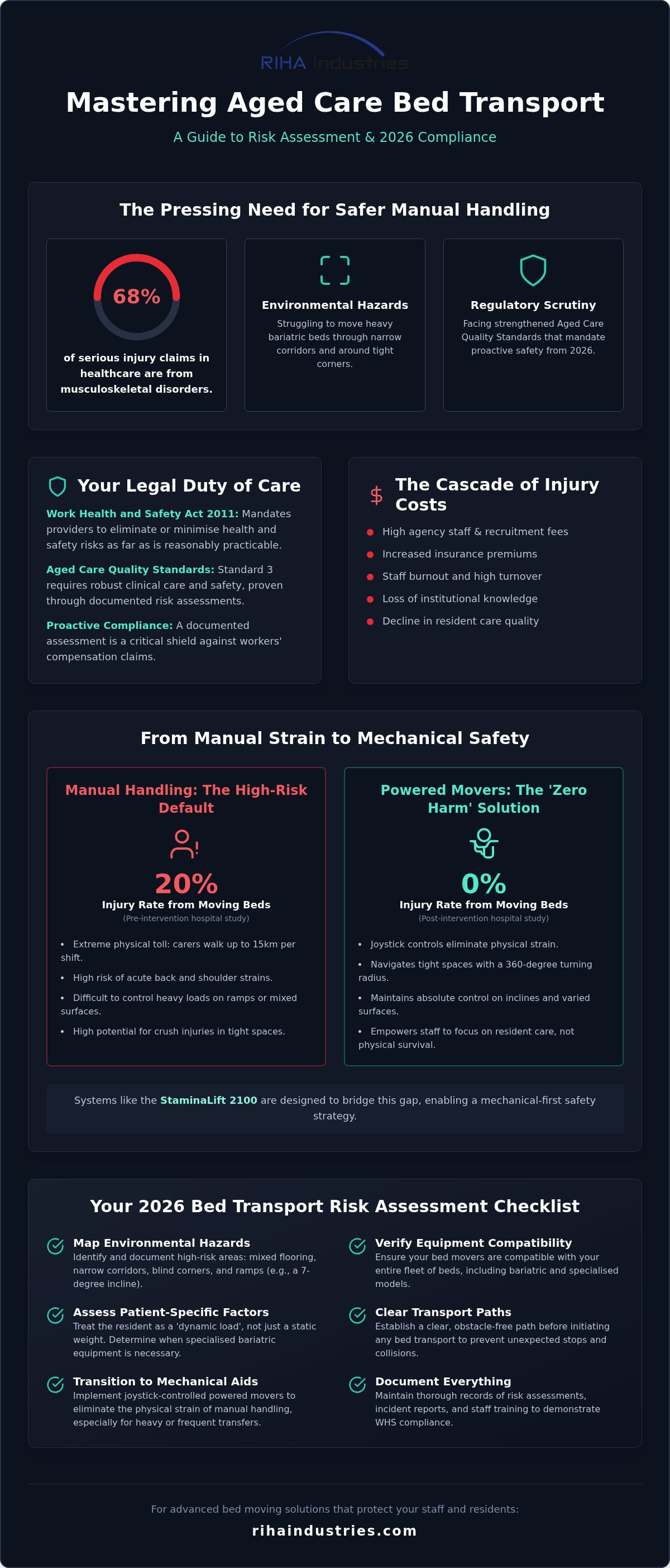
Musculoskeletal disorders account for approximately 68% of serious injury claims in Australia's healthcare sector, with back and shoulder strains often resulting from the daily strain of manual handling. You likely see the impact of these statistics firsthand as your team struggles to navigate heavy bariatric beds through narrow corridors. It's a constant challenge to balance resident care with the physical safety of your nurses and carers, especially under the scrutiny of the strengthened Aged Care Quality Standards that commenced in late 2025.
This article provides the clarity you need to master your aged care bed transport risk assessment and ensure full compliance with the 2026 regulatory landscape. We'll show you how to move beyond basic clinical observations toward a mechanical-first safety strategy that prioritises staff wellbeing. You'll learn to identify specific transport hazards, implement standardised risk controls, and integrate advanced equipment like the StaminaLift 2100 to create a safer, more sustainable workplace for your entire team.
Table of Contents
The Importance of Risk Assessment in Aged Care Bed Transport
A systematic aged care bed transport risk assessment is much more than a clinical formality; it's a vital evaluation of potential hazards that arise every time a patient is relocated. This proactive approach identifies environmental obstacles and equipment limitations before they lead to a workplace incident. In the high-pressure environment of residential care, the physical toll on nursing staff is immense. It's common for carers to walk up to 15km during a single shift, often while pushing heavy, awkward loads. By prioritising The Importance of Risk Assessment, providers can transition from reactive management to a "Zero Harm" culture. This philosophy ensures that every movement is planned to protect the physical integrity of the worker and the dignity of the resident.
The Legal Landscape: WHS Act and Aged Care Standards
Under the Work Health and Safety Act 2011, Australian aged care providers hold a primary duty of care to eliminate or minimise risks to health and safety as far as is reasonably practicable. This legal obligation extends directly to the manual tasks involved in bed transport. Conducting a thorough aged care bed transport risk assessment is an essential step in demonstrating compliance with the strengthened Aged Care Quality Standards, particularly Standard 3, which focuses on clinical care and safety. Robust documentation doesn't just satisfy auditors; it serves as a critical shield against workers' compensation claims by proving that the facility has implemented all feasible engineering controls to prevent injury. When safety protocols are documented and followed, the risk of litigation decreases while staff confidence grows.
The Hidden Costs of Manual Handling Injuries
The financial burden of manual handling injuries goes far beyond the immediate medical costs. When a nurse or carer suffers a back strain, the facility faces a cascade of expenses, including high agency hire rates, recruitment fees for replacement staff, and increased insurance premiums. Beyond the balance sheet, there's the "burnout" factor. Carers who feel physically unsafe at work are significantly more likely to leave the profession, leading to a loss of institutional knowledge and a decrease in the quality of resident care. The impact of mechanical intervention is measurable. For instance, a South Australian hospital study demonstrated that by implementing mechanical aids and structured assessments, injuries from moving beds were reduced from 20% to zero over just two years. This shift doesn't just save money; it empowers staff to focus on person-centred care rather than physical survival.
Environmental Hazards: Mapping the Aged Care Facility
While clinical assessments focus on the resident, a truly effective aged care bed transport risk assessment must scrutinise the physical environment where the movement occurs. Many older Australian facilities weren't designed for the dimensions of modern bariatric beds or the high frequency of relocations required today. Architectural quirks, such as "blind corners" near busy communal dining areas, create high-risk collision zones. Mapping the transport route is essential to identify where the physical layout might compromise the safety of both the staff and the resident. Without this spatial awareness, even the most skilled carers are at risk of accidents in high-traffic zones.
Surface friction presents another significant variable. Moving a bed from smooth clinical vinyl to high-pile carpet in resident wings causes a sudden, dramatic increase in the force required to maintain momentum. This transition is where many acute shoulder and back strains happen. Furthermore, the physics of a 7-degree incline can turn a standard bed relocation into a dangerous task. On such a gradient, the force needed to control a 500kg bariatric load manually often exceeds safe workplace limits. Following WorkSafe Victoria safety guidelines helps facility managers identify these environmental triggers and implement engineering controls before an injury occurs.
Navigating Confined Spaces and Narrow Corridors
The gap between a doorway frame and a modern bed is often measured in millimetres. In these confined spaces, staff face a heightened risk of crush injuries, particularly when navigating beds into small resident rooms or elevators. If a bed mover lacks precision, the operator can easily become pinned between the equipment and a wall. This makes a 360-degree turning radius non-negotiable for aged care equipment. To solve these spatial challenges, many facilities are adopting the StaminaLift 2100 Bed Mover, which is specifically engineered to manoeuvre heavy loads within the tight footprints of Australian aged care rooms.
Surface Friction and Gradient Challenges
Controlling a heavy load on an internal ramp requires more than just physical strength; it requires mechanical braking. A "runaway" bed on a slope is a catastrophic risk that manual handling simply cannot mitigate. Beyond the incline, the type of wheels used on transport equipment matters. Non-marking wheels are essential to maintain the integrity of the facility's flooring while ensuring consistent grip. When you calculate the force required to move a 500kg load across carpeted areas, it becomes clear that manual pushing is no longer a viable or compliant option. Transitioning to powered solutions ensures that the environment, no matter how challenging, doesn't dictate the safety of your team.
Patient-Specific Risk Factors in Bed Transfers
A comprehensive aged care bed transport risk assessment must acknowledge that a resident is a dynamic load rather than a static weight. During transit, a person may shift position or experience involuntary movements, which suddenly changes the momentum of the bed. This unpredictability increases the risk of tipping or patient falls, particularly during sharp turns or sudden stops. To mitigate this, carers must evaluate the "total weight" of the transport unit. This calculation includes the resident's weight, the bed frame, and all integrated medical equipment such as heavy oxygen cylinders and monitoring devices. Ignoring these additional loads can lead to equipment failure or severe musculoskeletal strain for the operator.
Bariatric Care: Beyond Manual Limits
When the combined weight of the resident and equipment exceeds 250kg, the transport task moves into a "High Risk" category where manual handling is no longer a safe option. For bariatric requirements where loads can approach one tonne, the StaminaLift Transfer System 6000 offers the mechanical power needed to maintain control. This technology ensures that even the heaviest beds can be moved by a single operator with minimal physical effort. Beyond safety, using a powered mover protects patient dignity. It replaces a potentially distressing scene of multiple staff members struggling with a heavy bed with a smooth, silent, and professional relocation process that reduces anxiety for the resident.
Clinical Attachments and Space Management
Clinical attachments like IV poles, catheter bags, and oxygen holders significantly complicate the transport path. These items often protrude beyond the bed's standard footprint, creating snagging hazards in narrow corridors or doorways. An effective risk assessment must account for these attachments to prevent medical tubing from being caught or dislodged during movement. Modern transport solutions use specialised racks and secure attachment points to keep these items within the mover's frame. For a deeper look at how to manage complex configurations and ensure your equipment is up to the task, the StaminaLift Transfer System 5000 guide provides essential compatibility details. Ensuring these clinical variables are assessed prevents equipment damage and, most importantly, protects the patient’s clinical stability during transit.
Mechanical Mitigation: Manual vs. Powered Solutions
Mechanical mitigation represents the most effective tier in the hierarchy of control for any aged care bed transport risk assessment. While clinical and environmental assessments identify hazards, engineering solutions like powered movers actively eliminate the physical strain that leads to injury. Replacing manual pushing with joystick-controlled movement transforms a high-risk task into a precise, effortless operation. This shift isn't just about comfort; it's about removing the "break-away" force required to initiate movement, which is where most musculoskeletal strains occur. By using a motorised drive, a single staff member can transport a resident safely, allowing other team members to focus on clinical care rather than acting as additional muscle for heavy beds.
Safety is further enhanced through integrated automatic braking systems. These systems provide immediate, fail-safe stopping power, even on the 7-degree gradients found in many facilities. This eliminates the risk of "runaway" beds and ensures the operator remains in total control at all times. Additionally, the "Connect and Lock" technology found in modern movers is a vital ergonomic feature. It allows the machine to secure the bed frame without the carer needing to bend, reach, or crawl under the equipment. This hands-free approach effectively removes the awkward postures that contribute to long-term back issues among nursing staff.
The StaminaLift 2100: Built for Aged Care
The StaminaLift 2100 Bed Mover is the industry standard for Australian residential aged care because it's engineered specifically for Australian-manufactured beds. Its compact footprint and 360-degree turning radius make it the ideal solution for the tight spaces and narrow corridors identified in your facility mapping. The hands-free connection mechanism acts as a primary risk eliminator, ensuring that the physical act of "hitching" a bed doesn't become a hazard itself. For facility managers looking to compare specific capabilities, our guide on patient transport equipment for aged care provides a detailed breakdown of model performance in real-world environments.
Technological Integration for Safety Monitoring
Modern safety management relies on data to ensure long-term compliance. Using Bluetooth diagnostics, facility managers can track equipment usage and identify where additional staff training might be needed. This transparency ensures that safety protocols aren't just written in a manual but are followed on the floor. Programmable joystick controls allow the equipment to be tailored to the height and reach of different staff members, ensuring optimal ergonomics for every user. Furthermore, integrated battery chargers mean the units can be powered up without trailing leads, which reduces tripping hazards in busy wards. Explore our range of Australian-made bed movers to find the right fit for your facility's safety strategy.
The 2026 Bed Transport Risk Assessment Checklist
Compliance in 2026 requires more than a signature on a form; it demands a rigorous, multi-layered approach to every resident movement. A robust aged care bed transport risk assessment serves as the final safety barrier before a bed begins its journey through the facility. By following a structured checklist, facility managers can ensure that both environmental variables and mechanical readiness are verified, reducing the likelihood of a "near-miss" or a serious workplace injury. This systematic approach transforms safety from a reactive policy into a reliable daily habit for your frontline team.
Pre-Transport: Verify that the bed frame is fully compatible with your motorised mover, ensuring a secure "Connect and Lock" engagement.
Environmental: Survey the intended route to clear the path of loose rugs, cleaning trolleys, and visitors who may create sudden obstacles.
Mechanical: Confirm the battery levels are sufficient for the journey and test the "Back Off Button" to ensure the anti-pinning safety feature is functional.
Staff: Ensure the operator holds a current StaminaLift certification, confirming they are trained in the latest ergonomic handling techniques.
Patient: Secure all clinical lines, oxygen bottles, and medical attachments, while checking that the resident is positioned centrally to maintain a stable centre of gravity.
Step-by-Step Execution Protocol
Effective transport begins with the "First Metre" test. Before entering the main corridor, the operator should move the bed one metre and perform a controlled stop to verify load stability and braking response. This simple protocol allows the carer to feel the momentum of the bed before navigating high-traffic areas. Clear communication between porters and clinical staff is equally vital; the nurse in charge must confirm the resident is clinically stable for transport before the move commences. Once the relocation is complete, the equipment must be returned to a designated charging station to prevent battery depletion and ensure it is ready for the next shift.
Reviewing and Updating Your Assessment
Risk management is an evolving process that requires regular refinement to remain effective. Facility managers should audit their aged care bed transport risk assessment annually, or immediately following any workplace incident or "near-miss" report. These reviews are the perfect time to gather direct feedback from carers, who can identify emerging environmental hazards like worn carpet transitions or faulty lift doors. Integration of hospital equipment preventative maintenance into your safety schedule ensures that mechanical controls remain reliable. By prioritising regular equipment servicing, you significantly reduce the risk of mechanical failure during a critical patient transfer, protecting your staff and your facility’s compliance standing.
Securing the Future of Your Care Team
Establishing a robust aged care bed transport risk assessment is more than a regulatory box-ticking exercise; it's a commitment to the long-term health of your staff and the dignity of your residents. By identifying environmental friction points and adopting mechanical controls, you can effectively eliminate the musculoskeletal hazards that have historically plagued the sector. Our FDA-registered and Australian-made equipment is designed to meet these exact challenges, backed by a zero-injury track record in clinical case studies and the reliability of 24-hour shipping on replacement parts.
Transitioning to a safer facility doesn't have to be a complex journey. When you integrate the 2026 checklist with proven technology like the StaminaLift 2100, you empower your team to work with confidence and precision. We are here to support your mission of providing world-class care in a safe, compliant environment. To take the next step in protecting your workforce, Book a hands-on safety demonstration for your facility today. You've worked hard to build a culture of care; let us help you ensure it remains sustainable for years to come.
Frequently Asked Questions
Is a risk assessment mandatory for every bed move in aged care?
Yes, under the Work Health and Safety Act 2011, a risk assessment is mandatory for any hazardous manual task, including bed transport. This process ensures you identify potential environmental and patient-specific hazards before they lead to an incident. A documented aged care bed transport risk assessment is also a key requirement for demonstrating compliance with Standard 3 of the strengthened Aged Care Quality Standards.
Can one person safely move a bariatric bed using a motorised mover?
Yes, one person can safely relocate a bariatric bed when using a powered mover with sufficient weight capacity. Mechanical aids like the StaminaLift Transfer System 6000 are engineered to handle loads nearing one tonne with minimal physical effort. This single-user operation significantly reduces labour costs while ensuring the carer is never at risk of overexertion during complex movements.
What are the most common injuries associated with aged care bed transport?
Musculoskeletal disorders are the most frequent injuries, accounting for approximately 68% of serious claims in the healthcare sector. These typically manifest as acute back strains and shoulder injuries caused by the high force required to push beds across carpeted surfaces. Implementing mechanical controls is the most effective way to reduce these statistics and protect your workforce from long-term physical damage.
How does the StaminaLift 2100 improve safety in small aged care rooms?
The StaminaLift 2100 improves safety through its 360-degree turning radius and compact footprint, which are ideal for the confined spaces of modern facilities. It allows operators to manoeuvre heavy beds in and out of small resident rooms without the risk of crush injuries. This precision ensures that even the tightest architectural layouts don't compromise the safety of the staff or the resident.
Do we need to upgrade our floors before using a powered bed mover?
You don't need to upgrade your flooring, as our bed movers are designed to operate on a variety of surfaces, including high-pile carpet and clinical vinyl. The high-torque motors provide the necessary power to overcome surface friction without causing damage to the floor. Using non-marking wheels further ensures that your facility's aesthetic integrity is maintained while improving operational safety.
What training is required for staff to operate motorised transport equipment?
Staff must complete manufacturer-specific training and certification to operate motorised equipment safely. This training covers essential protocols such as hands-free connection techniques, joystick control precision, and emergency braking procedures. Regular refresher courses ensure that all operators remain confident in their ability to conduct a thorough aged care bed transport risk assessment before every relocation.
How do we assess risk for beds with non-standard wheelbases?
Assessing risk for non-standard wheelbases requires verifying that the mover's attachment mechanism can securely grip the specific bed frame. Our universal "Connect and Lock" technology is designed to accommodate a wide range of Australian-manufactured beds, regardless of their castor configuration. If you are unsure about compatibility, a physical trial is recommended to ensure the load remains stable during turns and stops.
What should be included in a bed transport risk assessment for ramps?
A ramp-specific risk assessment must include an evaluation of the gradient and the mover's maximum operating slope capacity. You should also verify that the equipment's automatic braking system is functional to prevent the risk of "runaway" beds on inclines. Clearing the ramp of any debris or spills is a vital step in maintaining the necessary traction for a safe and controlled ascent or descent.


