
Choosing the Best Articulating Hospital Bed Mover: A 2026 Buyer’s Guide
- Aug 3
- 12 min read
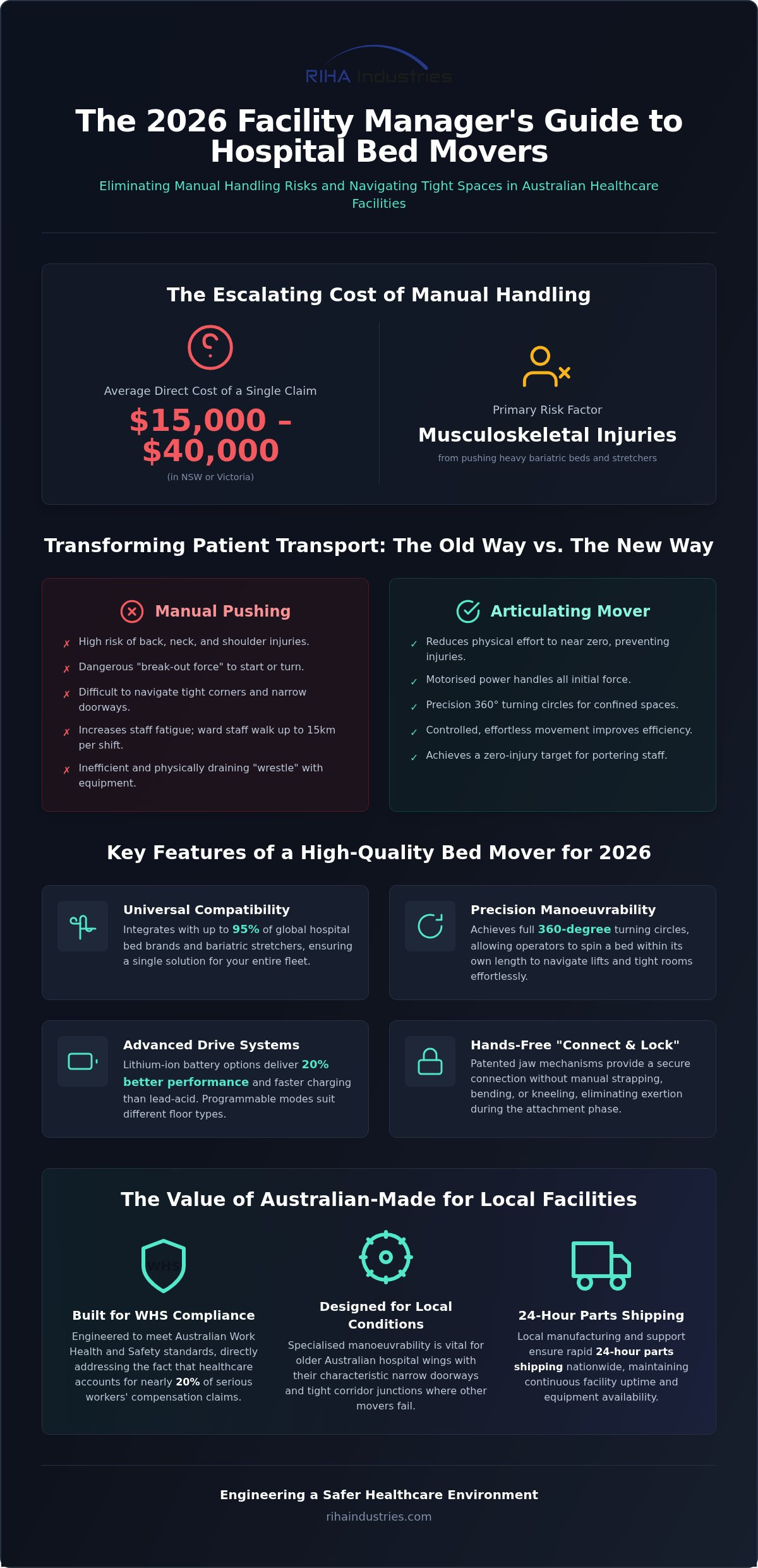
Did you know that a single manual handling claim in New South Wales or Victoria now averages between $15,000 and $40,000 in direct costs? For facility managers, these figures represent more than just a budget line. They reflect the physical toll on nursing and portering staff who navigate heavy bariatric beds through narrow, historical hospital wings. Finding the right articulating hospital bed mover is no longer a luxury. It's a critical safety intervention that prevents long-term musculoskeletal injuries while ensuring patients move smoothly through clinical environments.
You understand that your team's well-being is the foundation of quality care, yet the daily struggle with diverse bed brands and tight doorways often feels like an unavoidable challenge. This 2026 buyer's guide will empower you to select a transport solution that offers precision manoeuvrability and universal compatibility across your entire fleet. We'll examine the technical features that define a world-class mover, from 360-degree turning circles to secure locking mechanisms, helping you create a safer and more efficient workplace for every staff member.
Table of Contents
The Role of Articulating Hospital Bed Movers in Modern Healthcare
An articulating hospital bed mover is a specialised motorised device designed to mimic the natural steering geometry of a vehicle. Unlike basic towing units, it allows the operator to guide the bed with fluid, intuitive movements that follow the path of the person steering. This technology is becoming a cornerstone of Australian Work Health and Safety (WHS) compliance. With the healthcare sector accounting for nearly 20% of all serious workers' compensation claims in the country, administrators are prioritising engineering controls that eliminate manual handling risks. Shifting to a motorised system ensures that the physical "wrestle" of patient transport is replaced by controlled, effortless movement.
From Manual Pushing to Precision Articulation
Nursing and portering staff are the backbone of clinical care, but the physical toll of their roles is significant. It's estimated that ward staff can walk up to 15km during a single shift. When you add the repetitive task of pushing heavy beds, the risk of musculoskeletal injury skyrockets. The most dangerous moment is often the initial "break-out force" required to get a stationary bed moving or to change its direction. An articulating hospital bed mover handles this mechanical burden, using powered steering to navigate heavy loads without straining the operator's back or shoulders. By reducing the physical effort to near zero, facilities can maintain high levels of ward efficiency without compromising the health of their workforce.
Why Australian Hospitals Require Specialised Manoeuvrability
Australian clinical environments present unique spatial challenges. Many facilities operate within older wings where narrow doorways and tight corridor junctions weren't designed for the size of modern hospital beds or heavy bariatric stretchers. Fixed-axle movers often struggle in these settings, requiring wide swinging arcs that simply aren't possible in a crowded ward. This often leads to staff reverting to manual pushing just to get through a tight spot, which defeats the purpose of having a mover in the first place.
Precision articulation solves this by enabling 360-degree turning circles. This means a single operator can spin a bed within its own length, making it easy to enter a lift or turn into a small patient room. When evaluating your facility's needs, it's vital to consider specific patient handling equipment selection criteria for 2026. Choosing a mover that prioritises manoeuvrability doesn't just improve the speed of patient transfers; it acts as a protective measure against the chronic fatigue and injuries associated with traditional transport methods.
Key Performance Features of a High-Quality Bed Mover
Selecting a high-performance articulating hospital bed mover requires looking beyond simple motor power. It's about how the machine interacts with the operator and the existing fleet. Most hospitals manage a diverse range of equipment, so a quality mover must offer universal compatibility. Ideally, a single unit should service a 95% target range of global bed brands. This versatility ensures that your investment provides consistent mechanical assistance across the entire facility, which is a core requirement for meeting Australian safety standards during every patient transfer.
Modern drive systems have also seen significant upgrades. Advanced units now offer lithium-ion battery options that deliver 20% better performance and faster charging cycles than traditional lead-acid alternatives. These systems often include programmable drive modes. This allows facility managers to customise speed and torque settings to suit different floor types or the specific experience levels of their portering staff. If you're looking to upgrade your facility's transport fleet, you can explore the full range of StaminaLift motorised solutions to find the right fit for your ward layout.
The "Connect and Lock" Jaw Mechanism
Traditional movers often require manual strapping or awkward hitching that forces staff to bend, kneel, or reach under the bed frame. A superior system uses a hands-free "connect and lock" process. This mechanism, exemplified by the StaminaLift Jaw System 300, provides wide-ranging wheel compatibility and eliminates physical exertion during the attachment phase. Beyond ease of use, secure locking is vital for safety. It ensures the bed remains perfectly aligned with the mover, preventing "fishtailing." This is a common hazard where the bed swings out of control during sharp turns or high-speed transport in corridors.
Drive Systems and Incline Performance
Hospital architecture frequently includes ramps and service slopes that demand high torque and reliable stopping power. A high-quality articulating hospital bed mover must handle at least a 7-degree incline with a full load, ensuring even bariatric patients are moved between levels without hesitation. Safety on these slopes is maintained through automatic braking systems that engage the moment the operator releases the controls. Regenerative braking technology reclaims energy during deceleration to extend battery life while providing a smooth, controlled descent on ramps.
Evaluating Compatibility: Does One Size Fit All?
Facility managers often overlook the specific physical geometry of their bed fleet when purchasing transport assistance. While many movers claim to be universal, the reality of modern hospital design often tells a different story. Contemporary acute care beds frequently feature low-slung plastic shrouds and complex braking systems that can obstruct traditional hitching points. Ensuring your chosen articulating hospital bed mover can slide under these low clearances without damaging the bed frame is essential for long-term operational success. A compact footprint is equally vital, as adding too much length to a bed can make entering standard hospital lifts or navigating small patient rooms nearly impossible.
Integrating these tools aligns with global best practices for Safe Patient Handling and Mobility (SPHM), which prioritises engineering controls over manual labour to protect staff from career-ending injuries. Before making a selection, it's important to conduct a thorough audit of your current fleet. Use the following checklist to ensure a seamless fit:
Ground Clearance: Measure the distance from the floor to the lowest part of the bed frame or shroud.
Wheelbase Width: Verify the internal and external width of the bed wheels to ensure jaw compatibility.
Total Length: Calculate the combined length of the bed and mover to confirm it fits within your facility's lifts.
Braking Mechanisms: Ensure the mover does not interfere with the bed's central braking pedals or steering locks.
Standard vs. Bariatric Transfer Systems
The requirements for a standard ward bed differ vastly from those of a bariatric stretcher. For general ward duties, the StaminaLift Transfer System 5000 is a reliable choice for Australian hospitals, designed to handle approximately 95% of global bed brands with ease. However, when moving bariatric patients, the mechanical demands increase significantly. The TS6000 is engineered specifically for these high-stakes scenarios, supporting loads up to 900kg. These units require reinforced jaw structures and higher torque motors to maintain control during the initial movement phase, ensuring the operator never has to compensate with their own physical strength.
Future-Proofing Your Purchase for 2026
As we move into 2026, the technology surrounding an articulating hospital bed mover is becoming more sophisticated and data-driven. Look for features like Bluetooth diagnostics, which allow maintenance teams to monitor battery health and motor performance via a smartphone or tablet. FDA registration remains a critical indicator of medical-grade quality, ensuring the device meets rigorous safety standards for high-pressure clinical environments. Additionally, some manufacturers now offer 3D-printed spare parts for older or discontinued bed models, which can prevent your transport system from becoming obsolete when your hospital eventually upgrades its bed fleet.
Safety Standards and OHS Compliance in Australia
Adhering to Australian Work Health and Safety (WHS) regulations is a non-negotiable priority for facility managers. In the healthcare sector, body stressing remains the leading cause of workers' compensation claims, often resulting from the manual pushing and pulling of heavy equipment. Implementing an articulating hospital bed mover serves as a high-level engineering control that significantly reduces these risks. By taking the mechanical load off the individual, hospitals can transition from reactive injury management to a proactive safety culture. For instance, South Australian hospitals that integrated StaminaLift technology saw their manual handling injury rates drop from 20% to zero, proving that the right equipment can achieve a total safety transformation.
Beyond staff safety, the operational environment requires careful consideration. A high-quality mover must operate at noise levels below 65 dB to maintain the "quiet healing" environment essential for patient recovery. Additionally, the use of non-marking drive wheels is vital for protecting specialised hospital flooring and maintaining strict hygiene standards. These wheels ensure that the device doesn't leave behind debris or damage that could harbour bacteria. If you are ready to upgrade your facility's safety protocols, you can explore our range of StaminaLift safety solutions to see these features in action.
Reducing the Physical Burden on Nursing Staff
Nursing staff are particularly vulnerable to back and shoulder injuries, often caused by the twisting motions required to steer beds through busy wards. An articulating hospital bed mover eliminates this strain by using intuitive joystick controls that allow for a neutral, upright posture. This ergonomic advantage is crucial, as traditional manual transport often forces staff into compromised positions to gain leverage. By removing the need for physical exertion, you can directly address the root causes of staff burnout and long-term disability. For a deeper look at protecting your team, refer to our comprehensive guide on reducing nurse back injuries through better equipment selection.
Operational Safety Features
Safe operation in a high-traffic clinical setting requires robust mechanical safeguards. Every unit should be equipped with an easily accessible emergency stop button and an automatic "dead-man" braking system. This system ensures that if an operator releases the controls for any reason, the mover and the bed come to an immediate, controlled stop. To prevent unauthorised use by visitors or untrained personnel, key-only operation or secure pin-code access is a standard requirement. While the technology is designed to be intuitive, formal training and certification for all operators remain essential components of a successful OHS strategy. This ensures that every staff member understands how to use the precision manoeuvrability of the device to navigate safely around patients and colleagues.
The StaminaLift Solution: Why Australian-Made Matters
Choosing an articulating hospital bed mover is a long-term commitment to staff safety and operational efficiency. For Australian healthcare facilities, the decision to source locally manufactured equipment provides a layer of security that international vendors often struggle to match. RIHA Industries, the manufacturer of the StaminaLift brand, ensures that every unit is built to withstand the rigours of high-traffic clinical environments. By maintaining production within Australia, the brand offers superior quality control and a 24-hour shipping guarantee for replacement parts. This rapid response time is critical for minimising equipment downtime, a stark contrast to the weeks of waiting often associated with overseas suppliers.
The range extends beyond bed transport to support the entire facility's logistics. While the StaminaLift series handles patient transfers, the Easi Rider and Easi Mover tugs are engineered for non-bed transport needs, such as moving heavy linen trolleys or meal carts. Investing in durable, stainless steel Australian equipment provides a significant return on investment (ROI) by reducing the frequency of replacements and ensuring the fleet remains operational for years. This durability is essential when managing the high-stakes demands of modern acute care.
Ongoing Maintenance and Preventative Care
Establishing a robust hospital equipment maintenance programme is the most effective way to protect your capital investment. Regular servicing identifies minor wear before it leads to mechanical failure, extending the life of your articulating hospital bed mover fleet. For rural and remote facilities, innovative 3D viewer tools now assist in-house engineering teams with repairs, bridging the gap between local staff and manufacturer expertise. Following a detailed preventative maintenance schedule ensures that your transport systems are always ready for the next shift, providing peace of mind for both managers and frontline workers.
Final Considerations for Procurement
When justifying the capital expenditure for motorised movers, facility managers should utilise an ROI calculator to quantify the savings in workers' compensation claims and reduced labour costs. While technical specifications are important, we encourage hands-on hospital demonstrations over traditional sales pitches. This allows your portering and nursing teams to experience the precision manoeuvrability and ease of use in their own corridors. By prioritising user feedback and local support, you ensure that your facility remains at the forefront of safe patient handling. The StaminaLift series continues to lead the market in 2026 because it balances world-class engineering with a deep understanding of the practical challenges faced by Australian healthcare professionals.
Future-Proofing Your Facility’s Patient Transport
Selecting the right articulating hospital bed mover is a strategic decision that bridges the gap between mechanical efficiency and human well-being. By prioritising precision manoeuvrability and universal compatibility, you can eliminate the physical "wrestle" that leads to staff burnout and injury. We've explored how advanced jaw mechanisms and Australian-made reliability provide the stability required for today's diverse clinical environments. These engineering controls don't just move equipment; they protect the careers of your nursing and portering teams.
As you plan your facility's upgrades for 2026, remember that proven results matter more than technical specifications. Our equipment is FDA-registered and certified Australian-made, with a track record of reducing transport-related injuries to zero in South Australian hospitals. Because our systems are compatible with 95% of global hospital beds, you can integrate them seamlessly into your existing fleet without the need for costly replacements. It's time to empower your staff with tools that move as naturally as they do. View the StaminaLift Range and Request a Hospital Demonstration today to see the difference in your own wards. We look forward to partnering with you to create a safer, more efficient healthcare environment.
Frequently Asked Questions
What is the difference between an articulating and a fixed-axle bed mover?
An articulating hospital bed mover differs from a fixed-axle unit by allowing the machine to pivot and steer in a way that mimics the natural movement of the operator. Fixed-axle movers often require a wide swinging arc to navigate corners, which is impractical in crowded wards. Articulation allows for zero-radius turning, making it possible to spin a bed within its own length for better control in tight spaces.
Can an articulating bed mover handle bariatric patients safely?
Yes, specific models are engineered to handle bariatric loads with high torque and reinforced structures. The StaminaLift Transfer System 6000 is designed for acute care and bariatric environments, managing weights up to 900kg without physical strain on the operator. This ensures that even the heaviest patients are transported with the same level of safety and precision as standard ward transfers, maintaining a high standard of care.
Are these movers compatible with older hospital bed models?
Most articulating movers are designed with universal compatibility in mind to suit diverse facility fleets. The patented jaw mechanisms on StaminaLift units connect to the castor wheels rather than the frame, allowing them to work with older bed models and modern acute care beds alike. This versatility ensures you don't need to replace your entire bed fleet to implement motorised assistance across your organisation.
How long does the battery last on a single charge during a busy shift?
Battery systems are designed to support a standard eight-hour shift during high-use periods. While exact duration depends on the load and floor type, advanced lithium-ion batteries now offer 20% better performance and faster charging cycles. Most units include a clear battery indicator, ensuring staff can easily monitor power levels and plug the device in during quieter ward times to maintain continuous availability.
What training is required for staff to operate an articulating mover?
Operating an articulating hospital bed mover is intuitive and generally requires only a brief orientation session. Staff learn to use the joystick controls and the "connect and lock" mechanism within minutes. While the machines are easy to use, we recommend a formal training and certification programme to ensure all operators follow facility-specific safety protocols and OHS guidelines for long-term workplace safety.
Do these machines require regular professional servicing to stay compliant?
Regular preventative maintenance is essential to ensure your equipment remains compliant with Australian safety standards. Professional servicing helps identify mechanical wear before it leads to failure, protecting your staff and patients from unexpected downtime. Most facilities schedule these checks as part of their broader medical equipment management programme to maximise the lifespan and reliability of their transport fleet.
Can one person really move a 500kg bed alone using this equipment?
A single operator can easily move a 500kg bed alone using this equipment because the motor handles all the push and pull forces. The role of the staff member shifts from manual labourer to precision pilot, using the joystick to guide the bed with minimal effort. This single-person operation significantly reduces labour costs while eliminating the risk of musculoskeletal injuries associated with traditional transport.
Is the StaminaLift system registered with the FDA?
Yes, the StaminaLift system is FDA-registered, which serves as a global benchmark for medical-grade safety and quality. This registration confirms that the equipment meets rigorous standards for use in high-stakes clinical environments. Choosing FDA-registered devices provides facility managers with the assurance that their transport solutions are both reliable and built to meet international healthcare requirements for patient and staff safety.


